

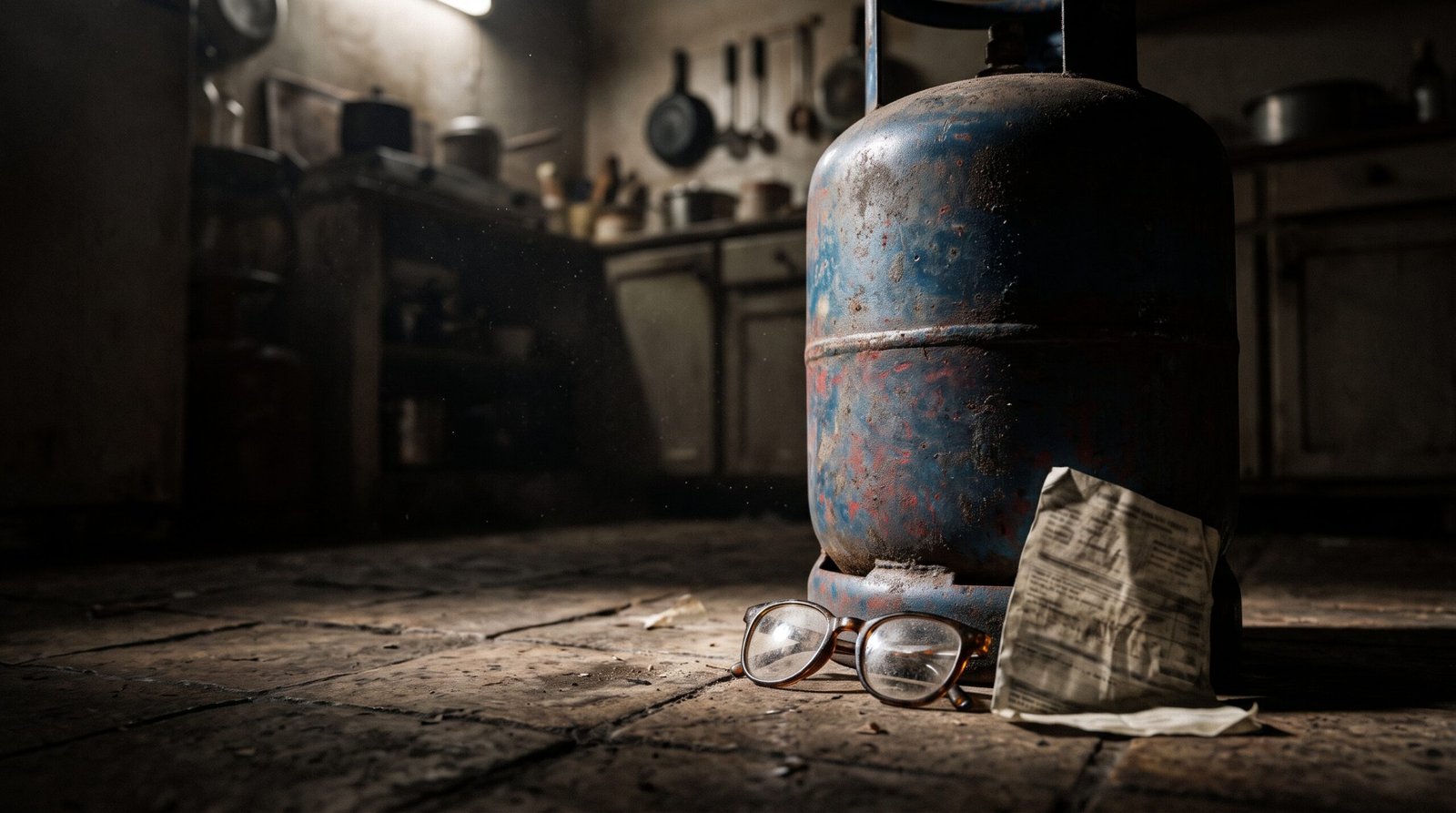
There is a metal cylinder in my kitchen, and its price is being negotiated, in part, thousands of miles away.
I live in Bahria Enclave, on the outskirts of Islamabad. We have no piped gas here, so every meal I eat, every pot of tea and every winter evening depends on LPG. Once a month, OGRA announces a number, and my household, like every household out here, pays it without a vote.
This November the number rose by Rs14.73 to about Rs294 per kg. An 11.8 kg cylinder now costs about Rs3,470. In January the same cylinder cost Rs2,592. That is Rs878 more in ten months, a jump of roughly 34 %, and winter has barely begun. Add petrol for a life lived on the outskirts, where the car is how the week works, and two numbers, the cylinder and the litre, decide whether a month closes comfortably or tightly.
But that is the official price, and this winter the official price is partly fiction. On 7 November, 24 News HD reported that LPG in Rawalpindi was selling for Rs600 to Rs640 per kg, roughly double OGRA’s rate. It blamed shortages of notified supply and dealers who buy in bulk from government plants and resell at inflated prices. At Rs600, a full 11.8 kg cylinder works out to about Rs7,080, by my arithmetic, against Rs3,470 on paper. Headlines from other outlets put twin-city prices near Rs600 as well, but I could not open them, and I found no separate, reliable street price for Islamabad or Bahria Enclave. Your own dealer’s receipt is the best evidence.
So when Russian and Ukrainian delegations sat down in Abu Dhabi on 10 and 11 November, I found myself reading the news as closely as I read my own bills.
It was the first US-brokered meeting between them in nine months. They agreed to exchange up to 1,500 prisoners each, which is no small thing for the families waiting. On the hard questions- territory and security guarantees- nothing moved. US envoys flew on to Moscow and agreed with Vladimir Putin to keep talking, yet Putin still demands that Ukraine hand over all of Donbas, and Kyiv says no. President Trump has called a deal close before. My honest reading: a ceasefire framework in the coming months is plausible; a full peace is not imminent.
Now the confession every honest energy expert owes his readers. Ukraine alone does not set my cylinder price. Pakistan’s LPG follows Gulf-linked contract prices, and the Gulf is in the middle of its own crisis. On 12 November, Brent crude closed at $95.82 a barrel, up $3.06 in one day after attacks on Saudi energy sites and tanker strikes in the Strait of Hormuz. Before the Gulf war, in December 2025, Brent was near $59. A ship on fire in Hormuz hurts my wallet more than any general in Donbas.
And yet the world’s energy market is one connected bowl of soup. When one war cools, traders relax about the other, and prices fall. Brent slid from about $103 on 4 November to the low $90s, partly on peace hopes, before Thursday’s attacks pushed it back up. Fear moves prices faster than barrels do. That is the invisible pipeline that runs from Abu Dhabi to Bahria Enclave.
The real prize of a deal is Russian oil. Commerzbank analysts note that lifting sanctions on Rosneft and Lukoil would let Russia raise output toward its OPEC+ quota and release crude now parked on tankers at sea. Traders doubt this would happen fast. My own estimate is that a signed deal could take $3 to $6 off Brent within weeks, if Hormuz does not get worse. A ceasefire would also silence Ukrainian drones hitting Russian ports such as Ust-Luga, removing one more supply scare.
Gas tells the same story in a different accent. Spot LNG in Northeast Asia, the JKM benchmark, fell to about $32 per MBtu on 6 November from $34 a week earlier. Europe’s TTF dropped to $28 from $34. Yet Europe’s storage is only 73 % full, about 19 % below its five-year average, so it is still bidding against Asia for winter cargoes. Peace would calm that scramble and soften prices for everyone, Pakistan included. But Europe has pledged to phase out Russian LNG, so Russian gas will not simply flow back, and Qatari cargoes through Hormuz remain the swing factor for us.
What about the pump? Petrol cost Rs377.91 per litre on 2 November and Rs338 from 11 November, a fall of Rs60.30 in 30 days. It is still Rs85 above 1 January’s Rs253.17, and far below April’s peak of Rs458.41. Because Pakistan now reprices fuel every few days, any dip in crude reaches the motorist fast. But look inside the price: on 10 November, a Rs346 litre held an ex-refinery cost of Rs249.92, an Rs80 petroleum levy and a Rs5 climate support levy. When crude falls, the levy decides how much relief actually reaches me.
What I expect from a peace deal, then, is a discount, not a miracle. If Hormuz stays calm, petrol could drop by a few rupees to perhaps low double digits per litre, and LPG could ease a little, arriving one or two OGRA notifications late. If Hormuz worsens, those cuts reverse, deal or no deal. These ranges are my own estimates, not forecasts from any agency.
Then comes the question I am asked most: if peace comes, can I switch to LNG for cooking and heating? Two corrections first. Nobody delivers LNG to a kitchen in a cylinder; the household version is piped RLNG through the SNGPL network. And the obstacle is not price but permission.
The prize is still large. SNGPL the RLNG tariff at about Rs3,900 to 4,000 per mmBtu with tax, 35 to 40 % below LPG at the time. By my arithmetic, official LPG at Rs294 per kg now equals roughly Rs6,700 per mmBtu, and street LPG at Rs600 per kg about Rs13,700. Piped gas would cost a fraction of either.
Also Read: From Cement To Kia And GAC: Inside Yunus Brothers Group’s Multibillion-Rupee Business Empire
How far would peace cut that tariff? Pakistan’s RLNG is largely linked to oil-indexed term contracts, as I understand it, so a $3 to $6 fall in Brent, 3 to 6 %, would trim it by a similar single-digit %age with a lag. Spot LNG, now about $32 per MBtu, could fall a few dollars. That is my estimate, not a forecast. So peace will not make piped gas cheap. Only a connection will. Register with SNGPL if you have not, ask your society office whether any supply plan exists, and keep an LPG arrangement until a connection is in your hands.
I am not asking Islamabad to control Moscow. I am asking for three things within its reach. Pass every fall in crude through to the pump, and do not raise the Rs80 levy while prices are falling. Enforce OGRA’s notified LPG price, because cylinders in outlying areas like mine have repeatedly sold above it, and winter makes that worse. And secure winter LNG and LPG supply now, with alternatives to Hormuz-dependent cargoes.
Peace in Ukraine would be good news for Ukrainians and Europeans first. For one family in Bahria Enclave, it would be a modest discount that comes a month or two late. My bills will depend far more on whether tankers move safely through Hormuz. So I will keep one eye on Abu Dhabi and the other on the cylinder, and I will budget for Brent between $85 and $100 this winter. If peace comes, any relief is a bonus, not a plan.