

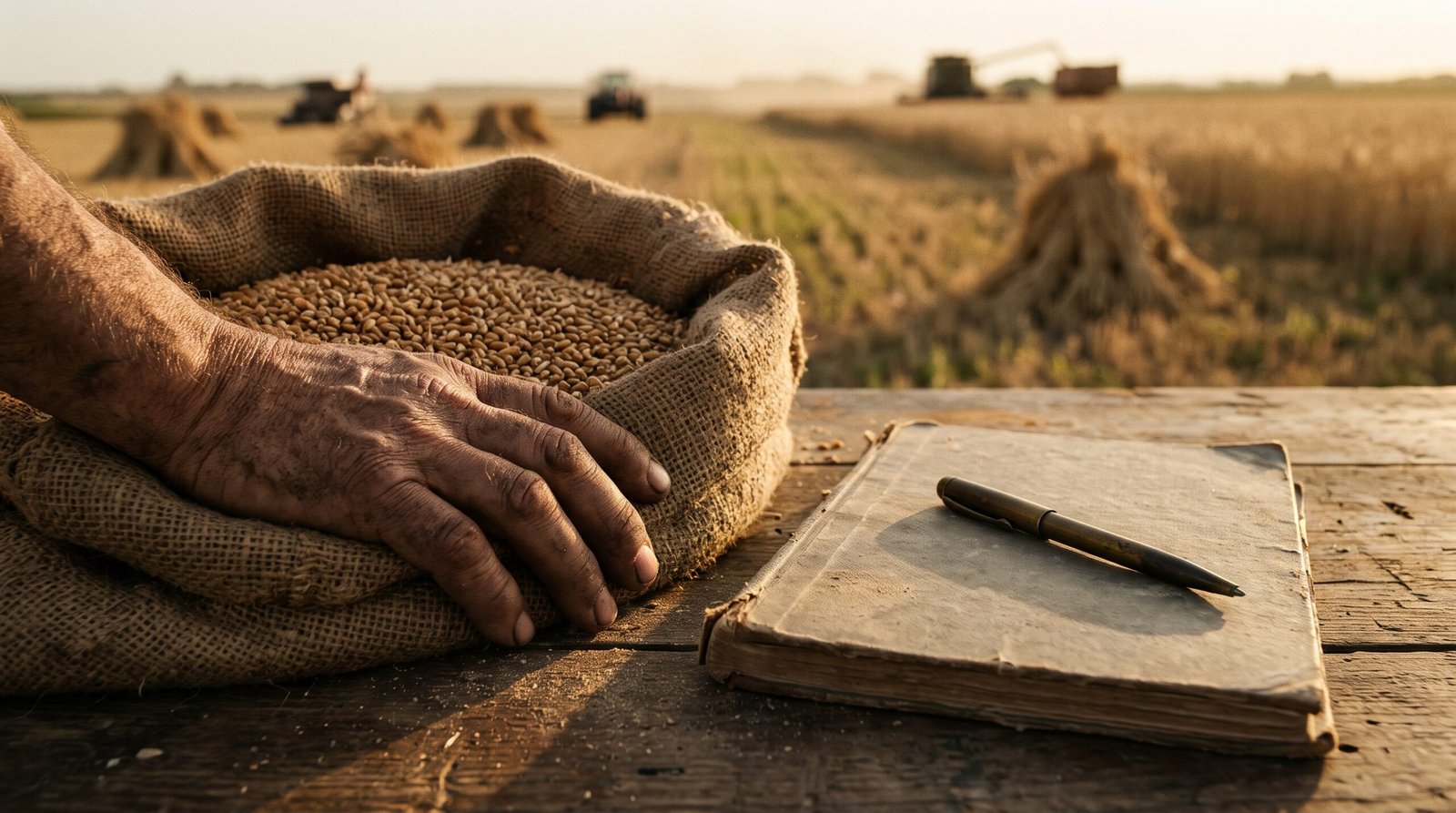
Ushr is the part of the Zakat and Ushr system that reaches agricultural land. Zakat on bank deposits is deducted at source on the first of Ramazan; Ushr has to be assessed crop by crop and holding by holding by the provincial revenue machinery. That is why it is the part that failed first, and why the question put to every province after devolution, how much Ushr are you collecting?, deserves a straight answer. This article sets out what the law says, whether the levy is compulsory or voluntary, and what the public record shows about collection, province by province.
1. What devolution changed
The Constitution (Eighteenth Amendment) Act 2010 (“18th Amendment) was signed by the President of Pakistan on 19 April 2010 and notified in the Gazette the next day.[1][2] By abolishing the Concurrent Legislative List, it left every matter not enumerated in the Federal Legislative List to the provinces under Article 142 of the Constitution of Islamic Republic of Pakistan [“the Constitution”]. Zakat was among the former concurrent entries that became residuary.[3] The federal cabinet devolved the Zakat and Ushr Division in December 2010 as part of the Implementation Commission’s phased programme.[4]
One qualification matters. The Economic Survey 2025-26 records that, under the Rules of Business, 1973, the federal government still collects Zakat and distributes it to the provinces and federal areas under a formula approved by the Council of Common Interests.[5] Devolution, therefore, split the system. Bank-deducted Zakat is collected centrally and shared out; Ushr, which is not collected centrally, was left wholly to the provinces. Even the federal footprint is contested: in July 2026 the Senate Functional Committee on Devolution objected to the later re-creation of federal ministries on devolved subjects, Zakat and Ushr among them.[2]
2. Four provinces, four statutes, one design
After 2010 each province legislated for itself: Sindh (an ordinance in 2010, then the Sindh Zakat and Ushr Act, 2011), Khyber Pakhtunkhwa (Act XVII of 2011), Balochistan (Act I of 2012) and, last, Punjab, where the federal Ordinance of 1980 continued as provincial law until the Punjab Zakat and Ushr Act, 2018 (Act IV of 2018) came into force on 15 February 2018.[1][6][7][8]
The Acts are close copies of the 1980 Ordinance. On Ushr they share these features:
- Ushr is charged and collected on a compulsory basis from every land-owner, grantee, allottee, lessee, lease-holder or land-holder who is a sahib-e-nisab.[6][9]
- The Sindh Act fixes it at five per cent of the landholder’s share of the produce on the valuation date.[6] Khyber Pakhtunkhwa officials, briefing an Assembly committee, described it as one-tenth.[10] The classical rule is one-tenth on rain-fed and one-twentieth on irrigated land. The rate in each Act should be read against the Shariah rule the state itself invokes; that officials and statute do not obviously agree is a sign of how rarely the provision is applied.
- First charge, in cash. Ushr is the first charge on the produce and is collected in cash, though the Council may take wheat and paddy in kind.[8][9]
- A person is not liable if the produce is below five wasqs or if he is himself entitled to receive Zakat.[11]
- The revenue department (the Board of Revenue in Punjab; the Revenue and Estate Department in Khyber Pakhtunkhwa after its 2024 amendment) assesses and collects Ushr and keeps the crop-season record; the money is credited to the District Zakat Fund.[6][7][8][9]
3. Compulsory or voluntary?
In law, compulsory. Every provincial Act, like the Ordinance before it, uses the words “on compulsory basis” for the charge on produce, and makes the revenue department, not the taxpayer, the assessing authority.[6][8][9]
Three features qualify that compulsion:
- The declaration. Each Act contains a “Declaration” clause under which no Zakat or Ushr is charged on a compulsory basis from a person who files, within the prescribed time, a declaration that his faith or fiqh does not require it.[8][13] In the banking system this exemption has become the main route of Zakat avoidance; the Auditor-General’s 2018-19 report found exemptions granted without valid declarations running into hundreds of millions of rupees.[13]. The Supreme Court later held that any person, irrespective of faith and fiqh can avail the wiver.
- The nisab. Small producers and those eligible to receive Zakat are outside the charge.[11]
- A voluntary overlay. The Ordinance lets a sahib-e-nisab pay directly to those entitled so much of the Ushr due under Shariah as is not compulsorily realisable.[9] The compulsory levy is thus a floor, not the whole of the religious obligation.
In practice, voluntary, and mostly unpaid. The record is consistent across sources and years:
- Mufti Muhammad Taqi Usmani, in an opinion placed before the Supreme Court in 2020, stated that collection of Ushr had been given up by all four provinces, though he could find no legislation to that effect, and that practically no Ushr was being collected.[12]
- Samra and Siddiqui, reviewing the five Zakat and Ushr laws in 2021, found that every one provides for collection but that practical implementation is “completely missing”, apart from contributions by some voluntary farmers.[1]
- On 31 December 2025, the Khyber Pakhtunkhwa Assembly’s standing committee on Zakat and Ushr was told that Ushr is levied at one-tenth of produce and that payment remains voluntary at the discretion of landowners and farmers.[10]
The first of these contains a legal inaccuracy worth correcting. Ushr has not been abolished. The statutes remain in force, and the Auditor-General was still citing the Sindh provision as a legal duty in a report laid in 2025.[6] The accurate description is a compulsory levy that has fallen into disuse: dormant, not repealed.
Also Read: Punjab’s Past Beyond The Palace And The Empire
4. The baseline: what the federal system collected
To judge what the provinces inherited, one needs the federal record. The Central Zakat Administration’s figures, compiled by Shirazi, show Ushr rising to a peak in the mid-1980s and then collapsing well before devolution.[14]
| Year | Assessed (Rs m) | Collected (Rs m) | Collected as % of assessed |
| 1982-83 | 179.62 | 179.32 | 99.8 |
| 1983-84 | 262.40 | 258.71 | 98.6 |
| 1984-85 | 271.47 | 261.04 | 96.2 |
| 1987-88 | 273.58 | 239.88 | 87.7 |
| 1989-90 | 237.11 | 107.57 | 45.4 |
| 1990-91 | 207.88 | 121.65 | 56.3 |
| 1991-92 | 58.82 | 12.66 | 21.5 |
| 1992-93 | 67.65 | 11.88 | 17.6 |
| 1993-94 | 0.21 | 0.20 | 95.2 |
Collection fell by more than 99.9 per cent from its 1984-85 peak to Rs 0.20 million in 1993-94, and it was the assessment itself, not just the recovery, that disappeared. Shirazi attributed the early failure to Local Zakat Committees that, in the words he quotes, lacked the professional competence and the backing to confront influential landowners. In 1993 the Central Zakat Administration handed assessment and collection to the provincial revenue departments, in the expectation that trained staff would do better.[14]
It did not. In March 2009, a year before devolution, the chairman of the Sindh Provincial Zakat Council told Dawn that after 1999 not a single paisa had been collected as Ushr in the province.[15] Devolution did not take over a functioning levy. It took over a dead letter.

5. After 2010: what each province reports
The vital question is how much each province has collected since the 18th Amendment. The honest answer is that no province, and no federal body, publishes a consolidated figure. Ater a search of the Auditor-General’s reports, provincial assembly proceedings, departmental websites and the Economic Survey, it has transpired that not a single reported rupee of Ushr collection for any province after 2010. What can be established is set out below.
| Province | Governing law | Assessing authority | What the record shows on Ushr collection |
| Punjab | Zakat and Ushr Act, 2018 (from 15 Feb 2018); 1980 Ordinance before that | Board of Revenue | No figure published. In February 2025 a district Zakat officer told philanthropists that the department’s entire system runs on Zakat collected through banks in Ramazan, and announced a drive for voluntary Zakat.[16] |
| Sindh | Zakat and Ushr Act, 2011 | Revenue Department | The Auditor-General’s report for Audit Year 2024-25 found that four District Zakat Committees (Thatta, Kambar Shahdad Kot, Matiari, Umerkot) had not pursued Ushr with the Revenue Department, resulting in “non-collection of a single penny” for 2022-24. The same para was raised in the 2021-22 and 2023-24 reports.[6] |
| Khyber Pakhtunkhwa | Zakat and Ushr Act, 2011; amended 2024 | Revenue and Estate Department | No figure published. The Assembly committee examined a 20-year record in December 2025 but the reported outcome was a direction to produce district-wise data. Officials said payment is voluntary; that 100 posts needed to run Ushr were approved and then abolished; and that Ushr, separated from the Board of Revenue by legislation, was returned to the Revenue Department.[10] |
| Balochistan | Zakat and Ushr Act, 2012 | Revenue Department | No figure found. A 2025 position paper on social protection reports that the Chief Minister announced the abolition of the provincial Zakat Department for poor performance.[18] |
| Islamabad Capital Territory (for comparison) | Ordinance of 1980 | Assistant Commissioner (Revenue) | The Auditor-General found that the District Zakat Committee was assessing and collecting no Ushr, for want of coordination with the Revenue Department; an earlier report on the same office put the lapse at 1990.[13][20] |
Two features of the Sindh finding deserve emphasis. First, the Zakat Department’s answer to the auditors was that Ushr is a matter for the Revenue Department, and the Departmental Accounts Committee duly referred it there on 31 January 2025.[6] Responsibility is passed between two arms of the same government and nobody owns the shortfall.
Second, the audit report records that no Public Accounts Committee has ever met on the Audit Reports of the Provincial and District Zakat Funds.[6] A finding repeated in three consecutive reports has therefore never been examined by the committee whose job it is to act on it.

Where provincial Zakat money actually comes from
If Ushr were material, it would show up in provincial Zakat accounts. What shows up instead is the federal pool. In 2022-23, the Sindh Provincial Zakat Fund had Rs 6,359.7 million available, of which Rs 2,584.2 million was received from the Central Zakat Fund and other institutions, and released only Rs 1,437.4 million, or 23 per cent.[6]
The scale of the federal transfers is set out below.
| Province / area | Zakat released, FY2026 (Rs m) | Share of the four provinces’ total |
| Punjab | 6,278.98 | 57.4% |
| Sindh | 2,595.44 | 23.7% |
| Khyber Pakhtunkhwa | 1,512.82 | 13.8% |
| Balochistan | 559.37 | 5.1% |
| Gilgit-Baltistan | 153.01 | n/a |
| Islamabad Capital Territory | 289.53 | n/a |
| Erstwhile FATA (released to KP) | 381.40 | n/a |
| Total | 11,770.56 |
Source: Economic Survey 2025-26, ch. 16; shares computed.[5] The Survey is silent on Ushr.
The distribution follows the old population formula, which the Auditor-General summarised in 2020 as 57 per cent to Punjab, 24 to Sindh, 14 to Khyber Pakhtunkhwa and five to Balochistan, after the Centre retains seven per cent of the total for Islamabad, the former FATA and Gilgit-Baltistan.[17]
For comparison, the Central Zakat Fund collected Rs 7,377.7 million in 2017-18, down 9.4 per cent on the previous year.[13] Every rupee of this is bank-deducted Zakat. The provinces are funded for their Zakat functions whether or not they collect a single rupee of Ushr, which removes any fiscal pressure to try.

6. Why Ushr is not collected
There appear to be several overlapping causes. The first four are documented; the fifth is an inference.
- No owner. Assessment belongs to the revenue department, disbursement to the Zakat department. The Sindh audit shows each deferring to the other. Khyber Pakhtunkhwa’s experience, with Ushr moved out of the Board of Revenue, staffed on paper, de-staffed and moved back, shows what half-measures produce.[6][10]
- No reporting. There is no published demand, collection and arrears statement for Ushr in any province, and the audit reports are not discussed by the Public Accounts Committees.[6][13]
- A trust deficit and an easy exit. Officials and scholars alike describe public confidence in the Zakat machinery as low, and the fiqh declaration gives a lawful way out of compulsion.[12][13][15]
- Provinces are paid regardless. Federal Zakat transfers arrive by formula, not effort.[5][17]
- The farm gate is hard for the state to reach. This is an inference rather than a finding. The provinces now levy agricultural income tax, backed by returns and penalties, yet Dawn’s 2026 analysis of provisional data found that Punjab collected tax equal to only 1.56 per cent of the agricultural income declared for tax year 2025, Sindh 3.22 per cent and Balochistan 2.41 per cent.[19]—see article The Enigmatic Collection Of Agricultural Income, The Scoop, October 16, 2026 .[21]
- If the state recovers so little from a tax with a return, a levy with no return and no enforcement is unlikely to do better. Samra and Siddiqui add that, outside Islamabad, Zakat paid under the provincial Acts earns no income-tax relief, and urge an amendment to section 60 of the Income Tax Ordinance, 2001.[1] The same absence of an offset plausibly blunts any incentive to pay Ushr on top of agricultural income tax.
Also Read: Powering Partition: A History Of Electricity In Rawalpindi & Murree (1831–1947)
7. What should be done
- Publish the numbers. Each provincial Zakat Fund should report, annually and district-wise, Ushr assessed, collected and in arrears. The Acts already require the revenue department to maintain the crop-season record, so the data exists on paper.[6][8]
- Give Ushr one owner. Either the revenue department is accountable to the Zakat Council for a collection target, or the function is moved and properly staffed. The present arrangement fails both ways.
- Table the audit reports. The Provincial Assemblies’ Public Accounts Committees should take up the Zakat Fund audit reports, beginning with Sindh’s repeated paragraph on Ushr.[6]
- Settle the rate and the character of the levy. The Acts and the officials who administer them should state one rate, consistent with the fiqh the state invokes, and say whether Ushr is meant to substitute for land revenue, as the 1980 Ordinance provided, or to sit on top of agricultural income tax.[1]
- Enforce it or repeal it. A compulsory levy that nobody collects damages the credibility of the Zakat system as a whole; Mufti Usmani’s warning that people have lost confidence in it applies with particular force here.[12] Parliament and the provincial assemblies should decide whether Ushr is to be a real obligation or an openly voluntary one.
Until the provinces answer the simple question of how much Ushr they collect, every other debate about the 18th Amendment’s social-sector promise is conducted without the figure that would test it. The statutes are on the books; the numbers are not.
It is because of the fact that the provinces after 18th Amendment have made no serious efforts to raise their own sufficient revenues and relied heavily on distributon of respective share from the Federation under the Seventh National Finance Award, there are now strong voices to abolish the provinces, make the districts as adminsitrative units and establish a centralised presidential form of governances.
The total tax to GDP contribution of all four provinces of Pakistan in fiscal year 2025-26 was just 0.95 percent. India’s combined central and state tax-to-GDP ratio stands at 19.6%, against Pakistan’s 11.2%, while Indian states’ own tax revenue (SOTR) contributes roughly 6.9% of GDP, based on recent Reserve Bank of India data. Both countries have similar colonial heritage. However, after 80 years of independence they are running the fiscal federalism diffrently; one with utter sucess and the other with a miserable failure.
Notes
[1] Umbreen Samra and Muhammad Saad Siddiqui, “System of Zakāt and Ushr – A Paradigm Shift after Eighteenth Amendment to the Constitution of Pakistan”, Journal of Islamic Thought and Civilization 11(1), Spring 2021, pp. 411–420.
[2] Shahid Siddiqui, “The Price of Incomplete Devolution”, The Friday Times, 3 August 2026 (Implementation Commission notifications of 2 December 2010, 15 April 2011 and 29 June 2011; Senate Functional Committee on Devolution, 24 July 2026).
[3] Counsel Pakistan, note on the economic impact of the 18th Amendment (listing Zakat among former Concurrent List entries now residuary); Constitution of Pakistan, Article 142.
[4] Planning Commission, “Stock Taking of Ministries/Divisions Functions in Pursuance of 18th Amendment”, pc.gov.pk.
[5] Pakistan Economic Survey 2025-26, Chapter 16 (Social Protection), para 16.3.3 and Fig. 16.3.
[6] Auditor-General of Pakistan, Audit Report on the Accounts of Provincial Zakat Fund and District Zakat Committees, Sindh, Audit Year 2024-25, Chapter 1 (para 1.1B, 1.3), Chapter 2 (para 2.4.9), quoting ss. 5–7 of the Sindh Zakat and Ushr Act, 2011.
[7] Khyber Pakhtunkhwa Zakat and Ushr Act, 2011 (Act XVII of 2011); Khyber Pakhtunkhwa Zakat and Ushr (Amendment) Act, 2024 (Bill No. 7, passed 9 August 2024), substituting s. 6.
[8] Punjab Zakat and Ushr Act, 2018 (Act IV of 2018), ss. 3–6; Balochistan Zakat and Ushr Act, 2012 (Act I of 2012), ss. 3, 5, 6.
[9] Zakat and Ushr Ordinance, 1980 (XVIII of 1980), ss. 3, 5 and 6.
[10] “KP PA panel seeks reforms, data transparency in Ushr collection system”, The Nation, 1 January 2026.
[11] “Essential Guidelines on Zakat”, Courting the Law, 22 June 2015.
[12] Nasir Iqbal, “New Zakat system based on ‘ground realities’ suggested”, Dawn, 6 May 2020.
[13] Auditor-General of Pakistan, Audit Report on the Accounts of Central Zakat Fund, Zakat Collection Controlling Agencies/Zakat Collection Offices and Islamabad Zakat & Ushr Committee, Audit Year 2018-19, paras 1.2, 2.2, 2.3.2, 3.4.2.
[14] Nasim Shah Shirazi, “Targeting, Coverage and Contribution of Zakat to Households’ Income: The Case of Pakistan”, Journal of Economic Cooperation Among Islamic Countries 17(3–4), 1996, pp. 165–186, Appendix Table 3 (source: Central Zakat Administration, 1994).
[15] “Karachi: Trust deficit causes drop in zakat collection”, Dawn, 17 March 2009.
[16] “Zakat & Ushr Department run on Zakat collected through banks during Ramazan”, Associated Press of Pakistan, Chiniot, 18 February 2025.
[17] “Rs3.67bn irregularities found in Zakat, Baitul Mal funds”, Dawn, 3 May 2020.
[18] Country Position Paper on Social Protection – Pakistan, GCAP, 2025.
[19] “Analysis: Agriculture tax reform stalls at the farm gate”, Dawn, 2026.
[20] Auditor-General of Pakistan, Audit Report on the Accounts of Central Zakat Fund … Audit Year 2017-18.
[21] Huzaima Bukhari & Dr. Ikramul Haq, The Enigmatic Collecton Of Agriculture Income, The Scoop, October 16, 2026.