


Four of the 56 Commissioners and Additional Commissioners who sat a sales tax assessment in Karachi met its standard for checking another officer’s order. Imagine the position of a business whose reply has been ignored in a draft assessment. Its first protection ought to be someone inside the department who reads the notice, the evidence and the reply together, and sends the draft back. In much of the Karachi group, the officer with the senior designation was as likely to need that help as the officer seeking approval. A taxpayer who must go to appeal for a hearing that should have taken place months earlier has already paid a price, even if every rupee of the demand is eventually withdrawn.
Pakistan needs a federalised National Tax Agency. Its case rests on two questions that successive reform exercises have tended to consider separately. Who is competent to exercise the state’s taxing powers in an individual case? And who, in a federation, is entitled to direct and scrutinise the institution exercising them? A training course can improve a draft order. It cannot give a province a binding voice in how its receipts are collected. A new governing board can give provinces that voice. It will do little for the taxpayer if the same defective order moves through the same chain of command.
The report, Sales Tax and Income Tax Capability of Inland Revenue Officers, Karachi, tested 150 officers of BS-17 and above in sales tax and 143 in income tax. Each sitting was open book. Participants received three draft orders, an agreed statement of facts and 36 planted errors. They earned marks for identifying a defect and explaining its consequences. Of 139 who sat both papers, four met the standard for adjudicating in both taxes and eight for vetting orders in both. Those are results from six simulated cases in one city. They give Parliament a sound reason to demand equivalent assessments across formations. They supply no national failure rate and no warrant for dismissing an entire service.
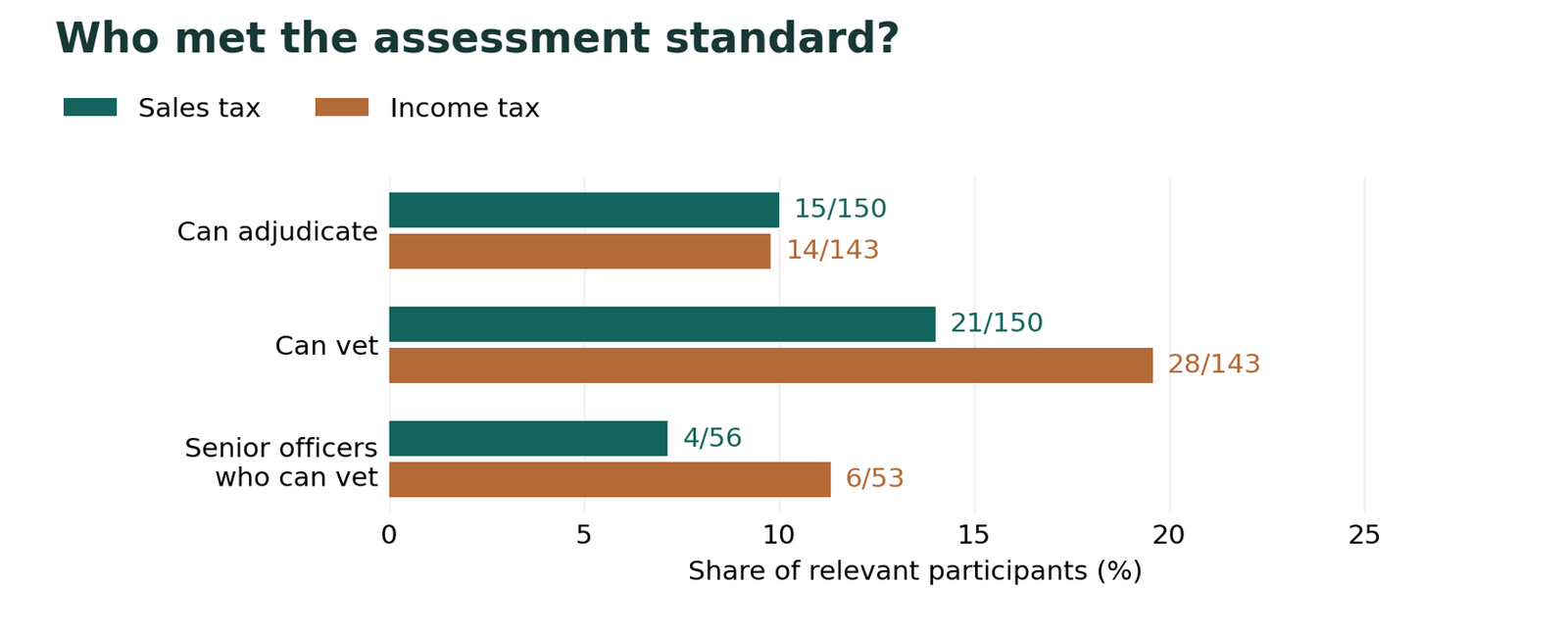
Figure 1. Karachi combined assessment, sections 3–5. Labels show qualifying officers / participants. Vetting and adjudication can overlap.
The most instructive result concerns an error an officer could see simply by reading the heading of an income tax order. In the smaller case, 97 per cent recognised a defect in the power invoked to amend the assessment on the basis of audit findings. Only 19 per cent explained why it defeated the order. In sales tax, just seven per cent and 23 per cent respectively detected, in two separate orders, findings on matters the show-cause notice had never put to the taxpayer. Software can identify a missing date. Whether a taxpayer had a fair opportunity to answer the particular allegation on which liability rests requires someone to read both documents and exercise judgment.
The error can also run against the revenue. A bank deposit may represent a transfer between a business’s own accounts or the proceeds of an undeclared sale. Without tracing the receipt, an officer can tax the same money twice or overlook a taxable supply. The measurable errors planted in the three sales tax orders amounted to Rs439.6 million, of which the average officer would have corrected 27 per cent. In income tax, the corresponding figures were Rs95.4 million and 46 per cent. These are amounts in the examination papers. They include both understated tax and unsustainable demands. Treating them as recoverable arrears would repeat the very mistake the exercise was designed to uncover.
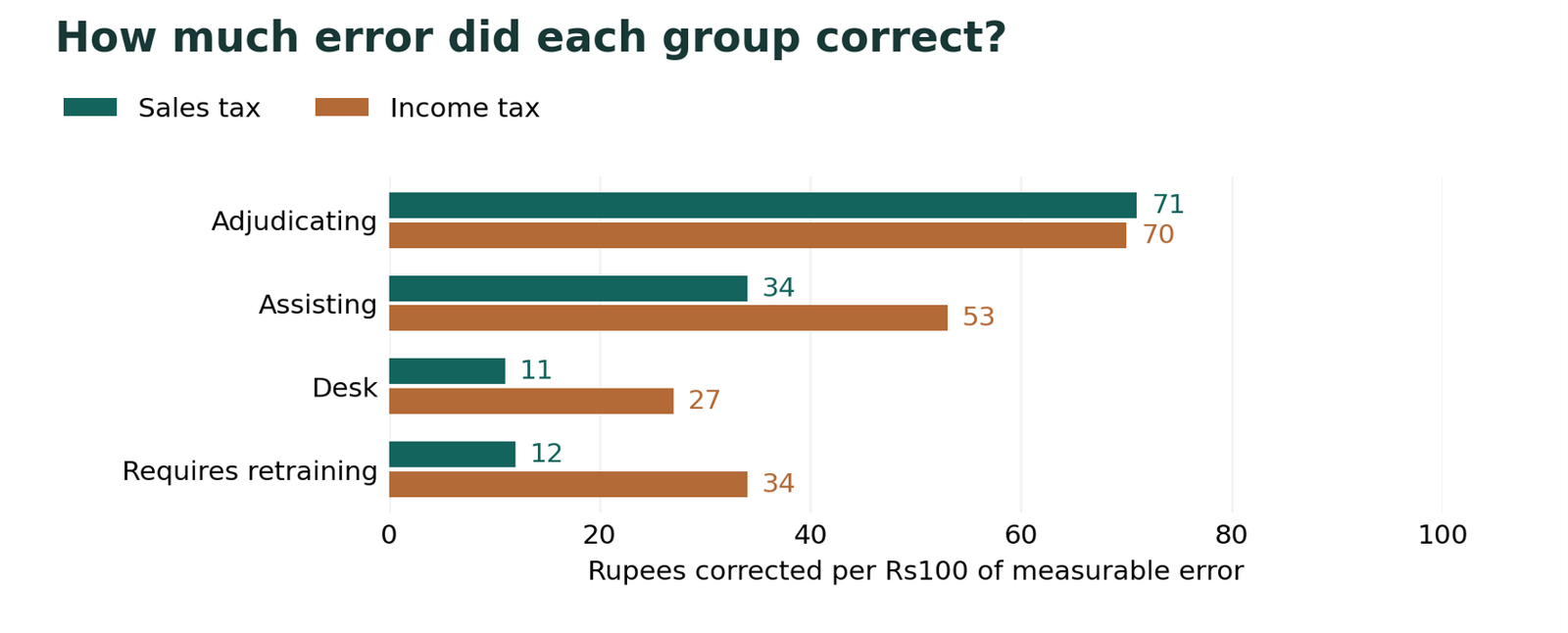
Figure 2. Karachi combined assessment, section 9. Groups follow the report’s work-assignment criteria. Values refer to simulated orders.
The difference between officers is large enough to matter. In sales tax, a participant who qualified to adjudicate corrected Rs71 of every Rs100 of measurable error. One qualified to assist corrected Rs34. Income tax showed a narrower gap. The papers differed, and some serious income tax defects were conspicuous. What carries across both is that protecting the revenue and protecting a taxpayer from an unfounded demand often require precisely the same skill. A system that rewards the face value of an assessment has little reason to distinguish the officer who establishes an omitted sale from one who mistakes a bank transfer for turnover.
Also Read: A Discount, Not a Miracle: How Ukraine Peace Talks Will—and Won’t—Lower Pakistan’s Fuel Bills
Seniority offers a poor shortcut. Deputy Commissioners supplied ten of the 15 officers who met the sales tax adjudication standard and ten of the 14 who met it for income tax. At Karachi’s Large Taxpayers Office, nine participants qualified to vet sales tax orders. None of those nine was a Commissioner or Additional Commissioner. At Regional Tax Office I, none of the 14 sales tax participants qualified to vet. With small numbers and different grade mixes, a league table of Karachi offices would convey false precision. A more pertinent question for the board is whether every office assigning contested cases can name a qualified reviewer and give that reviewer time to read them.
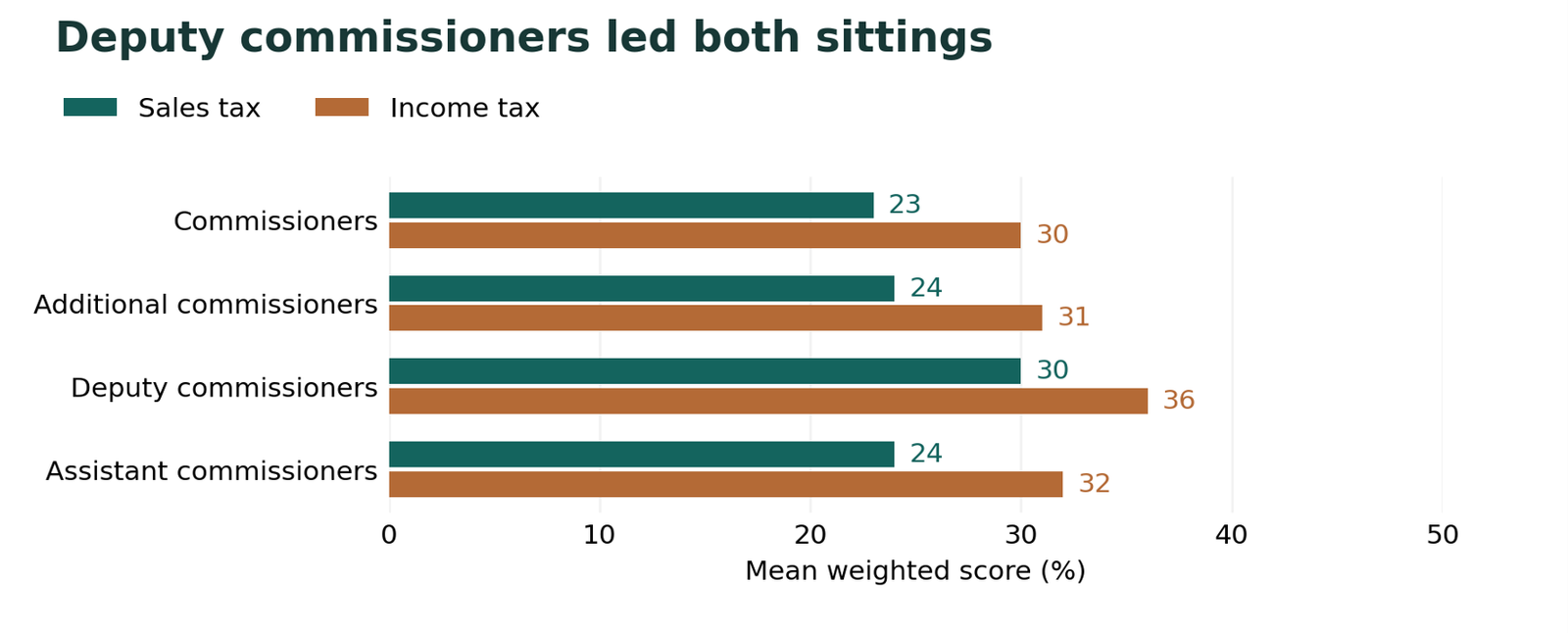
Figure 3. Karachi combined assessment, section 5. Grade averages are rounded as reported. The sitting sizes differ across taxes.
There is a history to this proposal. In Towards Flat, Low-rate, Broad and Predictable Taxes, Huzaima Bukhari and Ikramul Haq linked simpler taxes to a professional National Tax Agency. The second edition treated the agency and an independent appellate institution in separate chapters. Their PIDE volume, Tax Reforms in Pakistan: Historic & Critical View, proposed negotiating the institution through the Council of Common Interests (CCI) and putting its work under the National Economic Council (NEC). Haroon Khawaja and Ikramul Haq’s resource mobilisation presentation before the Senate Standing Committee took the argument into recruitment, public hearings and board composition. The Karachi evidence supplies a test for all these proposals. Can a qualified Deputy Commissioner stop an unsound draft, and can the institution show that similar errors became less frequent afterwards?
The case for a common agency is strongest where a business already deals with more than one jurisdiction. A supplier selling goods and providing maintenance services may have records relevant to both federal and provincial authorities. A shared filing channel could receive the records once, identify the two legal questions and assign each to an officer authorised under the relevant enactment. The invoice would remain available to both administrations, with a record of who accessed it and why. If they disagree over classification, the disagreement should enter a published intergovernmental procedure. The business should receive a reasoned decision and retain its statutory right of appeal. A common portal alone settles none of these questions.
Federalisation begins with the division of legislative power. Parliament charges federal taxes under federal law. The provincial assemblies retain their fields, including sales tax on services and taxes on agricultural income. A province can choose common collection while continuing to determine the charge, exemptions and rates within its competence. Article 147 permits a provincial government, with federal consent, to entrust executive functions to the Federal Government or its officers, subject to ratification by the provincial assembly within sixty days. The instrument must identify the lawful recipient. Where the intended collector is a separate statutory corporation, its authority should be conferred expressly under the relevant legislation. An agreement for exchanging data cannot, by itself, authorise an assessment.
Article 144 offers a legislative route where one or more provincial assemblies resolve that Parliament may regulate a matter outside the Federal Legislative List. Each participating assembly retains power to amend or repeal the resulting Act as it applies to that province. An enabling federal statute, matching provincial laws where appropriate, and published collection agreements could therefore establish a shared service in stages.
Each agreement should specify the taxes entrusted, the handling of refunds, the cost of collection, the date of remittance and the arrangements if a province withdraws. Provincial receipts should be credited to the proper treasury and independently reconciled. The National Finance Commission’s authority over recommendations on divisible-pool distribution under Article 160 is a distinct constitutional matter. An agency board should have no discretion to rewrite an award through accounting entries or deductions.
The federal bargain needs an institutional home. Under Articles 153 and 154, the Prime Minister and all four Chief Ministers sit on the CCI, which regulates policy on matters in Part II of the Federal Legislative List and supervises related institutions. Its remit does not automatically extend to all federal taxes in Part I. The durable course is to place the shared agency expressly within Part II by constitutional amendment and define the scope of the CCI’s control.
The CCI should settle the intergovernmental compact, approve common collection standards and review breaches of remittance obligations. A provincial finance minister should be able to establish when her treasury was credited and raise a documented shortfall through her government.
Article 156 gives the NEC a different responsibility. It reviews the economy and formulates plans to advise federal and provincial governments, with balanced development and regional equity expressly in view. It should examine the agency’s multi-year plans, the cost of compliance in each region and the distribution of service offices and specialist staff. If its approval of strategic plans and investment budgets is to bind the agency, that power should also be written into the Constitution. Daily management should belong to the professional board and chief executive. A minister on either council should have no power to direct the assessment, recovery or refund of a named taxpayer.
Accountability must run directly to the National Assembly and the Senate. Articles 153(4) and 156(5) already require the councils to report to Parliament. The agency’s founding law should separately require its chair to lay audited accounts and a performance report before each House and appear before the relevant committee of either. The National Assembly can test the relationship between the revenue budget and collections. Senators can question delayed provincial remittances, the closure of a district office or persistent differences in refund times. Both should see the same figures and receive written responses to recommendations. The Senate’s scrutiny of administration can be strengthened while preserving the National Assembly’s constitutional role on Money Bills under Article 73.
A workable board would have an independently selected chair, one nominee from each provincial government, a federal nominee and competitively selected members covering public finance, tax law, audit and digital administration. Governments should publish selection criteria, invite applications, disclose interests and subject shortlisted leadership candidates to hearings with members of both Houses. Fixed, staggered terms and removal for recorded cause would protect the board from a change of minister. An audit committee led by a member outside executive management should have access to internal review findings. Tax practitioners and businesses can advise on compliance costs through public consultations. Access to a competitor’s return or a pending assessment should never accompany a seat at the table.
A serving officer should be able to compete for a post and earn authority in a particular function by demonstrating the skill it requires. Use anonymised files, ask candidates to write the decisive paragraph of an order and have independent markers assess their reasoning. Give officers who need assistance supervised work, coaching and a fresh assessment. Examine reviewers as rigorously as new recruits. Some officers in the Karachi exercise identified a relevant legal issue the examiners had not planted. Their knowledge is an asset worth retaining. A reform that loses good officers while reproducing automatic promotion by grade would squander it.
Begin with a willing province and a defined group of taxpayers. Establish a baseline for duplicate notices, refund delays, remittance times and orders set aside for identifiable procedural defects. Track both sustained liabilities and unjustified demands withdrawn before recovery. Publish the costs of the pilot, credit balances and unresolved jurisdictional disputes. Keep pending cases, limitation dates and appeal rights traceable through the transfer. Expand only when an independent reconciliation accounts for the money and sampled files show that decisions have improved. Higher receipts alone could reflect inflation, a rate change or an advance collection from a handful of firms.
When the chair first appears before Parliament, a member should ask for one anonymised case in which a reviewer stopped an excessive demand and another in which an officer proved a concealed sale. A senator should then ask when the province received its share and whether its accounts agree with the agency’s. A board able to answer all three questions from the record will have earned something no reorganisation order can confer: the confidence of the taxpayer, the legislature and the federation’s constituent governments.
Sources and notes
Sales Tax and Income Tax Capability of Inland Revenue Officers, Karachi
Combined training needs assessment supplied to the authors. Sections 2–5 describe the exercise and thresholds, sections 6–7 compare participants and formations, and section 9 quantifies error in the simulated orders. All three figures are drawn from this report.
Towards Flat, Low-rate, Broad and Predictable Taxes
Huzaima Bukhari and Ikramul Haq, PRIME, first edition (2016), chapter 4. The second edition (2020) develops the institutional proposals in chapters 4–5 and includes a draft taxpayers’ bill of rights.
Tax Reforms in Pakistan: Historic & Critical View
Huzaima Bukhari and Ikramul Haq, PIDE, preface, pp. xvi–xvii.
National Tax Authority: Modernizing Pakistan’s Resource Mobilization Ability
Haroon Khawaja and Dr Ikramul Haq, presentation (October 9, 2024) before the Senate Standing Committee on Finance & Revenue, slides 16, 57–65 and 82. Its collection scenarios are proposals.
Constitution of the Islamic Republic of Pakistan
National Assembly text. See Articles 73, 77, 142, 144, 147, 153–154, 156 and 160, and the Fourth Schedule. The board structure, binding oversight powers and transition arrangements described here are proposals.
Council of Common Interests
CCI Secretariat, constitutional mandate under Articles 153 and 154.