

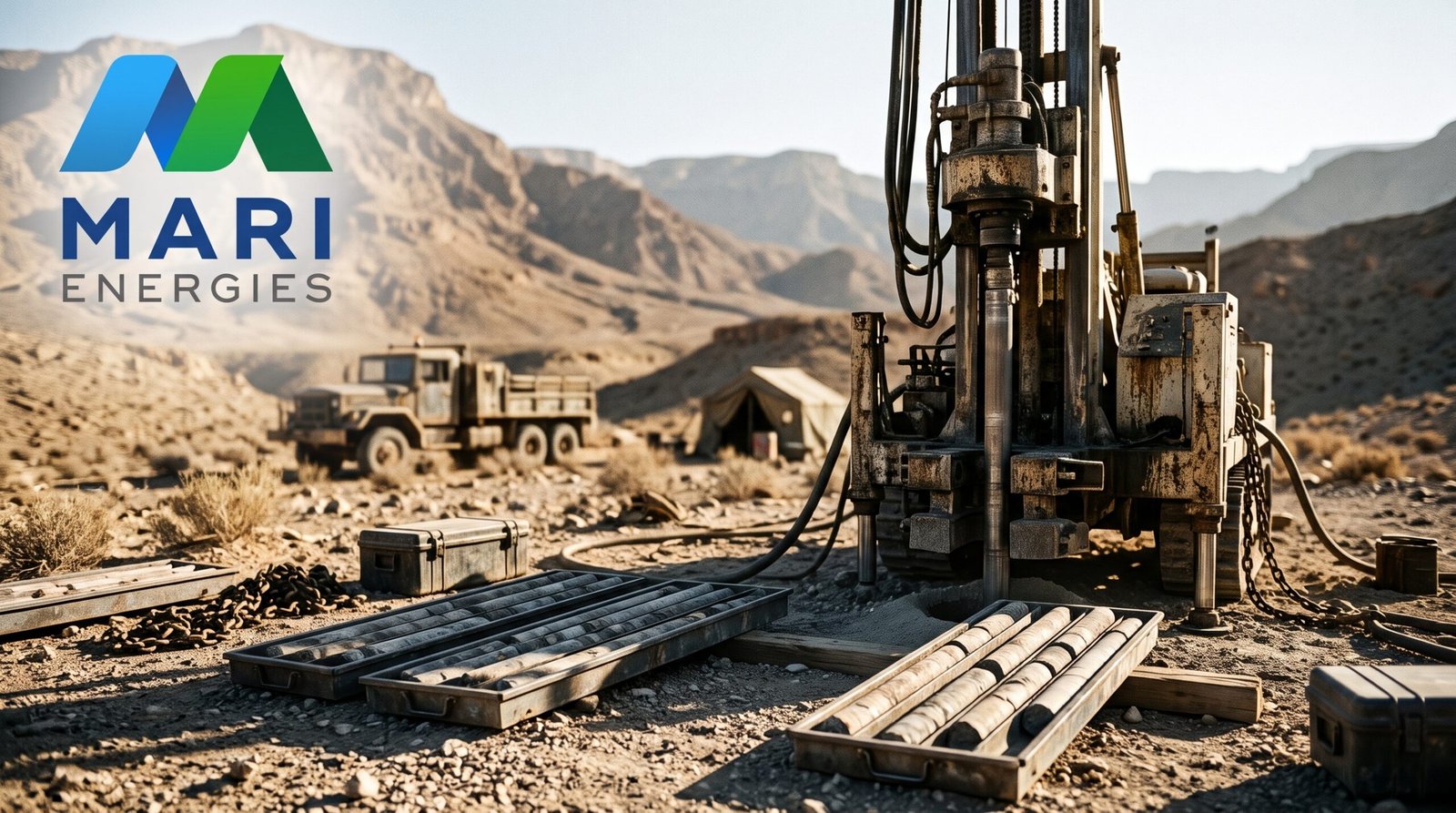
ISLAMABAD: Mari Energies Limited has officially announced a highly significant copper and gold discovery at the East Siah Diq (ESD-1) target in the Chagai district of Balochistan. The breakthrough was achieved following approximately 25,000 metres of rigorous exploration drilling conducted by its wholly owned subsidiary, Mari Minerals (Private) Limited.
In a formal disclosure submitted to the Pakistan Stock Exchange (PSX) on Friday, the energy giant revealed that drilling had successfully identified porphyry copper-style mineralisation across a substantial area of approximately 1.4 square kilometres.
Strategic Location and High-Grade Assays
The ESD-1 discovery is strategically located in the Koh-i-Sultan area, roughly 50 kilometres east of the world-renowned Reko Diq copper-gold mine development project, and 25 kilometres northwest of Nokkundi.
Mari Minerals, which currently holds multiple exploration licences across Chagai, executed the drilling programme in two distinct phases: Phase 1A and Phase 1B. The vertical drill holes extended to depths of approximately 500 metres, where mineralisation was encountered beneath roughly 100 metres of unconsolidated surface sediments.
Initial assay results from Phase 1A indicate the presence of a robust new porphyry copper system. Outstanding continuous intercepts from the drilling include:
- ESD-1-DD-017: 400.25-metre interval grading 0.50% copper and 0.11 grams per tonne (g/t) of gold.
- ESD-1-DD-011: 392.7 metres grading 0.45% copper and 0.14 g/t of gold.
- ESD-1-DD-016: 404.2 metres grading 0.43% copper and 0.12 g/t of gold.
- ESD-1-DD-015: 408.4 metres grading 0.42% copper and 0.11 g/t of gold.
- ESD-1-DD-007: 406.6 metres grading 0.41% copper and 0.11 g/t of gold.
Across the 20 Phase 1A drill-hole intercepts, the company reported copper grades ranging from 0.04% to 0.50%, alongside gold grades ranging from 0.02 to 0.19 g/t. Furthermore, molybdenum was detected, with concentrations reaching 171 parts per million (ppm) in one drill hole. Mari Energies clarified that these intercepts represent the entire length of the intersected bedrock without the application of an artificial minimum cut-off grade.
Also Read: Mobilink Microfinance Bank Inks Deal To Acquire 82.51% Stake In Apna Microfinance Bank
Geological Composition and Future Exploration
Geologically, the copper mineralisation at ESD-1 is primarily associated with chalcopyrite and pyrite, alongside notable observations of bornite. Molybdenum mineralisation linked to molybdenite was also identified in selected holes, coupled with localized copper oxide minerals just beneath the surface sediments. The mineralisation is hosted within porphyritic diorite intrusive rocks, exhibiting multiple intrusive phases and widespread hydrothermal alteration.
Sample preparation and rigorous assaying were conducted by SGS Pakistan, with Mari Minerals implementing strict quality assurance and control (QA/QC) procedures utilizing certified reference materials, duplicates, and blank samples.
Crucially, the mineralised system remains completely open below the current 500-metre drilling depth. The next phase of exploration is expected to push significantly deeper, investigating extensions down to 1,000 metres, alongside additional step-out drilling to assess the outer geographical extents of the mineralisation. Assaying for Phase 1B drill holes is currently underway and is slated for completion in the first quarter of 2027.
Cautionary Forward Outlook
While an initial geological model and resource estimate are in active development, Mari Energies issued a cautionary note reminding investors that the discovery remains strictly in the exploration stage. The current results do not yet officially constitute a classified “mineral resource” or “reserve”.
Further drilling, advanced metallurgical testing, detailed geological interpretation, and comprehensive technical studies will be required to establish the final scale, grade continuity, economic significance, and development potential of the site.
To ensure international compliance, all technical findings were reviewed and verified by Dr. John Mortimer of JM Geoscience Pty Ltd, a qualified geoscientist with over 40 years of relevant porphyry copper exploration experience, in strict accordance with the disclosure principles of National Instrument 43-101.