

ISLAMABAD: Pakistan’s regional trade agreements (RTAs) are heavily imbalanced, failing to generate meaningful export growth and overwhelmingly favoring foreign imports. Since 2000, for every dollar of goods imported from RTA partners, Pakistan has managed to export a mere 20 cents in return.
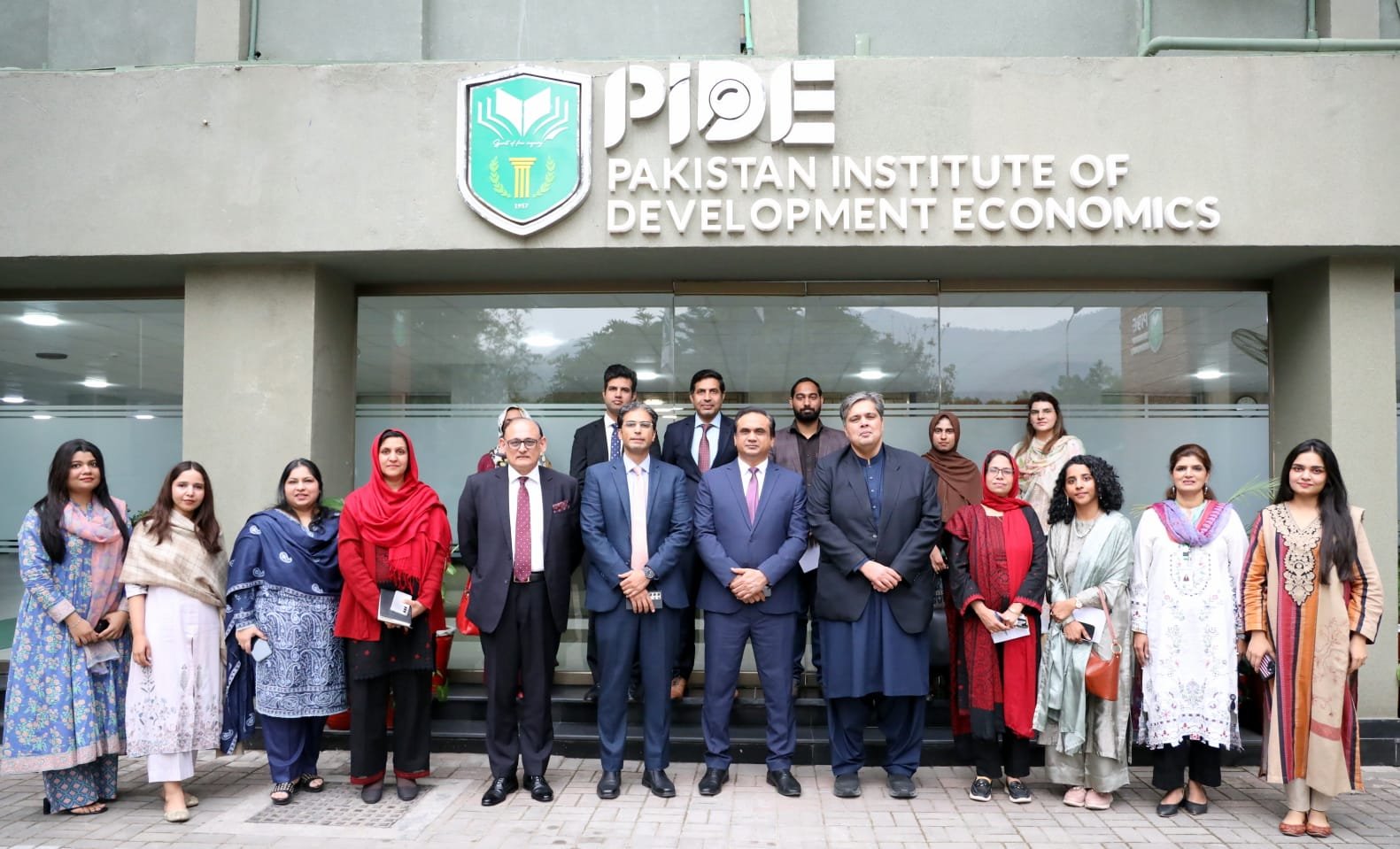
This stark assessment was the focal point of a high-level roundtable hosted by the Pakistan Institute of Development Economics (PIDE) in Islamabad on Friday. Titled “From Signing to Exporting: Exploring the Export-Promoting Role of Trade Agreements,” the session brought together top policymakers, academics, and private-sector leaders to diagnose the chronic failures of Pakistan’s trade diplomacy.
The discussions were anchored in a forthcoming PIDE report authored by Dr. Amjad Masood and Ms. Aneela Zubair from the Center for Trade, Logistics and Infrastructure (CTLI).
The Export-Oriented Framework
Presenting the report’s key findings, Dr. Amjad Masood, Chief of Research and Director at CTLI, outlined a comprehensive “Export-Oriented RTA Framework” designed to overhaul how Pakistan negotiates and leverages its trade deals.
The proposed framework demands a structural shift, including aligning trade negotiations directly with national industrial policy, selecting trade partners based on actual domestic export demand, and securing Sanitary and Phytosanitary (SPS) access alongside traditional tariff cuts. Crucially, the report advocates for deeper, more comprehensive agreements and the establishment of a strict, KPI-based performance review mechanism within the Ministry of Commerce.
Flawed Negotiations And Protectionism
Experts at the roundtable highlighted that Pakistan’s inability to capitalize on trade agreements is deeply rooted in domestic policy flaws.
Dr. Manzoor Ahmad, former Ambassador of Pakistan to the WTO, noted that with the exception of the China-Pakistan Free Trade Agreement, none of Pakistan’s RTAs have been successful. He pointed out that the recent agreement with Türkiye covers a negligible 2% of mutual trade. Dr. Ahmad attributed this persistent failure to Pakistan’s high domestic protectionism, which routinely incentivizes influential business groups to lobby for weaker, less competitive trade agreements.
This disconnect between negotiated terms and actual export potential was further highlighted by Ms. Sarrah Javad of the All Pakistan Textile Mills Association (APTMA). She observed that the market access Pakistan secures often completely misses the tariff lines that actually matter to domestic exporters. Citing Phase II of the China–Pakistan FTA, she noted that while access was granted on 313 new tariff lines, many of these comprised products that Pakistan does not currently export at all.
Also Read: A Discount, Not a Miracle: How Ukraine Peace Talks Will—and Won’t—Lower Pakistan’s Fuel Bills
Competitiveness Over Concessions
Multiple experts stressed that simple tariff reductions are insufficient without underlying industrial competitiveness. Dr. Zafar Mahmood, a professor at NUST, argued that Pakistan’s primary problem is not a lack of trade agreements, but a fundamental inability to translate preferential access into actual export competitiveness.
Dr. Vaqar Ahmed, Member of the Economic Advisory Group (EAG), echoed this sentiment, stating that zero tariffs alone cannot sustain long-term growth without a higher frequency of trade. He suggested that Pakistan should treat FTA offers as a stepping stone toward unilateral liberalization, urging policymakers to open trade with all neighboring countries while heavily focusing on regional connectivity. Furthermore, Dr. Adil Nakhoda, Chairperson of the EAG, urged the government to significantly lower its Most Favored Nation (MFN) tariffs to successfully integrate Pakistan into complex global value chains.
Implementation And Accountability Gaps
The session, moderated by PIDE Senior Research Economist Dr. Uzma Zia, also shed light on the systemic execution failures within the government. Dr. Hassan Butt, Senior Advisor at CEEC, emphasized the lack of inter-ministerial coordination, noting that many Memorandums of Understanding (MoUs) proudly signed through embassies are ultimately abandoned and never implemented.
To combat this bureaucratic inertia, Mr. Javed Kureishi, CEO of the Pakistan Business Council, called for clearly designated leads for RTA review processes, backed by rigorous follow-up protocols. Meanwhile, on the financial execution side, Mr. Sarmad Pretu of the EXIM Bank of Pakistan identified stringent collateral requirements as a primary constraint choking Small and Medium Enterprises (SMEs) from accessing vital export finance.
The actionable insights and policy critiques generated from the roundtable will be integrated into the final version of the PIDE report, which aims to provide the Ministry of Commerce with a definitive roadmap to reform Pakistan’s trade diplomacy.