

Pakistan’s merchandise import bill expanded to US$69.76 billion in FY2025–26—up from US$64.51 billion in the prior fiscal year—pushing the annual goods trade deficit to US$39.62 billion against exports of US$30.14 billion, according to provisional data from the Pakistan Bureau of Statistics (PBS). While headline numbers frequently trigger calls for emergency administrative import curbs, a comprehensive economic analysis by corporate banker and financial analyst Syed Ali Imran contends that policymakers must move away from artificial import compression toward strategic, market-competitive import substitution.
The report emphasizes that not all foreign purchases represent a structural drain; capital goods, LNG, crude oil, and specialized technology are essential inputs that build future productive capacity. Rather than imposing sweeping tariffs that inadvertently protect inefficient domestic monopolies, the central policy objective must be identifying recurring industrial import streams that Pakistani manufacturers can competitively produce at scale.
“Pakistan does not need merely a smaller import bill. It needs a more productive one, where today’s imported technology becomes tomorrow’s domestic value addition and export revenue.”
The Domestic Disconnect: Rising Imports vs. Stagnant Local Output
An examination of half-year import data (July–December FY26) alongside full-year Large Scale Manufacturing Industries (LSMI) performance reveals severe supply-chain mismatches across several core industrial sectors:
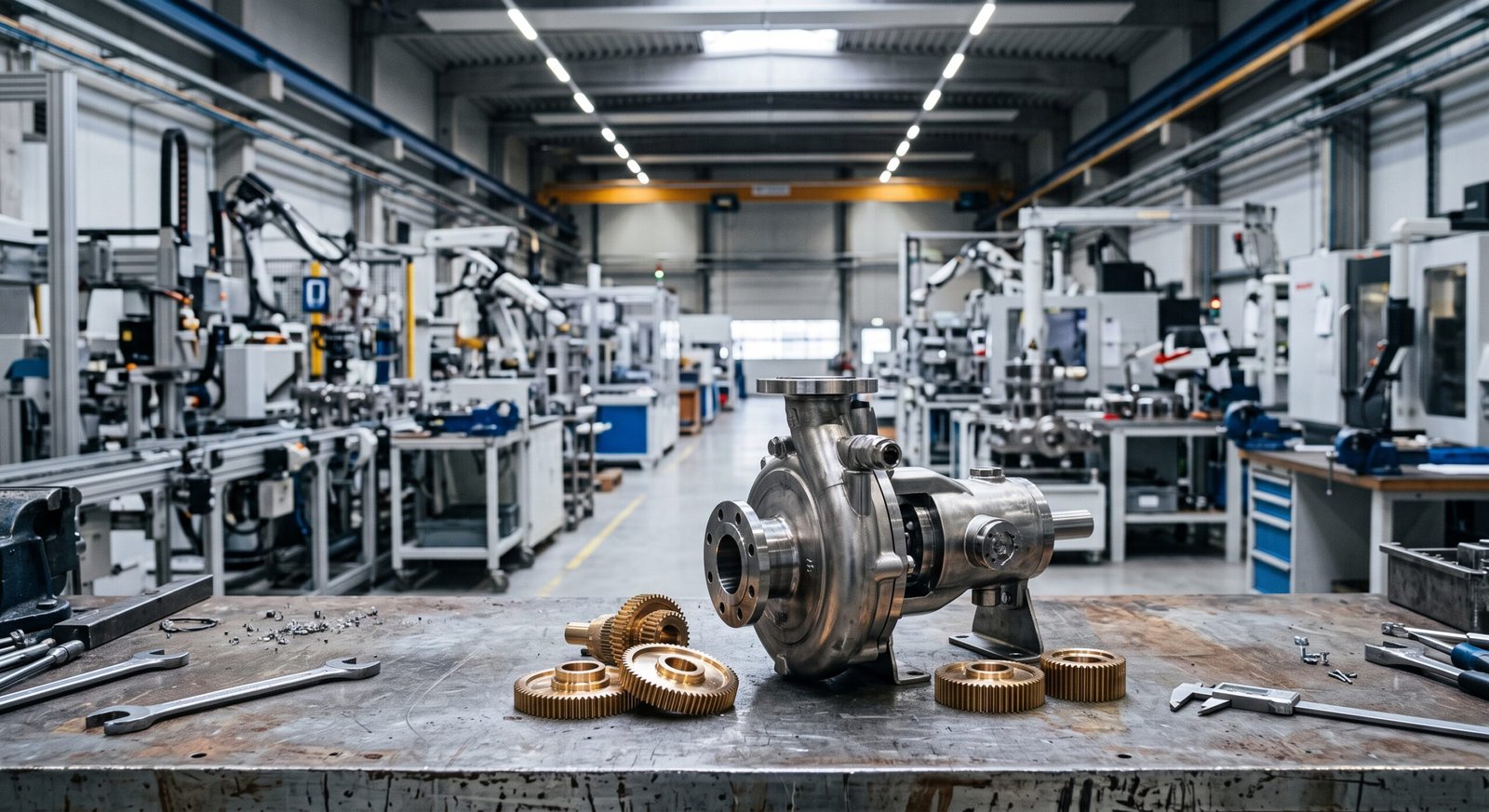
- Machinery & Electrical Engineering: Machinery and transport imports climbed 41.17% to Rs2.01 trillion during July–December FY26. While domestic electrical equipment output grew 22.35%, local production of heavy machinery and equipment expanded by just 2.95%. High-potential localization targets include industrial pumps, motors, switchgear, transformers, and precision engineering spares.
- Metals & Steel Fabrication: Finished metal imports jumped 55.77%, with iron and steel inflows rising 39.20% and scrap imports surging 84.43%. In contrast, domestic LSMI iron and steel output contracted by 7.84%. The report advocates prioritizing downstream steel processing and structural fabrication over raw tariff protection.
- Automotive Localization: Local vehicle production rebounded by 57.77%, yet transport-equipment imports spiked by 113.90%, indicating that domestic auto assembly remains heavily import-dependent. The next phase requires localizing precision transmissions, tooling, dies, automotive electronics, and EV battery components.
- Chemicals & Pharmaceuticals: Chemical imports rose 21.41% to Rs1.51 trillion, while domestic basic chemicals fell 1.25% and chemical products declined 5.15%. Similarly, medicinal imports grew 19.65% (Rs190 billion) even as domestic pharmaceutical production shrank 17.61%, highlighting an urgent need for commercial Active Pharmaceutical Ingredient (API) synthesis.
- Textile Intermediate Inputs: Group imports surged 66.78%—primarily driven by artificial silk and synthetic yarn—while domestic textile output contracted 6.67% (despite wearing apparel growing 5.49%). Upstream investment in man-made fibres (MMF) and technical textiles is critical to paring back imported content in finished apparel.
- Edible Oils & Food: Food imports reached Rs795 billion (+12.45%), dominated by palm oil purchases of Rs559 billion (+30.64%), requiring an agro-industrial push into domestic oilseed cultivation and commercial crushing facilities.
| Industrial Sector | Import Trajectory (Jul–Dec FY26) | Domestic LSMI Production (FY26) | Strategic Localization Priority |
|
Machinery & Transport
|
+41.17% (Rs2.01 trillion) |
Electrical: +22.35% | Machinery: +2.95% |
Switchgear, transformers, industrial pumps, precision parts |
|
Metals & Iron/Steel
|
+55.77% (Scrap: +84.43%) |
-7.84% (Contraction) |
Downstream steel fabrication, engineering components |
|
Automotive
|
+113.90% (Transport inputs) |
+57.77% (Vehicle assembly) |
Tooling/dies, precision transmissions, EV battery supply chain |
|
Chemicals
|
+21.41% (Rs1.51 trillion) |
-1.25% (Chemicals) | -5.15% (Products) |
Packaging resins, engineering plastics, industrial consumables |
|
Pharmaceuticals
|
+19.65% (Rs190 billion) |
-17.61% (Contraction) |
API development, quality certifications, bulk production |
|
Textile Supply Chain
|
+66.78% (Synthetic yarn/fibre) |
-6.67% (Apparel up +5.49%) |
Man-made fibres (MMF), technical textiles, specialized dyes |
Regarding the US$16.86 billion petroleum import bill, the analysis points out that conventional substitution is impractical; addressing fuel imports demands a broader energy-transition strategy centered on grid efficiency, renewable power, domestic refining modernization, and electric mobility.
“The question is no longer how many vehicles Pakistan assembles. It is how much domestic value Pakistan creates inside each vehicle.”
Unlocking Indirect Exporters: The Missing Link in Trade Financing
The analysis identifies an underutilized institutional tool already embedded within the central bank’s regulatory framework: the State Bank of Pakistan’s Export Finance Scheme (EFS Part-I). Under this mechanism, an Indirect Exporter (IDE)—a local small or medium-sized enterprise (SME) supplying raw materials, parts, or packaging to a direct exporter—is legally entitled to pre-shipment financing against an Inland Letter of Credit (ILC) or a Standardised Purchase Order (SPO) for up to 120 days.
Despite being operational, the scheme suffers from low market uptake due to:
-
Limited awareness across domestic SME clusters.
-
Burdensome transaction-structuring and documentation hurdles.
-
Commercial bank hesitation regarding SME credit and performance risk.
-
Friction in establishing auditable export linkages between buyers and secondary vendors.
To resolve these bottlenecks, the author proposes establishing an Export Supply-Chain Certification Framework. Under this structure, tier-one direct exporters would formally verify their domestic SME suppliers within a standardized registry, confirming that supplied intermediate goods directly substitute an import or embed into an exported product
Under the proposed model, commercial banks would originate working capital loans under standard credit assessment, while the Export-Import Bank of Pakistan (Pak EXIM) would step in as a catalyst by providing concessional refinancing windows, credit enhancement, and partial risk-sharing guarantees.
Performance-Linked Subsidies Over Protectionism
To protect public finances, the framework recommends that any government markup support or fiscal subsidies remain strictly capped by the Ministry of Finance and allocated solely on verified Key Performance Indicators (KPIs):
- Demonstrated foreign exchange savings from replaced imports.
- Audited domestic value addition within export products.
- Measurable technology transfer and industrial productivity improvements.
- Formal employment creation within documented supply chains.
The report concludes that Pakistan’s industrial turnaround cannot rely on cyclical import compression, which chokes economic growth, nor on indefinite tariff shields that breed inefficiency. By linking concessional trade finance directly to secondary SME suppliers, Pakistan can progressively replace avoidable imports, preserve foreign exchange reserves, and integrate local manufacturing into global value chains.