

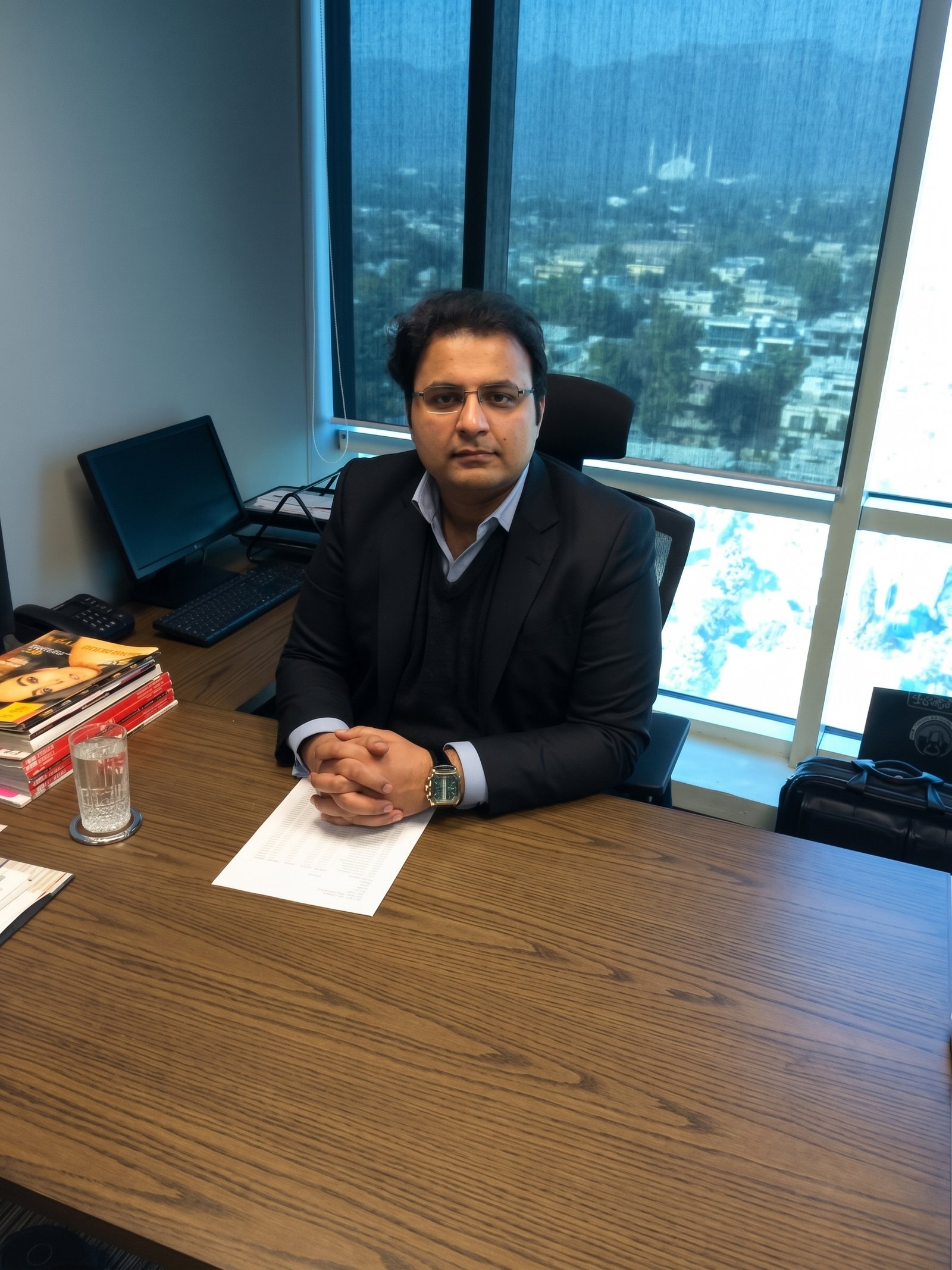
Pakistan’s café industry has changed significantly since Second Cup opened its first outlet in the country in 2012. What was once a relatively small market dominated by a handful of organised café operators has evolved into a highly competitive landscape featuring international chains, established Pakistani brands and a growing number of independent specialty coffee shops.
Second Cup Pakistan, however, has expanded well beyond its original premium café positioning. According to Founder and Managing Director Asim Majid, the company now operates more than 70 stores across 18 cities, with its expansion increasingly focused on Tier-II and Tier-III markets, smaller formats, café-bistro concepts and a more flexible franchise model.
In an exclusive interview with The Scoop, Majid discusses the thinking behind Second Cup’s entry into Pakistan, the changing economics of the café business, the challenges of maintaining international standards across franchises, the rise of Tier-II markets and the brand’s plans for the next phase of expansion.
The Scoop: You brought Second Cup Coffee Company to Pakistan in 2012, when the country’s organised café culture was still relatively young. Looking back, what did you see in the Pakistani market at that time that convinced you that an international coffee franchise could succeed here?
Asim Majid: When we opened in 2012 at Centaurus Mall in Islamabad, Pakistan had very few organised café experiences. What we saw was a gap: a rising middle and upper-middle class, a young population and a real desire for international brands and experiences, but very limited options in the market.
Globalisation, increased international travel and exposure to international markets meant people knew what a proper coffee chain looked like, and they wanted that experience at home.
Second Cup, as a Canadian brand founded in 1975, gave us the credibility to fill that gap early. The Canadian High Commission in Pakistan extended strong support and continues to do so, which sent a strong signal that this was a serious international entry, not a one-off experiment.
The Scoop: Second Cup has evolved from a premium café chain into a broader franchise-focused network. What is the long-term market you are building for — major urban centres, Tier-II cities, or eventually almost every major Pakistani market?
Asim Majid: We are not building only for Lahore, Karachi and Islamabad.
We started with about eight cities and 25 outlets by 2019. We have now grown to more than 70 stores by 2026 across 18 cities in Pakistan and have entered Tier-II markets such as Sargodha, Daska, Gujrat and Gujranwala.
The long-term vision is a layered network. Major urban centres carry the flagship brand presence and standard stores, while Tier-II cities get stores that reflect a true lifestyle choice for consumers.
These Tier-II stores are large, commercial and social spaces, effectively creating broader product reach and brand experiences.
Eventually, more efficient formats and smarter stores will give most Pakistani markets with real disposable income some form of Second Cup.
The key word is “layered” — one model does not fit every city.
The Scoop: You have recently highlighted Second Cup’s expansion into markets such as Sargodha and Daska. What have you learned from taking a premium coffee brand into Tier-II cities?
Asim Majid: The biggest lesson is that Tier-II consumers are not less willing to spend — they are more careful about what they get for that spend.
Our Daska outlet has a very high rating, around 4.9 on Google, which shows genuine appetite for a proper branded café.
But reviews also show that customers there judge us partly by local food standards. One reviewer questioned whether a pesto sandwich was “too local” for Second Cup.
That tells you something important: outside the big three cities, people want the international brand experience, but they also want value they can recognise.
Preferences are not fundamentally different, but the price-value calculation is much tighter.

The Scoop: Pakistan’s café industry has become dramatically more competitive, with international chains, established local brands and dozens of independent specialty cafés competing for the same consumer. What is Second Cup’s strongest competitive advantage today?
Asim Majid: It is not the international brand alone — there are many international brands now.
Our strongest advantage is the combination of an early-established multi-city network and a flexible format matrix.
We operate flagship cafés, café-bistro formats, in-line stores, kiosks and other models under one brand. That means we can match the format to the location and the city tier, which single-format local brands and independent specialty cafés cannot easily copy.
Brand recognition gets people in the door; format flexibility is what makes the economics work.
The Scoop: Franchising is central to Second Cup Pakistan’s growth strategy. How do you maintain quality and brand standards across independently operated franchises?
Asim Majid: One of the clearest signals we have sent is that a very high proportion of our ingredients are imported directly from Canada.
That centralises taste and quality control and makes it harder for any franchise partner to quietly substitute local inputs.
The biggest challenge is exactly that pressure. A franchise partner in a smaller city faces higher relative costs and may be tempted to localise too aggressively.
When a partner does not meet standards, the master franchise has to act firmly — through retraining, corrective plans and, in serious cases, termination rights.
Brand consistency is not negotiable.
The Scoop: The economics of running a café in Pakistan have changed considerably because of inflation, rents, energy costs, imported inputs and exchange-rate pressures. How have these factors affected profitability?
Asim Majid: It has been severe.
A club sandwich at a Lahore outlet can cost around Rs2,200–2,300. Imported ingredients, electricity, rent and currency depreciation all hit at once.
The traditional premium café model — large space, full service and a wide menu — has had to be rethought.
We have not abandoned it in prime locations, but we have definitely moved towards formats and menus that protect margins better.
Premium pricing has a ceiling in this environment, and franchise investors need to see a realistic payback period.
The Scoop: You have also been experimenting with smaller formats, kiosks, B2B partnerships and different store concepts. Does the future of Pakistan’s café industry lie in large destination cafés, or do smaller formats offer better returns?
Asim Majid: Both, but for different purposes.
Large destination cafés still matter for brand building in major cities. But for franchise investor returns, smaller and more efficient formats are increasingly where the better economics sit — mall kiosks, compact café-bistro units and formats that do not require huge footprints or heavy staffing.
In a market like Sargodha, we are not opening a massive destination flagship. We are opening a well-located, well-run outlet that serves local demand efficiently.
The Scoop: Coffee consumption in Pakistan is changing, particularly among younger consumers exposed to specialty coffee, international café chains and new brewing techniques. How is Second Cup responding?
Asim Majid: The café-bistro format is a direct response — paninis, tacos, loaded fries and lighter meals alongside coffee.
But honestly, a large part of our younger customer base still comes for beverages and shakes as much as for specialty coffee.
So product development is a mix. The international brand template sets the quality baseline and the core coffee identity, but local consumer behaviour drives the food menu, sweetness profiles and social atmosphere.
We are not trying to be a pure specialty coffee bar.
We are a branded social space where coffee is the anchor.
The Scoop: After more than a decade of operating an international franchise in Pakistan, what is the biggest lesson you have learned about doing business in the country? If you were launching Second Cup Pakistan again today, what would you do differently?
Asim Majid: The biggest lesson is that being first does not protect you forever.
In 2012, we were almost the only serious premium option. By 2025, we were competing with international chains, strong local brands and dozens of independent specialty cafés in the same cities.
If I were launching Second Cup Pakistan again today, I would build the small-format and Tier-II strategy from the beginning, in parallel with the flagship rollout, rather than treating it as a later phase.
I would also build the supply-chain localisation plan earlier, so we are less exposed to exchange-rate shocks.
The Scoop: What is the next major chapter for Second Cup Pakistan?
Asim Majid: The next chapter is deeper penetration of Tier-II and Tier-III cities with smaller, more efficient formats, plus a stronger café-bistro network in the major cities.
More kiosks, more mall-based compact units and a tighter food-led offering that competes with local casual dining as much as with coffee chains.
Drive-throughs and large-scale local manufacturing are possibilities, but they are not the immediate priority.
The immediate priority is making the franchise model work profitably across very different city tiers.
The long-term ambition is a Pakistani-developed Second Cup model that is efficient enough to be replicated in other similar emerging markets and have a broader reach across all major cities in Pakistan.