

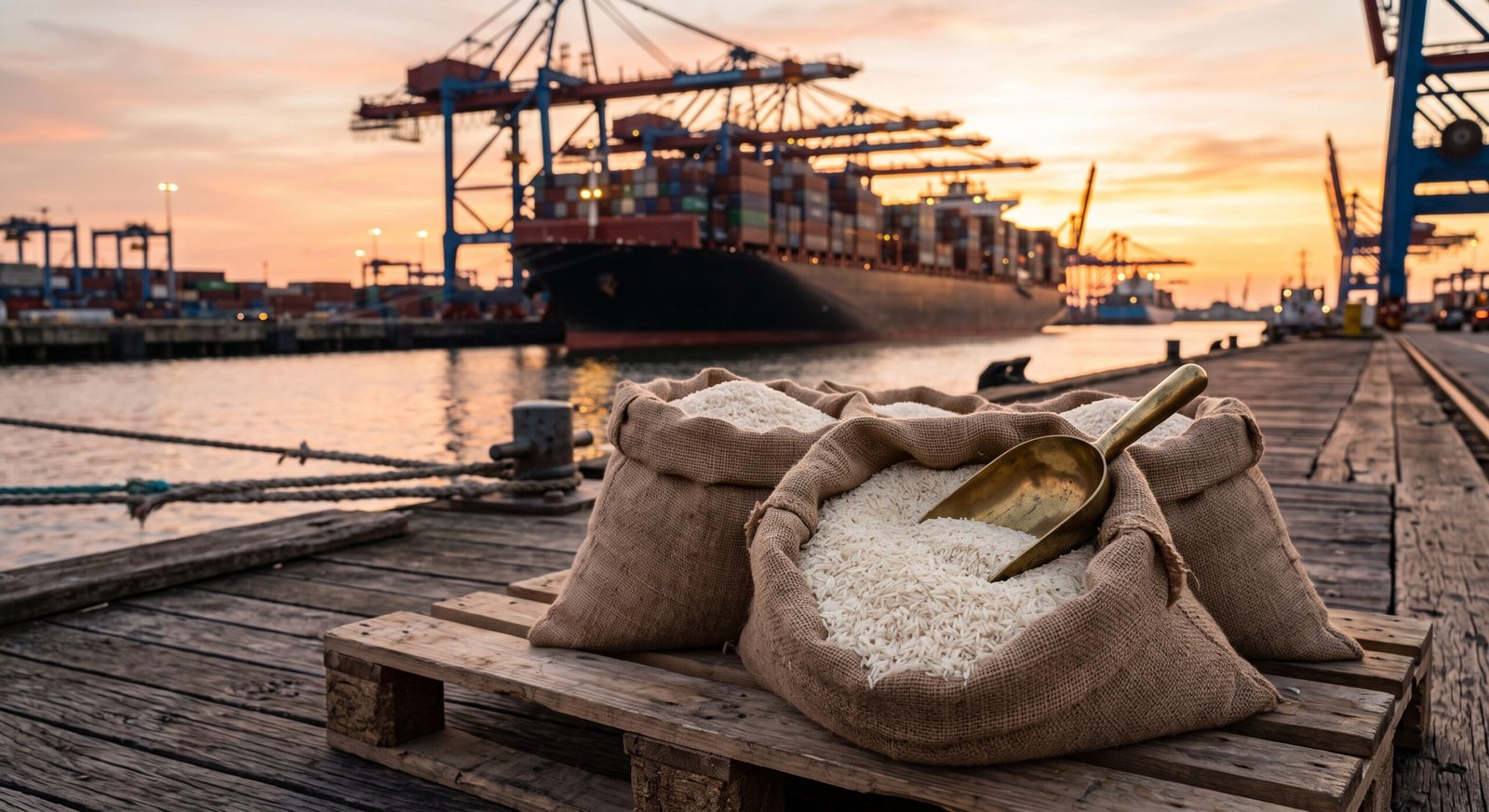
Pakistan has finalized arrangements to export an additional 70,000 metric tonnes of rice to Malaysia between October and December 2026, following sustained diplomatic and trade engagements between the two nations. According to a statement issued by the Prime Minister’s Office on Friday, relevant federal ministries and trade authorities secured the supplementary export quota on the direct instructions of Prime Minister Shehbaz Sharif.
Welcoming the development, Prime Minister Sharif stated that the expanded rice shipments would directly benefit local farmers while bolstering foreign exchange inflows for the national economy. He commended the federal team behind the bilateral breakthrough, specifically acknowledging Deputy Prime Minister and Foreign Minister Ishaq Dar, National Food Security Minister Rana Tanveer Hussain, Commerce Minister Jam Kamal Khan, and the federal secretaries for commerce and national food security.
“Expanding access to international markets for Pakistani agricultural commodities is the government’s top priority as we continue pursuing export-led economic growth.”
In a separate high-level meeting chaired on Friday, the prime minister reviewed ongoing regulatory reforms designed to streamline business operations, attract domestic and foreign investment, and build a more transparent regulatory environment. To eliminate bureaucratic bottlenecks and harmonize business rules nationwide, the prime minister issued several key directives and reviewed ongoing federal initiatives:
- National Regulatory Registry: Authorities were directed to establish a comprehensive digital regulatory registry that consolidates all federal and provincial rules, compliance requirements, and regulations under a single system.
- Nationwide Ease of Doing Business: The prime minister called for the uniform implementation of the Ease of Doing Business Act across all provinces to ensure enterprises receive consistent facilities nationwide.
- Simplification of Trade Policy Orders: The federal government is actively streamlining both the Export Policy Order and the Import Policy Order to reduce friction for traders.
- Modernized Facilitation Centres: Officials briefed the meeting on the upgradation of the Business Facilitation Centre, which is being modeled on the Punjab government’s digital E-BIZ platform.
- SIFC Coordination & Third-Party Audits: The Special Investment Facilitation Council (SIFC) is coordinating regulatory alignment across all provinces, Azad Jammu and Kashmir (AJK), and Gilgit-Baltistan, while also engaging the private sector to maximize awareness and utilization of new government facilities. Additionally, independent third-party validation will be conducted to audit the real-world impact of these reforms.
- Pointing to recent institutional overhauls at the Drug Regulatory Authority of Pakistan (DRAP) as a benchmark, Prime Minister Sharif instructed other federal regulatory bodies to fast-track similar modernization initiatives to support private-sector expansion.
“The government is simplifying the Export Policy Order and Import Policy Order while establishing a unified regulatory registry to provide businesses with transparent, consistent facilities across the country.”