

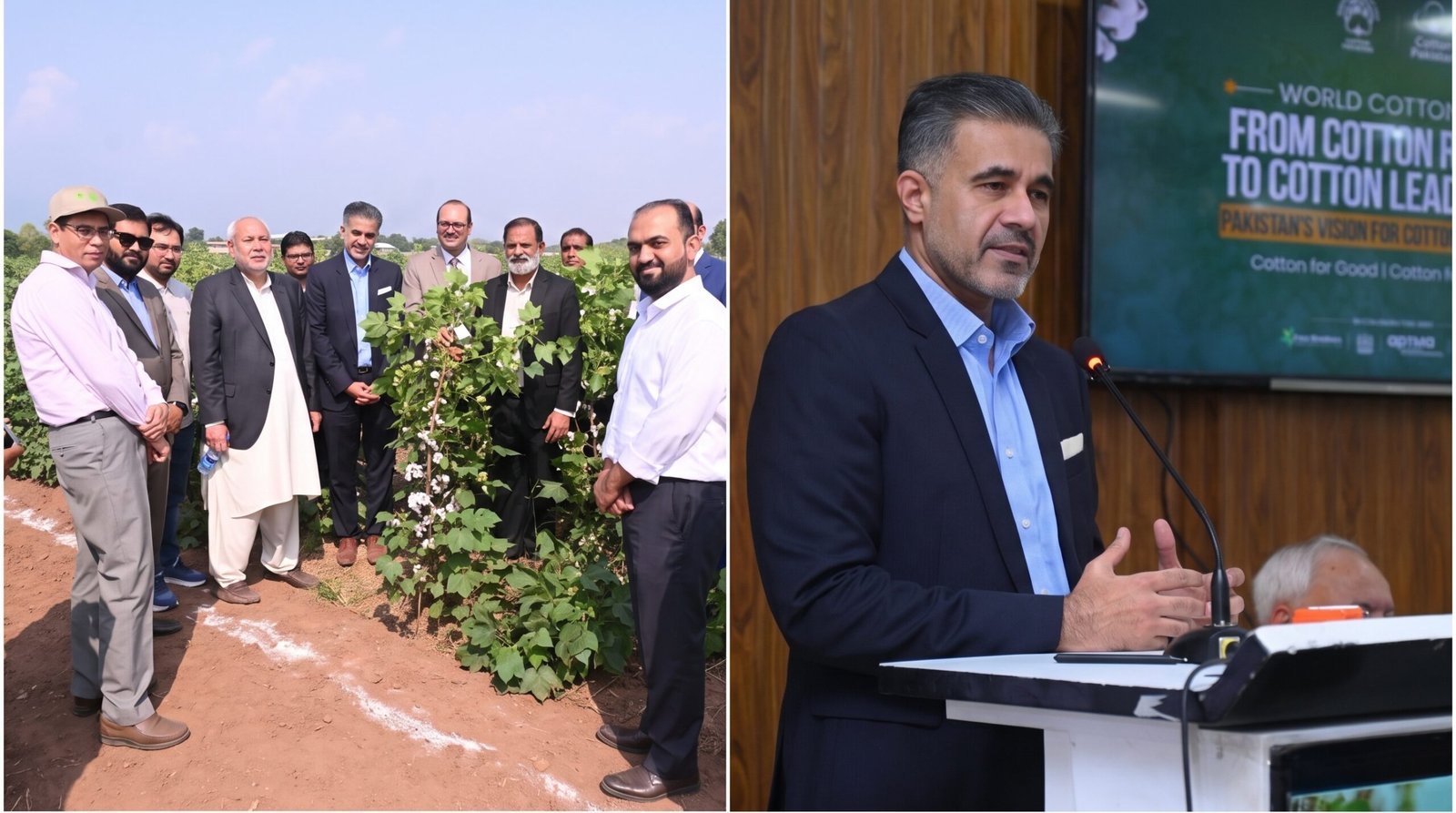
Pakistan’s agricultural planners are demanding the immediate digitization of the national seed registration system and the fast-tracked approval of advanced genetic cotton varieties to stabilize declining domestic yields. Prime Minister’s Coordinator on Agriculture and Food Security, Ahmed Umair, identified that limited access to modern agricultural technology remains a primary structural constraint on national crop production.
The strategic stabilization of the sector is heavily reliant on the operationalization of the “Pakistan Cotton Board”. Although a high-level committee led by the Deputy Prime Minister approved the entity’s establishment on October 22, 2025, the government has yet to issue the formal legal notification required to activate the regulatory body, according to industry representatives.
“Cotton must be profitable for the farmer and dependable for industry.”
During strategic consultations in Islamabad, key government and corporate stakeholders outlined an immediate framework for sector recovery:
-
Ahmed Umair mandated the implementation of an online registration system to digitally monitor seed trial data across all regulatory evaluation stages.
-
Engr. Jawed Salim Qureshi, Chairman of Four Brothers Group, demanded expedited regulatory clearance protocols for improved genetic planting materials, specifically “3G cotton technology,” to ensure rapid deployment to commercial farmers.
-
Former All Pakistan Textile Mills Association (APTMA) Chairman Kamran Arshad stressed that securing domestic cotton output through the pending Cotton Board is critical to sustaining the textile industry, which anchors national employment and exports.
To enforce standard trading practices and strengthen quality control, APTMA and the Pakistan Cotton Ginners Association have formally introduced a standardized “Cotton Sales and Purchase Contract”.
Recent field trials utilizing advanced seed genetics and satellite monitoring mechanisms, tested by progressive growers like Senator Sehar Kamran in the Sindh province, have demonstrated strong harvest viability. This reinforces the commercial necessity of integrating modern agronomic data directly into farm-level operations.