

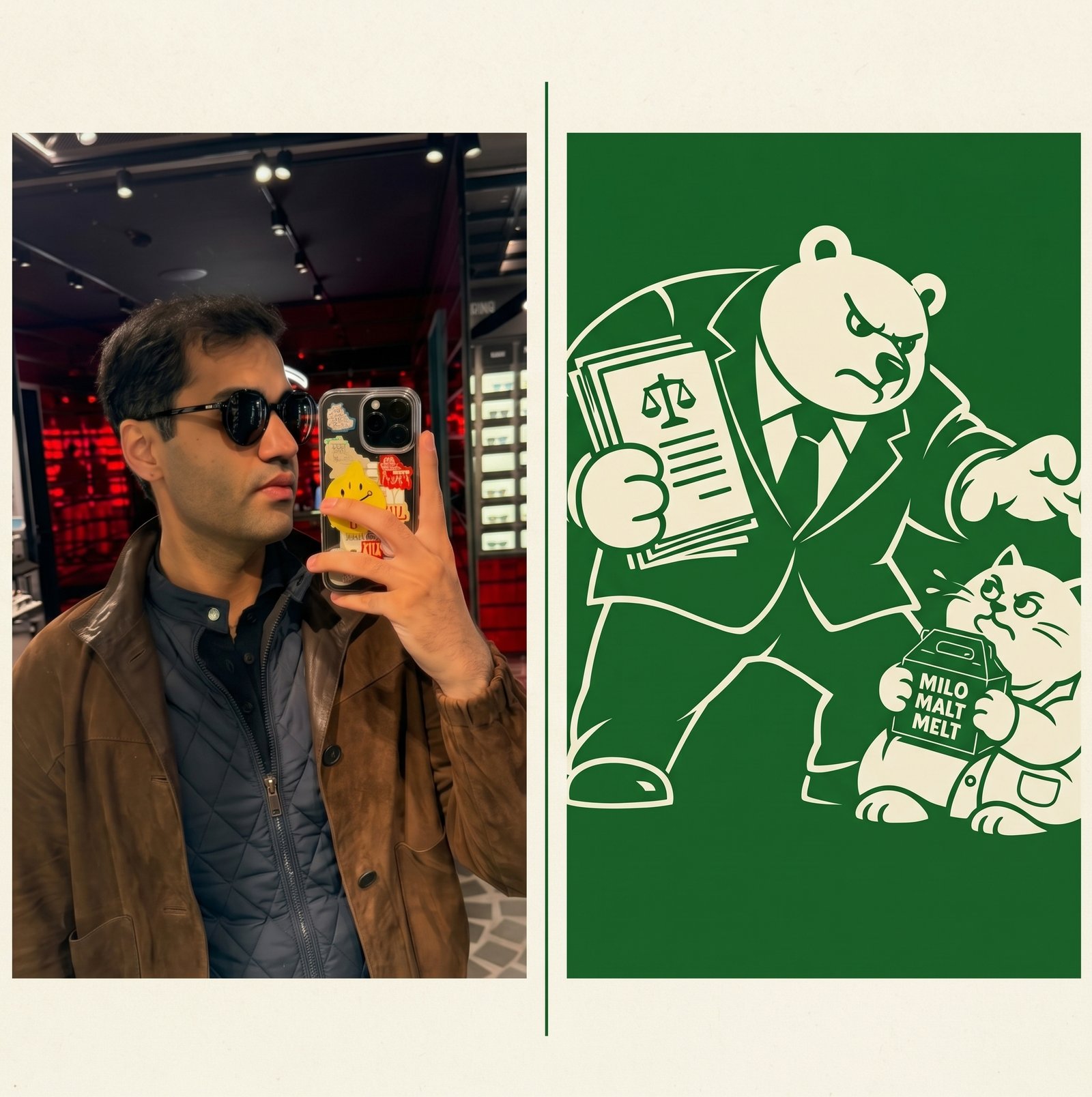
Pakistani food entrepreneur Murrad Gillani is severing all supply chain ties with Société des Produits Nestlé S.A., rapidly localizing ingredient production for his portfolio of brands following an intellectual property dispute over the commercial use of “Milo” and “Cerelac”.
Operating under Murrads.pk, the company—which manages retail brands including Dezāto, Dumbo Donuts, and FRIED—will completely strip Nestlé ingredients from its commercial kitchens within 2 to 3 days. The operational pivot comes in direct response to a legal notice issued by the Swiss multinational on September 23, alleging trademark infringement.
“The words CERELAC and MILO communicate to consumers the ingredient incorporated into the relevant baked product and do not identify Nestlé as the manufacturer or source of the finished baked product.”
In a formal rebuttal dated September 29, legal counsel for Murrads.pk firmly rejected the infringement claims, citing a documented history of B2B interaction. The defense asserts that Gillani met with Nestlé representatives at their Lahore headquarters on June 23, 2025, explicitly disclosing his intention to produce baked goods utilizing Nestlé products as base ingredients.
Key operational shifts triggered by the legal friction include:
-
Supply Chain Localization: Immediate termination of procurement from Nestlé, shifting entirely to proprietary formulations to eliminate vendor dependency.
-
Product Rebranding: Immediate discontinuation of the top-selling “MILO COOKIE” and “CERELAC COOKIE” product lines.
-
Proprietary Development: Launch of “MOTO MALT MELT,” a fully localized, in-house malt powder designed to bypass multinational supply chains.
View this post on Instagram
The legal pushback from Murrads.pk hinges on the concept of descriptive fair use. Gillani’s representatives argue that the trademarked names were utilized strictly to identify flavor profiles and raw materials, not to falsely suggest corporate sponsorship or endorsement.
The defense further claims that Nestlé personnel toured Murrads.pk production facilities, raised no intellectual property objections, and actively facilitated the procurement of the exact ingredients now contested in the legal notice. Commercially, Murrads.pk contends that its operations functioned as a net positive for Nestlé’s regional volume, acting as a downstream buyer that contributed to the conglomerate’s sales rather than cannibalizing its market share.
Despite the ongoing legal dialogue, Gillani’s enterprise has finalized the strategic decision to permanently restructure its ingredient sourcing, prioritizing in-house manufacturing to neutralize future leverage from multinational corporations.