

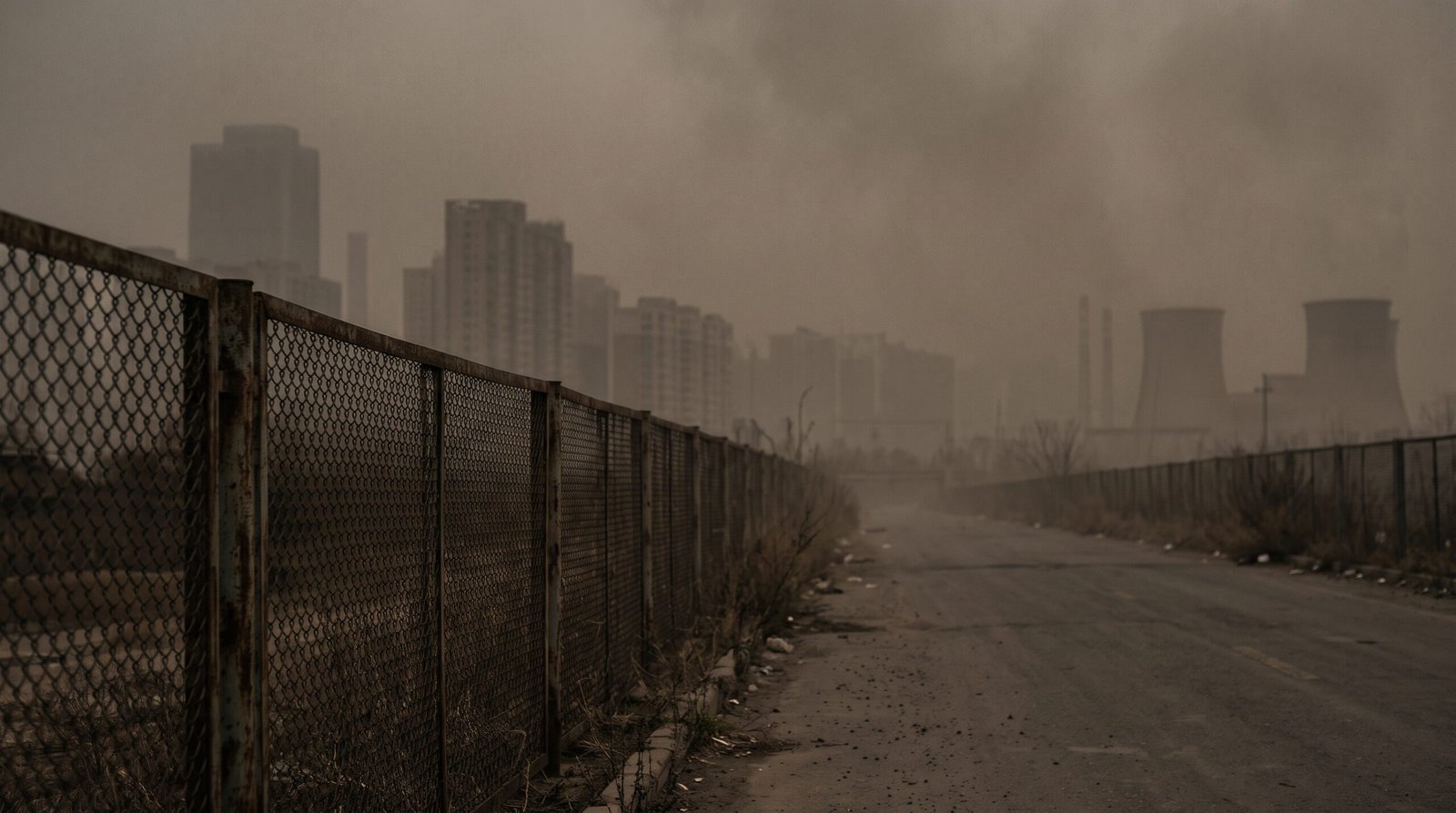
LAHORE, November 9, 2026: Lahore’s worsening smog crisis has once again exposed the scale of Punjab’s environmental challenges, with the provincial capital recording a hazardous Air Quality Index (AQI) of 563 on Monday morning, despite successive government interventions and a $300 million World Bank-backed programme intended to deliver long-term improvements in air quality.
According to IQAir data reported on Monday, Lahore’s AQI reached 563 at approximately 8am, while concentrations of fine particulate matter, known as PM2.5, stood at 357 micrograms per cubic metre.
The readings placed Lahore among the world’s most polluted cities, renewing concerns about public health, environmental governance and the effectiveness of measures introduced to combat recurring winter smog.
The deterioration comes as Punjab Chief Minister Maryam Nawaz’s administration continues implementing initiatives involving cleaner public transport, agricultural mechanisation, industrial inspections, environmental monitoring and restrictions on polluting activities.
However, the latest figures suggest that the province remains vulnerable to severe pollution episodes, raising an important question: are Punjab’s environmental policies producing sustainable reductions in emissions, or is the government still struggling to control a crisis that has developed over decades?
First Week Of November Exposes Scale Of Pollution Crisis
A separate assessment by the Pakistan Air Quality Initiative (PAQI), reported on November 9, found that Lahore experienced unhealthy to hazardous air quality during the first week of November.
According to the assessment, the city’s average AQI stood at 268, with pollution reaching very unhealthy levels on five days and hazardous levels on two.
Average PM2.5 concentrations reached 215.5 micrograms per cubic metre during the period.
The analysis also indicated that PM2.5 concentrations were approximately 25% higher than during the corresponding period in 2025.
These findings are particularly concerning because the World Health Organisation recommends a 24-hour PM2.5 guideline of 15 micrograms per cubic metre.
The first week’s reported average was more than 14 times that guideline value, although a multi-day average and a 24-hour guideline are not directly equivalent measures.

The latest evidence demonstrates that Lahore’s smog crisis is not merely a matter of occasional pollution spikes.
It reflects sustained exposure to harmful particulate matter, with serious implications for public health and economic activity.
$300 Million Clean Air Programme: Where Does Punjab Stand?
In March 2025, the World Bank approved $300 million in concessional financing for the Punjab Clean Air Programme, designed to strengthen air quality management and reduce pollution across Lahore Division.
The programme, scheduled to run until June 2030, is intended to support a 35% reduction in PM2.5 concentrations over the next decade.
Approximately 13 million residents of Lahore Division are expected to benefit from improved air quality.
The initiative includes major investments in cleaner transport, agricultural practices, environmental monitoring and institutional capacity.
Among its planned interventions are the deployment of 600 electric buses, provision of 5,000 super seeders to reduce agricultural residue burning, establishment of additional regulatory-grade air quality monitoring stations and development of fuel quality testing facilities.
The programme also envisages stronger vehicle emissions controls and improvements in environmental data collection.
These measures represent a significant opportunity to address the structural causes of Punjab’s pollution problem.
However, the approved financing does not mean that the entire $300 million has already been spent.
The programme remains in its implementation period, and its effectiveness must be assessed against actual disbursements, completed projects and independently verified environmental outcomes.
The Punjab government should therefore make public the programme’s expenditure, procurement progress, implementation milestones and measurable reductions in pollution attributable to its interventions.
Also Read: Powering Partition: A History Of Electricity In Rawalpindi & Murree (1831–1947)
Pollution Fell 27% In October — But Weather-Adjusted Improvement Was Just 4%
One of the most significant findings in the current smog debate concerns the difference between observed improvements in air quality and the effects of government interventions.
According to PAQI, average PM2.5 concentrations across 26 monitoring locations declined by approximately 27% in October 2026 compared with October 2025.
The improvement initially appeared substantial.
However, after accounting for meteorological conditions, including atmospheric mixing patterns that influence how pollutants disperse, the estimated improvement narrowed to approximately 4%.
This distinction matters because favourable weather can temporarily reduce pollution concentrations even when underlying emissions remain high.
The findings do not establish that government initiatives have failed.
Nor can the remaining 4% improvement be attributed exclusively to government policy.
Instead, the analysis highlights the importance of distinguishing changes in emissions from changes in weather conditions when assessing environmental performance.
The Punjab government has separately reported improvements in pollution indicators and pointed to its monitoring and enforcement initiatives as evidence of progress.
Nevertheless, the return of hazardous smog in November underscores the need for independent evaluation of the province’s anti-pollution strategy.

Why Lahore Continues To Choke Every Winter
Lahore’s smog problem results from a combination of emissions and meteorological conditions.
Vehicle exhaust, industrial combustion, construction dust, waste burning and agricultural residue burning contribute to the city’s pollution burden.
During winter, lower temperatures, weak winds and temperature inversions can prevent pollutants from dispersing effectively.
These conditions allow fine particles to accumulate near ground level, producing particularly severe pollution episodes.
However, winter weather does not create the underlying emissions.
The pollution sources remain active throughout the year.
This explains why Lahore can experience unhealthy air quality even outside the traditional smog season.
It also demonstrates why seasonal restrictions alone cannot provide a permanent solution.
Sustainable improvements require year-round reductions in emissions from transport, industry, agriculture and other activities.
Vehicular Pollution: A Growing Urban Challenge
Road transport remains a major contributor to Lahore’s air pollution.
The city’s expanding vehicle population, dependence on motorcycles and private cars, diesel-powered commercial transport and traffic congestion complicate efforts to reduce emissions.
The Punjab government’s investment in electric public transport is an important step towards cleaner mobility.
The planned deployment of electric buses under the World Bank-backed programme could help reduce exhaust emissions while providing alternatives to private transport.
However, the effectiveness of electric buses depends on route coverage, passenger uptake, service reliability and the extent to which they replace more polluting journeys.
A comprehensive transport strategy must also address vehicle inspection, fuel quality, ageing engines and the enforcement of emissions standards.
Without these measures, continued growth in road traffic could offset some of the gains achieved through cleaner public transport.
Crop Burning And The Cross-Border Pollution Debate
Agricultural residue burning remains a significant seasonal contributor to pollution across Punjab and the wider region.
Farmers often burn crop residues to clear fields quickly between harvesting and planting seasons.
The practice releases particulate matter and other pollutants that can travel considerable distances depending on atmospheric conditions.
The Punjab government has promoted super seeders and other agricultural machinery as alternatives to residue burning.
Such interventions could help reduce emissions if farmers are able to access, afford and effectively use the equipment.
However, the government must establish how many machines are operational, how extensively they are being used and what measurable reduction in burning has resulted.
Cross-border pollution is another frequently discussed factor.
Airborne pollutants can move between Pakistan and India, making regional cooperation relevant to long-term air quality management.
Yet local emissions remain critically important.
The November 9 assessment reported by The Express Tribune found that Lahore’s average AQI was lower on days with a greater contribution from winds originating in India than on other days within the study period.
This observation does not mean cross-border pollution is harmless or irrelevant.
It does demonstrate why simplistic explanations attributing Lahore’s smog primarily to neighbouring countries are scientifically inadequate.
The contribution of regional pollution must be assessed alongside local transport, industrial and agricultural emissions.
Industrial Pollution And Brick Kilns: Is Enforcement Working?
Industrial facilities, brick kilns and combustion-based commercial activities contribute to Punjab’s pollution burden.
The government has introduced measures aimed at improving industrial compliance, including inspections and restrictions on certain polluting practices.
Zigzag technology has also been promoted for brick kilns to improve combustion efficiency and reduce emissions.
However, the adoption of cleaner technology does not automatically guarantee compliance with environmental standards.
Proper maintenance, operational practices and continuous enforcement remain essential.
Authorities should publish detailed information on industrial inspections, emissions testing, penalties, closures and subsequent compliance.
Such transparency would allow the public to assess whether enforcement campaigns are producing lasting environmental improvements or merely temporary reductions during periods of heightened scrutiny.
Better Monitoring Is Welcome — But Measuring Pollution Is Not The Same As Reducing It
Punjab has expanded its environmental monitoring infrastructure and invested in systems intended to improve air quality forecasting and public information.
Reliable monitoring is essential for identifying pollution hotspots, understanding emissions patterns and issuing health advisories.
The World Bank-backed programme includes further improvements to monitoring and environmental management capacity.
However, monitoring stations do not themselves reduce emissions.
Their value depends on whether the data leads to effective regulatory action, better transport planning, industrial controls and public health protection.
Differences between readings reported by various monitoring platforms also highlight the importance of transparency.
AQI figures may vary because of differences in monitoring locations, averaging periods, instruments and calculation methodologies.
The government should ensure that its environmental data is accessible, scientifically credible and independently verifiable.
Public Health: Millions Remain Exposed
The most serious consequences of Lahore’s smog crisis concern human health.
Fine particulate matter can penetrate deep into the lungs and is associated with increased risks of respiratory and cardiovascular disease.
Children, older people, pregnant women, outdoor workers and individuals with existing medical conditions are particularly vulnerable.
Exposure to severe pollution can aggravate respiratory symptoms and contribute to wider health problems.
Long-term exposure is associated with additional risks, including chronic respiratory and cardiovascular conditions.
The latest reported pollution levels underline the importance of effective public health advisories, particularly for schools, hospitals and people who spend extended periods outdoors.
However, Punjab also needs a comprehensive assessment of the long-term health burden associated with air pollution.
Such research should examine hospital admissions, respiratory illness, cardiovascular outcomes and the economic consequences of pollution-related disease.
Without reliable health data, the full consequences of the crisis may remain underestimated.
Smog Is Also An Economic Crisis
The economic consequences of air pollution extend beyond healthcare costs.
Smog can disrupt educational activities, reduce labour productivity, increase absenteeism and affect commercial operations.
Outdoor workers face particular exposure, while households may incur additional expenditure on medical treatment and protective measures.
Businesses can also experience disruption when emergency restrictions affect construction, transport or other activities.
For a province seeking industrial growth, investment and employment generation, poor air quality represents an additional economic challenge.
Yet there is insufficient verified evidence to assign a precise monetary figure to the economic losses associated with Lahore’s current smog episode.
The Punjab government should commission an independent economic impact assessment covering healthcare expenditure, productivity losses, educational disruption and the broader costs of environmental degradation.
Such an assessment would help policymakers compare the cost of pollution-control investments with the economic burden of continued inaction.
Maryam Nawaz’s Anti-Smog Strategy: Progress Must Be Measured By Results
The Punjab government’s environmental initiatives represent an increasingly comprehensive approach to tackling air pollution.
Cleaner public transport, agricultural mechanisation, monitoring infrastructure and industrial regulation are all potentially important components of a long-term strategy.
The administration has also pursued dust-control measures and enforcement campaigns against polluting activities.
These efforts should be assessed fairly.
Punjab’s pollution problem developed over decades and cannot realistically be eliminated through a single season of interventions.
However, the complexity of the challenge does not diminish the need for accountability.
The government must demonstrate that its programmes are producing measurable reductions in emissions and population exposure.
Public spending should be linked to clearly defined environmental outcomes.
Independent scientific assessments should be encouraged rather than treated as competing political narratives.
The most meaningful indicator of success will be sustained improvement in air quality, not merely the number of initiatives announced.

Seven Questions Punjab Must Answer
As Lahore confronts another hazardous smog season, several questions require transparent responses.
First, how much of the World Bank-backed $300 million clean air programme has actually been disbursed and spent?
Second, how many planned electric buses, super seeders and environmental monitoring facilities are operational?
Third, what measurable reduction in vehicle, industrial and agricultural emissions has resulted from government interventions?
Fourth, how does the government distinguish the effects of its policies from improvements caused by favourable weather conditions?
Fifth, what proportion of industrial units and brick kilns currently comply with applicable environmental standards?
Sixth, what evidence exists regarding the impact of smog on hospital admissions, public health expenditure and economic productivity?
Seventh, what measurable improvement in Lahore’s annual PM2.5 concentrations does the provincial government expect to achieve by 2030?
Answers to these questions would help establish whether Punjab’s anti-smog strategy is moving beyond emergency management towards sustainable environmental reform.
The Road Ahead: Lahore Needs Cleaner Air, Not Just Better Statistics
Lahore’s worsening air quality on November 9 is another reminder that Punjab’s smog crisis remains unresolved.
The province has introduced important environmental initiatives, and some indicators suggest progress.
However, hazardous pollution episodes continue to expose the limitations of existing interventions.
The $300 million clean air programme provides an opportunity to strengthen environmental governance and address structural pollution sources.
Its success will depend on effective implementation, transparent spending, independent evaluation and sustained political commitment.
Ultimately, the measure of success will not be how many monitoring stations are installed, how many enforcement campaigns are announced or how much financing is approved.
It will be whether Lahore’s residents experience cleaner air throughout the year.
For millions of people living under the recurring threat of hazardous pollution, that remains the real test of Punjab’s environmental strategy.