

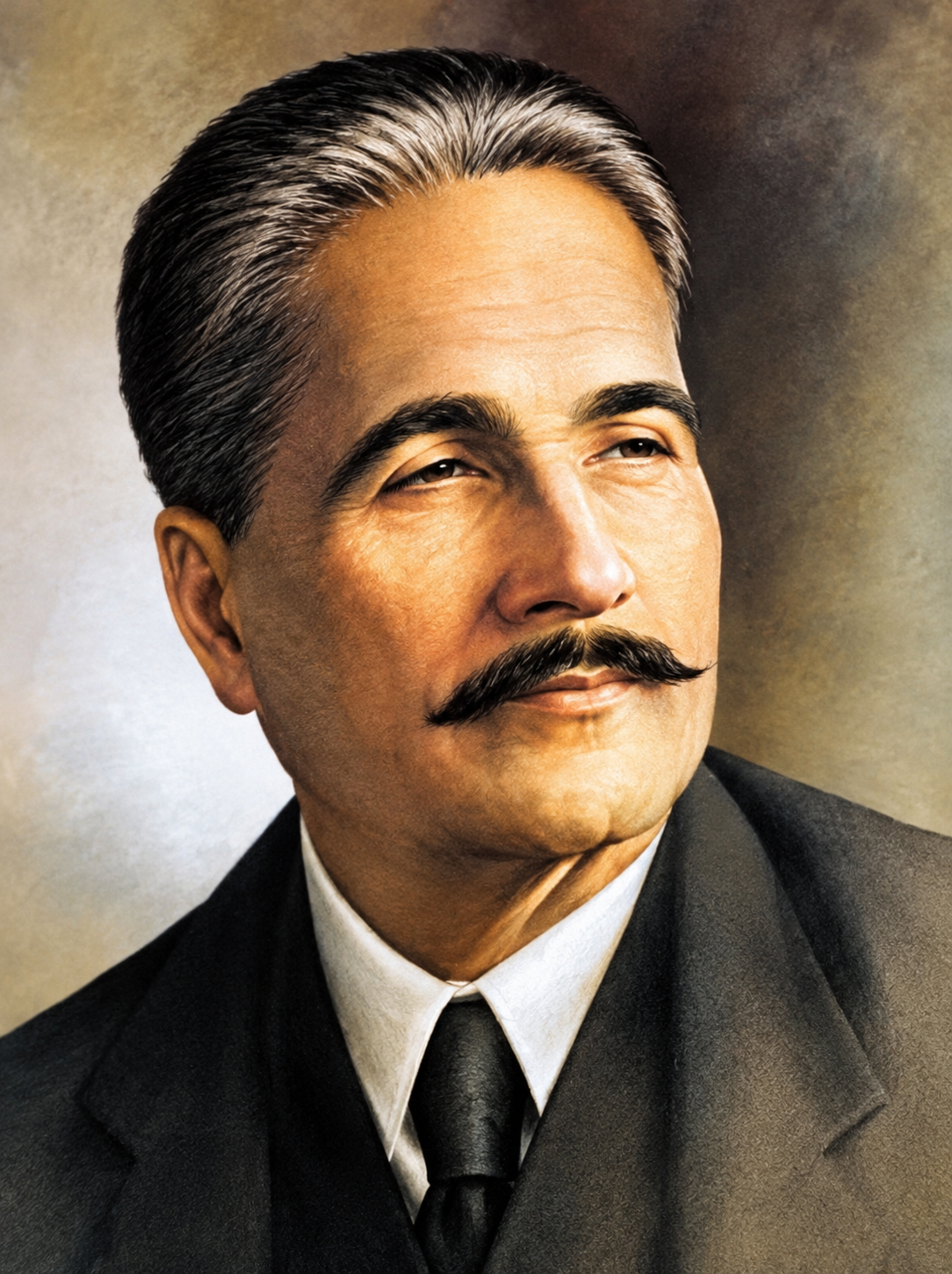
LAHORE, November 9, 2026: Long before Allama Muhammad Iqbal became the philosophical inspiration behind the idea of Pakistan, he was examining a question that remains central to the country’s economic future: can a nation truly prosper when millions of its citizens struggle to secure basic necessities?
In 1903, at a time when the Indian subcontinent remained under British colonial rule, a young Iqbal published Ilm-ul-Iqtisad (The Science of Economics), widely recognised as his first book and a pioneering comprehensive Urdu-language treatment of modern economic principles.
More than 123 years later, as Pakistan commemorates Iqbal Day, the book offers an opportunity to revisit a largely overlooked dimension of the national poet’s intellectual legacy: his engagement with economics, poverty, production, labour and the distribution of wealth.
While Pakistan celebrates Iqbal through poetry, speeches, commemorative ceremonies and national tributes, his early economic scholarship invites a more difficult discussion about the country’s development model.
Iqbal Was An Economist Before He Became A National Icon
At the beginning of the twentieth century, economic knowledge in British India was largely communicated through English-language academic and administrative institutions.
Iqbal’s decision to write Ilm-ul-Iqtisad in Urdu was therefore significant.
He sought to introduce economic concepts to readers who might otherwise have had limited access to the emerging academic discipline.
Drawing upon European economic thought, including classical discussions of population, production, exchange, consumption and distribution, Iqbal helped bring economic reasoning into the intellectual vocabulary of Urdu-speaking society.
His approach also reflected the circumstances of colonial India, where agricultural dependence, limited industrial development and widespread poverty shaped the everyday lives of millions.
The importance of the book lies not merely in its explanation of economic principles, but in its place within Iqbal’s developing intellectual engagement with society and human welfare.
Poverty Was More Than An Economic Problem
One of the most striking themes associated with Iqbal’s early economic concerns is the relationship between poverty and the wider condition of society.
Economic deprivation cannot be understood solely through the absence of money. It affects education, health, opportunity, productivity and the ability of individuals to participate meaningfully in national life.
For a country such as Pakistan, this perspective remains particularly relevant.
Despite possessing fertile agricultural land, a large labour force, substantial natural resources and a strategically important geographical position, Pakistan continues to struggle with poverty, weak productivity and limited economic opportunities.
The country has repeatedly pursued macroeconomic stabilisation through fiscal adjustments, external financing and monetary restraint.
Yet stabilisation alone cannot guarantee that ordinary households experience lasting improvements in their living standards.
The distinction between balancing national accounts and improving citizens’ lives is central to any serious discussion of economic development.
It also provides a useful contemporary lens through which to examine Iqbal’s early economic scholarship.
A Wealthy Elite Does Not Necessarily Mean A Wealthy Nation
Pakistan’s economic debate frequently revolves around investment, asset prices, industrial expansion, stock market performance, foreign exchange reserves and the accumulation of private wealth.
These indicators matter, but they do not tell the entire story.
An economy may produce extremely wealthy individuals while large sections of its population remain unable to afford quality education, healthcare, housing or adequate nutrition.
The fundamental question is whether economic progress translates into broader prosperity.
Ilm-ul-Iqtisad examined the classical economic processes through which wealth is produced, exchanged, distributed and consumed.
Viewed alongside Iqbal’s later social philosophy, this creates an important distinction between the accumulation of wealth and the welfare of society.
Pakistan’s economic success should therefore be judged not only by the fortunes of its wealthiest citizens, but also by improvements in the lives of farmers, factory workers, small entrepreneurs and salaried households.
Economic growth that fails to improve these conditions risks becoming prosperity for a few rather than development for the nation.
The Farmer At The Centre Of Iqbal’s Economic Imagination
Perhaps nowhere is the continuing relevance of Iqbal’s social concerns more visible than in Pakistan’s agricultural economy.
Agriculture remains central to rural employment, food security, industrial supply chains and export competitiveness.
Yet farmers frequently face high input costs, unpredictable market conditions, water constraints, weak storage infrastructure and limited access to affordable financing.
The resulting imbalance raises questions about how agricultural value is shared between producers, intermediaries, processors and consumers.
Iqbal’s later poetry expressed a powerful concern for the relationship between land, labour and economic justice.
His famous verse captures that sentiment:
Jis khet se dehqan ko mayassar nahin rozi,
Us khet ke har khosha-e-gandum ko jala do.
The verse is a poetic condemnation of an economic arrangement in which the cultivator is denied the fruits of his labour.
It should not be read as a literal policy prescription, but as a forceful statement about exploitation and injustice.
For modern Pakistan, the challenge is to create agricultural systems in which productivity, fair market access and technological improvement translate into sustainable incomes for those who cultivate the land.
Population, Resources And The Development Challenge
Iqbal’s early work also engaged with the relationship between population and economic resources, an important debate among classical economists such as Thomas Malthus and John Stuart Mill.
The underlying question remains relevant today: how can a growing population be supported by sufficient food, employment, infrastructure and productive capacity?
Pakistan’s demographic pressures make this particularly important.
A young and expanding population can become an economic advantage if supported by education, skills, healthcare and productive employment.
Without these investments, the same demographic trends can intensify unemployment, poverty and pressure on public services.
The lesson for policymakers is that population size alone does not determine national prosperity.
Human capital, resource management, technological progress and institutional capacity are equally important.
Pakistan’s long-term economic future will depend on its ability to convert population growth into productive potential.
The Economic Cost Of Inequality
One of the most important questions facing Pakistan is whether the country’s economic institutions provide meaningful opportunities for upward mobility.
Access to credit, education, land, technology and markets is not equally distributed.
Large businesses often possess advantages in financing, influence and market access that small enterprises struggle to match.
Similarly, workers and agricultural producers may face limited bargaining power despite contributing substantially to economic activity.
These inequalities can weaken productivity, discourage entrepreneurship and restrict the development of a broad domestic consumer market.
The problem is not simply that some individuals become wealthy.
It is whether economic institutions allow the benefits of growth to spread across society.
A functioning market economy requires investment and enterprise, but sustainable national development also depends upon competition, opportunity, effective public institutions and fair treatment of labour.
The challenge is to build an economy that rewards innovation and productivity without allowing structural disadvantages to become permanent barriers.
Why Pakistan Needs To Revisit Iqbal’s Economic Thinking
Iqbal is most commonly remembered for his poetry, his philosophy of Khudi, his intellectual contribution to Muslim political consciousness and his historic Allahabad Address of 1930.
His economic writings receive comparatively little attention in mainstream public discussion.
That omission matters.
Ilm-ul-Iqtisad demonstrates that economic questions were part of Iqbal’s intellectual development long before his later political and philosophical influence reached its height.
It also reminds readers that serious national thinking requires an understanding of how wealth is created, how resources are used and how economic institutions shape human lives.
For Pakistan, revisiting this dimension of Iqbal’s work could encourage a more meaningful public debate about education, industrialisation, agricultural productivity, poverty reduction and the distribution of economic opportunity.
The purpose should not be to portray a book published in 1903 as a ready-made blueprint for a twenty-first-century economy.
Economic systems, technologies, institutions and global conditions have changed enormously.
Rather, the value lies in recognising that many of the fundamental questions surrounding national welfare remain unresolved.
From Economic Stabilisation To Economic Justice
Pakistan’s economic policymaking has frequently been dominated by immediate pressures: debt servicing, fiscal deficits, inflation, exchange-rate volatility and external financing requirements.
These challenges cannot be ignored.
However, a durable economic strategy must also address the productive foundations of the country.
That means strengthening agricultural yields, expanding competitive manufacturing, improving educational outcomes, encouraging entrepreneurship, increasing exports and creating better-paid employment.
It also means ensuring that economic reform does not become an exercise in shifting adjustment costs onto households least able to bear them.
A country cannot build lasting prosperity through financial stabilisation alone if its productive capacity and human development remain weak.
Iqbal’s early engagement with economic thought provides an intellectual starting point for asking whether national policies are ultimately improving the welfare and capabilities of ordinary citizens.
123 Years Later, The Questions Remain
The significance of Ilm-ul-Iqtisad extends beyond its historical status as Iqbal’s first published book.
It reveals an intellectual curiosity about the material conditions of society that would continue to find expression in his later writing.
His poetry challenged exploitation, questioned social hierarchies and celebrated the dignity and potential of human beings.
His economic scholarship shows that these concerns were accompanied by an early interest in the practical mechanisms through which societies organise production, resources and wealth.
As Pakistan marks Iqbal Day on November 9, 2026, the country has an opportunity to look beyond ceremonial remembrance and engage with the substance of his intellectual legacy.
The question is not whether Pakistan has produced wealthy individuals, impressive buildings, successful corporations or expanding financial markets.
The more important question is whether the country’s economic progress has created opportunity, dignity and security for the wider population.
More than a century after Ilm-ul-Iqtisad, that remains one of Pakistan’s defining development challenges.
Iqbal did not leave behind a complete economic programme for modern Pakistan. But his intellectual legacy continues to challenge the nation to consider a fundamental question: what is the purpose of national wealth if it does not improve the lives of the people?