
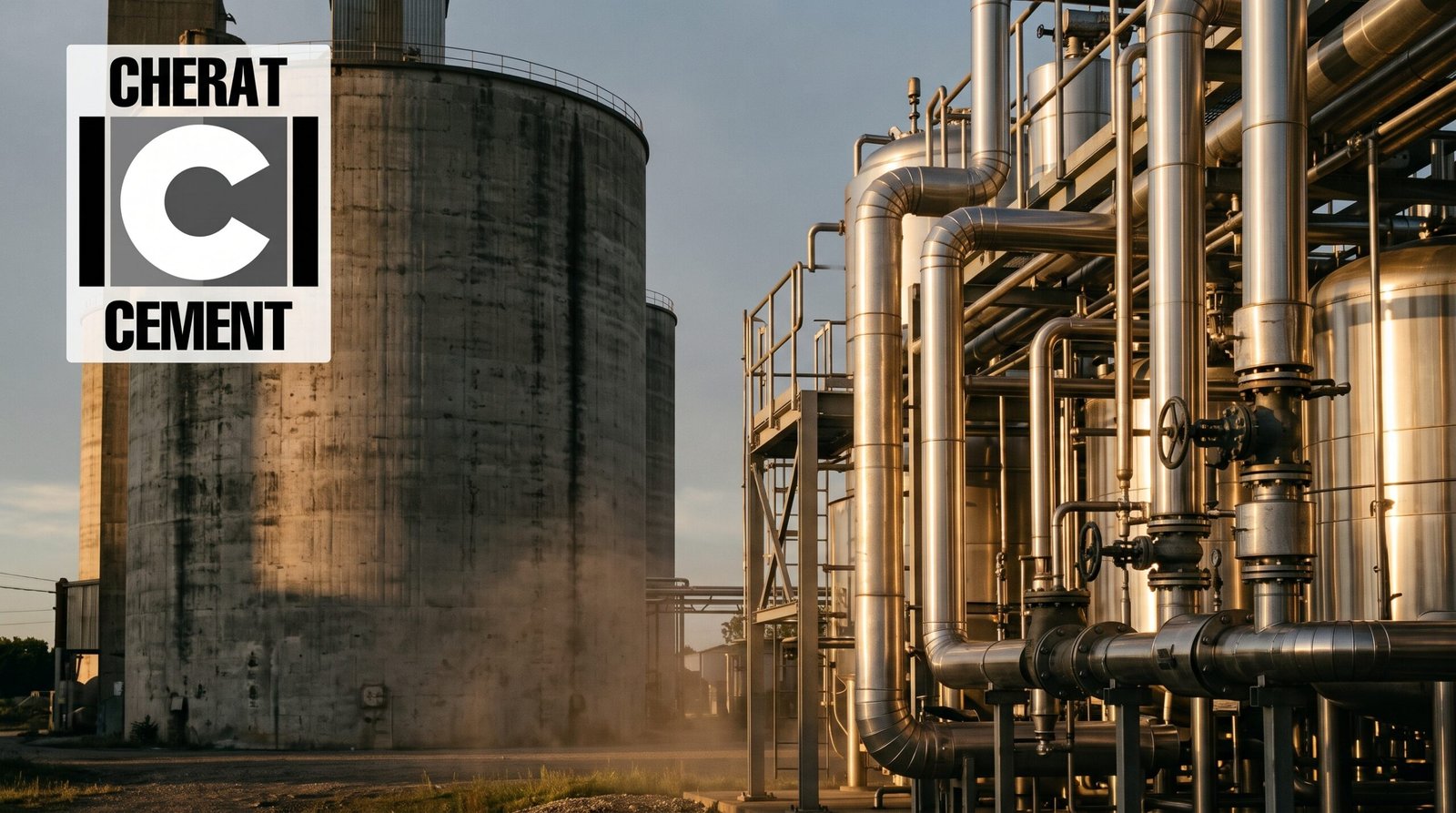
After two years of hunting for an acquisition and sitting on a massive pile of unutilised cash, Cherat Cement has finally closed a deal. However, the target is not a rival cement manufacturer or a construction materials supplier. Instead, the company is pivoting sharply into the industrial chemicals and fast-moving consumer goods (FMCG) supply chain.
On October 30, 2026, Cherat signed share purchase agreements to acquire 64.07% of Nimir Industrial Chemicals Limited for approximately Rs24.09 billion. The Sheikhupura-based facility is Pakistan’s leading producer of soap noodles, oleochemicals, and caustic soda.
The move highlights a growing trend in Pakistan’s corporate sector: legacy industrial giants in sluggish sectors like construction are using their fortified balance sheets to hunt for growth in entirely different industries.
The Anatomy Of The Rs24 Billion Deal
Cherat is acquiring control through two distinct transactions, paying a premium price of Rs340 per share.
The first agreement secures 56.4 million shares (a 51% controlling stake) directly from Nimir’s majority sponsors for Rs19.2 billion. The second agreement mops up an additional 14.46 million shares (13.07%) from two substantial shareholders, Nadeem Nisar and Shaheen Nadeem, for Rs4.9 billion.
Because this transaction crosses the regulatory takeover threshold, Cherat has appointed KTrade Securities to manage a mandatory public offer for the remaining outstanding shares. If minority shareholders decide to cash out at the Rs340 premium, the final acquisition cost could swell by another Rs13.5 billion.
Third Time Lucky For Cherat
This deal marks the end of a frustrating shopping spree for Cherat. Over the past two years, the company aggressively attempted to deploy its capital but was repeatedly outbid by rivals with deeper pockets.
In May 2025, Cherat partnered with Shirazi Investments to bid for Rafhan Maize Products, but ultimately lost to a Nishat-led consortium that closed the deal for $165 million. Just weeks later, the same Cherat-Shirazi partnership attempted to acquire a controlling stake in Attock Cement from its Lebanese owners. That deal also collapsed, with Fauji Cement and KAPCO eventually sweeping in to claim the asset.
By targeting Nimir—a company not being auctioned off by a departing foreign multinational—Cherat was able to negotiate directly with local sponsors and secure a definitive agreement.
The Margin Paradox: Why Buy A Low-Margin Business?
On the surface, the financials of this deal look counterintuitive. Cherat is a highly lucrative cement business enjoying net profit margins of nearly 20%. In the 2026 fiscal year, Cherat generated Rs7.25 billion in net profit on Rs36.5 billion in sales.
Nimir, by contrast, operates in a high-volume, low-margin environment. Despite generating substantially more revenue than Cherat (Rs48.3 billion in FY2026), Nimir kept only a 5% net margin, resulting in a profit of Rs2.39 billion. Furthermore, while Cherat is virtually debt-free, Nimir carries Rs18.2 billion in debt to finance its heavy reliance on imported palm oil.
So why is a 20% margin company buying a 5% margin company at nearly 15 times trailing earnings?
The answer lies in Pakistan’s stagnant construction sector and the limitations of organic growth. Cherat’s Nowshera plant has an annual capacity of 4.5 million tons, but it only despatched 2.35 million tons last year. The plant is running at half capacity, yet the company is generating record cash flows due to aggressive price retention and cheap solar energy investments.
Cherat had Rs12.5 billion in cash sitting in short-term investments. In an environment where the State Bank of Pakistan’s policy rates are fluctuating, leaving cash in the bank is a poor long-term strategy. Building new cement capacity in a depressed housing market makes even less sense. Nimir offers something Cherat desperately needs: double-digit annual revenue growth and a dominant market position.
Nimir: The Unseen Backbone Of Pakistan’s FMCG Sector
While not a household brand, Nimir is deeply embedded in the daily lives of Pakistani consumers. It is the dominant force in the country’s oleochemicals sector.
Nimir boasts an annual production capacity of over 120,000 tons of soap noodles—the core ingredient used by almost every major soap brand in the country. The company also dominates the chlor-alkali sector, producing 120 tons of caustic soda daily.
Beyond raw materials, Nimir operates a highly successful toll manufacturing division. Consumer goods giants rely on Nimir’s Bhikhi plant to manufacture and package household staples, including aerosols and iconic cleaning products like Harpic and Robin for Reckitt.
The Strategic Bet
By paying a 30% premium over Nimir’s pre-announcement stock price, the Ghulam Faruque Group (Cherat’s parent company) is making a bold wager. The group already successfully manages a diverse portfolio spanning packaging, sugar, and ethanol, proving it is not intimidated by complex, multi-sector operations.
Cherat is betting that integrating a fast-growing, FMCG-adjacent chemicals business into its portfolio will yield better long-term returns than money market funds or stranded cement capacity. The challenge now shifts from the boardroom to the factory floor, as Cherat prepares to manage a highly leveraged, import-dependent supply chain in the heart of Punjab.