

LAHORE: Pakistan does not need another round of currency devaluation to revive its struggling exports. What it needs is a fundamental shift in economic policymaking — from borrowing dollars to earning them, from rewarding financial deposits to encouraging industrial investment, and from relying on exchange-rate adjustments to addressing the structural disadvantages that have made Pakistani products increasingly uncompetitive in international markets.
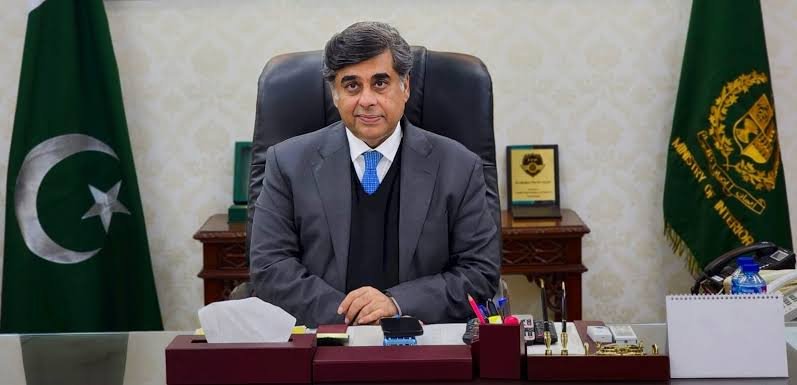
Talking exclusively to The Scoop, former caretaker federal minister for commerce and industry, Patron-in-Chief of the All Pakistan Textile Mills Association (APTMA), and prominent industrialist Dr Gohar Ejaz proposed a performance-based export incentive framework that, he believes, could generate approximately $10 billion in additional annual export earnings over three years without exposing the overwhelming majority of Pakistan’s economy to another inflationary shock.
This is the central argument advanced by former caretaker federal minister for commerce and industry Dr Gohar Ejaz, who has proposed a performance-based export incentive framework that, he believes, could generate approximately $10 billion in additional annual export earnings over three years without exposing the overwhelming majority of Pakistan’s economy to another inflationary shock.
His proposal challenges a longstanding assumption in Pakistan’s economic management: that weakening the rupee is an effective and sustainable instrument for boosting exports.
Instead, Ejaz wants the government to reward exporters for generating additional foreign exchange through a conditional drawback of local taxes, linked directly to incremental export performance.
Borrowing $3 Billion Or Earning $3 Billion?
At the heart of Ejaz’s argument is a comparison between the economic consequences of raising foreign exchange through international borrowing and generating the same amount through exports.
Referring to a $3 billion bond issuance at an interest rate of approximately 8 per cent, Ejaz argued that while raising international financing can strengthen foreign exchange reserves in the short term, it simultaneously creates repayment obligations for future governments and taxpayers.
He questioned why the government could not extend an equivalent incentive to exporters willing to generate additional foreign exchange through production and international sales.
His proposition is straightforward: if the government is prepared to pay 8 per cent annually to international creditors for borrowed dollars, it should consider offering exporters an equivalent incentive against verified incremental export earnings.
“If we commit to bringing in $3 billion more in export revenue next year — real money, not debt — give us the 8 per cent you would otherwise pay as interest as a drawback of local taxes,” Ejaz argued before members of Lahore’s business community.
Under the proposed arrangement, exporters would qualify for the incentive only after demonstrating an increase in export earnings above an agreed benchmark.
Ejaz believes this would encourage businesses to expand production, develop international markets, invest in industrial capacity and generate employment.
Unlike borrowed foreign exchange, export proceeds do not create an equivalent sovereign repayment liability.
However, the proposal would still carry a fiscal cost. An 8 per cent incentive on $3 billion of additional exports would represent approximately $240 million in government support, assuming the full increment qualified.
The central economic question, therefore, is whether the additional exports, employment, investment and tax revenues generated would justify that expenditure.
A Three-Year Formula For Export Growth
Ejaz proposes that the government establish a three-year export growth programme with annual performance benchmarks.
Using approximately $30 billion in annual exports as his illustrative starting point, he argues that Pakistan should target at least 10 per cent annual growth.
The proposed trajectory would look like this:
| Year | Export Target | Additional Exports |
| Base year | $30 billion | — |
| Year 1 | $33 billion | $3 billion |
| Year 2 | $36.3 billion | $3.3 billion |
| Year 3 | $39.93 billion | $3.63 billion |
Under this scenario, annual exports would approach $40 billion by the end of the third year, representing an increase of nearly $10 billion over the starting benchmark.
Ejaz believes the country’s established industrial base, particularly its textile and manufacturing sectors, possesses the capacity to deliver this expansion if the government addresses the disadvantages faced by domestic producers.
He has offered to mobilise Lahore’s business community, the All Pakistan Textile Mills Association (APTMA) and other industrial associations around measurable export commitments.
The proposed incentive would apply to incremental exports rather than the entire existing export base, an important distinction intended to link public expenditure with additional foreign exchange generation.
Why Devaluation Is Not The Answer
One of the strongest elements of Ejaz’s argument concerns the economic consequences of currency depreciation.
Successive governments have allowed or pursued exchange-rate adjustments in the expectation that a weaker rupee would make Pakistani products cheaper for foreign buyers.
In theory, depreciation can improve export competitiveness by reducing foreign-currency prices when domestic production costs do not rise proportionately.
However, Ejaz argues that Pakistan’s heavy dependence on imported energy, machinery, chemicals, industrial inputs and other essential commodities significantly weakens this advantage.
When the rupee depreciates, the cost of imported production inputs increases, energy becomes more expensive and inflationary pressures spread throughout the economy.
These higher costs can subsequently eliminate much of the initial price advantage enjoyed by exporters.
Ejaz describes devaluation as a temporary painkiller rather than a treatment for the underlying disease of industrial uncompetitiveness.
He argues that the inflationary consequences are especially damaging because exports account for only a relatively small share of Pakistan’s overall economic activity.
Using his estimate that exports represent approximately 8 per cent of the economy, he questions the justification for imposing inflationary costs on the much larger domestic economy to provide temporary relief to exporters.
The precise export-to-GDP ratio depends on whether goods alone or goods and services are included, but his broader concern remains relevant: exchange-rate depreciation affects consumers, importers and domestic producers far beyond the exporting sector.
The 2022–23 Experience: A Warning Against Easy Solutions
Ejaz points to Pakistan’s experience during 2022–23 as evidence that currency depreciation does not automatically translate into higher export earnings.
The rupee depreciated sharply during that period, moving from around Rs160 against the US dollar in April 2022 to approximately Rs280 by March 2023.
Yet Pakistan’s merchandise exports declined from approximately $31.8 billion in FY2021–22 to around $27.7 billion in FY2022–23, according to commonly reported official annual trade figures.
This occurred despite the substantial depreciation of the domestic currency.
The experience illustrates why exchange-rate adjustments cannot substitute for competitive production costs, reliable energy supplies, export financing and access to international markets.
However, the export decline cannot be attributed to exchange-rate movements alone. Pakistan also faced import restrictions, shortages of industrial inputs, devastating floods, global demand pressures and severe macroeconomic instability during the period.
Nevertheless, the episode raises an important policy question: if a substantial depreciation of the rupee fails to produce an accompanying increase in dollar-denominated exports, should exchange-rate adjustments remain the central instrument of export policy?
For Ejaz, the answer is no.
Pakistan’s Real Competitiveness Crisis
Ejaz identifies three structural problems that continue to undermine Pakistan’s industrial competitiveness: high energy costs, expensive financing and taxes embedded in production costs that are not adequately refunded.
Pakistani manufacturers compete against producers in countries with more predictable energy tariffs, efficient tax-refund mechanisms, greater access to affordable credit and established industrial supply chains.
Even where Pakistani exporters manufacture products of comparable quality, these additional costs can prevent them from offering internationally competitive prices.
Ejaz estimates that the resulting competitiveness gap is approximately 8 per cent.
He argues that eliminating this disadvantage through targeted incentives would deliver more sustainable results than attempting to offset it through repeated currency depreciation.
The distinction is critical.
Devaluation changes the exchange rate at which exporters receive rupees for their dollar earnings. Structural reform reduces the actual cost of producing and delivering goods.
Only the latter can permanently improve industrial productivity and international competitiveness.
Ejaz also cites export incentives available in neighbouring economies, including India, as evidence that competing governments actively support their export industries.
However, India’s export-remission and incentive arrangements differ by product and scheme. They should not be interpreted as a universal 12 per cent rebate across all exports.
For Pakistan, the relevant policy lesson is not necessarily to replicate another country’s subsidy structure but to ensure that domestic exporters are not burdened by unrecovered taxes and avoidable production costs that competitors do not face.
From Interest Income To Industrial Investment
Beyond export incentives, Ejaz raises a broader concern about the direction of capital allocation within Pakistan’s economy.
He argues that businesses and investors increasingly prefer earning returns from bank deposits and financial instruments rather than committing capital to industrial expansion.
This reflects a wider structural challenge.
When risk-free or relatively low-risk financial returns are attractive, while manufacturing involves expensive energy, uncertain taxation, regulatory complications and weak export competitiveness, private investment naturally gravitates away from productive enterprises.
Ejaz warns that such an economic model cannot create sufficient employment opportunities for Pakistan’s growing population.
Factories generate demand for labour, transport, packaging, machinery, logistics, professional services and supporting businesses.
Industrial investment can therefore create economic activity extending far beyond the original investment.
By contrast, a development strategy heavily dependent on government borrowing and financial returns risks perpetuating a cycle in which debt servicing absorbs resources that could otherwise support productive investment.
Ejaz argues that Pakistan must restore the commercial incentive to establish factories, expand manufacturing capacity and compete internationally.
Turning Pakistan’s Overseas Trade Missions Into Marketing Offices
Another important component of Ejaz’s proposed strategy concerns Pakistan’s commercial representation abroad.
He believes trade officers and commercial counsellors stationed in foreign markets should operate more actively as marketing representatives for Pakistani businesses.
Rather than limiting their responsibilities to administrative reporting and diplomatic engagement, overseas commercial missions should be assessed against measurable export-development outcomes.
These could include identifying new buyers, facilitating business-to-business connections, resolving market-access problems, promoting Pakistani brands and helping exporters diversify beyond traditional destinations.
Pakistan’s export concentration also presents a challenge.
Ejaz argues that the country’s trade relationships with the United States, European Union and United Kingdom demonstrate its ability to compete successfully in major developed markets.
His reference to a combined trade surplus of approximately $15 billion with these markets illustrates the importance of examining Pakistan’s trade balance by partner rather than treating the aggregate deficit as a uniform weakness across all international relationships.
The broader objective should be to expand exports into markets where Pakistan currently sells relatively little while protecting and increasing its presence in established destinations.
Can An 8 Per Cent Incentive Transform Exports?
Ejaz’s proposal has an important advantage over unconditional export subsidies: it attempts to reward measurable additional performance.
However, designing such a mechanism would require careful safeguards.
The government would need to establish transparent export benchmarks, verify the repatriation of foreign exchange and prevent businesses from manipulating shipment timing or invoicing to qualify for incentives.
It would also need to determine whether the incentive should apply uniformly across industries or be adjusted according to value addition, employment generation and domestic input content.
The fiscal implications would require particular attention.
An incentive equivalent to 8 per cent of incremental exports could be justified if it generates sufficiently large additional economic benefits. But it should not become another open-ended subsidy without independent performance evaluation.
Furthermore, an 8 per cent export drawback cannot independently resolve electricity pricing, financing costs, delayed tax refunds or weaknesses in industrial productivity.
Its effectiveness would depend on complementary reforms.
A credible export-growth programme would therefore need to combine performance-linked incentives with energy-sector reform, predictable taxation, affordable working capital, faster refunds, trade facilitation and greater market access.
Debt Can Stabilise An Economy, But Exports Must Sustain It
Pakistan’s economic history demonstrates the limitations of repeatedly relying on external borrowing to support foreign exchange reserves.
International loans, multilateral financing and sovereign bonds can provide essential liquidity during periods of financial stress.
But borrowed dollars eventually create obligations to repay principal and interest.
Export earnings, by comparison, arise from commercial activity and can support the external account without creating the same sovereign debt liability.
Ejaz uses the analogy of a household or business to explain the distinction.
No household can indefinitely meet its expenses through borrowing without generating sufficient income. Similarly, no business can remain financially sustainable if its financing obligations continually outpace its earnings.
He believes the same principle should guide Pakistan’s economic management.
The country must expand its capacity to earn foreign exchange through manufacturing, services, technology, agriculture and international trade.
The Policy Choice Before Islamabad
Gohar Ejaz’s proposal represents a challenge to the conventional sequencing of Pakistan’s economic stabilisation policies.
Instead of first borrowing to strengthen reserves and then relying on exchange-rate adjustments to improve competitiveness, he wants the government to create direct incentives for businesses to earn additional dollars.
His proposed bargain is simple: the business community commits to measurable export growth, while the government rewards verified increases in foreign exchange earnings through targeted tax relief.
The formula is not without complications. Its fiscal affordability, compliance with international trade obligations and effectiveness across different industries would require detailed assessment.
But the underlying argument deserves serious policy consideration.
Pakistan cannot sustainably expand its economy through repeated depreciation, expensive borrowing and financial returns disconnected from productive investment.
Its long-term economic strength will depend on whether businesses can manufacture competitively, access international markets and generate export earnings sufficient to support growth, employment and external stability.
The choice is not necessarily between borrowing and exporting. Responsible external financing can coexist with an export-led growth strategy.
The real challenge is to ensure that borrowing supports productive capacity rather than becoming a substitute for it.
For Pakistan, the question is no longer simply how many dollars the government can raise from international creditors.
It is how many additional dollars Pakistani businesses can earn from the rest of the world — and what Islamabad is prepared to do to make that possible.