

The federal government has aggressively severed the statutory rupee allocation for foreign-funded development projects by more than 50%, reducing the required Rs537 billion lifeline down to a highly constrained Rs255 billion for the fiscal year 2026-27. This drastic fiscal contraction, triggered by mounting domestic liquidity constraints, exposes the government’s inability to sustain the local financial matching required to unlock massive international debt tranches.
The critical budget reduction was disclosed during a high-level briefing of the Senate Standing Committee on Planning, Development and Special Initiatives, which was chaired by Senator Quratulain Marri.
Appearing before the parliamentary oversight panel, Planning Secretary Dr. Tahir Noor officially confirmed that 98 distinct foreign-funded infrastructure initiatives have been absorbed into the Public Sector Development Programme (PSDP) for 2026-27. According to Noor, this sprawling portfolio carries a combined estimated cost of Rs8.1 trillion, which is heavily anchored by Rs4.65 trillion in projected foreign assistance.
“The committee expressed concern over reliance on foreign borrowing and recommended prioritising domestic resources to reduce debt obligations.”
The internal financial mechanics preceding the final budget exposed a severe disconnect between the state’s development ambitions and its actual fiscal capacity. The Economic Affairs Division (EAD) had originally intervened to propose a moderated Rs425 billion against the total baseline requirement of Rs537 billion. However, the National Economic Council (NEC) executed the final, definitive cut, authorizing a mere Rs255 billion in rupee backing.
This drastic reduction was part of a broader macroeconomic contraction by the NEC, which authorized an overall national PSDP ceiling of just Rs1 trillion, effectively dismissing a total initial demand of Rs2.9 trillion.
| Fiscal Year 2026-27 PSDP Metrics | Baseline Demand / Request | Final Approved Allocation | Shortfall Imposed |
| Total Overall PSDP | Rs2.9 trillion | Rs1.0 trillion | Rs1.9 trillion |
| Foreign-Funded Rupee Share | Rs537 billion | Rs255 billion | Rs282 billion |
| EAD Moderated Proposal | Rs425 billion | Rs255 billion | Rs170 billion |
During the proceedings, the Senate committee issued a stark warning regarding the sovereign’s dangerous reliance on external leverage. Lawmakers explicitly directed the planning authorities to prioritize domestic revenue mobilization to aggressively wind down the nation’s suffocating debt obligations. Furthermore, the committee demanded adequate rupee allocations in upcoming quarters to neutralize the risk of severe project implementation delays and subsequent cost overruns.
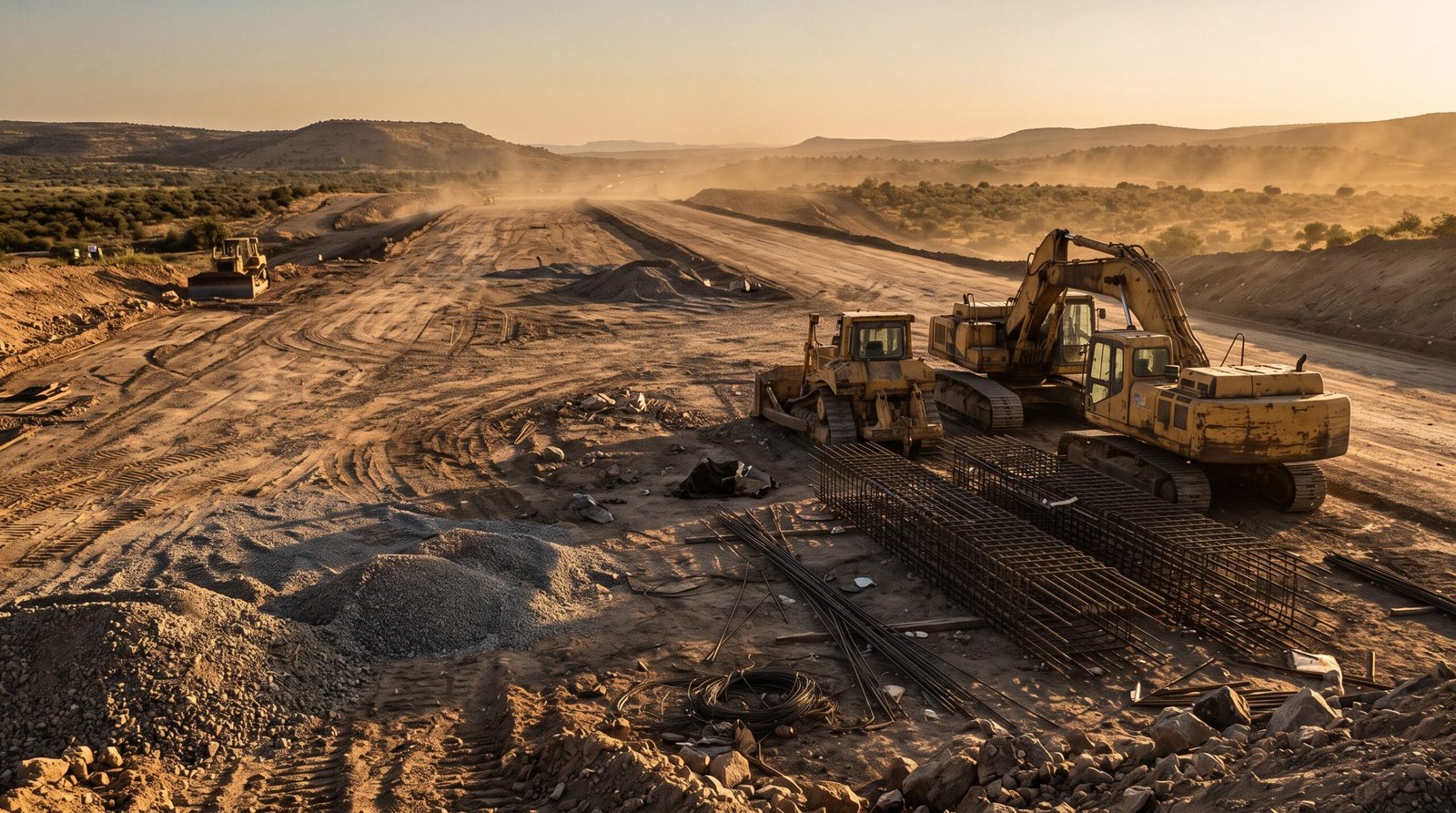
Despite the broad fiscal contraction, key strategic infrastructure assets appear insulated due to secured external capital. Planning officials confirmed to the committee that physical construction on the long-delayed Sukkur-Hyderabad (M6) Motorway is scheduled to commence within months following the immediate availability of $705 million in foreign financing.
“Sections I and II are being processed under a public-private partnership arrangement, with the concession award targeted for February 2027.”
The massive transportation artery will be constructed through structured tranches. Under current operational timelines, Sections I and II will be built leveraging a strict “public-private partnership” mechanism, with the official concession award currently targeted for execution in February 2027.
To ensure global compliance and commercial viability, the Asian Development Bank (ADB) has been officially retained to supply “transaction advisory services” for the initial segments. Simultaneously, sovereign financing arrangements for the remaining sections of the M6 corridor have been successfully locked down through an organized syndicate of international development partners.