

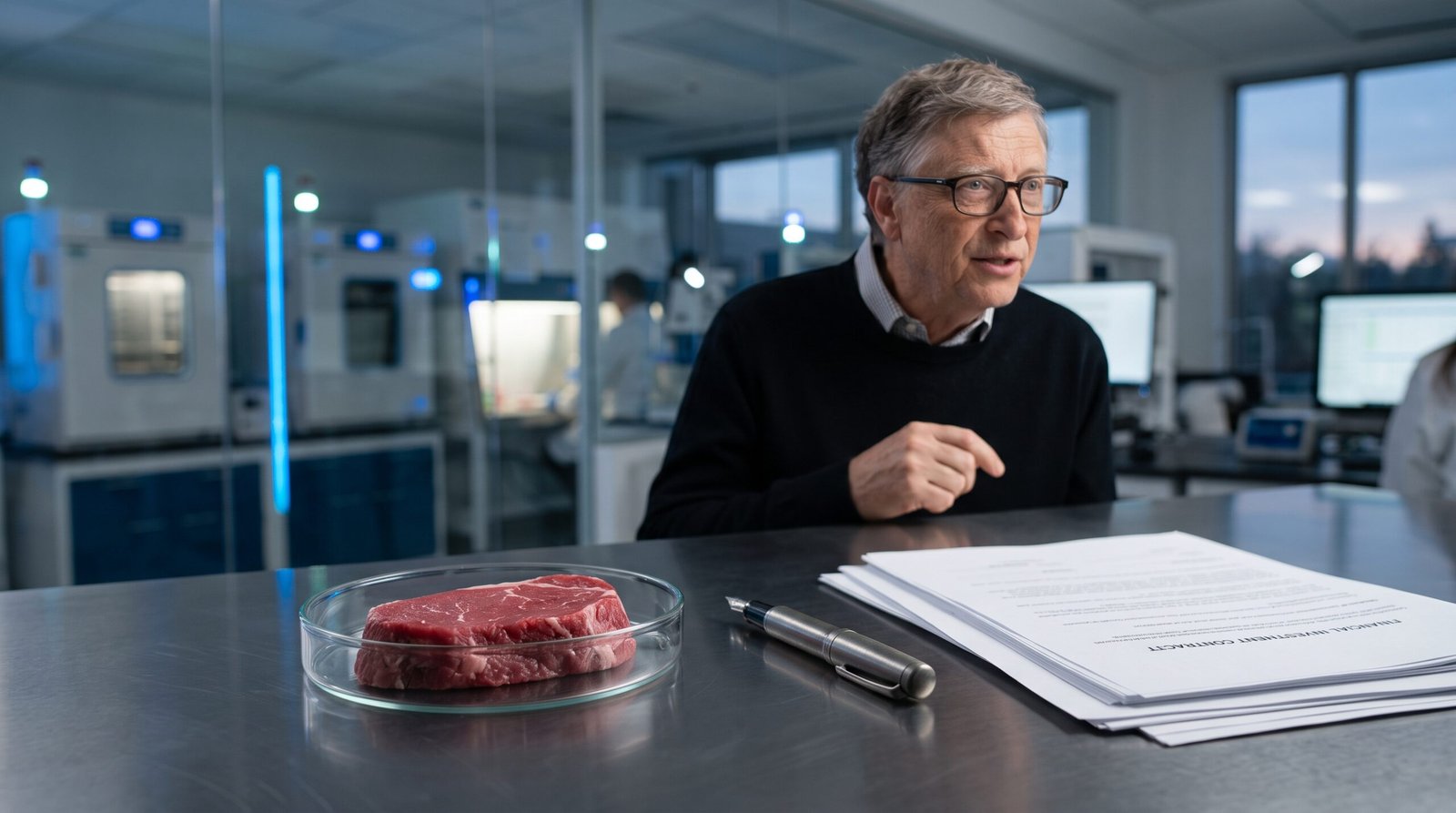
The US Food and Drug Administration (FDA) has officially granted safety clearance for multiple lab-grown meat products, enabling cultivated chicken, pork fat, and salmon to enter grocery stores and restaurant supply chains. This regulatory shift highlights a massive transformation in food technology, driven by substantial investments from prominent billionaires and traditional agriculture conglomerates.
Corporate Giants and the FDA Greenlight
At the centre of this commercial transition is Tyson Foods, the primary poultry supplier for major fast-food chains like McDonald’s, KFC, and Taco Bell, as well as retail giants like Walmart and Kroger. Tyson has actively invested in the cultivated meat sector for eight years, notably channelling millions of dollars in 2018 into Upside Foods alongside Microsoft co-founder Bill Gates. Upside Foods subsequently became one of the first companies to secure full US regulatory clearance to sell lab-grown chicken. Furthermore, Tyson expanded its biotechnology footprint by investing in Believer Meats, an Israeli firm that recently secured its first US-based production facility.
The Backlash: State Bans and “Cancer” Claims
Despite completing federal safety reviews, the commercialisation of cultivated meat faces severe legislative pushback and public scepticism. Critics warn that the long-term health effects remain a mystery, raising alarms that lab-grown meat relies on cells prone to genetic mutations that could lead to carcinogenic DNA defects.
However, independent industry research and scientific fact-checkers clarify that these alarmist claims stem from the industry’s necessary use of “immortalised cell lines”—cells engineered to divide indefinitely to scale production. While they share replicative traits with cancer cells in a petri dish, leading researchers note there is currently no evidence that consuming these cultivated products poses a cancer risk to humans.
Nonetheless, public scepticism has triggered swift legislative action. To date, eight US states—including Florida, Alabama, Mississippi, Indiana, Montana, Nebraska, Texas, and South Dakota—have officially banned the sale and distribution of lab-grown meat to protect traditional agriculture and consumers.
The Bigger Picture: Tech Disruption and the “Burry” Warning
Whether lab-grown meat ultimately succeeds or fails, observers note that the underlying narrative points to a much broader economic shift. Technology is no longer just changing how the world works; it is fundamentally changing what humans eat.
This massive concentration of technological power in the hands of a few corporations mirrors concerns famously raised by investors like Michael Burry, who warned about the systemic risks of relying too heavily on a single economic engine or market narrative. As multi-billion-dollar corporations attempt to monopolise physical supply chains, analysts argue that personal financial strategies require the exact opposite approach: creating more options to ensure less dependence.
The “Faceless” Pivot: AI’s Role in the Creator Economy
This macro-level disruption has sparked a parallel movement in the digital economy, where independent entrepreneurs argue that the next decade will financially reward those who rapidly adapt to new tools. Rather than competing in highly regulated, capital-intensive sectors like biotech, digital creators are utilising the current artificial intelligence (AI) boom to build alternative cash-flowing assets.
By leveraging AI to handle market research, streamline content creation, and simplify repetitive workflows, individuals are increasingly building “faceless” digital properties—such as anonymous Instagram pages—to capture niche audiences. Unlike the billions of dollars in financing, massive data centres, and advanced GPUs required by biotech labs or tech monopolies, these AI-driven digital assets allow everyday users to participate in the technology boom without betting their entire livelihoods on it.
The ultimate takeaway from the convergence of these industries is clear: while corporate giants battle regulators over the future of the food supply, the most accessible opportunities for the public may lie in using AI to build diversified, independent income streams.