

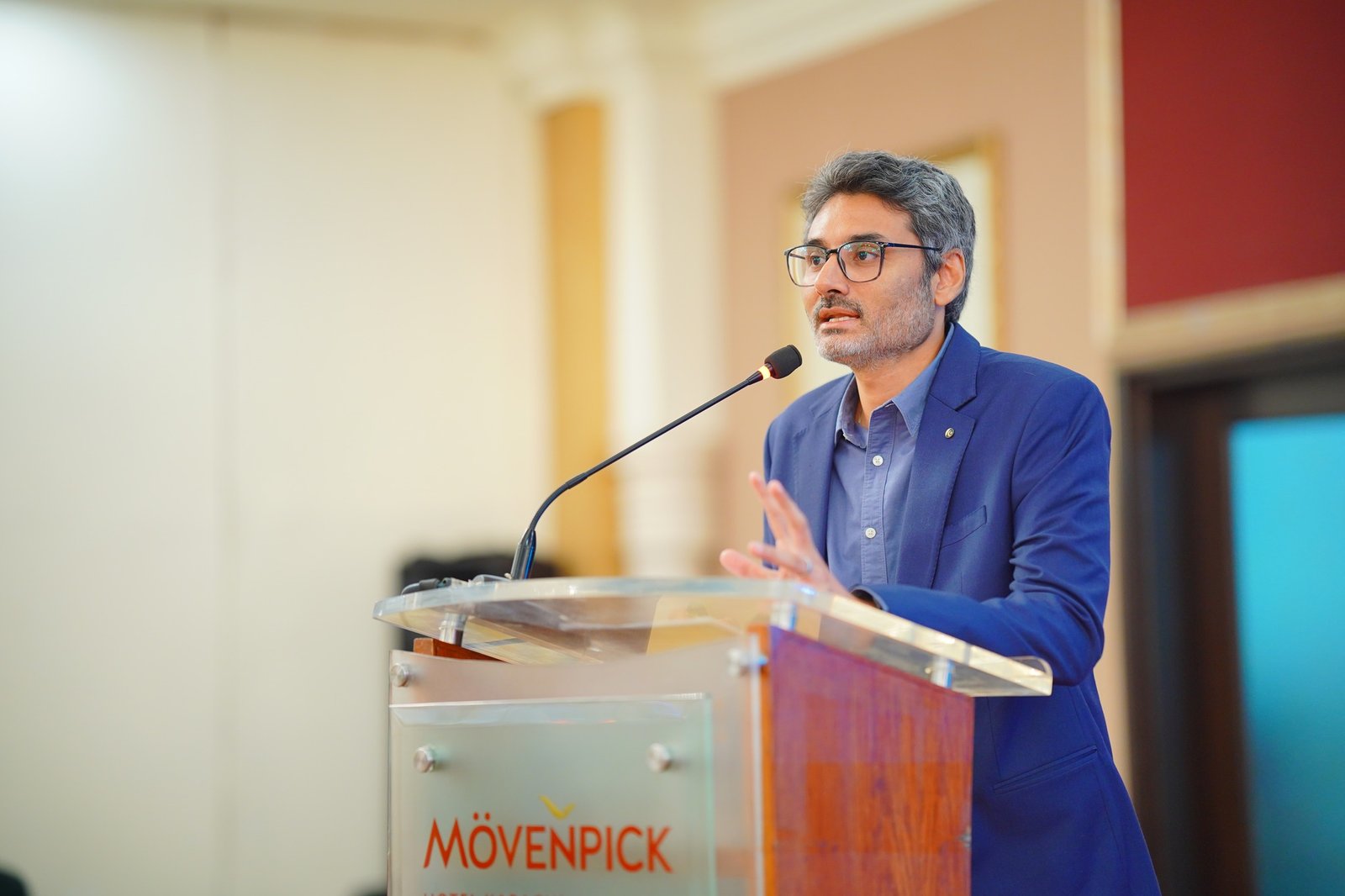
Pakistan’s retail sector is undergoing a fundamental transformation as changing consumer behaviour, e-commerce, digital payments and the expansion of organised retail reshape the market. Yet, according to Asfandyar Farrukh, Managing Director of Urban Brands and Former Chairman & Co-Founder of the Chainstore Association of Pakistan, the country’s formal retail sector continues to face a structural disadvantage because of taxation, documentation and regulatory policies.
Farrukh, who has spent more than two decades working across leather manufacturing, exports, fashion retail and e-commerce, believes Pakistan must move beyond its traditional role as a manufacturing and sourcing destination and develop globally recognised consumer brands.
HUB, the flagship brand of Urban Brands, was launched in 2001 as a premium leather goods retailer, building on a much longer family history in leather trading and manufacturing. The group now operates a broader portfolio including HUB, HOBO and FHS.
In this exclusive interview with The Scoop, Farrukh discusses the future of Pakistan’s retail industry, taxation and documentation, early market closures, e-commerce, consumer purchasing power, sustainability, international expansion and the reforms he believes are essential to unlock the potential of the country’s retail and consumer-goods sector.
The Scoop: You have spent more than two decades working across leather manufacturing, exports, fashion retail and e-commerce. Looking back at this journey, what has been the biggest transformation you have witnessed in Pakistan’s retail market and where do you believe the industry is heading over the next five years?
Asfandyar Farrukh: In my view, the biggest transformation has been the shift from a largely fragmented, product-led and offline market to one that is increasingly branded, organised and omnichannel.
Consumers today discover, compare and buy products across physical stores, websites, marketplaces and social media, and their expectations around service, convenience and the overall brand experience have increased considerably.
Over the next five years, I think growth will be driven less by simply opening more stores and more by offering better products and stronger value propositions, using technology and data to improve efficiency, and making shopping more convenient through e-commerce, digital payments and increasingly AI-enabled personalisation.
Pakistan still has significant room for organised retail to grow. However, that growth will also depend on whether the policy environment encourages businesses to scale and become documented, rather than disproportionately burdening those that become larger and more visible.
The Scoop: As Former Chairman of the Chainstore Association of Pakistan, you have repeatedly argued that Pakistan’s organised retail sector is being disproportionately burdened by taxation and documentation requirements. What specific changes in the tax system would you like the government to introduce to create a level playing field between formal and informal retailers?
Asfandyar Farrukh: The basic principle should be that formalisation and scale must provide an advantage, not a disadvantage.
At present, documented retailers collect taxes transparently, integrate with FBR systems and bear significant compliance costs, while competing with a very large number of businesses that remain fragmented, less visible and largely outside the tax net. That creates a significant cost and pricing disadvantage for the businesses that are actually documented.
We need to broaden the tax base while gradually moving towards lower and more sustainable rates. At the same time, smaller retailers need a simple and realistic pathway into the formal economy through simplified taxation, easier compliance and a predictable multi-year roadmap.
Tier-1 criteria and POS integration requirements should also be linked to objective measures of business scale. Most importantly, documentation, digital payments and formalisation should be encouraged through incentives for both merchants and consumers, rather than relying excessively on enforcement against businesses that are already documented.
The Scoop: You recently highlighted the impact of government-imposed early market closures on retail sales and advocated a uniform 10pm closing time. Do you believe Pakistan’s current energy and commercial policies are actually reducing consumption, or are they simply shifting economic activity from the documented to the undocumented economy?
Asfandyar Farrukh: Energy conservation is certainly a valid objective, but any restriction on commercial activity should be based on evidence of the actual energy saved compared with the economic cost it creates.
The concern is that closing organised malls and formal retail early appears to have shifted a portion of consumption towards informal markets, cash-based e-commerce and other less documented channels.
Consumer behaviour has also changed significantly over the past decade. A substantial amount of shopping now takes place after work and in the evening, particularly during the hotter months. A uniform and predictable 10pm closing time, with preferably an extension to 11pm on weekends, would be a more practical balance between energy conservation and commercial realities.
We also have to recognise that retail does not operate in isolation. Fashion retail supports local manufacturing, logistics, technology, employment and many other services. When documented retail is negatively affected, the impact flows through the wider formal economy, including household incomes, employment and tax revenues.
In my view, these wider effects are not being adequately measured or factored into such policy decisions.
The Scoop: Pakistan has a large manufacturing base but relatively few globally recognised consumer brands. You have recently called for closer cooperation between manufacturers and retailers to develop Pakistani brands for international markets. What needs to change for Pakistan to move from being a manufacturing and sourcing destination to becoming a genuine global brand-exporting country?
Asfandyar Farrukh: Pakistan has historically captured too little of the total value chain. We manufacture very good products, but much of the value created through design, branding, distribution and ownership of the customer relationship is ultimately captured elsewhere.
Manufacturers and retailers need to work much more closely on product development, design, consumer insight, sourcing, clustered production, branding and international market access.
My own family’s journey is relevant here. We moved from trading hides and skins to tanning, then into value-added leather goods and eventually retail. Each move further down the value chain allowed us to capture more value and understand the consumer better.
The government’s role should primarily be to enable that transition through trade facilitation, international market access, e-commerce, intellectual property protection and the effective implementation of existing sector strategies.
We have produced many good policy documents over the years. What we now need is sustained execution.
The Scoop: HUB has evolved from a leather-focused business into a broader retail portfolio through brands such as HUB, HOBO and FHS. What is your strategy for taking these brands into the next phase of growth, and do you see greater potential in expanding domestically or entering international markets?
Asfandyar Farrukh: Domestically, our approach has been to expand in a disciplined and gradual manner, entering selected malls and cities where the economics make sense while continuing to strengthen the positioning of our brands.
One constraint is that the development of high-quality organised retail infrastructure in Pakistan has slowed considerably because of the broader economic environment.
A larger part of our future growth is expected to come from e-commerce, better use of customer data and technology, and much stronger integration between physical and digital retail.
International markets are also an opportunity, particularly through cross-border e-commerce as an initial step, but we believe expansion should be selective.
Pakistani fashion brands, especially eastern-wear brands, have a natural opportunity with the South Asian diaspora, while other brands need to evaluate markets based on their own product strengths.
I also believe Pakistani brands can expand internationally more effectively if they collaborate on areas such as market knowledge, logistics, fulfilment and partnerships.
For that to happen at scale, our foreign exchange and export regulations also need to allow Pakistani brands to invest abroad and operate internationally on commercially practical terms, through official channels.
The Scoop: E-commerce has fundamentally changed consumer behaviour, while international platforms are increasingly accessible to Pakistani consumers. How should Pakistani retailers compete with global digital platforms, and what policy framework is needed to ensure that local businesses are not disadvantaged while still encouraging competition?
Asfandyar Farrukh: Pakistani retailers cannot compete with global platforms only on price or assortment. Their advantage has to come from local relevance, product quality, trust, service, faster fulfilment, physical presence and building differentiated local brands.
At the same time, competition should take place on reasonably comparable terms.
A Pakistani business that employs people locally, operates stores and warehouses, invests in infrastructure and operates fully within the domestic tax and regulatory system should not face a structural disadvantage against a cross-border seller serving the same Pakistani consumer.
The objective should not be to restrict competition or consumer choice. It should be to create greater tax and customs neutrality between comparable domestic and cross-border transactions so that everyone competes on a reasonably level playing field.
The Scoop: Pakistan’s retail sector is estimated to represent a multi-trillion-rupee market, yet a large portion remains informal. What would it take to bring a substantially larger share of this economy into the formal sector without pushing small retailers and businesses out of the market?
Asfandyar Farrukh: I am a firm believer that formalisation cannot be achieved mainly through enforcement.
For a small retailer, entering the formal economy has to be simple, affordable and economically worthwhile. That means simplified taxation, minimal filing requirements and sensible transitional arrangements.
The earlier Tajir Dost initiative and the more recent simplified Fixed Tax Scheme for small shopkeepers are steps in the right direction, but in my view their design and implementation remain flawed, particularly because there is no sufficiently credible multi-year roadmap that businesses can trust.
Trust is actually one of the most important issues.
In the past, concessionary tax regimes have repeatedly been changed or withdrawn after businesses entered the system. Once documented, those taxpayers then became easier targets for additional taxation and compliance. That discourages others from following them.
We therefore need clear incentives for documentation, including digital payments, verified invoices, access to finance and consumer incentives.
At the same time, larger businesses that clearly meet objective scale thresholds should face consistent enforcement. A small shop should not be treated like a national chain, but becoming large should also not provide a permanent route to remaining outside the formal system.
The Scoop: Consumer purchasing power has come under considerable pressure because of inflation, taxation and higher living costs. From your position as a retailer, what changes are you seeing in consumer behaviour, particularly in terms of brand switching, trading down, discounting and demand for premium products?
Asfandyar Farrukh: Consumers have become much more value-conscious.
Purchases are being delayed, promotions matter more, people are switching between brands and categories, and there is greater willingness to consider lower-priced alternatives.
One of the problems is that high GST rates and the pass-through of other taxes widen the price difference between documented and undocumented goods.
For price-sensitive consumers, that can make cash-based or less documented alternatives more attractive, creating a vicious cycle for compliant businesses and ultimately for the tax system as well.
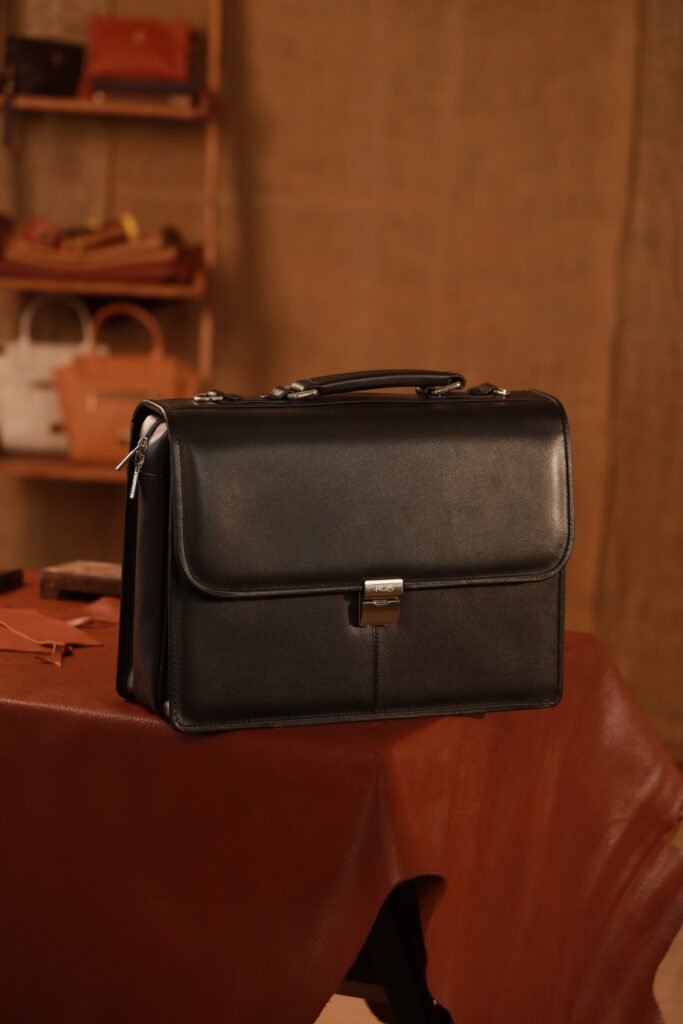
In leather, we also see another issue. Fast fashion and inexpensive synthetic alternatives have expanded rapidly, while many consumers do not fully understand the difference between natural leather and PU or other synthetic materials in terms of durability, ageing and long-term value.
Premium demand has not disappeared, but customers increasingly want a clear reason to pay more.
Premium brands therefore have to communicate authenticity, craftsmanship, durability and long-term value much more effectively than before.
The Scoop: Sustainability is becoming increasingly important in international leather and fashion markets, particularly with regard to environmental standards and responsible manufacturing. What investments and changes does Pakistan’s leather and fashion industry need to make if it wants to remain competitive in Europe, Japan and other premium markets?
Asfandyar Farrukh: Leather should not automatically be viewed as less sustainable than synthetic alternatives. It is a durable natural material that utilises hides leftover by the meat industry and can have a very long useful life.
At the same time, how leather is produced is critical.
Many Pakistani leather manufacturers have already made considerable progress in effluent treatment, safer chemical usage, resource efficiency, social compliance, traceability and international certification. However, standards and capabilities still vary considerably across the industry, so further investment is required.
The other major opportunity is greater collaboration between manufacturers, designers, retailers and exporters.
Pakistan’s domestic retail market has helped build much stronger design, product development and consumer understanding over the past two decades. We now need to connect those capabilities more effectively with our manufacturing and export base.
A lot of what needs to be done is already identified in Pakistan’s leather and textile policy frameworks. The real challenge is coordinated implementation by both government and the private sector, which is sorely missing.
The Scoop: Finally, if you were given the opportunity to present the government with a five-point economic agenda specifically for Pakistan’s retail, fashion and consumer-goods sector, what would your five priorities be and which single reform would you implement immediately?
Asfandyar Farrukh: My first priority would be to broaden the tax base in a methodical and predictable manner while reducing the disproportionate burden on documented businesses in parallel.
Second, we need regulatory consistency, broad-based stakeholder consultation and a credible multi-year policy and taxation roadmap.
Third, we should accelerate digital payments and formalisation by creating incentives for both consumers and merchants.
Fourth, as a country we need to actively support local brands, value addition and international market expansion rather than focusing primarily on manufacturing and commodity exports.
And fifth, organised retail and Pakistani consumer brands need to be recognised as an important engine for investment, employment, technology, manufacturing and exports.
The common thread across all five is predictability. Businesses need clarity of direction and confidence that policy will be implemented consistently over a number of years.
If I had to choose one immediate reform, it would be to change the economics of formalisation.
We need to progressively reduce the tax disadvantage faced by fully documented businesses while widening the tax base through a planned, predictable and genuinely consultative multi-year roadmap.
Too many policies have failed because they were designed without sufficient understanding of commercial realities or because there was not enough will or consistency in their implementation.
The point about building Pakistani brands for wider markets applies to smaller manufacturers as well. For a regional maker, getting into organised retail usually starts with consistent packaging, proper documentation and reliable supply, well before any shelf listing. It is encouraging to see digital payments reaching smaller shops too. Derox by Lasani Chemicals, Sialkot.