

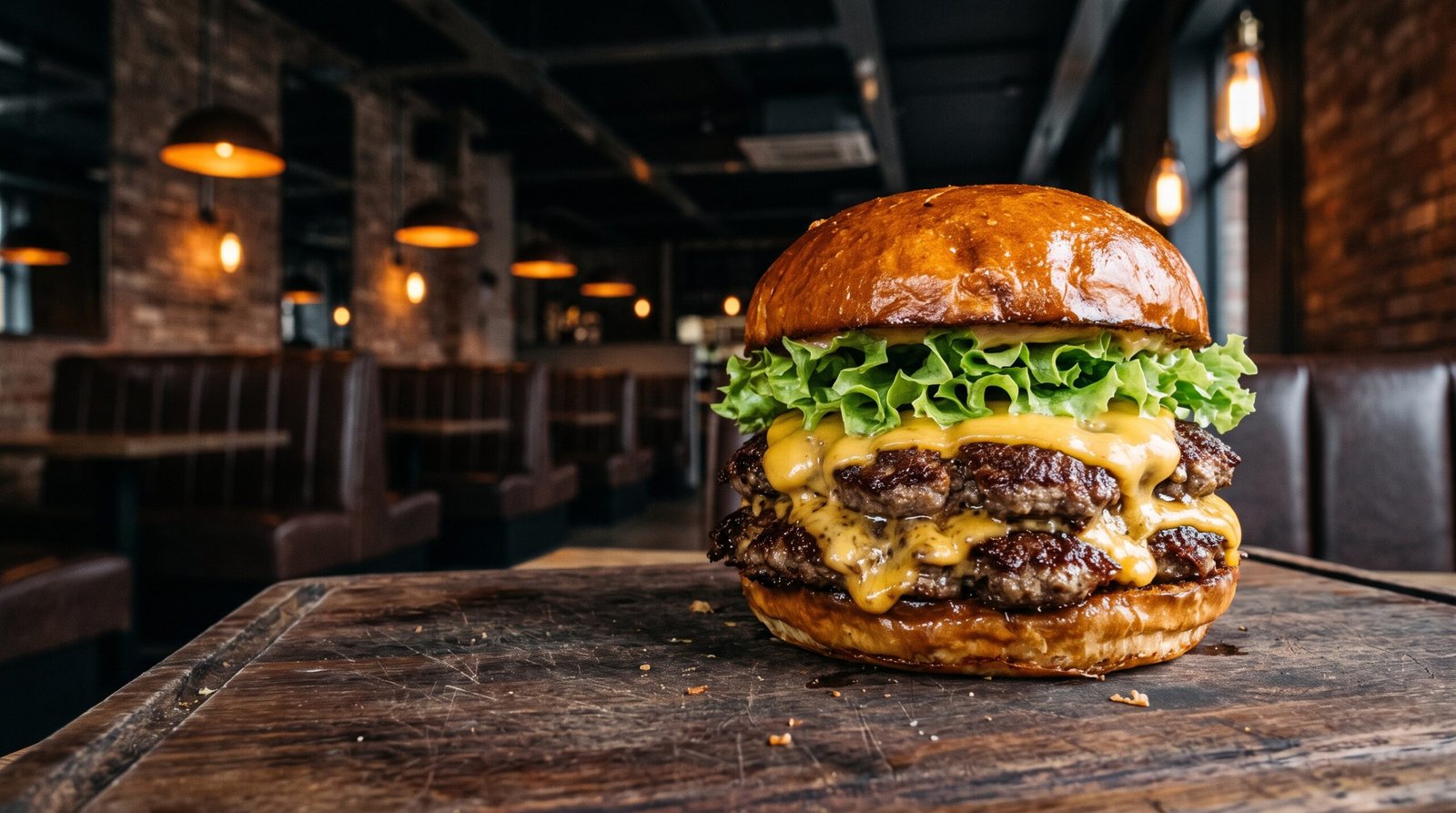
LAHORE: When SMASH began selling burgers during the Covid-19 lockdown in 2020, Pakistan’s fast-food industry already had established international competitors, including McDonald’s, Hardee’s and Burger King. These multinational brands had spent years building restaurant networks, developing supply chains and introducing Pakistani consumers to internationally recognised fast-food products.
For a small Pakistani business operating out of a backyard, the prospect of competing against these companies appeared formidable.
Yet six years later, SMASH has developed into a multi-city restaurant business, employing hundreds of people and serving thousands of customers daily, according to its published corporate information.
Its transformation illustrates an important change in Pakistan’s urban food economy: international recognition and decades of operating experience are no longer sufficient, by themselves, to guarantee dominance in the increasingly competitive burger market.
The emergence of SMASH, Howdy, Burger Lab, Daily Deli Co., Brim Burgers, Ranchers, Burger O’Clock, Johnny & Jugnu and other homegrown operators has created a market in which Pakistani entrepreneurs are developing their own products, restaurant formats, branding strategies and expansion models.
These businesses are not necessarily defeating multinational competitors in overall sales. Indeed, reliable market-share figures remain difficult to establish. What they have demonstrated, however, is that Pakistani brands can build recognisable restaurant networks in a segment historically associated with foreign franchises.
The central business question is no longer whether local burger brands can survive alongside international giants. Several already have.
The more consequential questions concern their profitability, the sustainability of expansion, the economics of individual outlets and whether their growing visibility is translating into a meaningful share of Pakistan’s fast-food spending.
SMASH represents one of the more striking examples of entrepreneurial expansion in Pakistan’s contemporary restaurant industry.
Established in Lahore in 2020, the company describes its origins as a lockdown passion project that developed from backyard burger preparation into a professional restaurant operation.
Its early growth is particularly revealing because the business did not initially depend on the traditional expansion model associated with international fast-food chains.
Rather than beginning with expensive flagship premises, extensive seating arrangements and large-scale restaurant infrastructure, SMASH developed around a relatively specialised product and a customer base attracted to its burgers.
In February 2022, the company disclosed that its first takeaway kitchen had reached average sales of approximately 300 burgers daily within three months of opening.
That figure is significant for understanding its early operating model.
At 300 burgers a day, a single kitchen operating consistently throughout a 30-day month would produce approximately 9,000 burgers.
At an illustrative average selling price of Rs600, such volume would represent gross monthly burger sales of Rs5.4 million.
At Rs800, the corresponding figure would reach Rs7.2 million.
These calculations are hypothetical revenue illustrations based on the company’s historical volume disclosure, not verified turnover or profitability figures.
Nevertheless, they demonstrate why a relatively small takeaway operation can become an attractive business when customer demand is sufficiently concentrated.
The company’s next expansion decision also provides an insight into its management approach.
Before opening its second location, SMASH surveyed customers and reportedly discovered that approximately 35% were travelling from DHA Lahore.
Rather than selecting a new outlet solely on the basis of commercial visibility, the business identified an existing concentration of customers and established a location in DHA Phase 2.
The decision also took account of delivery coverage and rental costs.
This approach reflects a principle increasingly important to modern restaurant operators: expansion should follow demonstrated customer demand rather than merely the availability of attractive commercial property.
By 2026, SMASH’s published restaurant information listed eight locations in Lahore, three in the Islamabad-Rawalpindi area, one in Sialkot and one in Gujranwala.
Its corporate profile describes operations across five cities, while its ordering platform advertises more than 2,450 orders daily and over 100 skilled professionals. Its LinkedIn profile places the organisation in the 201–500 employee category.
These figures are company-reported and should not be mistaken for independently audited operating results.
Even so, they indicate the scale of the business that has emerged from its modest beginnings.
Assuming the advertised 2,450 daily orders were sustained over 365 days, the network would process approximately 894,250 orders annually.
At an illustrative average order value of Rs800, this would imply annual gross customer spending of approximately Rs715.4 million.
At Rs1,000 per order, the corresponding amount would approach Rs894.3 million.
At Rs1,200, it would exceed Rs1.07 billion.
These are sensitivity calculations, not SMASH’s disclosed revenues. They exclude the possibility of fluctuations in demand, cancelled orders, discounts, taxes, platform commissions and differences between orders and individual burgers.
The company has not publicly established through audited financial statements what proportion of customer spending translates into its recognised revenue, operating profit or net earnings.
That distinction matters.
A restaurant chain processing hundreds of millions of rupees in customer orders may still face substantial expenses for beef, chicken, buns, cheese, cooking oil, packaging, staff, utilities, rent, delivery and marketing.
High sales volume is not automatically evidence of high profitability.
SMASH’s achievement, therefore, is best understood as demonstrated operational expansion and brand development, with the profitability of that expansion remaining an important unanswered question.
The appeal of the smash burger extends beyond its branding.
Unlike thicker conventional patties, smash burgers are generally prepared by pressing minced beef against a hot cooking surface, creating a relatively thin patty with extensive surface browning.
The technique can produce a distinctive flavour and texture while allowing relatively rapid cooking.
From an operational perspective, the format offers several potential advantages.
A specialised burger menu can reduce the number of ingredients a kitchen must manage. Standardised patty weights can improve portion control. Shorter preparation times can increase kitchen throughput, while a focused product range may simplify staff training and procurement.
These advantages are conditional rather than automatic.
Thin patties still require appropriate cooking equipment, temperature control, ingredient consistency and skilled execution. A restaurant offering multiple toppings, sauces and combinations can quickly lose the simplicity associated with its original product.
Nevertheless, the broader commercial principle is important.
International fast-food operators historically built their businesses around standardisation, repeatability and speed. Pakistani burger entrepreneurs are increasingly applying similar principles without necessarily reproducing the entire multinational restaurant model.
SMASH’s growth suggests that a specialised product, consistent brand identity and well-selected locations can create an alternative to the extensive menus and capital-intensive formats of larger competitors.
Its success also reflects the importance of product positioning.
Rather than presenting itself as a general-purpose fast-food restaurant, SMASH has developed a recognisable identity around burgers.
In a crowded market, such specialisation can make a brand easier for consumers to remember and distinguish from competitors.
The challenge emerges when that specialisation becomes fashionable.
As more restaurants introduce smash burgers, the cooking method itself becomes less distinctive. Operators must then compete through ingredients, execution, pricing, convenience and customer loyalty.
A successful product can attract customers, but sustainable restaurant economics ultimately determine whether a chain can retain them.
If SMASH represents the newer generation of specialised burger operators, Howdy demonstrates how an established Pakistani restaurant concept can maintain a presence alongside international competitors.
Founded in 2012, Howdy developed its identity around charcoal-grilled burgers, distinctive product names and a restaurant experience designed to differentiate it from conventional fast-food outlets.
Its menu includes products such as Son of a Bun, Rango Tango, Fandango and Wrangler.
This branding approach matters because it creates a product identity independent of the international chains.
Instead of attempting to replicate McDonald’s or Hardee’s, Howdy positioned its burgers around a particular cooking style and a recognisable dining experience.
Its published branch information includes restaurants across Lahore and the Islamabad-Rawalpindi region.
The company has established locations in prominent commercial areas and shopping centres, indicating a business model with a substantial dine-in component.
That model differs from the takeaway-led origins of SMASH.
For Howdy, restaurant atmosphere, seating, service and location can be important components of the customer proposition.
However, these characteristics also create different cost pressures.
Larger premises generally require more investment in interiors, furniture, maintenance, utilities and customer-facing staff.
They may also carry higher occupancy costs than compact takeaway kitchens.
Consequently, comparing Howdy’s financial performance with a smaller burger outlet purely on the basis of daily order counts would be misleading.
A full-service burger restaurant may generate higher average bills while carrying substantially greater operating expenses.
Howdy’s continued presence demonstrates that Pakistani entrepreneurs can build enduring restaurant identities, but its long-term financial performance cannot be determined without outlet-level revenue, profitability and investment figures.
Burger Lab provides another important example of the evolution of Pakistan’s homegrown fast-food industry.
Its expansion strategy is particularly relevant because franchising can change the economics of restaurant growth.
The company’s published branch directory identifies approximately 30 locations across Karachi, Lahore, Islamabad, Rawalpindi, Hyderabad, Faisalabad, Multan, Sialkot, Peshawar and Kharian.
Its franchise materials have separately reported 32 outlets across nine cities, illustrating the need to distinguish between promotional figures, active outlets and the dates on which counts were published.
The business has developed a recognisable menu and expanded into shopping malls, commercial districts and secondary urban markets.
For restaurant entrepreneurs, the franchise model offers a potentially attractive route to geographical expansion.
Instead of financing every new location from central company resources, a brand can license its operating system to investors who provide capital for premises, equipment and local operations.
In return, the franchisor may receive initial fees, continuing royalties or other contractual payments.
This approach can accelerate expansion while reducing the amount of capital required from the original brand owner.
However, franchising introduces its own risks.
A poorly managed franchise can damage consumer confidence in the entire chain. Inconsistent ingredients, inadequate staff training, weak hygiene controls and variations in service quality can undermine a brand even when its original restaurants perform well.
Successful franchising therefore requires more than selling the right to use a name.
It depends on operational manuals, procurement standards, training systems, quality inspections, technology and enforceable franchise agreements.
Burger Lab’s expansion demonstrates the appeal of this model in Pakistan, but the number of franchise outlets alone does not establish the profitability of individual investors.
The more revealing indicators would be franchisee payback periods, restaurant-level margins, outlet closures and the proportion of franchise partners who invest in additional locations.
These figures are not comprehensively available in the public domain.
The competitive landscape is becoming more crowded as additional Pakistani operators expand beyond their original markets.
Brim Burgers provides an example of a business positioning itself around smash burgers while establishing a network extending beyond Lahore.
Its published locations include outlets in Lahore, Islamabad, Multan, Gujranwala, Faisalabad, Sargodha and other markets.
This expansion is important because it challenges the assumption that specialised burger concepts can succeed only in the most affluent neighbourhoods of Lahore, Karachi and Islamabad.
Secondary cities may offer opportunities through comparatively different rental structures, lower levels of direct competition and growing consumer demand for organised food brands.
However, expansion outside major metropolitan centres is not necessarily cheaper or easier.
Purchasing power, supply-chain reliability, delivery density and customer spending patterns can vary significantly between cities.
A business model that works in DHA Lahore may require substantial adjustments in Sargodha, Gujranwala or Multan.
The growing number of local burger operators also creates a new competitive problem for the industry.
Pakistani chains are no longer competing only against international franchises.
They are increasingly competing against one another.
This means the market is moving beyond the simple distinction between foreign and local brands.
Consumers can now compare several Pakistani operators offering broadly similar products, promotional deals, delivery services and dining experiences.
As the number of competitors increases, product differentiation becomes harder and the cost of acquiring and retaining customers may rise.
Despite the expansion of Pakistani burger chains, McDonald’s and Hardee’s retain substantial competitive advantages.
Their international brand recognition, established operating procedures, supplier relationships and experience in restaurant management represent capabilities that smaller businesses may require years to develop.
McDonald’s has operated in Pakistan since 1998 and established a significant national presence.
An earlier assessment by the United States International Trade Administration reported more than 85 McDonald’s restaurants and approximately 21 Hardee’s outlets in Pakistan.
These figures provide historical context rather than verified October 2026 restaurant totals.
The scale of international chains is important because their businesses are built around more than burgers.
They have developed systems for procurement, staff training, food safety, inventory management, equipment maintenance, restaurant design and customer service.
Such systems can reduce operational uncertainty and support consistency across multiple locations.
They also require considerable investment.
International franchises may face contractual obligations, brand standards, approved equipment requirements and other restrictions that affect operating flexibility.
Locally developed businesses may have greater freedom to introduce products, modify menus, select suppliers and respond to changing consumer preferences.
That flexibility can be particularly valuable in Pakistan, where currency movements, inflation, changing purchasing power and supply disruptions can alter restaurant economics.
However, the competitive advantages of local ownership should not be overstated.
Domestic brands also face imported ingredient costs, machinery expenses, high electricity tariffs, financing constraints and volatile raw-material prices.
The difference lies less in immunity from these pressures than in how quickly individual operators can respond.
Perhaps the most significant finding is the lack of transparent, comparable market-share information for Pakistan’s organised burger industry.
There is no readily accessible, independently verified public dataset establishing the current percentage of national burger-chain sales attributable to McDonald’s, Hardee’s, SMASH, Howdy, Burger Lab or other domestic operators.
Commercial market-research companies produce reports covering Pakistan’s broader fast-food and quick-service restaurant industry.
For example, a September 2026 market-research update identifies burgers and sandwiches as a distinct product segment and examines revenues by business model, service channel and cuisine.
However, the publicly accessible description does not disclose a verified brand-by-brand market-share breakdown.
This absence creates a serious analytical problem.
Restaurant counts cannot be treated as market share.
A McDonald’s outlet with a drive-through, breakfast service, substantial seating capacity and high transaction volume may generate significantly different sales from a compact burger takeaway.
Similarly, a Pakistani chain with more outlets than a competitor may still generate lower total revenue.
Average selling prices, daily transactions, operating hours, delivery volumes and outlet formats all affect revenue.
A meaningful market-share calculation would require a defined market and comparable sales information.
If the relevant market were defined as organised burger-chain sales, analysts would need to establish the annual burger-related revenue of every significant operator and divide individual brand sales by the combined industry total.
Without those figures, any precise percentage attributed to SMASH or another private chain would be speculative.
This is particularly important when interpreting the rapid expansion of local businesses.
An increase in the number of Pakistani burger restaurants does not necessarily mean international chains are losing absolute sales.
The overall market may also be expanding.
New consumers, higher menu prices, delivery growth and changing eating habits can increase industry revenue even while individual operators experience changing market shares.
The distinction between taking business from competitors and participating in a growing market is fundamental.
The profitability of Pakistan’s burger industry depends on a complicated combination of food costs, labour, rent, utilities, packaging, marketing and sales volume.
Consider an illustrative burger outlet generating 150 customer orders daily at an average transaction value of Rs1,000.
Over a 30-day month, gross customer spending would reach Rs4.5 million.
If food and packaging consumed 38% of that amount, the business would incur Rs1.71 million in direct product costs.
If payroll accounted for another 15%, rent 10%, utilities 6%, marketing and delivery-related expenses 12%, and other operating expenses 7%, the outlet would retain approximately 12% before depreciation, financing costs and income tax.
That would represent roughly Rs540,000 monthly.
These percentages are hypothetical and should not be interpreted as actual margins reported by any Pakistani restaurant chain.
They illustrate how apparently substantial sales can translate into much smaller operating earnings.
A reduction in daily orders from 150 to 100 would lower monthly customer spending from Rs4.5 million to Rs3 million, assuming the average transaction value remained unchanged.
Yet rent, management salaries, equipment expenses and some utility costs would not decline proportionately.
Consequently, restaurant profitability can deteriorate rapidly when sales volumes fall below the level required to cover fixed costs.
This is why expansion based on brand popularity alone can be dangerous.
A restaurant generating queues during its opening weeks may not necessarily sustain sufficient demand throughout the year.
Promotional discounts can increase transactions while reducing contribution margins.
Similarly, delivery platforms can create additional sales but introduce commissions, packaging costs and promotional expenses.
For Pakistani burger chains, the real measure of business success is not how many outlets open.
It is how many generate sustainable returns after accounting for their full operating costs.
The growth of app-based food ordering has changed the way restaurants acquire customers.
Historically, a new restaurant needed an attractive location and substantial visibility to generate traffic.
Today, a business can reach customers through delivery platforms, social media marketing, direct ordering websites and its own mobile applications.
This shift has potentially reduced some of the disadvantages faced by smaller brands.
A relatively compact kitchen can serve customers across a surrounding delivery area without providing extensive seating.
Digital ordering also allows operators to gather information about popular products, transaction frequency and customer locations.
SMASH’s early use of customer-location information demonstrates how such insights can influence expansion decisions.
The company has also introduced its own ordering application, EAT Smash Pakistan, providing another direct channel through which customers can place orders.
For restaurant operators, direct ordering can be strategically valuable because it may reduce dependence on third-party platforms and allow greater control over customer relationships.
However, developing an application does not automatically produce meaningful direct sales.
Consumers must download it, continue using it and find sufficient value in ordering directly.
Third-party platforms retain advantages through customer traffic, delivery infrastructure, payment systems and established ordering habits.
The economic challenge for local chains is therefore to balance marketplace visibility with the benefits of direct customer relationships.
The rise of Pakistani burger brands cannot be understood without examining how consumers evaluate value.
International fast-food chains traditionally benefited from brand familiarity, perceived consistency and the status associated with recognised global names.
Local operators increasingly offer alternative forms of appeal.
These include distinctive cooking methods, larger or differently configured portions, locally developed sauces, customised menus and brand identities that reflect Pakistani consumer preferences.
Price is another important factor, although it would be inaccurate to assume that every local chain is cheaper than its international competitors.
Many domestic gourmet burger brands now operate in premium price categories.
For example, Howdy’s published delivery menu lists several individual burgers around Rs1,000–Rs1,350, before accounting for variations in promotions, delivery charges and location.
At such prices, these restaurants are not competing solely through affordability.
They are competing for customers willing to pay a premium for a particular product or dining experience.
The distinction matters because Pakistan’s burger industry increasingly contains multiple consumer segments.
Budget-conscious customers may prioritise promotional meals and portion size.
Other consumers may prefer premium beef burgers, specialised ingredients, restaurant ambience or convenience.
A successful brand must understand which customers it serves rather than attempting to appeal equally to every segment.
Pakistan’s economic conditions have made restaurant management particularly demanding.
Food businesses are exposed to fluctuations in meat, poultry, dairy, edible oil, flour, packaging and energy costs.
Exchange-rate movements can affect imported ingredients, specialised equipment and other supplies.
Higher electricity bills increase the cost of refrigeration, ventilation, lighting and cooking operations.
Rising wages and commercial rents place additional pressure on businesses operating in major urban centres.
Restaurant operators must decide whether to absorb these increases, reduce portions, modify recipes, negotiate supplier prices or pass costs on to consumers.
Each option carries consequences.
Increasing menu prices can protect margins but may reduce demand.
Reducing portion sizes can preserve affordability but damage consumer trust.
Switching ingredients can lower costs but affect product consistency.
The ability to manage these trade-offs is one reason operational discipline becomes increasingly important as restaurant chains expand.
A small business may be able to monitor food preparation and purchasing directly.
A network of 10, 20 or 30 outlets requires formal systems, trained managers, centralised reporting and reliable supplier controls.
The transition from an entrepreneur-led restaurant to a professionally managed chain can therefore be as challenging as launching the original business.
The expansion of Pakistani food chains has also created opportunities for investors interested in operating restaurants under established local brands.
However, the financial attractiveness of such investments depends on considerably more than franchise fees.
A prospective franchisee must evaluate initial setup costs, security deposits, equipment, furniture, opening inventory, staff recruitment, training, working capital and continuing royalty obligations.
The investment may also include expenses associated with commercial property, signage, kitchen ventilation and technology systems.
Burger Lab’s publicly advertised franchise arrangements provide an example of how local restaurant brands have formalised their expansion offerings.
But a franchise fee should never be confused with the total cost of opening a restaurant.
Nor does the existence of an established brand guarantee a particular return.
A prospective investor should examine actual sales from comparable outlets, operating margins, historical closures, franchise renewal rates and the financial performance of existing operators.
Perhaps the most important question concerns payback.
How many months or years does it take for the cash generated by a restaurant to recover the initial investment?
Without credible answers, the financial viability of a franchise cannot be established.
For Pakistan’s restaurant industry, greater disclosure of franchise economics would help distinguish genuinely sustainable business opportunities from expansion driven primarily by brand enthusiasm.
The emergence of successful Pakistani burger brands is not the result of a single competitive advantage.
Several developments have occurred simultaneously.
Local entrepreneurs have become more sophisticated in branding and digital marketing.
Consumers have become more familiar with specialised burger products and more willing to experiment with unfamiliar restaurant names.
Delivery services have created new channels for customer acquisition.
Shopping malls and commercial developments have provided opportunities for restaurant expansion.
Franchising has enabled some businesses to attract investment beyond their founding teams.
Perhaps most importantly, several local operators have avoided competing with international chains on precisely the same terms.
Howdy developed a charcoal-grilled burger identity and a distinctive dine-in experience.
SMASH concentrated on a specialised product and demonstrated early demand-led expansion.
Burger Lab developed a scalable restaurant concept supported by franchising.
Brim Burgers has expanded the presence of the smash-burger category across multiple cities.
These different strategies illustrate why there is no single formula for building a successful Pakistani burger chain.
However, survival and expansion should not be confused with proof of superior financial performance.
International franchises may continue to generate substantial sales while local brands grow around them.
The industry can accommodate several successful business models, particularly if overall consumer spending continues to expand.
The next phase of competition may prove more difficult than the first.
Establishing a popular burger brand requires product quality, marketing and customer interest.
Building a profitable national restaurant chain requires considerably more.
Operators must develop reliable supply chains, maintain food safety, standardise recipes, train managers, control costs and ensure that expansion does not weaken the customer experience.
They must also avoid opening restaurants simply because investors are willing to finance them.
Poorly selected locations can undermine profitability even when the underlying brand remains popular.
Aggressive discounting can temporarily increase orders while weakening earnings.
Overdependence on delivery platforms can leave restaurants exposed to changing commercial terms.
And rapid franchising can create quality-control problems that become difficult to reverse.
These are not challenges unique to Pakistani businesses.
They are fundamental characteristics of the restaurant industry internationally.
What makes the Pakistani market particularly interesting is that several domestic operators are confronting these problems while simultaneously competing with multinational brands that have decades of experience managing them.
The growth of SMASH, Howdy, Burger Lab and other homegrown burger businesses reflects a significant development in Pakistan’s organised food-service industry.
SMASH’s transformation from a lockdown-era project into a multi-city operation is particularly noteworthy because it demonstrates how a relatively focused restaurant concept can develop substantial operational scale.
Howdy’s established presence illustrates the potential longevity of a differentiated Pakistani dining brand.
Burger Lab’s franchise expansion demonstrates how local concepts can attract capital and establish networks beyond their original cities.
Brim Burgers and other emerging operators show that competition is continuing to intensify rather than consolidating around a handful of established names.
Yet the industry’s most important financial questions remain unanswered.
How much revenue do these businesses actually generate?
What are their restaurant-level operating margins?
How many outlets are profitable?
How much capital is required to establish a new location?
What proportion of expansion is financed by company resources, debt or franchise investors?
And, most importantly, what share of Pakistan’s organised burger market is now controlled by domestic operators?
Without reliable answers, declarations that Pakistani chains have overtaken international competitors would be premature.
What can be established is that international franchises no longer have the organised burger business to themselves.
Pakistani entrepreneurs have developed products, restaurant formats and brands capable of attracting customers across multiple cities.
The most important achievement is not that a local business can produce a burger comparable to an international competitor.
It is that a locally developed restaurant concept can establish a recognisable identity, build repeat demand, employ hundreds of people and expand beyond its original neighbourhood.
For SMASH, the journey from backyard burgers to a multi-city network illustrates that opportunity.
But the next chapter will be determined less by how many burgers it sells than by how efficiently it can sell them.
Pakistan’s burger revolution has already produced expanding domestic brands.
Whether it produces financially resilient national restaurant companies will depend on what happens behind the counter: margins, management, investment discipline and the ability to retain customers long after the excitement surrounding a new outlet has faded.