

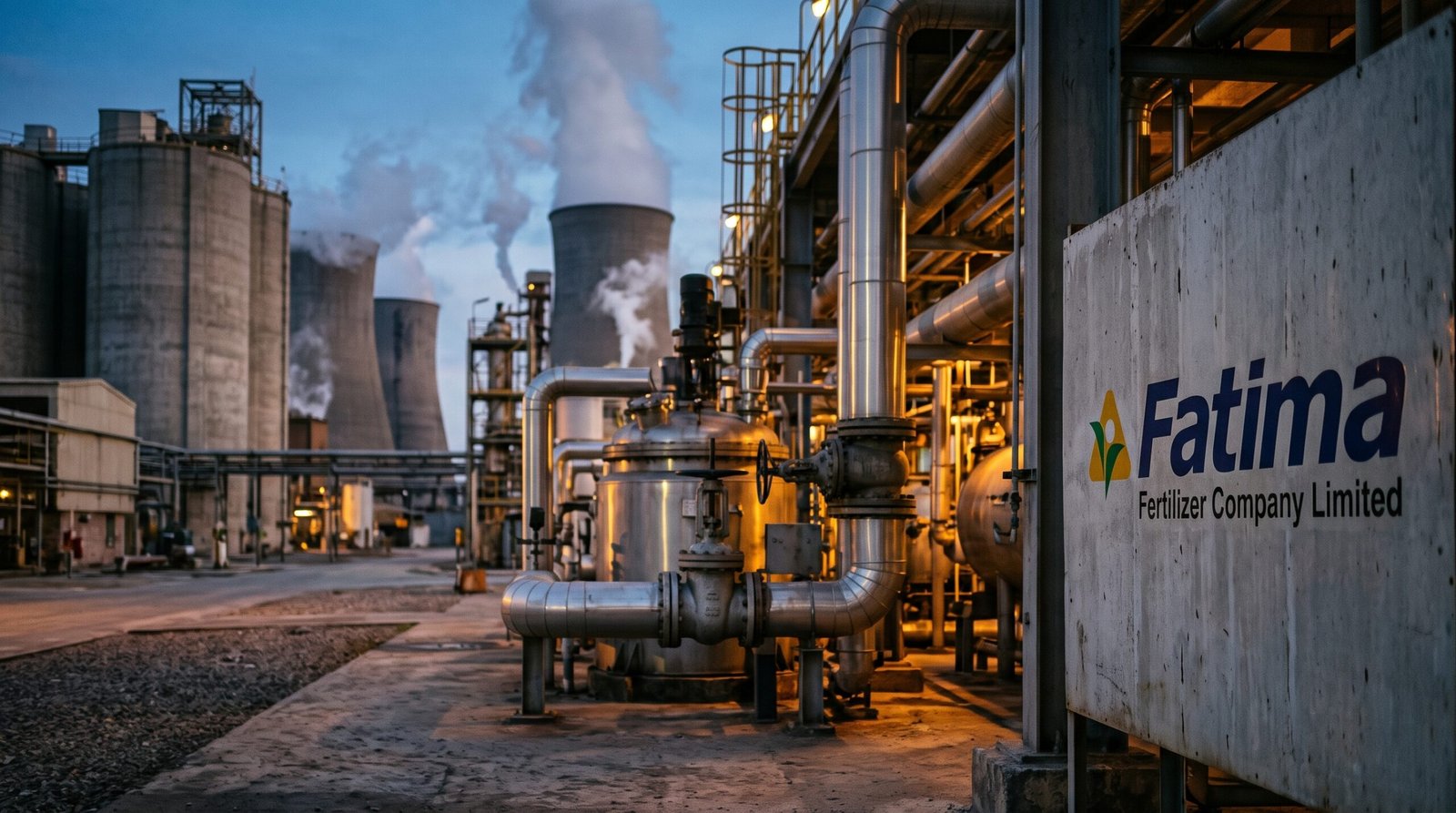
LAHORE, October 30, 2026: Fatima Fertilizer Company Limited has reported its highest-ever consolidated revenue for a nine-month period, reaching Rs194.54 billion during January–September 2026, while profit after tax increased to Rs29.96 billion despite production disruptions, rising operational expenses and mounting pressure on Pakistan’s agricultural economy.
According to the company’s third quarterly financial report for 2026, consolidated revenue increased by 8.8 per cent from Rs178.80 billion in the corresponding period of 2025, reflecting stronger sales volumes and a favourable product mix.
Consolidated profit after tax rose by approximately 3.6 per cent from Rs28.91 billion to Rs29.96 billion, while earnings per share increased from Rs13.77 to Rs14.27.
The financial performance highlights the company’s ability to sustain profitability despite an 88-day shutdown at its Sheikhupura manufacturing facility following the suspension of gas supplies amid disruptions associated with the ongoing regional conflict.
The company also maintained an overall fertiliser market share of 29.7 per cent, reinforcing its position as one of Pakistan’s major agricultural input manufacturers.
Gross Profit Surges Nearly 22% As Revenue Reaches Record Level
A closer examination of the financial statements reveals that Fatima Fertilizer’s gross profitability improved considerably faster than its overall revenue.
Consolidated gross profit increased from Rs64.18 billion in the first nine months of 2025 to Rs78.15 billion during the corresponding period of 2026, representing growth of approximately 21.8 per cent.
The company’s gross profit margin consequently improved from approximately 35.9 per cent to 40.2 per cent.
Management attributed this performance largely to a favourable sales mix, particularly the growing contribution of nitrogen-based fertilisers, which helped restrict the increase in cost of sales to just 1.5 per cent.
Consolidated earnings before interest, taxation, depreciation and amortisation (EBITDA) reached Rs63.18 billion, compared with Rs60.93 billion in the corresponding period last year.
Profit before taxation increased from Rs46.07 billion to Rs48.90 billion, representing growth of approximately 6.2 per cent.
However, the improvement in gross profitability did not translate into an equally substantial increase in net earnings.
Administrative expenses increased by 28.7 per cent, while distribution expenses rose by 11.5 per cent, reflecting higher transportation and product storage costs.
Other income declined by 63.7 per cent, primarily because of lower valuation gains on Pakistan Stock Exchange-listed investments held by the company’s wholly owned subsidiary, Fatima Capital Limited.
Finance costs, meanwhile, declined by 14.4 per cent, partially offsetting the pressure from higher operating expenses.
The effective tax rate increased from 37.2 per cent to 38.7 per cent, further limiting growth in after-tax earnings.
Fertiliser Sales Rise Despite 88-Day Sheikhupura Plant Shutdown
One of the most significant developments during the reporting period was the divergence between Fatima Fertilizer’s production volumes and sales performance.
Combined fertiliser production declined by approximately 8.5 per cent, principally because of the prolonged shutdown at the Sheikhupura facility.
Nevertheless, consolidated fertiliser sales increased by 2.2 per cent to 1.868 million metric tonnes, compared with 1.828 million metric tonnes during January–September 2025.
The company’s product-wise sales data indicates a noticeable shift in demand towards nitrogen-based fertilisers.
Urea sales increased from 711,000 metric tonnes to 783,000 metric tonnes, representing growth of approximately 10.1 per cent.
Calcium Ammonium Nitrate (CAN) sales increased from 577,000 metric tonnes to 612,000 metric tonnes, reflecting growth of approximately 6.1 per cent.
However, Nitrophos sales declined from 514,000 metric tonnes to 462,000 metric tonnes, a reduction of approximately 10.1 per cent.
Diammonium Phosphate (DAP) sales fell more sharply, declining from 26,000 metric tonnes to just 11,000 metric tonnes.
The changing sales composition reflects broader developments in Pakistan’s fertiliser market, where farmers have increasingly shifted towards relatively affordable nitrogen-based products as international phosphate prices have surged.
Despite the operational disruption, Fatima Fertilizer reported completing several process improvements, plant modifications and overhauls intended to improve manufacturing efficiency.
Global Fertiliser Prices Surge As Middle East Tensions Disrupt Supply Chains
The company’s financial report also provides an assessment of international fertiliser market conditions, particularly the impact of geopolitical tensions on global agricultural input prices.
According to management, supply chain bottlenecks involving phosphates and elemental sulphur contributed to substantial increases in international fertiliser prices during the first nine months of 2026.
Landed DAP prices in Pakistan reached a peak of $965 per metric tonne before easing to approximately $907 per metric tonne towards the end of September.
The correction was attributed primarily to buyer resistance and affordability constraints rather than a significant improvement in underlying raw material costs.
International urea prices also experienced considerable volatility.
Middle Eastern urea prices increased from approximately $380 per metric tonne at the beginning of July 2026 to $462.50 per metric tonne, representing an increase of nearly 21.7 per cent.
These developments have significant implications for Pakistan, where fertiliser affordability directly influences crop productivity, agricultural investment and food security.
Pakistan’s Fertiliser Market Grows 2.5% But Phosphate Demand Slumps
Pakistan’s overall fertiliser market recorded modest growth during the first nine months of 2026.
Total industry offtake increased from 6.149 million metric tonnes to 6.301 million metric tonnes, representing growth of 2.5 per cent.
However, the third quarter witnessed a reversal in demand, with overall fertiliser offtake declining by 3.1 per cent compared with the corresponding quarter of 2025.
The decline was particularly pronounced in phosphate fertilisers.
Industry-wide phosphate offtake fell by 28.1 per cent during the third quarter, while nitrogen-based fertiliser demand increased by 3.3 per cent.
The figures suggest that higher input prices are increasingly influencing farmers’ purchasing decisions.
Management warned that the shift away from balanced fertiliser application towards comparatively cheaper nitrogen products could create challenges for agricultural productivity.
The report highlighted the financial pressures confronting farmers, particularly rising cultivation costs, squeezed margins and uncertainty surrounding crop yields.
Standalone Profit Falls 24% Despite Consolidated Growth
Although Fatima Fertilizer reported higher consolidated earnings, its standalone financial statements presented a contrasting picture.
Standalone revenue declined from a restated Rs124.52 billion during January–September 2025 to Rs111.69 billion in the corresponding period of 2026, representing a reduction of approximately 10.3 per cent.
Standalone profit after tax fell from Rs26.79 billion to Rs20.33 billion, a decline of approximately 24.1 per cent.
Earnings per share consequently decreased from Rs12.76 to Rs9.68.
Standalone profit before taxation declined from Rs42.22 billion to Rs33.56 billion.
However, gross profit increased marginally from Rs52.81 billion to Rs53.71 billion, indicating that pressure on earnings was also influenced by developments below the gross profit line.
Other income declined significantly from Rs13.21 billion to Rs4.74 billion, while administrative expenses increased from Rs5.43 billion to Rs7.64 billion.
The standalone results reflect the operations of the company’s Sadiqabad plant following the transfer of its Multan operations to wholly owned subsidiary Pakarab Fertilizers Limited.
The restructuring became effective from January 1, 2025, following approval of the relevant scheme by the Lahore High Court in November 2025.
The company has restated the corresponding 2025 standalone figures to provide a comparable basis.
This distinction is important because the consolidated accounts include the financial performance of the wider group, while the standalone statements reflect a narrower operational structure.
Third-Quarter Profit Declines Despite Higher Revenue
The July–September quarter also revealed an important divergence between revenue growth and profitability.
Consolidated quarterly revenue increased from Rs62.90 billion in 2025 to Rs63.93 billion in 2026, representing growth of approximately 1.6 per cent.
Gross profit rose from Rs22.24 billion to Rs27.64 billion, an increase of approximately 24.3 per cent.
Nevertheless, quarterly profit after tax declined from Rs11.98 billion to Rs9.52 billion, representing a fall of approximately 20.5 per cent.
Quarterly earnings per share decreased from Rs5.70 to Rs4.53.
A major contributor was the sharp decline in other income, which moved from Rs6.97 billion in the corresponding quarter of 2025 to a net expense of approximately Rs59 million in 2026.
The figures demonstrate that stronger gross margins did not fully protect quarterly net profitability from changes in non-core income and other expenses.
Also Read: Can Ismail Industries Restore Its Former Profitability?
Debt Repayments And Investment Activity Reshape Financial Position
The company’s financial statements also reveal significant movements in borrowings, investments and working capital.
On a standalone basis, outstanding long-term financing, including the current portion, declined from approximately Rs40.15 billion at the end of December 2025 to Rs8.82 billion by September 30, 2026.
During the nine-month period, the company reported long-term financing repayments of approximately Rs36.97 billion, alongside fresh financing proceeds of Rs5.54 billion.
However, short-term secured financing increased from Rs29.74 billion to Rs35.60 billion.
The figures indicate a substantial reduction in outstanding long-term borrowings, although short-term financing requirements remained significant.
The standalone balance sheet also recorded a decline in short-term investments from Rs68.10 billion to Rs21.56 billion.
Meanwhile, capital work in progress increased from approximately Rs7.50 billion at the end of 2025 to Rs16.60 billion by September 2026.
The increase indicates continuing investment in projects and assets under development.
The company’s standalone total assets stood at Rs283.29 billion as of September 30, compared with Rs308.09 billion at the end of December 2025.
Consolidated total assets, however, remained broadly stable at approximately Rs361.26 billion, compared with Rs360.89 billion at the end of the previous year.
Consolidated equity increased from Rs169.86 billion to Rs194.57 billion over the same period.
Cash Generation Improves As Company Funds Operations And Investments
Fatima Fertilizer’s standalone cash flow statement showed improved operating cash generation during the reporting period.
Net cash generated from operating activities increased from Rs9.69 billion in the corresponding nine months of 2025 to Rs16.26 billion in 2026.
Cash generated from operations before interest, taxation and other specified payments increased from Rs36.08 billion to Rs49.97 billion.
However, taxes paid increased from approximately Rs19.61 billion to Rs28.25 billion.
The company also reported additions to property, plant and equipment amounting to Rs9.98 billion, compared with Rs1.99 billion during the corresponding period last year.
These figures indicate that the company continued to allocate substantial resources towards capital investment while meeting financing and tax obligations.
Tax Disputes Remain Under Litigation
The financial statements also disclose several tax disputes involving the company.
One significant matter concerns a sales tax demand of approximately Rs628.72 million relating to the period from June to September 2014.
According to the company’s disclosure, the Appellate Tribunal Inland Revenue had deleted the demand through a rectification order issued in January 2025.
However, the Lahore High Court subsequently decided the matter in favour of the tax department in January 2026, restoring the liability.
The company has challenged the judgment before the Supreme Court, where its petition remains pending.
Separately, the tax authorities raised an income tax demand of approximately Rs2.16 billion for tax year 2023 through an order dated August 28, 2026.
The demand involved disputed deductions and claims relating to expenditure, exchange losses, the Workers’ Profit Participation Fund, donation-related tax credits and the Gas Infrastructure Development Cess.
The company disclosed that it had paid Rs309 million relating to the cess under protest and filed an appeal against the assessment.
Additional tax matters involving other assessment years also remain under appeal.
These disclosures represent contested tax assessments and ongoing legal proceedings rather than final determinations of wrongdoing.
Diversification Beyond Fertiliser Manufacturing
Fatima Fertilizer’s consolidated financial statements reflect an expanding corporate structure extending beyond its traditional fertiliser manufacturing operations.
Its subsidiaries include Pakarab Fertilizers Limited, Fatimafert Limited, Fatima Capital Limited, Fatima Packaging Limited, Fatima Cement Limited, Fatima Petroleum Company Limited and Fatima Mining Limited.
The consolidated financial statement notes also identify Pan-Africa Fertilizers Limited, incorporated in Kenya, as a wholly owned subsidiary.
The group’s principal activities encompass fertilisers, chemicals, cement and packaging materials, while its corporate structure includes investment, petroleum and mining entities.
The diversification is relevant to the company’s longer-term strategy, particularly as Pakistan’s fertiliser industry remains exposed to agricultural demand cycles, gas supply arrangements and international commodity price volatility.
However, the quarterly report does not establish the individual future revenue contribution expected from each diversification initiative.
Agricultural Sector Faces Growing Affordability Challenge
In its outlook, the company highlighted the vulnerability of Pakistan’s agricultural sector to rising input costs.
According to management, agriculture accounts for approximately 23 per cent of national GDP and employs nearly 38 per cent of the country’s workforce.
The company warned that high phosphate prices have weakened farmers’ purchasing power and encouraged a shift away from balanced fertiliser application.
Climate-related pressures on crop yields could further complicate the outlook.
Management also highlighted that domestically manufactured urea remains available to Pakistani farmers at approximately half the international market price.
However, the affordability of other agricultural inputs remains a significant concern.
The company expects fertiliser demand to improve during the final quarter of 2026, supported by seasonal cultivation requirements.
Management Expresses Confidence In Growth Outlook
Fatima Fertilizer’s board, chaired by Arif Habib, with Fawad Ahmed Mukhtar serving as Chief Executive Officer, expressed confidence in the company’s operational capabilities and longer-term growth prospects.
In its report dated October 28, 2026, management stated that the company remained prepared to meet farmers’ fertiliser requirements despite the challenges experienced during the reporting period.
The company also reported more than 159 million cumulative safe man-hours across its three plants, with a total recordable incident rate of 0.05.
It further highlighted its community development initiatives in healthcare, education and access to drinking water.
Fatima Fertilizer also reported receiving first position in the Human Rights category at the United Nations Global Compact Network Pakistan Sustainability Awards 2026.
Outlook: Strong Financial Position But Structural Challenges Persist
Fatima Fertilizer’s nine-month performance presents a mixed but broadly resilient picture of one of Pakistan’s major fertiliser manufacturers.
Record consolidated revenue, improved gross margins and higher nine-month profitability demonstrate the company’s ability to sustain commercial performance despite production disruptions and volatile international markets.
At the same time, declining standalone earnings, weaker third-quarter consolidated profit, higher administrative expenses and falling phosphate demand highlight pressures that could influence future results.
The widening difference between gross profit growth and net profit growth also underlines the importance of non-operating income, taxation and financing costs in determining overall profitability.
For Pakistan’s agricultural economy, the larger concern remains whether farmers can afford balanced fertiliser application at a time when cultivation costs are rising and crop margins remain under pressure.
Fatima Fertilizer’s performance suggests that major domestic producers retain considerable financial and operational capacity, but their longer-term growth will remain closely connected to agricultural purchasing power, uninterrupted energy supplies, global fertiliser prices and the broader stability of Pakistan’s economy.
With consolidated revenue approaching Rs200 billion in just nine months, the company enters the final quarter of 2026 from a substantial commercial position. Its ability to convert that scale into sustained earnings growth will depend on managing operational costs, maintaining production reliability and responding to the changing requirements of Pakistan’s farming sector.