

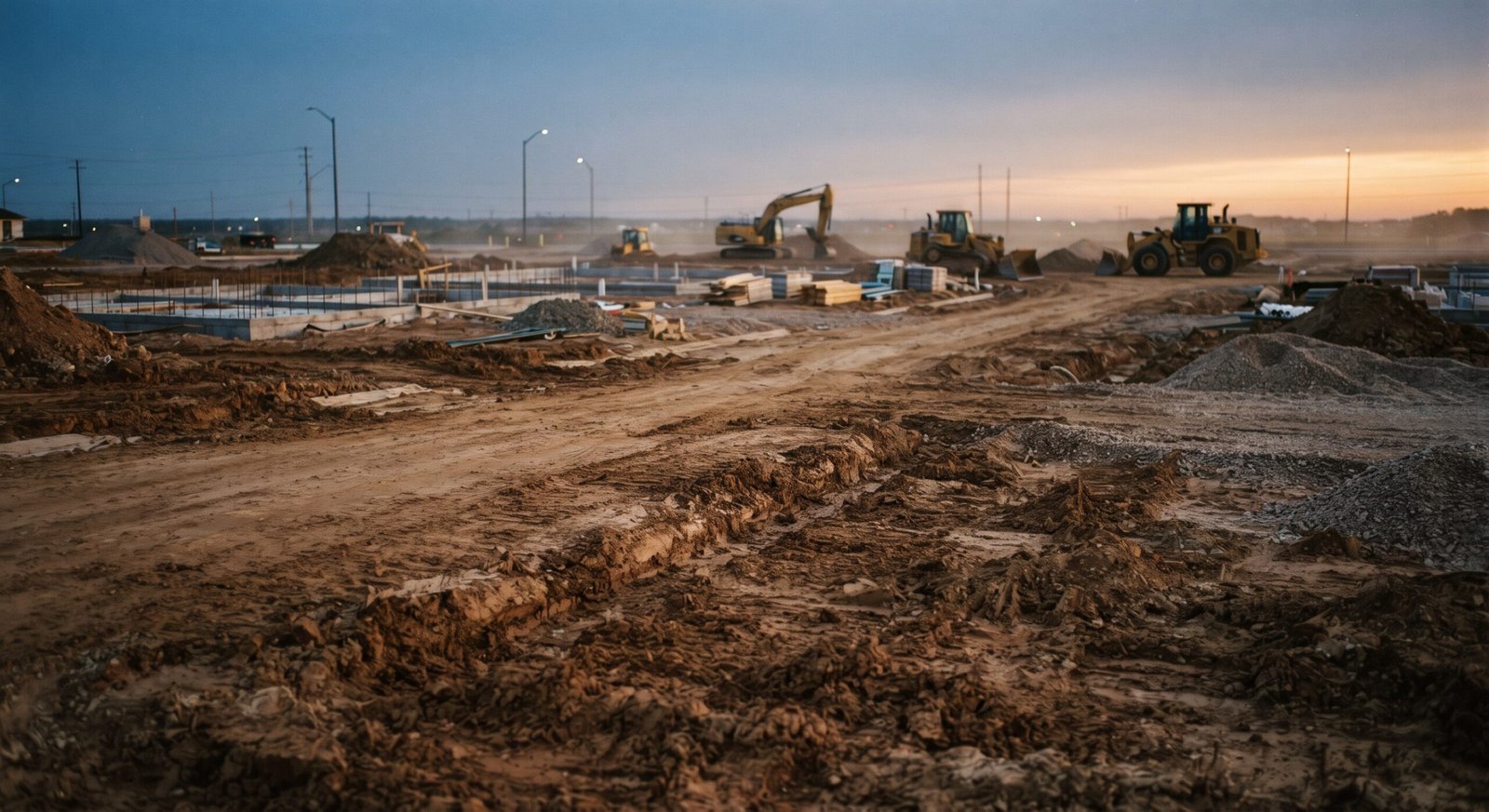
The federal government has submitted extensive records to the Senate revealing thousands of residential plot allotment entries in the Sky Garden Housing Scheme at Bara Kahu, Islamabad, including allocations to senior bureaucrats, secretaries, directors general, commissioners, engineers, medical professionals and other government employees, while acknowledging that development work remains incomplete in certain sections of the project.
The disclosure came in response to Senate Starred Question No. 127, moved by Senator Kamran Murtaza, who sought details of plots allotted in the housing scheme, including the names of beneficiaries, their designations, employment grades, addresses, contact numbers, allotment dates and the current status of development activities.
The Ministry of Housing and Works submitted a 44-page response containing extensive category-wise allotment records, providing a detailed account of individuals associated with the project and the progress of infrastructure development.
The documents identify beneficiaries across different levels of government service, from senior administrative officials to technical personnel, teachers, medical professionals, clerical employees and support staff.
The disclosure also highlights a significant distinction between the number of recorded allotments and the progress reported on the physical development and possession of residential plots.
Thousands Of Allotment Entries Disclosed Before Senate
According to the documents submitted by the Ministry of Housing and Works, the Sky Garden Housing Scheme’s allotments have been organised into five categories.
The annexures contain serialised lists extending to 262 entries in Category-I, 413 in Category-II, 584 in Category-III, 654 in Category-IV and 544 in Category-V.
Together, these records contain approximately 2,457 allotment entries across the five categories.
However, the figures represent entries appearing in the official category-wise records and should not automatically be interpreted as an equivalent number of unique beneficiaries or fully developed residential plots.
The lists provide names, professional designations, employment grades and allotment dates, offering an extensive documentary account of the individuals associated with the housing scheme.
The records include allotments dating from 2020 onwards, with subsequent entries extending across later years.
The disclosure is particularly significant because it brings the scheme’s allotment history into the parliamentary record at a time when questions remain regarding the completion of development work and the delivery of residential infrastructure.
Senior Secretaries, Directors General And Government Officials Named Among Allottees
An examination of Category-I of Annex-A reveals the names of several senior government officials and professionals among the recorded beneficiaries.
The individuals listed include Abdul Kabir Qazi, identified as Special Secretary; Abdul Hafeez Imran, recorded as Secretary; Abdul Jabbar Memon, listed as Director General; and Amir Hussain Hashmi, also identified as Director General.
Other names appearing in the records include Farrukh Masood Khan, identified as Regional Director; Mamoon Zafar, Associate Professor; Abbas Ahmed Mir, Chief; Abdul Basit Chaudhary, Principal; Dr Muhammad Khalil Ejaz, Director; and Muhammad Asad Cheema, Chief.
The category also includes officials holding senior administrative, engineering, financial and professional positions.
Several entries identify beneficiaries serving in Grade 20 and Grade 21 positions, illustrating the presence of senior government officers among the scheme’s allottees.
The designations reflect those recorded in the ministry’s allotment documents and do not necessarily establish the individuals’ current official positions.
The records do not, by themselves, indicate that any of the named individuals received preferential treatment or benefited from an irregular allocation.
Determining compliance with the applicable allotment rules would require examination of eligibility requirements, application records, seniority arrangements, payment details and the procedures followed by the competent authorities.
Nevertheless, the identification of senior officials among the beneficiaries adds an important dimension to parliamentary scrutiny of the scheme, particularly concerning transparency, allocation criteria and the eventual delivery of developed residential plots.
Also Read: Gul Ahmed Textile Mills’ Quarterly Profit Surges 116% To Rs506 Million Despite 17% Decline In Sales
Allotments Extend Across Government Departments And Employment Grades
Beyond the senior officials named in Category-I, the remaining annexures identify beneficiaries from a wide range of government departments, professional institutions and employment categories.
Category-II includes directors, deputy directors, assistant professors, principals, engineers, medical professionals and other officers.
Category-III contains administrative officials, technical personnel, teachers, supervisory employees and individuals serving in different professional capacities.
Categories IV and V include lower-grade government employees, clerical personnel, technical workers, assistants, drivers, guards and other support staff.
The records demonstrate that the scheme’s allotment categories encompass a broad spectrum of public-sector employment grades.
However, the ministry’s principal response does not provide a consolidated explanation of the eligibility framework governing each category or the precise criteria used to determine priority among applicants.
Such information would be necessary to assess whether the distribution of plots was consistent with the applicable allocation policy.
Housing Ministry Confirms 82 Per Cent Earthwork Completion
While the allotment records provide extensive information about beneficiaries, the ministry’s response also offers an important update on development activities at the housing scheme.
According to the Ministry of Housing and Works, development work is progressing through different stages, including earthwork, road infrastructure, drainage, sewerage, water supply and allied construction activities.
The ministry reported that approximately 82 per cent of earthwork, including cutting and filling, had been completed in Blocks A, B and D.
It further stated that these blocks were receiving priority, with targeted delivery by the end of December 2026.
The reported progress indicates that substantial preliminary construction activity has been undertaken.
However, earthwork completion represents only one component of the overall development process and should not be interpreted as 82 per cent completion of the entire housing scheme.
Residential development also requires functional road networks, drainage systems, sewerage facilities, water supply infrastructure and other essential services before plots can be considered ready for residential use.
The ministry’s response does not provide a comprehensive percentage showing the overall completion status of all infrastructure components across the scheme.
Eighty Plots In Block A Handed Over For Possession
One of the most important disclosures in the ministry’s response concerns the handing over of residential plots to allottees.
According to the official submission, 80 plots in Block A have been handed over to their respective allottees for possession.
The ministry stated that the handover was intended to enhance project development.
It also confirmed that the bridge and access road had been completed.
The completion of these facilities represents an important milestone in improving accessibility to the project.
However, the distinction between the administrative allotment of residential land and the physical delivery of developed plots remains central to evaluating the scheme’s progress.
The annexures contain thousands of allotment entries, while the ministry specifically reports the handing over of 80 plots in Block A.
This does not necessarily mean that only 80 plots across the entire housing scheme have been delivered, as the response does not provide a consolidated possession statement covering every block.
Nevertheless, the difference between the scale of recorded allotments and the specifically reported handovers underlines the need for greater clarity regarding possession and development status across the project.
Phase-1B Development Affected By Pending Matters
The ministry has also acknowledged that development activities in Phase-1B, situated in the Mauza Mengal portion of the housing scheme, remain affected by pending matters before various forums.
The response does not identify the specific proceedings, their legal or administrative nature, or the forums before which they are pending.
It also does not specify the number of plots affected by these unresolved matters.
The disclosure nevertheless establishes that development activities in this portion of the scheme have encountered obstacles that remain unresolved.
Such matters can have implications for construction schedules, possession arrangements and the completion of residential infrastructure.
However, without additional documentary details, it would be premature to attribute the delays to any particular legal dispute, administrative failure or land-related controversy.
The ministry stated that efforts were being made to expedite the remaining development works to ensure timely completion of the project.
December 2026 Deadline Puts Development Progress Under Spotlight
The government’s stated target of completing priority development in Blocks A, B and D by the end of December 2026 provides an important benchmark for assessing the implementation of the project.
With the deadline approaching, the focus will increasingly shift towards whether the remaining earthwork, roads, drainage systems, sewerage infrastructure, water supply arrangements and allied facilities can be completed within the indicated timeframe.
The ministry’s reported 82 per cent completion of earthwork suggests progress, but it does not establish whether the remaining infrastructure components are advancing at a comparable pace.
For residential allottees, the ultimate measure of project delivery will be the availability of accessible plots supported by essential services and infrastructure.
The response does not provide a detailed block-wise completion schedule for every remaining development component.
Nor does it establish a final completion date for Phase-1B, where development remains affected by pending matters.
These gaps leave important questions concerning the overall implementation timetable.
Allotment Records Raise Broader Questions About Housing Governance
The disclosure of extensive allotment records before the Senate highlights the importance of transparency and accountability in government-linked housing projects.
Such schemes involve multiple stages of administration, including eligibility verification, application processing, plot allocation, development expenditure, infrastructure construction and the delivery of possession.
The presence of senior government officials and professionals among the recorded allottees is not inherently unusual or improper where individuals satisfy the applicable eligibility requirements.
However, the scale of the allotment records makes it important for the relevant authorities to demonstrate that allocations were processed according to established rules and procedures.
A comprehensive assessment would require access to the scheme’s allotment policy, category-wise eligibility criteria, application and waiting lists, payment records and decisions made by the relevant authorities.
The documents submitted to the Senate establish the identities and recorded designations of beneficiaries but do not independently establish whether any allotment was made in violation of the applicable rules.
Similarly, the ministry’s development update provides information about construction progress but does not present a complete financial and operational assessment of the scheme.
Questions Remain Over Project Cost, Possession And Completion
Despite the extensive allotment records, several important aspects of the project remain unclear from the ministry’s principal response.
These include the total number of residential plots planned across the scheme, the number of plots for which possession remains outstanding, the overall financial position of the project and the detailed completion schedule for all development phases.
The response also does not provide a comprehensive account of development expenditure or explain the specific pending matters affecting Phase-1B.
Another important issue concerns the relationship between allotment dates and the eventual delivery of developed residential plots.
The records show that allotments have been recorded over several years, while development activities remain ongoing.
This makes the timeline between allocation and possession an important area for further examination.
A complete assessment would require matching the allotment records against block-wise possession data, infrastructure completion certificates and approved development schedules.
Such an exercise would establish how many beneficiaries have received possession, how many plots remain under development and what commitments remain outstanding.
Senate Scrutiny Establishes Basis For Further Accountability
Senator Kamran Murtaza’s question has brought the Sky Garden Housing Scheme’s allotment history and development progress into the parliamentary record.
The Ministry of Housing and Works has provided extensive category-wise information about beneficiaries and reported progress on infrastructure development.
At the same time, its response acknowledges that important construction activities remain incomplete and that development in Phase-1B continues to be affected by pending matters.
The disclosure of senior officials among the recorded allottees adds public interest to the issue, although their inclusion in the lists does not itself establish wrongdoing.
The central question now concerns whether the scheme’s administrative allotments will be matched by the timely delivery of developed residential plots.
With the government targeting the end of December 2026 for priority development in Blocks A, B and D, the coming months will provide an important test of the ministry’s implementation commitments.
For beneficiaries, the ultimate outcome will depend not on the number of allotment entries appearing in official records, but on the completion of infrastructure, resolution of outstanding matters and delivery of residential plots ready for construction.
The Senate disclosure has established a substantial documentary basis for continued parliamentary oversight, while placing renewed attention on the authorities responsible for completing the project.
Source: Government of Pakistan, Ministry of Housing and Works; reply to Senate Starred Question No. 127 moved by Senator Kamran Murtaza, together with Annex-A containing category-wise allotment records.