

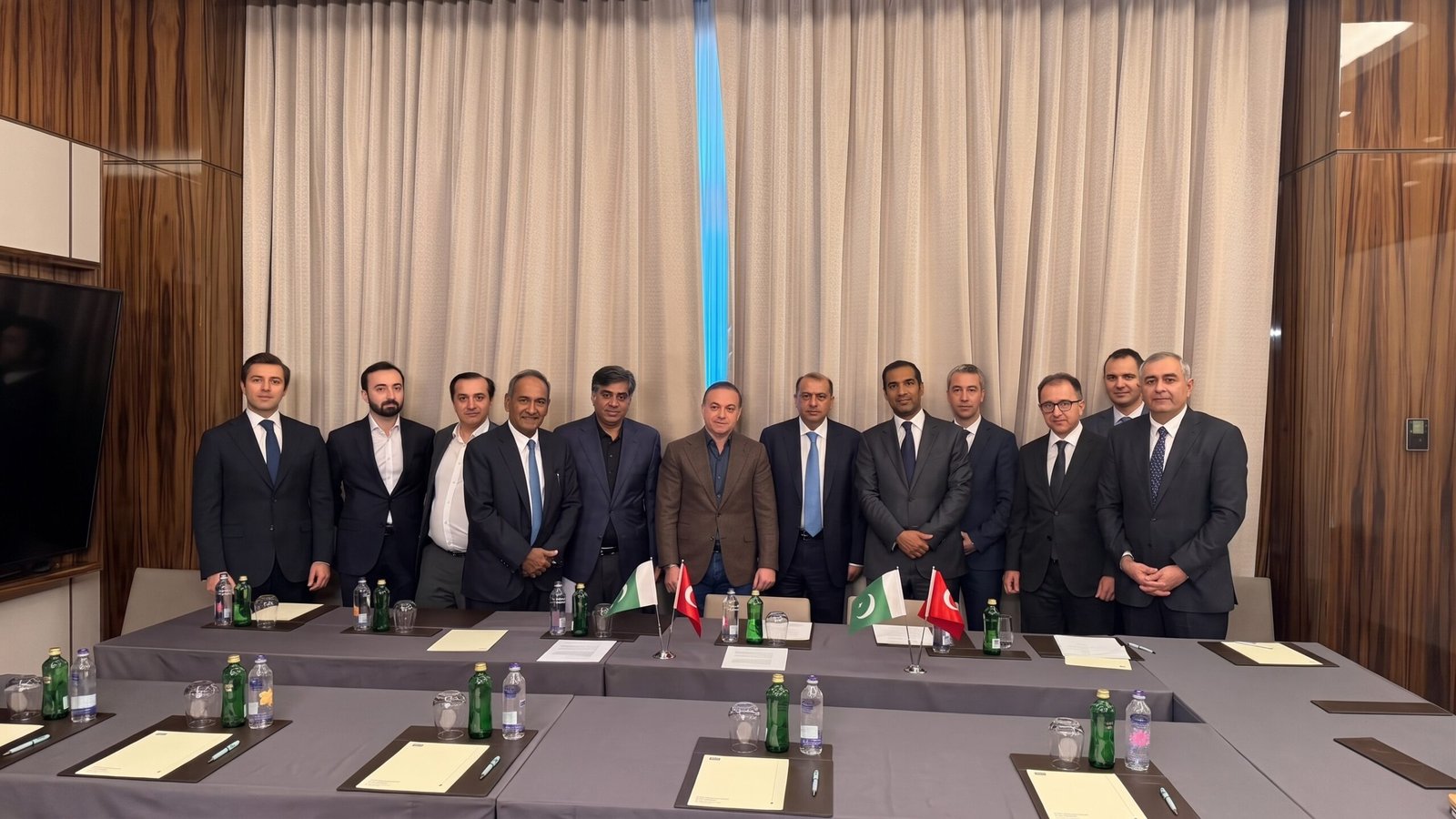
LAHORE/ISTANBUL, November 7, 2026: In a landmark development that could reshape Pakistan’s electricity distribution industry, a consortium of some of the country’s most prominent industrial and investment groups has signed a joint venture agreement with Türkiye’s Cengiz Group in Istanbul to participate in the privatisation of three major state-owned electricity distribution companies — Faisalabad Electric Supply Company (FESCO), Gujranwala Electric Power Company (GEPCO) and Islamabad Electric Supply Company (IESCO).
The agreement brings together Pakistani business interests associated with Fatima Group, Lake City, Artistic Denim and Fazal Group with one of Türkiye’s most influential privately owned industrial conglomerates, creating a potentially formidable international partnership in Pakistan’s power-sector privatisation programme.
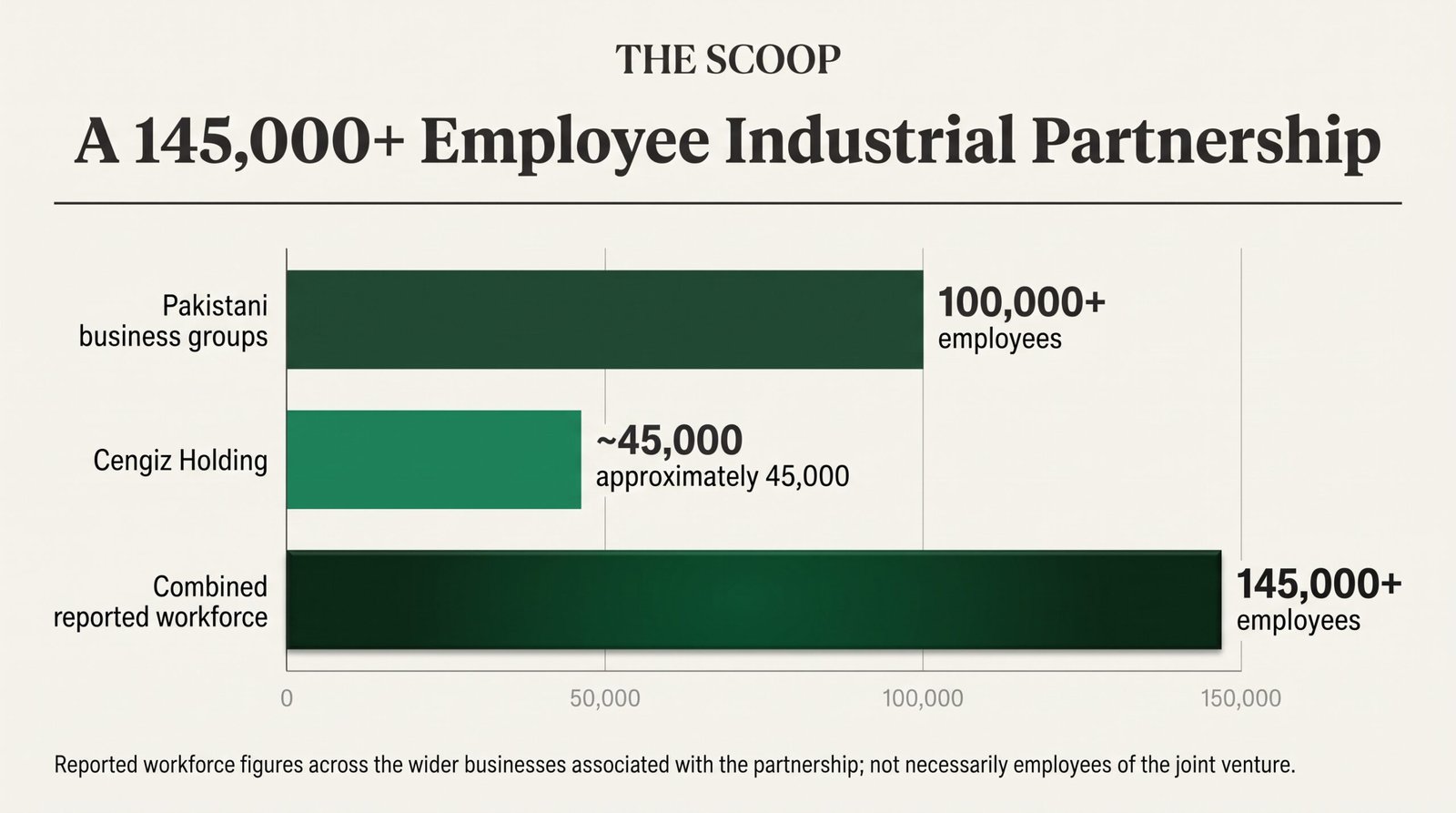
The Pakistani business groups collectively represent a reported workforce exceeding 100,000 people across fertilisers, textiles, construction, mining, aviation and real estate development, while Cengiz Holding employs approximately 45,000 people across its diversified operations.
Together, the wider business groups associated with the partnership represent a reported workforce exceeding 145,000, bringing substantial industrial experience, financial resources and management capabilities to a privatisation programme that could transform Pakistan’s electricity distribution sector.
The Istanbul agreement could pave the way for foreign direct investment in Pakistan’s power distribution industry while introducing international operational expertise into three strategically important electricity utilities.
The significance of the partnership extends beyond the proposed acquisition of state-owned assets. It brings together Pakistani industrial investors with experience in managing large manufacturing and investment businesses and a Turkish conglomerate involved in electricity generation, distribution, infrastructure development, construction and mining.
Cengiz Holding, through its associated energy businesses, participates in electricity distribution operations across three major Turkish regions and has a generation portfolio exceeding 5,600 megawatts.
The joint venture positions the consortium as a potentially serious contender in Pakistan’s first batch of electricity distribution privatisation transactions.
Istanbul Agreement Brings Together Two Major Industrial Forces
The agreement signed in Istanbul establishes a partnership between the Pakistani consortium and Cengiz Group to pursue investment opportunities arising from the privatisation of FESCO, GEPCO and IESCO.
The Pakistani side comprises business interests associated with Fatima Group, Lake City, Artistic Denim and Fazal Group.
These groups bring experience in industrial manufacturing, textiles, investment, construction, real estate development and other capital-intensive sectors.
Cengiz Group contributes international experience in electricity distribution, generation, engineering, infrastructure and industrial investment.
The partnership could combine domestic market knowledge and investment capacity with technical expertise developed through Türkiye’s electricity distribution privatisation programme.
The agreement is particularly noteworthy because Cengiz Enerji and Pakistani investors associated with the consortium had already participated in the government’s preliminary privatisation process.
The Privatisation Commission previously identified Cengiz Enerji as an interested party in the transactions involving FESCO, GEPCO and IESCO.
It also recognised an Artistic Milliners-led consortium comprising The Lake City Holdings, Fatima Capital Limited, Din Ventures and Fazal Cloth Mills Limited.
The Istanbul agreement represents a further development in cooperation between the Turkish energy operator and Pakistani industrial interests.
However, the exact shareholding structure, financial commitments, financing arrangements and governance framework of the new joint venture have not yet been publicly disclosed.
The agreement does not constitute the acquisition of any electricity distribution company. The consortium must still complete the applicable competitive bidding and approval requirements.
Pakistani Consortium Represents Over 100,000 Employees Across Major Industries
One of the most significant aspects of the proposed partnership is the scale and diversity of the Pakistani business groups involved.
According to information provided about the consortium, the wider Pakistani business interests collectively employ more than 100,000 people across fertiliser manufacturing, textiles, construction, mining, aviation, industrial investment and real estate development.
These sectors represent important components of Pakistan’s industrial and commercial economy.
The business interests associated with Fatima Group have an established presence in fertilisers and industrial investment, while Artistic Denim-related businesses operate in Pakistan’s export-oriented textile industry.
Fazal Group has longstanding interests in textile manufacturing, and Lake City is associated with major real estate development and investment activities.
The wider investment interests represented in the consortium also extend into construction, mining and aviation, including business interests associated with Pakistan International Airlines (PIA).
The precise corporate relationships and ownership interests involving aviation and PIA require distinction from the legal entities directly participating in the electricity distribution joint venture.
The scale of the Pakistani partners is particularly relevant because electricity distribution is a capital-intensive business requiring sustained infrastructure investment, large-scale workforce management, financial discipline and operational expertise.
The participating business groups have experience in managing industrial facilities, complex supply chains, substantial workforces and major investment projects.
Their combined domestic knowledge could complement Cengiz Group’s international experience in electricity distribution.
Cengiz Holding: Inside Türkiye’s Multibillion-Dollar Industrial Empire
Founded in 1987 and associated with Turkish businessman Mehmet Cengiz, Cengiz Holding has grown from a construction business into one of Türkiye’s major privately owned industrial conglomerates.
Its operations span electricity generation, electricity and natural gas distribution, construction, mining, metals, infrastructure, tourism and international investment.
The group reports a workforce of approximately 45,000 people across its businesses and associated operations.
Its major companies and investments include Cengiz İnşaat, Cengiz Enerji, Eti Bakır, Eti Alüminyum and interests associated with CK Enerji.
The conglomerate has developed a substantial presence in sectors considered strategically important to Türkiye’s economy.
Unlike a conventional energy company, Cengiz combines electricity operations with construction, mining and industrial manufacturing.
Its diversified structure provides exposure to infrastructure development, energy production, distribution networks and industrial raw materials.
The group’s exact consolidated annual revenue and profitability are not publicly established with the same level of disclosure required of a listed company. Nevertheless, its extensive industrial portfolio and major infrastructure investments demonstrate its substantial commercial scale.
For Pakistan, the most important aspect of Cengiz’s involvement is its experience in operating electricity distribution networks following privatisation.
Turkish Group Operates Major Electricity Distribution Networks
Cengiz’s electricity distribution experience comes through CK Enerji and associated businesses.
The group is involved in three major Turkish electricity distribution companies: Boğaziçi Elektrik Dağıtım A.Ş. (BEDAŞ), Akdeniz Elektrik Dağıtım A.Ş. (AEDAŞ) and Çamlıbel Elektrik Dağıtım A.Ş. (ÇEDAŞ).
BEDAŞ — Istanbul’s European Side
BEDAŞ operates on the European side of Istanbul, one of Türkiye’s most economically significant and densely populated electricity markets.
The network serves residential, commercial and industrial consumers across a major metropolitan region.
AEDAŞ — Mediterranean Türkiye
AEDAŞ serves Antalya, Burdur and Isparta, covering an important region with substantial tourism, agricultural, industrial and residential electricity demand.
ÇEDAŞ — Central Anatolia
ÇEDAŞ operates across Sivas, Tokat and Yozgat, serving consumers across central Anatolia.
According to Cengiz Holding’s corporate information, its associated electricity distribution operations serve more than nine million subscribers across three regions.
These businesses provide the Turkish group with practical experience in managing extensive distribution infrastructure, consumer connections, network maintenance, revenue collection and electricity delivery.
Türkiye previously undertook a major electricity distribution privatisation programme, transferring regional networks into private-sector management.
Cengiz’s involvement in that process gives it experience in managing electricity distribution assets under a private ownership and regulatory framework.
This experience could prove particularly relevant to Pakistan, where distribution companies face challenges involving electricity theft, technical losses, inadequate infrastructure investment, billing inefficiencies and weak recoveries.
Cengiz Has More Than 5,600 MW Of Power Generation Capacity
Beyond electricity distribution, Cengiz Enerji has developed a substantial power generation portfolio.
According to the group’s published corporate figures, its energy operations have approximately 5,622 megawatts of installed generation capacity, including around 5,162 MW in Türkiye.
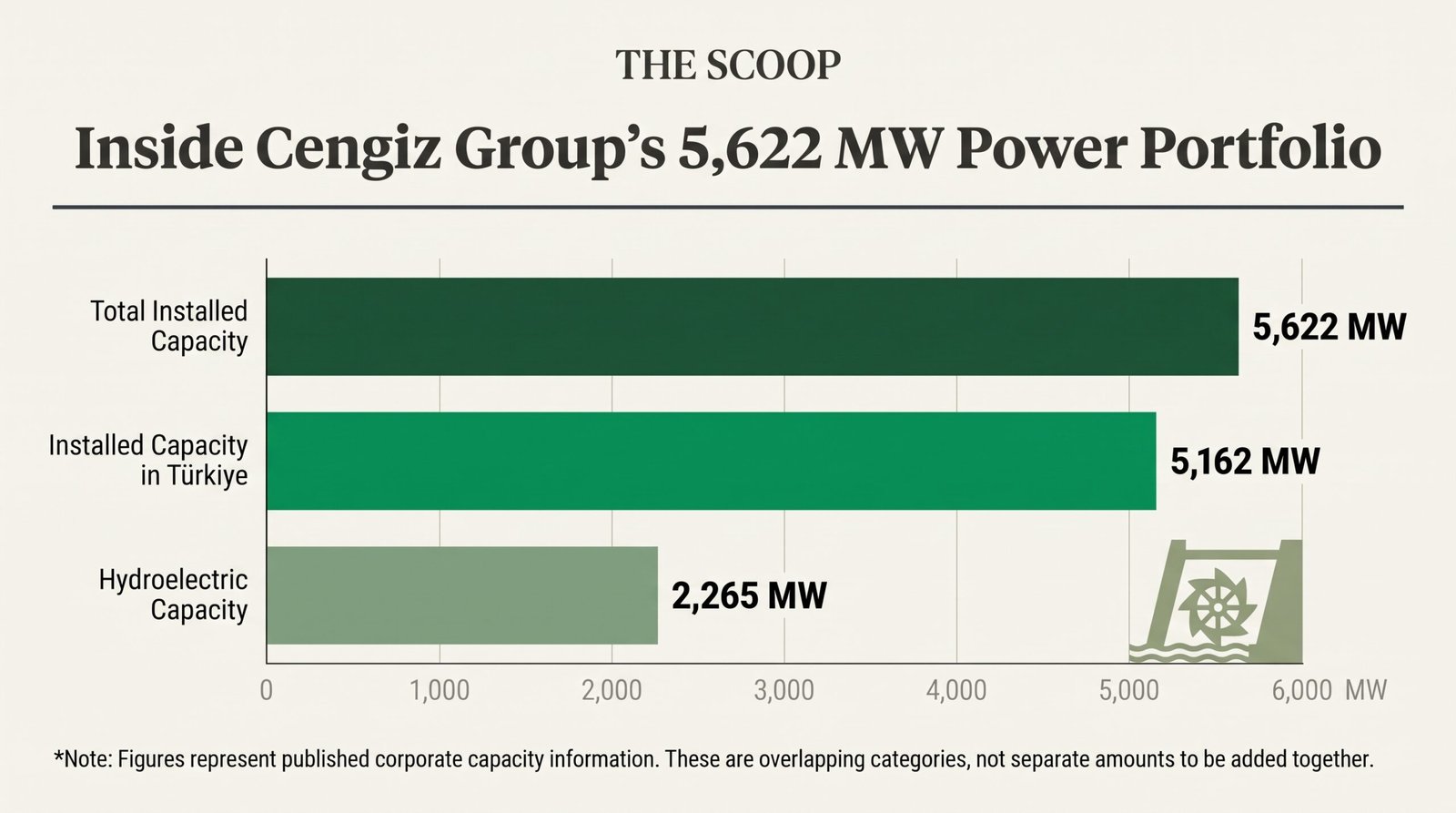
Its hydroelectric generation portfolio accounts for approximately 2,265 MW, making it a major private-sector hydropower producer in the Turkish market.
The group also has interests in thermal, solar, wind and natural gas generation.
Its electricity generation operations include facilities in Türkiye and investments in Uzbekistan.
Cengiz has also developed renewable energy infrastructure and hybrid generation projects.
Its energy businesses extend into natural gas distribution through Samgaz and Selçukgaz.
The combination of electricity generation, distribution, energy trading and natural gas operations gives Cengiz experience across several segments of the energy industry.
For Pakistan, this could provide access to technical knowledge concerning network investment, commercial management and the financial sustainability of electricity distribution operations.
However, electricity generation and distribution remain distinct regulated activities, and the Turkish group’s generation portfolio does not automatically translate into ownership rights or commercial advantages in Pakistan.
From Istanbul Airport To International Infrastructure Projects
Cengiz Holding’s construction business is another major component of its industrial operations.
Through Cengiz İnşaat, the group has participated in major infrastructure projects in Türkiye and international markets.
Its portfolio includes involvement in Istanbul Airport, one of Türkiye’s most significant aviation infrastructure developments.
Cengiz has also participated in major railway, highway, tunnel, dam and other infrastructure projects.
Its construction operations extend beyond Türkiye into international markets, including parts of Europe and Central Asia.
Cengiz İnşaat has appeared in Engineering News-Record’s rankings of international contractors, reflecting its involvement in major construction projects outside Türkiye.
The group’s infrastructure experience is relevant because electricity distribution privatisation requires more than the transfer of ownership.
Successful operators must undertake infrastructure upgrades, network expansion, equipment procurement, maintenance programmes and long-term capital investment.
A conglomerate with experience in delivering major engineering projects could potentially support such requirements.
Mining And Metals Add Another Dimension To Cengiz’s Strength
Cengiz Holding has also developed substantial mining and metals operations.
Through Eti Bakır and Eti Alüminyum, the group operates integrated industrial facilities involved in copper and aluminium production.
Its published corporate information identifies annual production capacity of approximately 90,000 tonnes of cathode copper and 82,000 tonnes of aluminium.
These operations are strategically important because copper and aluminium are essential materials for electricity networks, industrial machinery, power equipment and infrastructure.
Copper is widely used in electrical conductors, transformers and other power equipment, while aluminium is an important material in electricity transmission and distribution systems.
Cengiz’s presence in metals production therefore complements its activities in energy and infrastructure.
The group also has international industrial interests involving specialised metals and chemicals.
Although these businesses are separate from the proposed Pakistani electricity distribution transactions, they demonstrate the breadth of Cengiz’s industrial capabilities.
Why FESCO, GEPCO And IESCO Are Strategically Important
The three electricity distribution companies targeted by the consortium serve some of Pakistan’s most economically important regions.
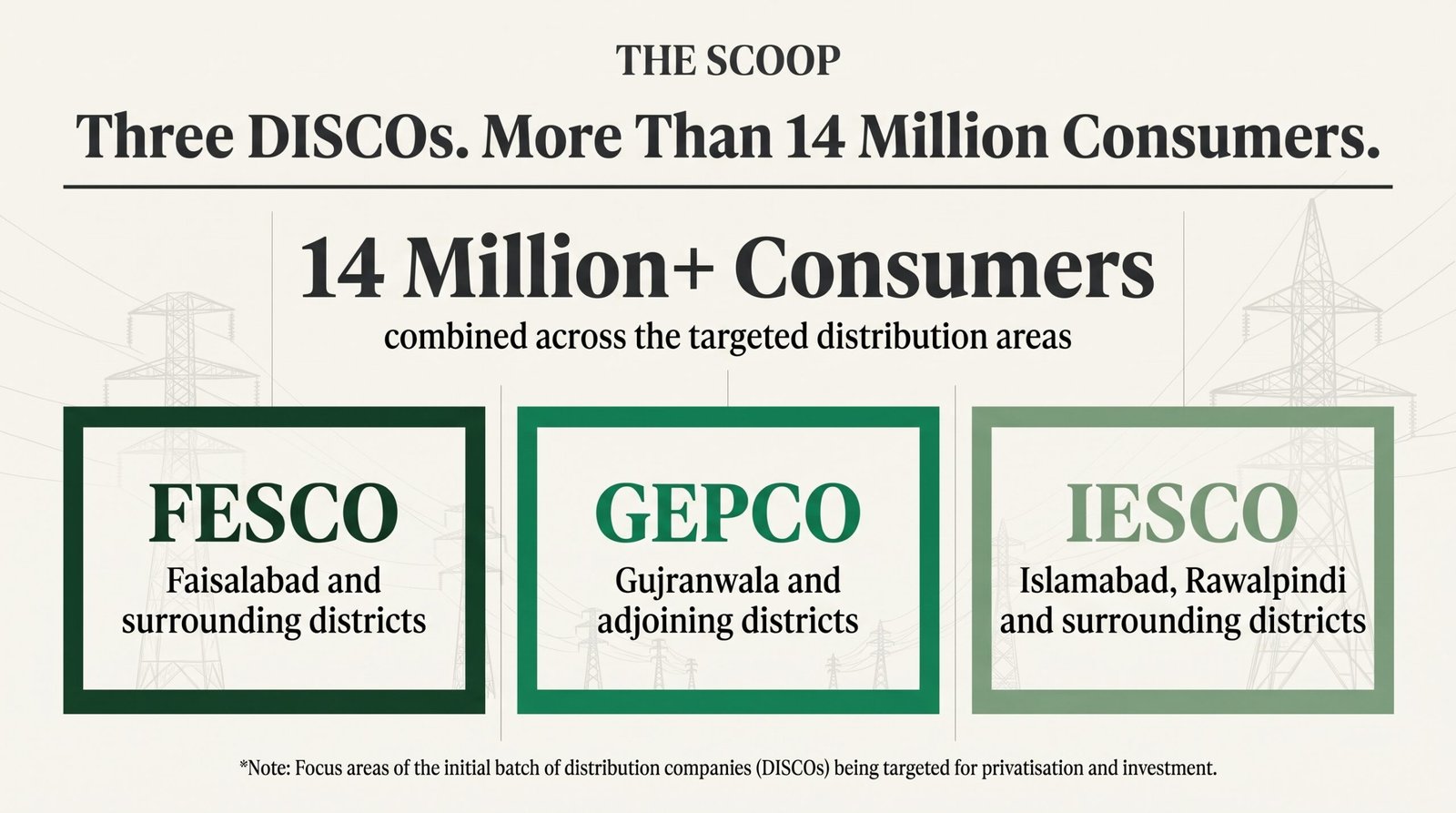
Faisalabad Electric Supply Company (FESCO) supplies electricity to Faisalabad and surrounding districts, covering one of Pakistan’s largest textile and industrial manufacturing centres.
Faisalabad’s economy depends heavily on textiles, exports, industrial processing and manufacturing.
Reliable electricity supply is essential for maintaining industrial productivity and export competitiveness.
Gujranwala Electric Power Company (GEPCO) operates across Gujranwala and adjoining districts, serving manufacturing, engineering, ceramics, electrical equipment and other industrial clusters.
The region contains a substantial concentration of industrial and commercial consumers whose operations depend on stable electricity supply.
Islamabad Electric Supply Company (IESCO) serves Islamabad, Rawalpindi and surrounding districts, covering residential consumers, government institutions, commercial establishments and industrial users.
Collectively, the three distribution companies serve more than 14 million consumers, according to figures previously presented by the Privatisation Commission.
Their privatisation would represent a major shift in the management of Pakistan’s electricity distribution infrastructure.
Privatisation Commission Has Already Advanced The Process
Pakistan’s Privatisation Commission has been progressing with the first batch of electricity distribution privatisation transactions.
The process has attracted interest from Pakistani industrial groups and international energy investors.
The commission received 12 expressions of interest for FESCO, 11 for GEPCO and 10 for IESCO.
Cengiz Enerji was among the Turkish companies participating in the process.
Pakistani industrial groups, including the Artistic Milliners-led consortium, have also participated.
The Privatisation Commission subsequently undertook prequalification and related procedural steps to identify investors meeting the technical and financial requirements for participation.
On October 22, 2026, the Privatisation Commission Board approved the prequalification of 10 interested parties for IESCO, including Cengiz Enerji and the Artistic Milliners-led Pakistani consortium.
The board also approved changes involving consortium membership to facilitate participation across the first batch of DISCO transactions, subject to applicable requirements.
The Istanbul joint venture could strengthen the proposed consortium by combining an experienced international electricity operator with established Pakistani industrial investors.
However, the final bidding arrangements and treatment of the newly combined investor group will remain subject to the commission’s rules.
The government’s transaction framework has contemplated the sale of controlling shareholdings ranging from 51 per cent to 100 per cent, together with management control.
Each distribution company remains a separate privatisation transaction.
Can The Partnership Attract Major Foreign Investment?
One of the most important aspects of the Istanbul agreement is its potential to attract foreign direct investment into Pakistan’s electricity distribution sector.
The involvement of Cengiz Holding could introduce international capital, technical expertise and management practices into an industry historically dominated by state-owned companies.
Pakistan’s electricity distribution system requires substantial investment in network modernisation, advanced metering, infrastructure upgrades and operational efficiency.
Foreign participation could potentially support these requirements while improving investor confidence in the country’s infrastructure market.
The combination of domestic industrial resources and international energy expertise may also strengthen the consortium’s ability to mobilise financing for a large-scale acquisition.
However, the signing of a joint venture does not itself constitute an inflow of foreign direct investment.
The actual amount and timing of any investment will depend on successful bidding, transaction completion and the financing arrangements adopted by the consortium.
The financial terms of the Istanbul agreement have not yet been disclosed.
Can Turkish Expertise Reduce Pakistan’s Electricity Losses?
Pakistan’s electricity distribution system has struggled for years with technical losses, electricity theft, weak recoveries, infrastructure deficiencies and governance challenges.
These problems have contributed to financial pressure across the electricity supply chain and complicated efforts to contain circular debt.
Privatisation advocates argue that commercially managed distribution companies could introduce stronger financial discipline, improved operational practices and more effective accountability.
International operators may bring expertise in advanced metering, digital billing, network monitoring, outage management and infrastructure maintenance.
Such measures could potentially improve billing accuracy, reduce avoidable losses and strengthen revenue recovery.
However, private ownership alone cannot resolve every structural problem.
Electricity theft, weak enforcement, regulatory uncertainty and broader financial challenges will continue to affect distribution company performance.
The success of any private operator will therefore depend on its ability to implement effective reforms within Pakistan’s regulatory and commercial environment.
Will Privatisation Reduce Electricity Bills?
For millions of electricity consumers, the most important question is whether privatisation will deliver more reliable electricity supply and lower costs.
Private management could potentially reduce avoidable distribution losses, improve billing systems, strengthen maintenance and deliver better customer services.
Industrial consumers may benefit from improved reliability and fewer production disruptions.
However, privatisation does not automatically guarantee lower electricity tariffs.
Consumer electricity prices are influenced by generation costs, capacity payments, transmission charges, taxes, subsidies and regulatory decisions.
Distribution companies control only part of the overall electricity supply chain.
Consequently, any potential savings from improved distribution efficiency would need to be assessed within Pakistan’s broader tariff and regulatory framework.
A successful privatisation programme should include clear performance targets covering losses, recoveries, service quality, investment and consumer protection.
A Major Test Of Pakistan’s Economic Reform Programme
The proposed partnership comes at a time when Pakistan is seeking to improve the financial sustainability of its energy sector and reduce the burden of inefficient state-owned enterprises.
Electricity distribution privatisation has been discussed for years, but implementation has faced political, financial, regulatory and institutional challenges.
The entry of a major Turkish industrial group alongside prominent Pakistani investors could strengthen confidence in the process.
It could also encourage additional international investors to examine opportunities in Pakistan’s electricity and infrastructure sectors.
For the government, however, the objective should extend beyond obtaining proceeds from the sale of public assets.
The larger economic benefit would come from improved operational efficiency, reduced losses, stronger infrastructure investment, reliable electricity supply and better financial performance.
Transparent bidding, credible valuations, clearly defined investment obligations and effective regulatory supervision will be essential.
The government must also ensure that privatisation protects public interests and does not replace public-sector inefficiencies with poorly regulated private monopolies.
What Happens Next?
Following the Istanbul agreement, the consortium will need to proceed through the applicable stages of Pakistan’s electricity distribution privatisation process.
These include compliance with qualification requirements, due diligence, submission of financial proposals and participation in competitive bidding.
The consortium’s investment strategy, financing arrangements, proposed management structure and capital commitments will become important as the process progresses.
It remains to be seen whether the partnership will pursue all three distribution companies through separate bids or prioritise particular assets according to commercial considerations.
The final outcome will depend on competitive bidding and the government’s transaction requirements.
Any transfer of ownership or management control will remain subject to the necessary contractual, regulatory and governmental approvals.
A Potential Turning Point For Pakistan’s Power Sector
The Istanbul joint venture between the Pakistani consortium and Türkiye’s Cengiz Group represents a potentially significant development in Pakistan’s electricity distribution privatisation programme.
By combining Pakistani business groups with a reported combined workforce exceeding 100,000 people and a Turkish industrial conglomerate employing approximately 45,000, the partnership brings together considerable industrial experience and organisational resources.
The wider businesses associated with the two sides collectively represent a reported workforce exceeding 145,000, spanning fertilisers, textiles, construction, mining, aviation, real estate, electricity generation and distribution.
The significance of the agreement extends beyond the possible acquisition of FESCO, GEPCO and IESCO.
It could provide an opportunity to introduce international operational expertise, new investment and stronger management practices into Pakistan’s electricity distribution industry.
For the country’s industrial economy, improvements in electricity reliability and distribution efficiency could support manufacturing productivity, export competitiveness and future investment.
For domestic consumers, the ultimate measure of success will be better service, accurate billing, fewer outages and effective regulatory protection.
The Istanbul agreement is an important step towards potential private-sector participation, but the real test will come through competitive bidding, transaction completion and the performance of any successful operator.
If the partnership ultimately secures an acquisition and delivers sustained operational improvements, it could become a significant milestone in Pakistan’s wider power-sector reform programme.