

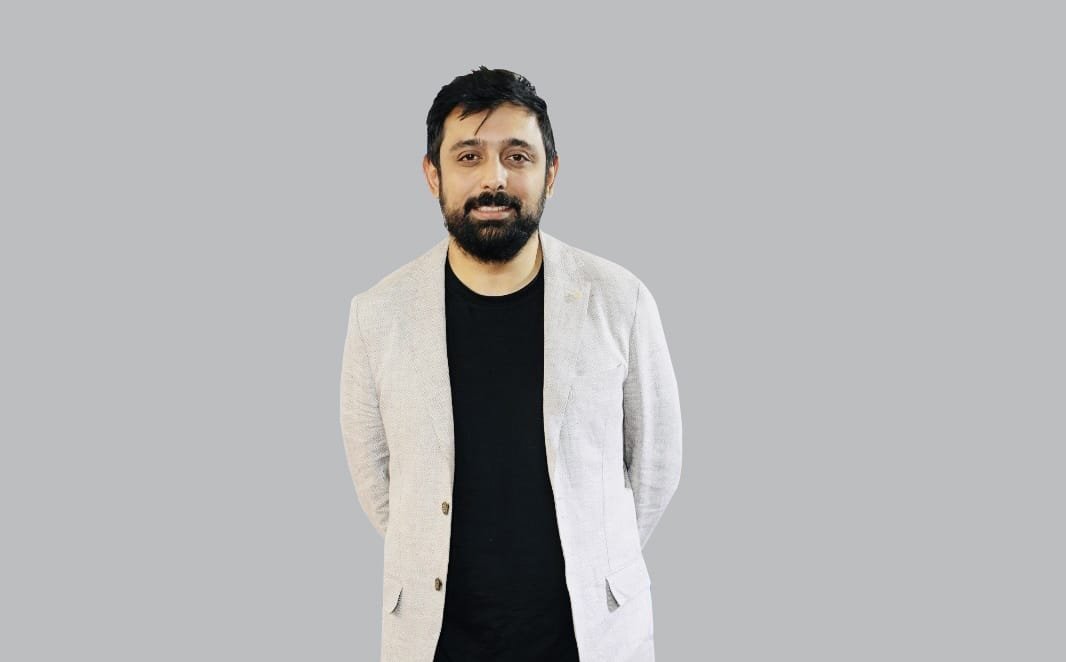
LAHORE: When Saad Javed Akram looks back at one of the most defining experiences of his business career, he does not point to a successful investment, an international expansion or a major pharmaceutical breakthrough. Instead, he recalls a business that failed.
“My experience with Pepe Jeans taught me some of my hardest business lessons. It was an established international brand, but my venture in Pakistan ultimately failed, and I closed it,” Akram tells The Scoop in an exclusive interview.
It is an unusually candid admission from a businessman who now leads Don Valley Pharmaceuticals and has served as Chairman of the Pakistan Pharmaceutical Manufacturers Association (PPMA) North.
The experience of bringing an international fashion brand to Pakistan, investing in its development and eventually shutting down the venture profoundly influenced his approach to business ownership, corporate governance and long-term investment.
“Our relationship with the overseas principals became difficult, and the arrangement was no longer workable. I accept that failure as part of my own business journey,” he says.
For Akram, the lesson was not simply about managing an unsuccessful venture. It was about understanding who ultimately controls a business and how much influence a local investor can exercise over its future.
“You can invest years of effort and capital in a business while remaining dependent on decisions made elsewhere. A principal’s CEO can change, its managers can change, and its policies can change. The people you originally reached an understanding with may no longer be there.”
That experience convinced him that building and controlling his own brands offered a more sustainable path than relying entirely on overseas principals.
“I learned that I wanted to build brands whose future I had a greater ability to shape.”
It was only after closing the Pepe Jeans venture that Akram joined the pharmaceutical business.
Today, as Managing Director of Don Valley Pharmaceuticals, he is pursuing a strategy centred on proprietary brands, manufacturing capabilities, quality assurance and international expansion.
His experience also offers a revealing entry point into a much larger discussion about Pakistan’s pharmaceutical industry, which is seeking to transform itself from a predominantly generic-drug manufacturing base into a significant global exporter.
With pharmaceutical exports reported at approximately $457 million in FY2025, representing growth of around 34 per cent, the industry has been discussing ambitious targets of $3 billion within three years and $10 billion over the longer term.
But Akram believes those ambitions will remain difficult to achieve unless Pakistan confronts regulatory delays, taxation distortions, imported raw-material dependence, inadequate scientific testing facilities and the high costs of entering international pharmaceutical markets.
From Business Failure to Building Independent Brands
Akram’s professional journey has taken him through international retail, pharmaceutical manufacturing and healthcare-related businesses.
His academic background in accounting and finance has provided a foundation for evaluating investments, financial performance and operational efficiency.
However, he believes his unsuccessful retail venture taught him something that financial statements alone could not.
“The biggest lesson was about ownership,” he explains.
For entrepreneurs considering international franchises or partnerships, Akram believes the critical question is not merely whether the business model is profitable but whether the investor retains sufficient influence over its long-term direction.
His experience with Pepe Jeans demonstrated how changes in overseas management and corporate policies can undermine arrangements that initially appear commercially attractive.
At Don Valley, he has consequently placed greater emphasis on developing the company’s own brands and strengthening the value created within the organisation.
“My accounting background helps me assess the numbers, but that setback taught me to look just as closely at who controls the business’s future,” he says.
He advises entrepreneurs to think carefully about ownership before committing years of their lives and substantial capital to a venture.
That philosophy now extends beyond brand ownership to leadership development, decision-making authority and accountability within Don Valley itself.
The Pharmaceutical Industry’s $3 Billion Question
Pakistan’s pharmaceutical industry has recorded encouraging export growth, but its contribution to the global pharmaceutical market remains relatively modest.
Exports of approximately $457 million in FY2025, representing a reported 34 per cent increase, have strengthened calls for a more ambitious national export strategy.
Industry discussions have included a target of $3 billion within three years and a longer-term aspiration of $10 billion.
Akram does not dismiss those ambitions, but he is cautious about the scale of transformation required.
“These targets are achievable only if the pace of reform and investment matches the ambition,” he says.
“Moving from $457 million to $3 billion in three years would require exports to almost double annually. That is a demanding growth path, and the $10 billion ambition needs a sustained national strategy.”
The numbers underline the challenge. Increasing annual exports from $457 million to $3 billion over three years would require a compound annual growth rate of approximately 87 per cent.
That is substantially higher than the industry’s reported FY2025 growth rate.
For Akram, achieving such growth requires more than competitive pricing.
“Pakistan cannot become a major pharmaceutical exporter through low prices alone,” he argues.
He identifies dependable domestic regulatory approvals, affordable scientific studies, internationally acceptable quality documentation and reliable supply chains as essential foundations for export expansion.
Manufacturers must also invest in stronger regulatory dossiers and develop lasting relationships with overseas partners.
The government’s role, he believes, is to establish predictable policies that allow companies to make long-term investment commitments.
His proposed priorities include regulatory reform, a taxation framework that supports reinvestment, reliable energy supplies, access to appropriate financing and stronger research capabilities.
He also advocates closer cooperation between pharmaceutical manufacturers and universities to address formulation, product-development and quality challenges.
Intellectual property rules, he argues, must be clear and enforceable while preserving lawful competition from generic medicines.
Most importantly, he believes national export targets should be accompanied by named institutional responsibilities and measurable annual milestones.
Without accountability and a clear implementation framework, ambitious targets risk remaining little more than policy aspirations.
DRAP’s Regulatory Delays: A Barrier to Export Growth
Among the most significant obstacles identified by Akram are delays in pharmaceutical registration.
For companies seeking to expand internationally, regulatory approvals are not simply domestic administrative requirements. They can determine whether products qualify for registration in overseas markets.
Akram explains that certain importing countries require a free sale certificate confirming that a medicine is authorised for sale in Pakistan.
An export-only registration may therefore be insufficient.
The distinction creates a practical difficulty for manufacturers whose primary commercial objective is to export their products.
According to Akram, Don Valley has experienced precisely this problem.
“In our own experience, domestic applications under export priority have remained pending for months, without a clear timeline for consideration by DRAP’s Registration Board,” he reveals.
The uncertainty complicates negotiations with international partners and makes it difficult to establish reliable launch schedules.
Akram believes the Drug Regulatory Authority of Pakistan (DRAP) should make export-priority procedures more transparent.
He wants published processing timelines, clear communication regarding missing documentation and greater visibility into Registration Board scheduling.
“I would like export priority to mean published processing timelines, clear requests for missing information and visibility on Board scheduling,” he says.
His argument extends beyond individual applications.
Pakistan’s export policy, he believes, must address the complete journey from pharmaceutical product development and domestic registration to approval in the destination market.
“Announcing priority at one stage is insufficient if the next stage remains uncertain.”
For an industry competing against established pharmaceutical exporters, regulatory predictability can be as important as manufacturing costs.
Drug-Price Deregulation: Protecting Manufacturers Without Hurting Patients
Akram’s tenure as Chairman of PPMA North coincided with a period of significant policy debate over pharmaceutical pricing, manufacturing costs and export competitiveness.
He identifies the deregulation of non-essential medicine prices as one of the industry’s most consequential reforms.
Introduced in 2024, before his tenure as chairman, the policy provided manufacturers with greater flexibility to respond to changing costs.
Akram says he was closely involved in advocating for the reform, while emphasising that it was the result of collective industry efforts and subsequent government decisions.
“The most important policy change, in my view, was the deregulation of non-essential medicine prices. It gave manufacturers greater room to respond to costs and sustain production,” he says.
However, he warns against treating deregulation as a comprehensive solution to the industry’s financial difficulties.
Essential medicines remain subject to price controls, and their economics can differ substantially from those of deregulated products.
“The debate needs to distinguish between essential and non-essential medicines,” he explains.
According to Akram, improved profitability from non-essential products does not necessarily mean that every essential medicine remains commercially viable.
Pakistan’s dependence on imported pharmaceutical ingredients makes manufacturers particularly vulnerable to exchange-rate movements.
When the rupee depreciates, imported raw-material costs can rise immediately, while the selling prices of regulated medicines remain constrained.
He points out that the ordinary annual price-adjustment mechanism for essential medicines, excluding separate provisions for lower-priced products, is linked to 70 per cent of consumer price inflation and capped at 7 per cent.
But general inflation, he argues, does not necessarily reflect the replacement cost of an imported pharmaceutical ingredient.
A sharp currency movement can therefore eliminate already narrow margins.
Akram believes the government should establish predictable annual adjustments and timely, evidence-based hardship decisions for medicines whose verified production costs exceed the ordinary pricing framework.
He wants these decisions governed by published criteria and clear timelines, ideally before shortages develop.
“Keeping its official price artificially low can become a false economy if supply disappears and patients must seek a more expensive alternative,” he warns.
Nevertheless, he does not suggest that affordability should be abandoned.
He believes government procurement and targeted patient-support mechanisms should protect those unable to afford treatment, while manufacturers remain responsible for quality, efficiency and pricing discipline.
“We should not expect a manufacturer to sustain a loss-making essential medicine indefinitely. Protecting the ability to produce these medicines is part of protecting patients.”
The Taxation Problem: Why Akram Wants Refundable Zero-Rating Restored
Taxation is another area where Akram believes government policy can directly influence pharmaceutical investment and export competitiveness.
He supports restoring refundable zero-rated treatment for domestic pharmaceutical supplies, subject to proper verification and timely refunds.
His concern is that unrecoverable input taxes increase manufacturing costs and reduce the capital available for reinvestment.
For companies producing price-controlled essential medicines, the inability to recover input taxes can create additional financial pressure.
Akram argues that an effective refund mechanism could reduce these costs without compromising regulatory oversight.
He believes the policy should be designed around transparent verification and timely processing rather than creating new administrative uncertainties.
The wider objective, he says, should be to encourage pharmaceutical manufacturers to invest in improved production facilities, product development and internationally acceptable quality systems.
Pakistan’s Missing Scientific Link: Bioequivalence Studies
One of Akram’s most detailed policy recommendations concerns the scientific infrastructure needed to support pharmaceutical exports.
For generic medicines, importing regulators may require bioavailability and bioequivalence studies to establish whether a product performs comparably to its reference medicine.
These studies can be expensive and technically demanding, particularly for manufacturers seeking registration in multiple international markets.
Akram believes Pakistan needs more accessible and credible study facilities.
He advocates strengthening qualified bioavailability and bioequivalence centres, alongside bioanalytical laboratories capable of meeting the requirements of overseas regulators.
He also proposes a more effective role for the industry-funded Central Research Fund.
According to Akram, the fund should help strengthen existing study centres and support manufacturers with eligible scientific study costs.
However, he cautions that infrastructure development should not become an exercise in constructing new buildings without delivering usable scientific services.
“Existing centres should be strengthened where practical; new buildings alone will not solve the problem,” he says.
The success of such initiatives, he argues, should be measured by their practical outcomes.
These include affordable study charges, predictable completion times, internationally acceptable scientific evidence and successful regulatory submissions.
He recommends publishing eligibility criteria, fees, completion timelines, disbursements, completed studies and regulatory outcomes.
Akram also stresses the importance of ethical clinical oversight, validated bioanalytical methods and study designs suited to the intended destination market.
Where relevant regulatory requirements permit, appropriate biowaivers should also be considered.
For him, the central question is whether scientific infrastructure actually helps Pakistani manufacturers gain access to international markets.
Don Valley’s Growth Strategy: Anti-Infectives, Softgels and Nutraceuticals
While discussing the broader industry’s challenges, Akram also outlines the business segments he believes offer meaningful opportunities for Don Valley Pharmaceuticals.
Anti-infectives remain an important part of the company’s operations.
He also sees potential in medicines used to treat diabetes and cardiovascular conditions, alongside selected nutraceutical products.
“Nutraceuticals offer a further avenue, particularly where we can combine suitable formulations with dependable manufacturing and documentation,” he explains.
Softgel production represents another opportunity.
Akram believes the segment offers scope not only for Don Valley’s own products but also for contract manufacturing on behalf of other brands.
The model would allow the company to generate value from its technical expertise, product-development capabilities and manufacturing infrastructure.
“That allows us to build value through manufacturing expertise alongside our own brands,” he says.
His approach reflects the ownership philosophy shaped by his earlier business experience: build capabilities that create long-term value within the company rather than relying exclusively on externally controlled brands.
Sri Lanka, Myanmar, Africa and the European Opportunity
Don Valley’s experience in international markets, including Sri Lanka and Myanmar, has influenced Akram’s approach to geographical expansion.
He believes successful pharmaceutical exports depend on much more than identifying countries with large populations.
Reliable local partners, products suited to market requirements, regulatory approvals, payment security and consistent supply are all essential considerations.
“A large population alone does not make a market attractive,” he says.
Akram sees opportunities across selected African and Asian markets, but stresses that each destination must be evaluated according to its commercial and regulatory conditions.
Europe also deserves attention, although the route to market varies considerably by product category.
Nutraceutical contract manufacturing, for example, involves different requirements from the registration and sale of pharmaceutical medicines.
Akram believes Pakistani manufacturers should build on their existing capabilities while making the investments required to enter more demanding markets.
He is particularly cautious about pursuing expansion without the scientific documentation, manufacturing standards and regulatory systems needed to sustain it.
Why Pakistan Cannot Manufacture Every Pharmaceutical Ingredient Locally
Pakistan’s dependence on imported active pharmaceutical ingredients and other pharmaceutical inputs remains a major source of vulnerability.
Akram explains that the combination of foreign-currency procurement and domestic rupee-denominated sales exposes manufacturers to exchange-rate fluctuations.
Import restrictions, customs valuation uncertainties and global supply-chain disruptions can further complicate production planning.
In the short term, he recommends qualifying alternative suppliers where feasible, carefully managing inventories of critical inputs and improving procurement visibility.
He also wants the government to ensure predictable access to legitimate pharmaceutical inputs and transparent customs procedures.
However, Akram does not support an indiscriminate drive towards complete localisation.
“Manufacturing every API locally would be an expensive ambition without a clear commercial basis,” he says.
Instead, he favours identifying specific pharmaceutical molecules where domestic demand, technical capabilities and production economics justify investment.
Shared industrial infrastructure, reliable utilities, environmental treatment facilities and technical partnerships could make selected projects more viable.
He also believes packaging materials, excipients and laboratory inputs deserve attention within a broader pharmaceutical-input development strategy.
The objective should be commercially sustainable localisation rather than pursuing domestic production at any cost.
Global Regulatory Recognition: No Shortcuts to Quality
For Pakistan to compete in regulated pharmaceutical markets, Akram believes quality must become embedded in everyday manufacturing operations.
He emphasises the importance of capable laboratories, validated processes, reliable production data and quality-control teams empowered to prevent the release of products that fail required standards.
“Quality has to be built into daily operations,” he says.
He supports strengthening DRAP’s inspection capabilities and pursuing participation in the Pharmaceutical Inspection Co-operation Scheme, commonly known as PIC/S.
However, he warns against overstating the benefits of international regulatory recognition.
PIC/S participation does not automatically certify individual pharmaceutical factories, nor does it require every participating authority to accept another member’s Good Manufacturing Practice certificates.
Similarly, World Health Organisation benchmarking and WHO Listed Authority designation are separate regulatory processes that should not be confused with PIC/S participation.
Akram believes these developments can strengthen confidence in Pakistan’s regulatory framework, but practical market-access benefits depend on the requirements of individual importing countries.
He wants DRAP to engage directly with target-country regulators to explore acceptance of inspection evidence and reduce unnecessary duplication.
For manufacturers, he argues, regulatory credibility must ultimately translate into clearer pathways to international markets.
Healthcare Is a Business, But Medicines Are Not Ordinary Products
Akram’s understanding of pharmaceutical manufacturing is influenced by his family background in healthcare.
With parents involved in the healthcare sector and his own academic training in accounting and finance, he believes he approaches commercial decisions from both financial and ethical perspectives.
“My accounting background makes me conscious of costs, but growing up with parents in healthcare makes me equally conscious of what those numbers represent,” he says.
For him, profitability and patient responsibility are not inherently contradictory.
A financially unstable manufacturer may struggle to retain qualified personnel, maintain production facilities and invest in quality improvements.
Yet commercial pressure cannot justify compromising standards.
“A medicine is something a patient and a doctor must be able to trust.”
Akram believes companies must create environments where employees can raise concerns without hesitation and managers are held accountable for resolving problems.
He wants potential failures reported promptly rather than concealed until they become more serious.
“Commercial urgency cannot become a reason to keep a problem quiet,” he stresses.
His stated objective is for Don Valley to earn sustainable returns through products that meet required standards and retain the confidence of patients and healthcare professionals.
Vision 2030: Building a Company That Does Not Depend on One Individual
Looking towards 2030, Akram’s ambitions for Don Valley extend beyond sales growth and geographical expansion.
He wants the company to develop stronger brands, deeper international relationships and a reputation for dependable quality.
Essential medicines, including anti-infectives, will remain central to its identity.
But he also wants to strengthen the organisation’s leadership structure and reduce dependence on individual decision-makers.
“I have started working towards a culture in which people have clear responsibilities, the authority to make decisions and accountability for results,” he says.
He wants employees to contribute ideas, take ownership of their work and develop the confidence to make decisions within clearly defined responsibilities.
“A company that depends on me for every decision will have a limit to how far it can grow.”
The observation reflects a broader evolution in his business philosophy.
His experience with Pepe Jeans taught him the risks of depending on decisions made by others. His ambitions for Don Valley now include ensuring that the organisation itself becomes capable of functioning and expanding beyond the decisions of any single individual.
For Pakistan’s pharmaceutical industry, Akram believes the immediate foundation must be stronger generic manufacturing, better product-development capabilities and internationally trusted brands.
Higher-value formulations and selected nutraceutical categories could provide further opportunities.
He also supports investment in biotechnology and original pharmaceutical research, while recognising that these fields require specialised talent, sustained funding and capable institutions.
“We should build those capabilities seriously rather than assume export growth alone will create them,” he says.
His assessment of Pakistan’s pharmaceutical future is therefore neither unreservedly optimistic nor pessimistic.
The country has a manufacturing foundation, growing export ambitions and companies seeking opportunities beyond the domestic market.
But converting that potential into sustainable international competitiveness will require consistent regulation, scientific investment, predictable taxation, reliable infrastructure and a stronger culture of corporate accountability.
For Akram, the lessons of his own business journey remain relevant to that national challenge.
Success requires more than ambition, investment or association with an established name. It requires control over the capabilities that create lasting value, the discipline to confront weaknesses and the patience to build institutions capable of sustaining growth.
“Alhamdulillah, we have a foundation to build on. My focus is on strengthening the business and its people, and earning greater trust at home and abroad. InSha’Allah, our progress will speak for itself.”