

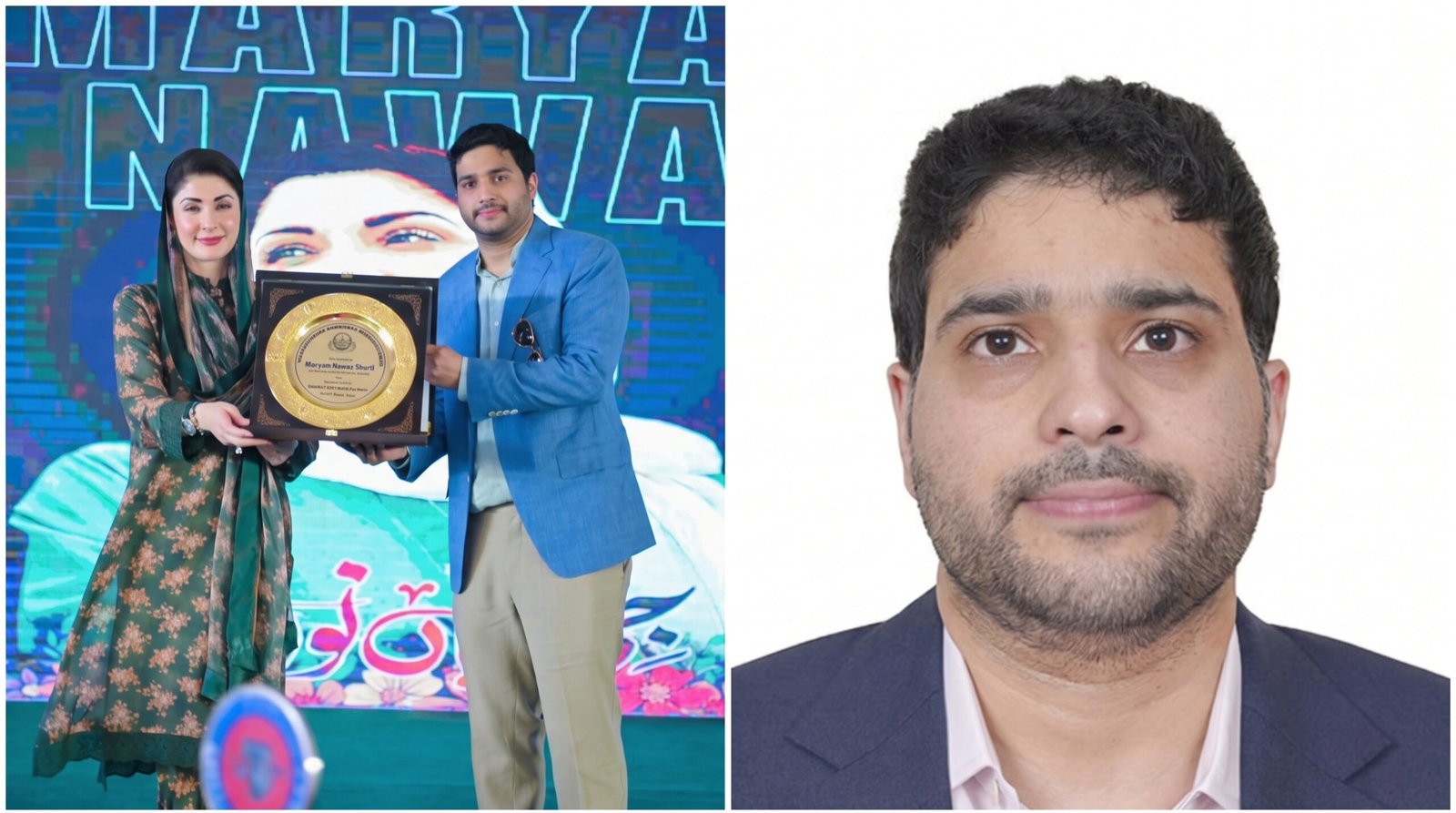
LAHORE: The Punjab Cattle Market Management and Development Company (PCMMDC) has recorded a nearly fourfold increase in annual revenue, from Rs 3.84 billion in FY 2022-23 to Rs 14.28 billion in FY 2025-26, while its reported net worth has surged fivefold to Rs 44.5 billion, according to Chairman Ibrahim Tariq Shafi.
In an exclusive interview with The Scoop, Shafi disclosed that the company, which manages 113 cattle markets across Punjab’s nine divisions, is pursuing an ambitious Rs 37 billion infrastructure development programme aimed at transforming traditional livestock trading grounds into modern commercial facilities.
The programme envisages upgrading 74 additional cattle markets by 2028, subject to land availability, alongside three model markets already under development. If completed as planned, Punjab could have approximately 85 model cattle markets by 2030, compared with eight currently operating.
Shafi said the company’s annual revenue had increased more than eightfold since FY 2020-21, when nine divisional cattle market companies were merged into a single provincial organisation.
He revealed that cattle market contracts for FY 2026-27 had been auctioned for Rs 14.8 billion against a reserve price of Rs 9.6 billion, representing a premium of approximately 54%.
The chairman also disclosed that an estimated Rs 800 billion worth of livestock trade takes place annually across PCMMDC-managed markets, much of it still conducted in cash.
According to Shafi, the company’s strategy is shifting from maximising revenue collection towards improving services for farmers, introducing transparent fee structures, digitising transactions, strengthening institutional governance and developing commercially sustainable cattle markets.
Among the initiatives discussed were a unified animal fee, electronic ticketing, cashless payments, Oracle-based financial management, GPS-enabled staff attendance, solar-powered internet connectivity, animal traceability, renewable energy and the conversion of approximately 35,000 tonnes of annual animal waste into biogas and organic fertiliser.
He also revealed that PCMMDC had forfeited Rs 240 million in contractors’ securities following violations and removed officers found responsible for failures in their duties.
The following is the exclusive interview.
Revenue Growth, Financial Transformation And Major Achievements
The Scoop: Since assuming leadership of PCMMDC, what have been your most significant achievements in transforming Punjab’s cattle markets? Can you share concrete figures regarding revenue growth, infrastructure development and improvements in market operations?
Ibrahim Tariq Shafi: When I joined the Board in June 2023, PCMMDC’s annual revenue stood at Rs 3.84 billion for FY 2022-23. By FY 2025-26, it had increased to Rs 14.28 billion, almost four times the previous figure.
Over the same period, the company’s net worth increased from Rs 8.9 billion to Rs 44.5 billion. For the current financial year, 2026-27, our market contracts have already been auctioned for Rs 14.8 billion.
We have also strengthened the company’s financial position. PCMMDC’s non-profit status was renewed for two years beginning July 2025, which is expected to save approximately Rs 4 billion in income tax over that period. We have also engaged the Punjab Pension Fund to professionally invest our surplus funds.
For farmers, perhaps the most important reform has been the Unified Animal Fee, introduced in July 2026.
Previously, farmers faced multiple charges for different services. Under the new arrangement, they pay one fixed fee, once, at the market exit through a QR-coded electronic ticket.
This fee includes facilities such as drinking water, charpai, khurli, tents and toilets, which contractors must provide without additional charges.
We have also demonstrated our commitment to farmers during emergencies. When floods affected Punjab in 2025, we opened all our markets to flood-affected animals and provided fee relief for two to three weeks across the province.
Infrastructure development has been another major achievement.
Our new Jhang Model Cattle Market was constructed in just one year at a cost of Rs 3.3 billion. Its annual revenue more than doubled, increasing from Rs 540 million in FY 2024-25 to Rs 1.16 billion in FY 2025-26.
Shahpur Kanjran in Lahore has become the largest cattle market in Pakistan. Three additional model markets are being developed in Bhakkar, Rajanpur and Layyah, while another 29 are in the development pipeline.
We have outsourced security and cleaning services across our model markets, initiated the integration of CCTV surveillance with the Punjab Safe Cities Authority and planted 8,000 trees of local varieties across our facilities.
Institutional reforms have been equally important.
PCMMDC has adopted an international Oracle Enterprise Resource Planning system, making it, according to our assessment, the first public-sector entity in Punjab to implement such an international ERP platform.
We introduced GPS-based electronic attendance to eliminate ghost employees, upgraded our Human Resources Manual and implemented seven new policies, including e-Auction, Dispute Resolution and Whistle Blower policies.
Accountability has also been enforced. Officers who failed to perform their duties were removed, while contracts of non-compliant contractors were cancelled and Rs 240 million in securities forfeited.
Another important achievement has been our collaboration with the State Bank of Pakistan to encourage digital livestock transactions.
Digital payments at cattle markets across Pakistan increased from Rs 4.6 billion during Eidul Azha 2025 to Rs 34 billion during Eidul Azha 2026.
We are also working with the National Telecommunication Corporation (NTC) to bring internet connectivity to our markets and support cashless transactions.
In November 2025, we organised the Punjab Cattle Show in Lahore, which attracted significant public participation and media coverage.
We are now exploring opportunities to convert animal waste into biogas and organic fertiliser, creating additional economic value while improving environmental sustainability.
Also Read: Jahangir Tareen Quit Politics, Not Business: Inside JDW’s Sugar And Ethanol Empire
Punjab’s 113 Cattle Markets And Future Revenue Potential
The Scoop: How many cattle markets are currently operating under PCMMDC’s management across Punjab, what is their combined annual revenue, and how does this compare with previous years? What is the company’s revenue potential over the next three to five years?
Ibrahim Tariq Shafi: PCMMDC currently manages 113 cattle markets across Punjab’s nine divisions, including eight model markets. Three additional model markets are under development.
When the nine divisional companies were merged into one provincial company in FY 2020-21, annual revenue stood at Rs 1.7 billion.
Since then, our revenue has increased consistently.
In FY 2022-23, revenue reached approximately Rs 3.8 billion, increasing to Rs 5.2 billion in FY 2023-24 and Rs 10 billion in FY 2024-25.
During FY 2025-26, we collected approximately Rs 14.3 billion, more than eight times the amount recorded five years earlier.
For FY 2026-27, market contracts were auctioned for Rs 14.8 billion against a reserve price of Rs 9.6 billion, approximately 54% above the reserve.
This demonstrates strong commercial confidence in our markets.
Revenue growth during the current financial year is comparatively moderate, but that is a deliberate policy decision.
We have introduced the Unified Animal Fee, which links the amount farmers pay directly to the services they receive.
Our priority is no longer simply to maximise revenue. We want to ensure that every rupee collected is matched by meaningful services, including clean drinking water, shade, charpai, khurli and toilets.
Even with this change, our revenue remains strong.
Future growth will come primarily through infrastructure development and market modernisation.
Jhang provides an excellent example. Following its transformation into a model market, annual revenue increased from Rs 540 million to Rs 1.16 billion.
The three model markets currently under development are expected to generate approximately Rs 935 million in additional annual revenue.
We also plan to upgrade another 74 cattle markets by 2028, subject to the availability of land.
At the same time, we are working to reduce operational expenses.
A detailed feasibility study is being commissioned for the solarisation of 11 shortlisted markets. This should reduce electricity expenditure and dependence on the national grid.
We are also exploring the commercial conversion of animal waste into biogas and organic fertiliser.
These products can generate additional revenue while improving sanitation. Carbon credits could provide another potential income stream.
Under the Punjab Local Government Act 2025, half of our net revenue will go to local governments, meaning that stronger financial performance will directly benefit districts throughout Punjab.
Eliminating Overcharging, Corruption And Revenue Leakages
The Scoop: Punjab’s cattle markets have historically faced allegations of corruption, illegal fee collection, middlemen monopolies and revenue leakages. What specific measures has PCMMDC introduced to address these problems, and how are you ensuring transparency and accountability in market operations?
Ibrahim Tariq Shafi: Overcharging was one of the biggest complaints we received.
Previously, contractors charged separate amounts for government levies, tandi, khurli, charpai and parking.
For a large animal, these charges could collectively reach approximately Rs 2,500.
From July 2026, we replaced this complicated system with a single Unified Animal Fee.
The basic fee is Rs 1,500 for a large animal and Rs 300 for a small animal.
After adding 16% provincial sales tax, the total becomes Rs 1,740 for a large animal and Rs 348 for a small animal.
The fee is collected only once, at the exit.
It covers drinking water, charpai, khurli, tents, toilets and animal loading and unloading services, all of which contractors are required to provide without additional charges.
To prevent overcharging, every transaction is recorded through an electronic ticketing application that generates a QR-coded receipt.
This enables us to monitor collections and identify discrepancies.
We have also introduced GPS-based electronic attendance to eliminate ghost employees, while our accounts are managed through an international ERP system.
CCTV cameras installed at our eight model markets are being linked with the Punjab Safe Cities Authority to strengthen surveillance and address overcharging, theft and law-and-order concerns.
We have also introduced open electronic auctions for market contracts.
Under this arrangement, contractors compete transparently for the right to operate markets, reducing opportunities for entrenched groups to monopolise operations.
Fodder rates are officially notified, and fodder must be sold according to weight.
Special Monitoring Teams from our Head Office regularly inspect markets to ensure compliance.
Farmers and traders can contact our helpline at 1233 or send WhatsApp messages to 0323-1233000 for complaints, assistance and feedback.
We have taken disciplinary action wherever necessary.
Officers, including senior field officials, have been removed for failing to perform their duties.
Contracts have been cancelled where contractors violated the rules, and Rs 240 million in securities has been forfeited.
We have also introduced a Whistle Blower Policy and established a Dispute Resolution Committee.
During FY 2025-26, the Board and its committees held 72 meetings to review operations, governance and institutional performance.
Digital Auctions, Cashless Payments And Animal Tracking
The Scoop: PCMMDC has been pursuing digital transformation, including electronic auctions and technology-based revenue collection. How far has this initiative progressed, what measurable results has it produced, and when can Punjab expect a fully digitised cattle market management system?
Ibrahim Tariq Shafi: Digital transformation is now central to our operations.
It begins with the awarding of market contracts.
Every market contract is now awarded through open electronic bidding under our e-Auction Policy 2025.
This increases competition, attracts more bidders and reduces the possibility of any particular group maintaining exclusive control over a market.
For FY 2026-27, electronic auctions for 112 markets generated successful bids worth Rs 14.8 billion, approximately Rs 5.2 billion above the reserve price.
In Sahiwal division, winning bids were more than double the reserve price.
Fee collection has also been digitised.
Our e-Ticketing application, developed in collaboration with the Punjab Information Technology Board (PITB), provides QR-coded receipts for approved fees.
The application operates in both Urdu and English.
Payments can be made through RAAST QR codes, point-of-sale machines and mobile wallets.
Bank branches are also being established at model markets to facilitate transactions.
The wider impact of digital payments is already visible.
According to figures reported by the State Bank of Pakistan, digital payments at cattle markets across Pakistan increased from Rs 4.6 billion during Eidul Azha 2025 to Rs 34 billion during Eidul Azha 2026.
Within PCMMDC, GPS-based electronic attendance, supported by photographic check-ins, has helped eliminate ghost employees and allows management to verify travel claims.
Our financial management system has also been modernised through Oracle ERP.
The company’s FY 2025-26 financial statements were prepared using this platform.
Importantly, we negotiated the system’s cost down from Rs 270 million to Rs 62 million.
The next major step is digital connectivity.
In collaboration with NTC, we are bringing internet services to 111 cattle markets through solar-powered satellite links.
Each market will have five Wi-Fi access points.
This will enable digital payments and monitoring even in remote locations where conventional connectivity is unreliable.
We expect the markets to be digitally connected soon.
Once the network is operational, we intend to introduce animal tracking systems to monitor livestock movement and health across Punjab.
Rs 37 Billion Plan To Modernise Punjab’s Cattle Markets
The Scoop: What are PCMMDC’s plans for developing modern cattle markets equipped with international-standard infrastructure, including veterinary facilities, animal welfare arrangements, digital trading platforms, waste management and improved logistics? How much investment is required, and which projects are currently in the pipeline?
Ibrahim Tariq Shafi: Our answer is the Model Cattle Market initiative.
Traditional cattle markets have often operated on open, muddy grounds with inadequate facilities for traders, farmers and animals.
We want to replace that model with purpose-built markets equipped with modern infrastructure and proper services.
Eight model markets are currently operational.
These include Shahpur Kanjran and Sheikhupura in Lahore division; Jhang City and Niamoana in Faisalabad division; Jungle Jaswant Garh in Multan; Gondal in Rawalpindi; and Chichawatni and Arifwala in Sahiwal.
Shahpur Kanjran demonstrates the standard we want to establish across Punjab.
Spread over approximately 74 acres, it is the country’s largest cattle market.
Around 12,000 to 15,000 large animals and 30,000 to 35,000 small animals are traded there every week.
The market has covered, fan-cooled sheds, proper feeding and drinking water facilities, a veterinary clinic and a quarantine centre to prevent the spread of disease.
Facilities for traders include accommodation, an auction ring, mosque, canteen, shops and clean toilets.
There are also dedicated parking areas and loading and unloading bays for livestock transport vehicles.
Security and sanitation services are managed by professional companies, while CCTV surveillance is being integrated with the Punjab Safe Cities Authority.
The financial impact of such infrastructure is evident in Jhang.
We invested Rs 3.3 billion in developing the Jhang Model Cattle Market, and its annual revenue subsequently increased from Rs 540 million to Rs 1.16 billion.
Digital infrastructure is another essential component.
Our markets are introducing QR-coded e-Ticketing, RAAST payments, POS facilities and banking services.
NTC is supporting the development of internet connectivity through solar-powered satellite systems.
We now intend to replicate this model throughout Punjab.
Of the 113 markets under our management, 74 have been identified for potential upgrading into model markets.
Three new model markets are already being developed at Bhakkar, Muhammad Pur in Rajanpur and Chowk Azam in Layyah.
Each will include veterinary clinics, covered sheds, commercial shops and proper parking facilities.
Land has also been identified for six additional markets at Talagang, Chak Madrasa, Khushab, Bhalwal, Luddan and Mandi Bahauddin.
Our plan is to upgrade 74 markets in two phases.
The first phase envisages 29 markets by December 2027, followed by another 45 during 2028, subject to land availability.
The estimated total cost, including land acquisition, is approximately Rs 37 billion.
All projects are designed, constructed and independently inspected by leading public-sector engineering organisations to ensure quality and transparency.
Environmental sustainability is another important component.
Our cattle markets generate approximately 35,000 tonnes of animal dung annually.
We intend to convert this waste into biogas and organic fertiliser, initially at six major markets.
This would reduce environmental pollution, improve cleanliness and generate useful products for farmers.
We are also exploring the possibility of earning carbon credits from these initiatives.
Also Read: APTMA Demands Exclusion Of Yarns And Fabrics From Export Facilitation Scheme To Halt Tax Evasion
Shahpur Kanjran: Pakistan’s Largest Modern Cattle Market
The Scoop: The Shahpur Kanjran cattle market in Lahore is one of Punjab’s most prominent livestock trading centres. What are your plans for its modernisation, and how do you intend to address longstanding concerns regarding congestion, sanitation, infrastructure, traffic management and facilities for traders?
Ibrahim Tariq Shafi: Shahpur Kanjran is our flagship project.
It has already been rebuilt as a Model Cattle Market and was inaugurated by the Chief Minister of Punjab on 27 May 2025.
Spread over approximately 74 acres, it is now the largest cattle market in Pakistan.
Many longstanding problems have been addressed through improved planning and infrastructure.
To reduce congestion, the market has large parking areas, dedicated truck parking and proper loading and unloading bays.
Vehicles can now park and unload livestock within designated areas rather than obstructing surrounding roads.
Space inside the market is allocated through online balloting for sheds and enclosures, ensuring greater fairness and transparency.
Sanitation and waste collection have been outsourced to a professional company.
Washrooms are available throughout the market, while a dedicated water tank provides clean drinking water.
A quarantine centre helps isolate sick animals and prevent disease transmission.
Facilities for traders and farmers have also been significantly upgraded.
There are 20 large sheds equipped with fans, which we believe represent a first for cattle markets in Pakistan.
The market also has residential accommodation for traders staying overnight, a veterinary clinic, an auction ring, mosque, tuck shop and ATM.
Security arrangements include an on-site police post, professionally managed security services and CCTV surveillance being connected to the Punjab Safe Cities Authority.
Shahpur Kanjran is also leading our digital transformation.
We launched e-Ticketing there on 1 July 2026.
During Eidul Azha 2026, the State Bank of Pakistan worked with PCMMDC to encourage traders, buyers and transporters to adopt digital payments.
NTC is now supporting high-speed internet connectivity at the market to facilitate payments and monitoring, particularly during peak trading periods.
An on-site bank branch is also being established so traders do not have to carry large amounts of cash.
Looking ahead, Shahpur Kanjran is among six markets identified for projects that will convert animal waste into biogas and organic fertiliser.
It has also been shortlisted for solarisation, and a detailed feasibility study is being commissioned to assess how renewable energy can reduce electricity expenditure and dependence on the national grid.
Bringing Punjab’s Rs 800 Billion Livestock Trade Into The Formal Economy
The Scoop: Punjab’s livestock economy has enormous commercial potential, yet cattle trading largely remains traditional and fragmented. How can PCMMDC help formalise this sector, improve price discovery and attract institutional investors, commercial livestock businesses and private-sector partnerships?
Ibrahim Tariq Shafi: An estimated Rs 800 billion worth of livestock trade takes place annually across our 113 cattle markets.
Most of these transactions have traditionally been conducted in cash.
We are working to bring this enormous economic activity into the documented economy, gradually and systematically.
Our first priority has been digitising payments.
Farmers and traders can now use QR codes, POS machines and RAAST payment systems.
Bank branches are being established at model markets to facilitate account opening and electronic transactions.
The State Bank of Pakistan has reported a substantial increase in digital payments at cattle markets nationwide, from Rs 4.6 billion during Eidul Azha 2025 to Rs 34 billion during Eidul Azha 2026.
The internet connectivity network being developed with NTC will eventually support animal tracking and traceability.
This will improve animal health monitoring and help establish the origins and movement of livestock.
Price discovery is another important issue.
When markets are properly managed, with adequate space, transparent rules and modern facilities, they attract more buyers and sellers.
Greater competition allows prices to be determined more openly rather than being influenced by a small number of intermediaries.
Our Unified Animal Fee also helps farmers by eliminating hidden charges that previously reduced their earnings.
As more livestock transactions move into digital channels, we will gain a clearer understanding of actual market prices across Punjab.
This information can benefit farmers, traders, buyers and policymakers.
Events such as the Punjab Cattle Show, organised in Lahore in November 2025, also provide opportunities to connect farmers, livestock businesses, buyers and investors.
The private sector already plays a central role in our operating model.
Each cattle market is operated by a private contractor selected through an open electronic auction.
Under the e-Auction Policy 2025, contracts for FY 2026-27 were awarded for Rs 14.8 billion.
Our model markets also provide commercial opportunities for fodder suppliers, banks, canteens, retailers and other service providers.
We are open to additional private-sector partnerships, particularly in renewable energy, waste management and the production of biogas and organic fertiliser.
Modern infrastructure, transparent bidding and predictable regulations can help attract serious commercial investment into Punjab’s livestock economy.
Eidul Azha Operations, Farmer Protection And Digital Payments
The Scoop: Millions of animals are traded across Punjab, particularly during Eidul Azha. What arrangements does PCMMDC make to regulate seasonal cattle markets, prevent overcharging, protect buyers and sellers, ensure animal welfare and maximise legitimate government revenue? Can you share the latest figures for Eid-related transactions and revenue collection?
Ibrahim Tariq Shafi: Eidul Azha is the busiest period of the year for our markets, and preparations begin well in advance.
For Eidul Azha 2026, the Punjab government, with the approval of the Chief Minister, introduced clear arrangements for livestock trading.
Animals could only be sold at officially notified cattle markets and designated sale points.
Illegal roadside trading was prohibited to prevent congestion, improve sanitation and protect residential areas.
In Lahore, livestock trading was directed towards Shahpur Kanjran Model Cattle Market and five temporary sale points.
These were established at Saggian, Wagha, Burki Road, LDA City and Raiwind.
No fee was charged to the public or traders at these five temporary sale points during Eid.
Facilities included shaded tents, animal loading areas, clean drinking water and toilets.
Dedicated staff assisted traders arriving from other districts.
Punjab Police, Rescue 1122, the Livestock Department and the Health Department were deployed to maintain security, provide emergency assistance and monitor animal health.
Complaint control rooms were established at provincial and district levels.
Waste collection continued around the clock to maintain sanitation within markets and surrounding areas.
Another important initiative was the promotion of digital payments.
We collaborated with the State Bank of Pakistan under its Go Cashless campaign.
A total of 22 banks established camps at cattle markets to help traders open accounts and accept electronic payments.
The State Bank worked directly with PCMMDC at Shahpur Kanjran.
According to the reported national figures, digital cattle market payments increased from Rs 4.6 billion during Eidul Azha 2025 to Rs 34 billion during Eidul Azha 2026.
The next Eidul Azha will be the first conducted under our Unified Animal Fee, which came into effect in July 2026.
Under this system, the total fee, including tax, is Rs 1,740 for a large animal and Rs 348 for a small animal.
The fee is paid once, at the exit, and the payer receives a QR-coded electronic ticket.
Drinking water, charpai, khurli, tents and toilets are included without additional charges.
We also maintain complaint and assistance channels.
Farmers, traders and members of the public can contact 1233 or WhatsApp 0323-1233000.
Regarding government revenue, our annual income is secured through market contracts awarded by open electronic auction.
For FY 2026-27, these contracts are worth Rs 14.8 billion.
This model protects government revenue without imposing additional unapproved charges on farmers during Eid.
Financial Sustainability, Tax Contributions And New Revenue Streams
The Scoop: How financially sustainable is PCMMDC today? Does the company generate sufficient revenue to cover its operational expenses and development projects, or does it depend on government financial support? Are there plans to introduce public-private partnerships, commercial concessions or new revenue streams?
Ibrahim Tariq Shafi: PCMMDC is financially strong.
During FY 2025-26, our revenue of approximately Rs 14.3 billion was sufficient to cover the company’s operational expenditure and development projects, leaving a surplus.
We are managing this surplus through professional investment arrangements with the Punjab Pension Fund, a government-authorised fund manager.
Our renewed non-profit status also allows us to retain more financial resources for reinvestment in infrastructure and public services.
The company makes an important contribution to government finances.
During FY 2025-26, PCMMDC, acting as a collecting agent, collected and deposited approximately Rs 4 billion in income tax and Punjab sales tax on behalf of the government.
Under the Punjab Local Government Act 2025, half of our net revenue will be transferred to local governments.
This means that stronger financial performance at PCMMDC will directly support local government institutions and districts across Punjab.
Our business model already involves substantial private-sector participation.
Markets are operated by contractors selected through competitive electronic auctions.
Contractors pay PCMMDC for the right to operate the markets, while the company establishes service standards, approved fees and regulatory requirements.
For FY 2026-27, these contracts are valued at Rs 14.8 billion.
We are now exploring opportunities to generate additional income and reduce expenditure.
One important initiative is the conversion of animal waste into biogas and organic fertiliser.
Our first two proposed projects, at Chichawatni and Multan, are expected to generate combined annual revenue of approximately Rs 40 million.
Based on current projections, these projects could recover their investment costs in less than three years.
Carbon credits may provide additional financial benefits.
Solarisation is another priority.
We have shortlisted markets for renewable energy projects that could significantly reduce electricity expenditure.
We are also willing to work with private-sector partners on commercially viable projects involving renewable energy, waste processing and other market services.
PCMMDC’s Vision For 2030: Modern Markets, Digital Trade And Institutional Reform
The Scoop: What is your vision for PCMMDC by 2030? Can you share specific targets for revenue generation, the number of modernised cattle markets, digital integration, private investment and institutional reforms? Ultimately, what would you like your legacy as Chairman of PCMMDC to be?
Ibrahim Tariq Shafi: Our vision is to develop the maximum possible number of Model Cattle Markets across Punjab, in phases, while ensuring that farmers receive direct benefits from every reform.
By 2030, we want modern cattle markets to become the standard rather than the exception.
At present, we have eight operational model markets, while three more are under development.
We plan to upgrade another 74 markets by 2028, subject to the availability of land.
If these projects proceed according to plan, Punjab could have approximately 85 model cattle markets.
Our markets are also being connected to the internet, which will allow us to expand digital payments and reduce dependence on cash transactions.
We want the livestock trade to become increasingly transparent, documented and accessible to formal financial institutions.
Animal tracking is another important part of our future plans.
Once the required digital infrastructure is established, we intend to introduce systems that can trace livestock movement and help monitor animal health across Punjab.
Environmental sustainability will also be central to our operations.
We want to reduce electricity costs through solar power and convert animal waste into useful products such as biogas and organic fertiliser.
These initiatives will help make our markets more financially and environmentally sustainable.
However, our vision goes beyond infrastructure and technology.
We are changing the way the institution operates.
Previously, the emphasis was largely on revenue generation. We have shifted towards providing direct relief to farmers through fair fees, improved facilities, transparent procedures and better public services.
To make these reforms sustainable, we have strengthened the institution itself.
Our Human Resources Manual has been upgraded, and seven new policies have been introduced, including e-Auction, Dispute Resolution and Whistle Blower policies.
We have also initiated staff training in collaboration with the Lahore University of Management Sciences (LUMS).
We want PCMMDC to become an institution that continues to perform effectively, regardless of changes in leadership.
As far as my legacy is concerned, I would like to be remembered for transforming PCMMDC into a cashless, transparent and fully documented institution that showcases the true potential of Pakistan’s livestock sector.
Above all, I want the landmark development projects undertaken during my tenure to stand the test of time and be remembered for generations as pioneering initiatives that have set new benchmarks for cattle market infrastructure and management, not only in Pakistan but across South Asia.
PCMMDC’s Financial Transformation At A Glance
| Financial Year | Reported Annual Revenue |
| FY 2020-21 | Rs 1.70 billion |
| FY 2022-23 | Rs 3.84 billion |
| FY 2023-24 | Rs 5.20 billion |
| FY 2024-25 | Rs 10.00 billion |
| FY 2025-26 | Rs 14.28 billion |
| FY 2026-27 | Rs 14.80 billion in awarded market contracts |
Key Figures Disclosed By The Chairman
| Indicator | Figure |
| Reported company net worth, FY 2022-23 | Rs 8.9 billion |
| Reported company net worth, FY 2025-26 | Rs 44.5 billion |
| Markets under management | 113 |
| Operational model markets | 8 |
| Model markets under development | 3 |
| Additional markets targeted for upgrading | 74 |
| Estimated modernisation investment | Rs 37 billion |
| Estimated annual livestock trade in PCMMDC markets | Rs 800 billion |
| Jhang Model Cattle Market investment | Rs 3.3 billion |
| Expected additional annual revenue from three new model markets | Rs 935 million |
| Securities forfeited following contractor violations | Rs 240 million |
| Taxes reportedly collected and deposited in FY 2025-26 | Rs 4 billion |
| Projected two-year income tax savings | Rs 4 billion |
| Annual animal dung generation | 35,000 tonnes |
| Trees planted across markets | 8,000 |
| Digital connectivity rollout | 111 markets |
| Markets shortlisted for solar feasibility | 11 |
| Estimated annual revenue from first two waste conversion projects | Rs 40 million |
| National cattle-market digital payments, Eid 2025 | Rs 4.6 billion |
| National cattle-market digital payments, Eid 2026 | Rs 34 billion |