

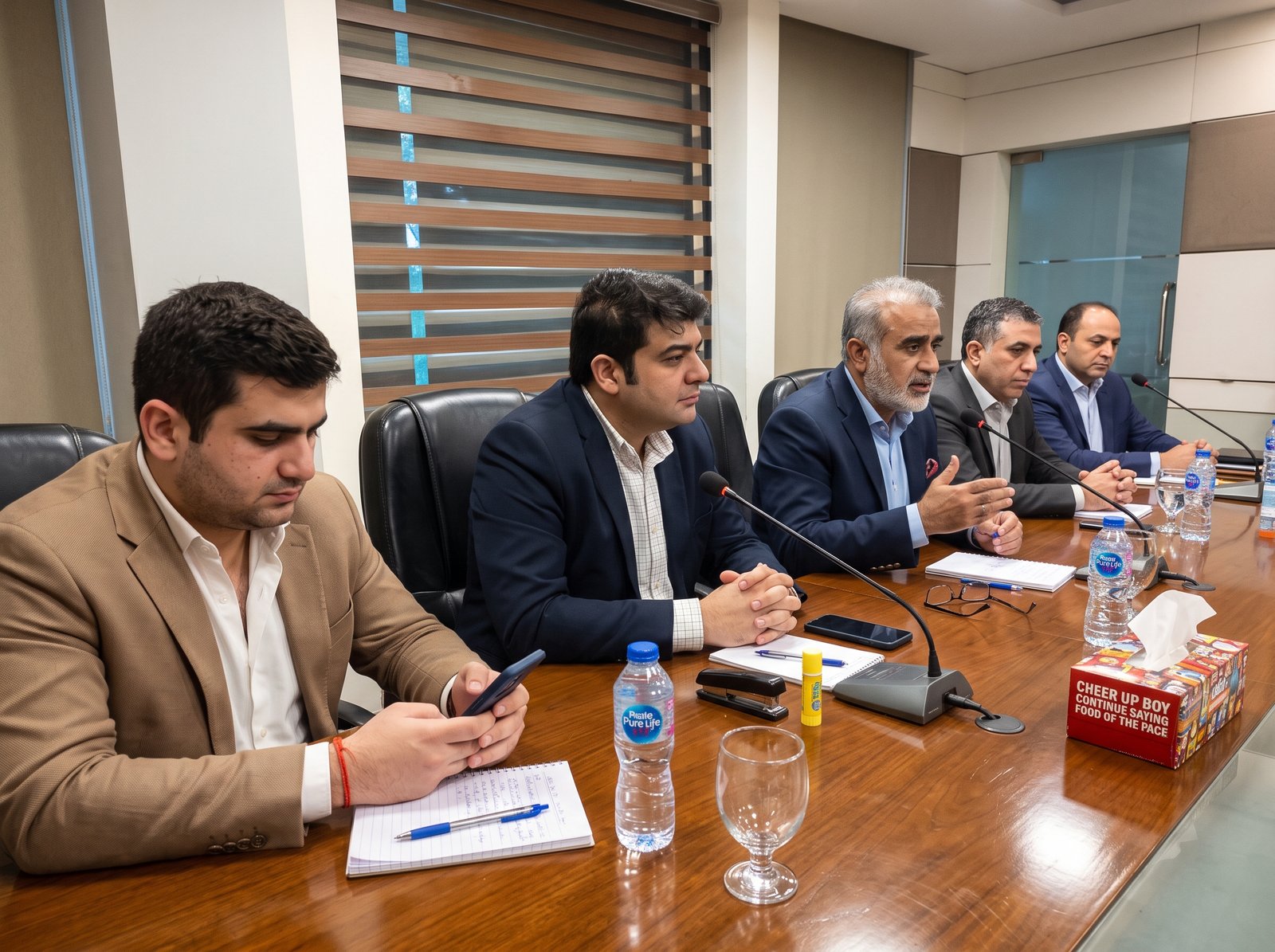
Lahore, October 9, 2026: The All Pakistan Textile Mills Association (APTMA), in collaboration with the Chainstore Association of Pakistan (CAP), hosted its first-ever Manufacturing Retail Working Session at APTMA House, Lahore, bringing together leading Pakistani retail brands and textile manufacturers to strengthen domestic sourcing, develop internationally competitive products and create a pathway for Pakistani brands to expand into global markets.
The initiative forms part of APTMA’s broader vision, under the leadership of Patron-in-Chief Dr. Gohar Ejaz, to increase Pakistan’s textile exports by USD 3 billion within the next 12 months and USD 10 billion over the next few years, through greater value addition, stronger industrial collaboration and international expansion of Pakistani brands.
Speaking at the event, Chairman APTMA Asad Shafi highlighted Pakistan’s unique retail landscape, where homegrown brands dominate the organized fashion retail sector, demonstrating the strength of local entrepreneurship, design capabilities and consumer understanding.
“Pakistan has already developed some exceptionally strong local brands that compete on quality, design and retail experience. The next step is to take these brands global. We should not limit our ambition to manufacturing products for international brands when we have the capability to develop, manufacture, brand and sell our own products to consumers around the world,” said Asad Shafi.
He noted that Pakistan has made considerable progress in value-added textile exports, with more than 80 percent of textile exports comprising value-added consumer products, including apparel and home textiles. However, the country must now focus on capturing a greater share of the value generated beyond manufacturing.
“Manufacturing typically represents less than 30 percent of the final retail value of apparel. The remaining value is created through product development, design, branding, marketing, distribution and retail. Pakistan must move beyond being primarily a manufacturing destination and become a country that develops and owns globally recognized brands,” he added.
Chairman APTMA emphasized that globally competitive Pakistani brands require globally competitive local supply chains. He said that under the guidance of Patron-in-Chief Dr. Gohar Ejaz, APTMA member companies are joining hands with domestic retailers to provide international-standard fabrics, finished products, technical expertise, innovation and manufacturing capabilities.
The working session provided a practical platform for retailers to present actual imported products, discuss challenges in sourcing locally and identify gaps in quality, technology, product development, pricing and delivery. Participating manufacturers showcased their technical capabilities, product innovations and manufacturing expertise, with the objective of replacing imported merchandise with locally developed and manufactured alternatives.
The session was attended by leading Pakistani retail brands, including Cross Stitch, Kiji, Maria. B, Limelight, Sapphire, Nishat Linen, Outfitters, Zeitgeist, Cougar, Royal Tag, Charcoal and Wewear, alongside major textile manufacturers and exporters, including Kohinoor Mills, Nagina Group, Shahzad Textile Mills, Resham Textile Mills, Din Textile Mills, Din Industries and Crescent Textile Mills, among others.
The event was moderated by Muhammad Ali Chaudhry of Resham Textile Mills, Vice Chairman APTMA North Zone, whose efforts brought together senior leadership, business owners, sourcing teams and technical professionals from both sectors.
Wasif Sikandar Butt, APTMA Executive Committee Member and newly appointed Chairman of the Chainstore Association of Pakistan, (CAP) participating alongside Rana Tariq, Patron CAP emphasized the importance of institutional collaboration between manufacturers and retailers to reduce import dependence, strengthen domestic industry and develop internationally competitive Pakistani products.
Looking ahead, Chairman APTMA announced that APTMA would work towards institutionalizing this collaboration through continued buyer-supplier engagement, product development initiatives and stronger coordination between retailers and textile manufacturers.
He further stated that APTMA would engage with the Federal Ministries of Commerce, Finance, Planning, FBR TDAP and other relevant public sector bodies to develop a coordinated national strategy supporting the international expansion of Pakistani brands, including export facilitation, market access, trade promotion and brand development.