

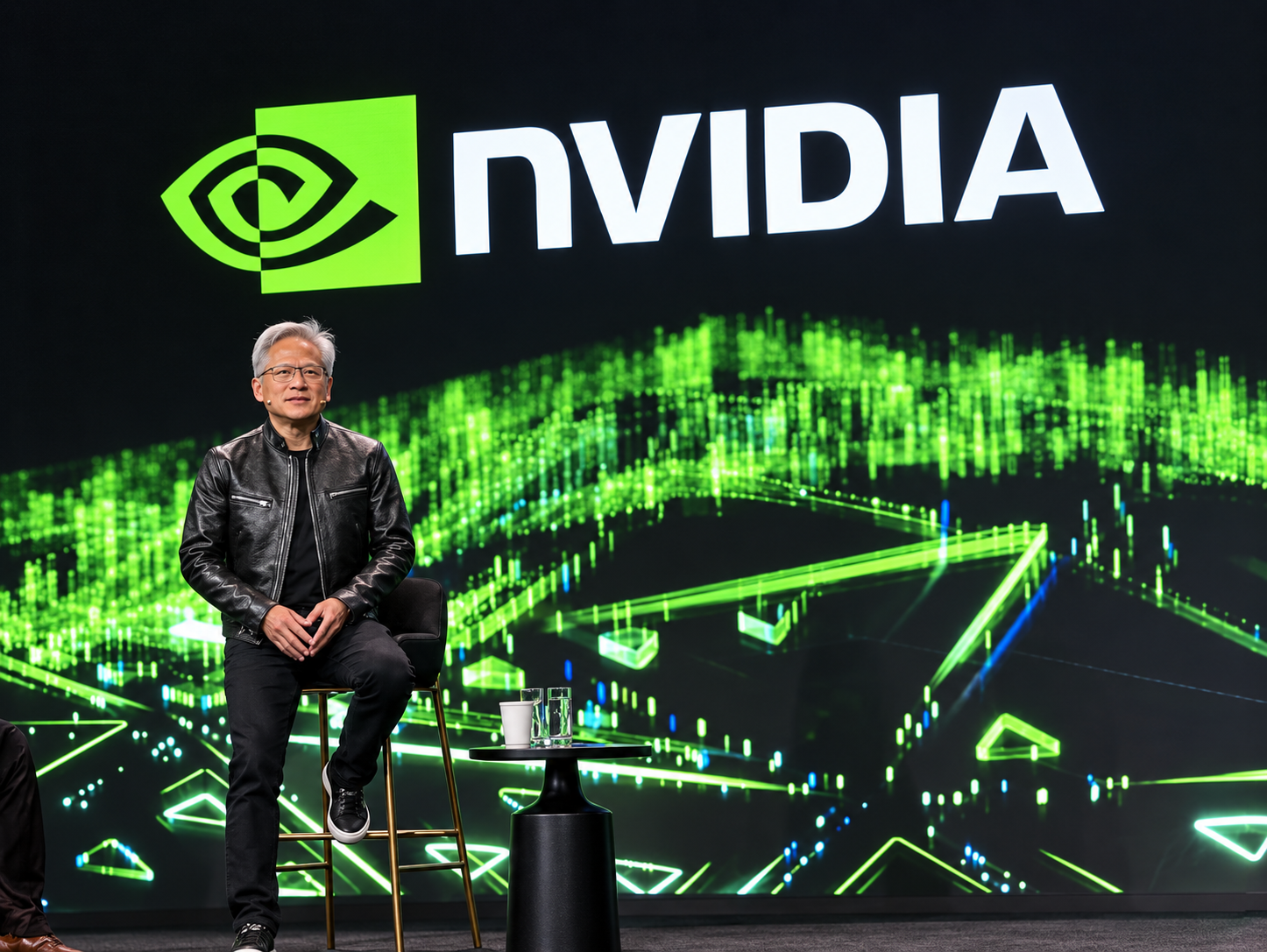
Nvidia CEO Jensen Huang has publicly defended his company’s relationship with Singapore-based data centre operator Megaspeed International, describing their interactions as “normal and not unusual” following explosive allegations that a senior Megaspeed executive operated as a Chinese intelligence asset.
The controversy stems from a recent New York Times report revealing that US intelligence agencies identified Alice Huang, a Chinese-born executive at Megaspeed, as a suspected spy for Beijing. According to the report, she is accused of cultivating close ties with the Nvidia chief executive and helping China circumvent stringent US export controls to acquire highly advanced artificial intelligence processors.
Nvidia’s Firm Denial and Internal Audits In an interview on Thursday, Jensen Huang pushed back against the allegations of sanctions evasion, maintaining that Nvidia’s dealings with the regional cloud provider were strictly professional. He emphasised that the chipmaker has conducted extensive audits of Megaspeed’s operations to ensure compliance with US export restrictions.
“We’ve studied all their deployments of our GPUs and counted every one,” Huang stated, affirming that Nvidia found no evidence that Megaspeed illegally diverted its powerful graphics processing units (GPUs) to China.
Addressing his personal interactions with Alice Huang, the CEO and Nvidia spokespersons noted that meeting with major clients is a routine executive function. “Jensen’s interactions with Ms. Huang are not unusual or unexpected. Meetings with customers are part of a CEO’s job; Jensen talks with thousands of customer executives every year,” an Nvidia spokesperson said. The company further clarified that Megaspeed received only standard commercial information, with zero access to national security data or Nvidia trade secrets. Furthermore, Huang noted that the US government had never provided him with a defensive briefing or warned him of any suspicions regarding the executive.
The Espionage Plot and Federal Probe The intelligence surrounding Alice Huang reportedly raised red flags within the US government about whether Beijing could leverage the relationship to gain insights into Nvidia’s operations or US semiconductor export strategies. The two executives were reportedly photographed together at a technology industry gathering in Taipei in June 2024 and seen together after a business dinner in May 2025.
The situation is currently the subject of an escalating federal probe. The investigation originated in late 2024 when a US Commerce Department official visited a Megaspeed-operated data centre in Malaysia. Investigators reportedly found circumstances that raised immediate suspicions: highly restricted Nvidia equipment remained packed in boxes rather than being installed in server racks, suggesting the hardware was being staged for transhipment rather than local deployment.
Trade records revealed that a Malaysian sister company of Megaspeed purchased at least $4.8 billion worth of advanced AI equipment containing Nvidia technology between June 2024 and February 2026. The case has since been referred from the Commerce Department to the Department of Justice (DOJ). Singaporean authorities also reportedly questioned Alice Huang in 2025.
Megaspeed’s Role and Response Megaspeed operates as a crucial intermediary in the Asian tech ecosystem, purchasing Nvidia-powered computing equipment and renting cloud data centre capacity to major Chinese enterprises, including Alibaba. US officials suspect that through this network, some banned hardware may have been illicitly funnelled into mainland China.
In response to the growing scandal, Megaspeed released a statement affirming that its current leadership is taking the matter “extremely seriously.” The company has retained outside legal counsel to conduct a thorough internal investigation and has formally notified the US government of its full commitment to cooperating with the DOJ probe.
Geopolitical Ramifications The controversy highlights the persistent challenges of enforcing US technology blockades against China. The US has strictly barred the export of Nvidia’s most powerful AI processors to China to prevent them from being used in Chinese military or surveillance applications.
Despite these safeguards, the New York Times reported that President Donald Trump was briefed on the investigation into Alice Huang roughly a year ago but opted not to take immediate action. While the Trump administration slightly relaxed some chip export rules in 2025—allowing limited sales of older-generation AI products in exchange for a 15 per cent revenue cut to the US government—the broader embargo on cutting-edge GPUs remains a central pillar of the US-China tech war.
As the Justice Department investigation deepens, the case underscores the vulnerability of the global semiconductor supply chain and the intense lengths to which foreign intelligence services may go to secure the hardware powering the global AI revolution.