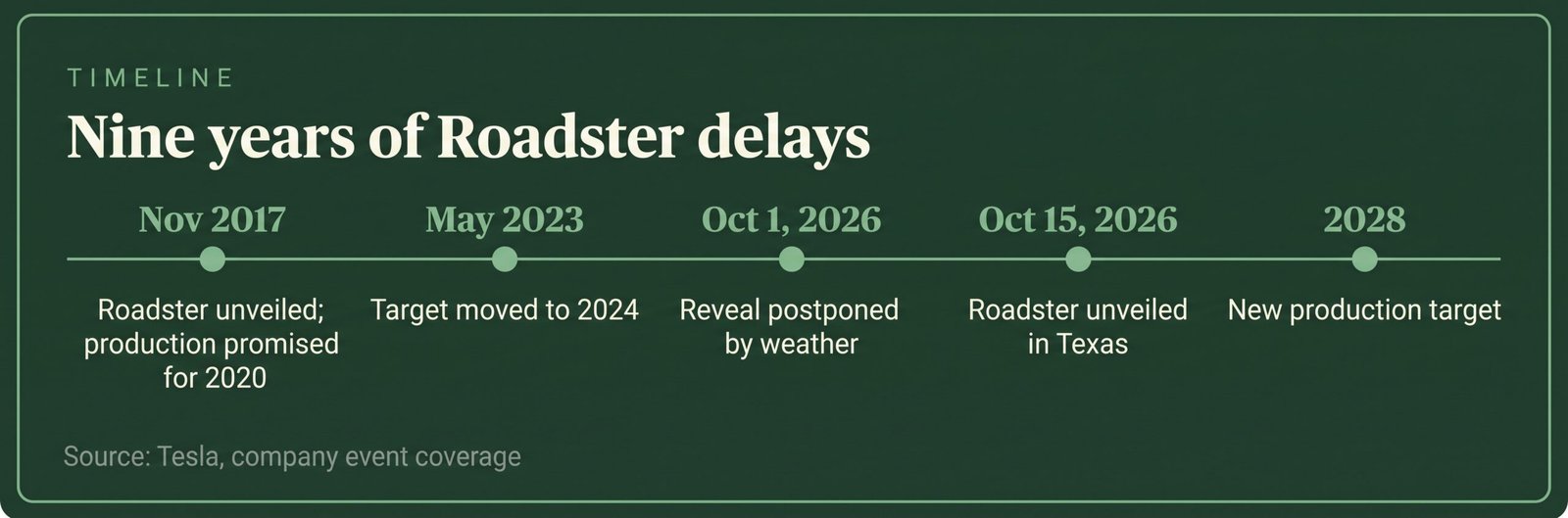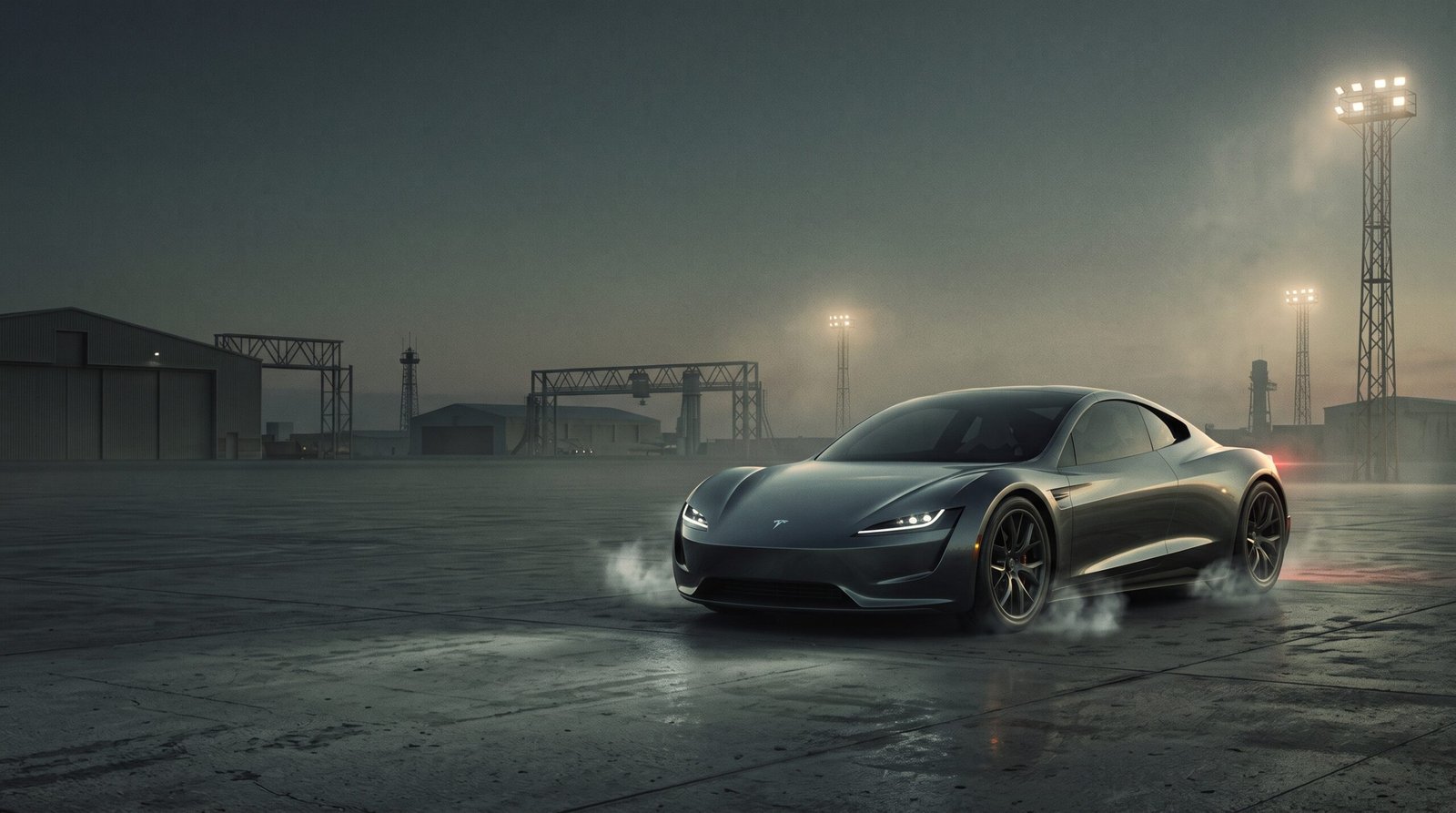
Tesla has unveiled the production version of its second-generation Roadster, a car fitted with SpaceX-developed cold-gas thrusters, and said it expects to start building it in 2028. CEO Elon Musk presented the car on Thursday, October 15, at a livestreamed event at a SpaceX test site near Waco, Texas, almost nine years after the Roadster was first shown in 2017.
What Tesla showed
In the demonstration, the car drove up an inverted ramp with the help of a suction system, then used its thrusters to jump over a row of Tesla vehicles, flip in the air and land. Cold-gas thrusters release compressed gas without combustion, the same basic principle SpaceX uses to steer its rockets, and they deliver short bursts of force rather than sustained flight.
Musk called the Roadster “the best of the last of the human-driven cars.”
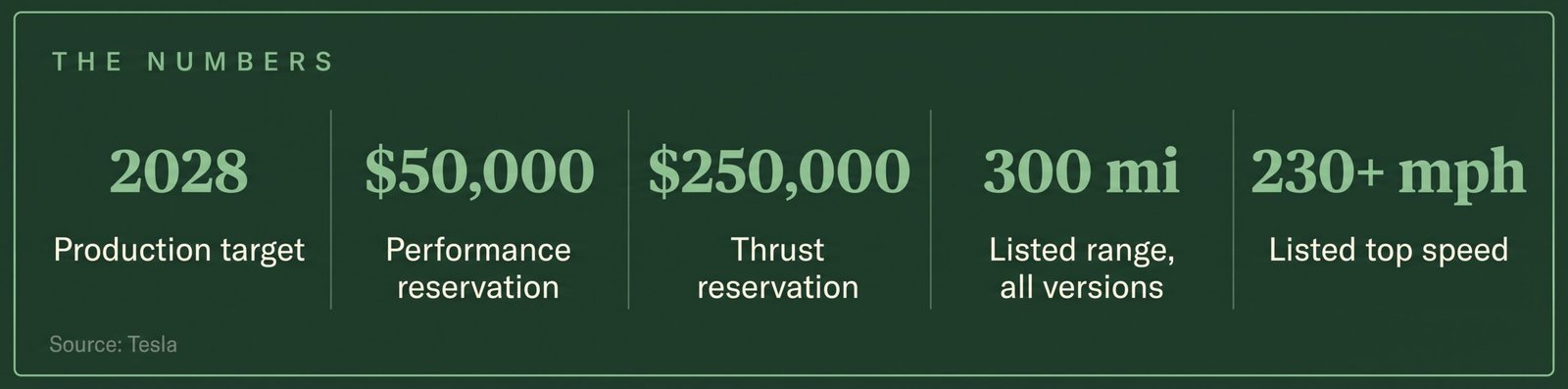
All three versions are listed with a range of 300 miles and a top speed above 230 mph. That is a step back from the 620-mile range, 250 mph top speed and four seats promised in 2017.
Three versions, no price
| Version | Tesla’s description | Seats | 0-60 mph (listed) | Reservation |
|---|---|---|---|---|
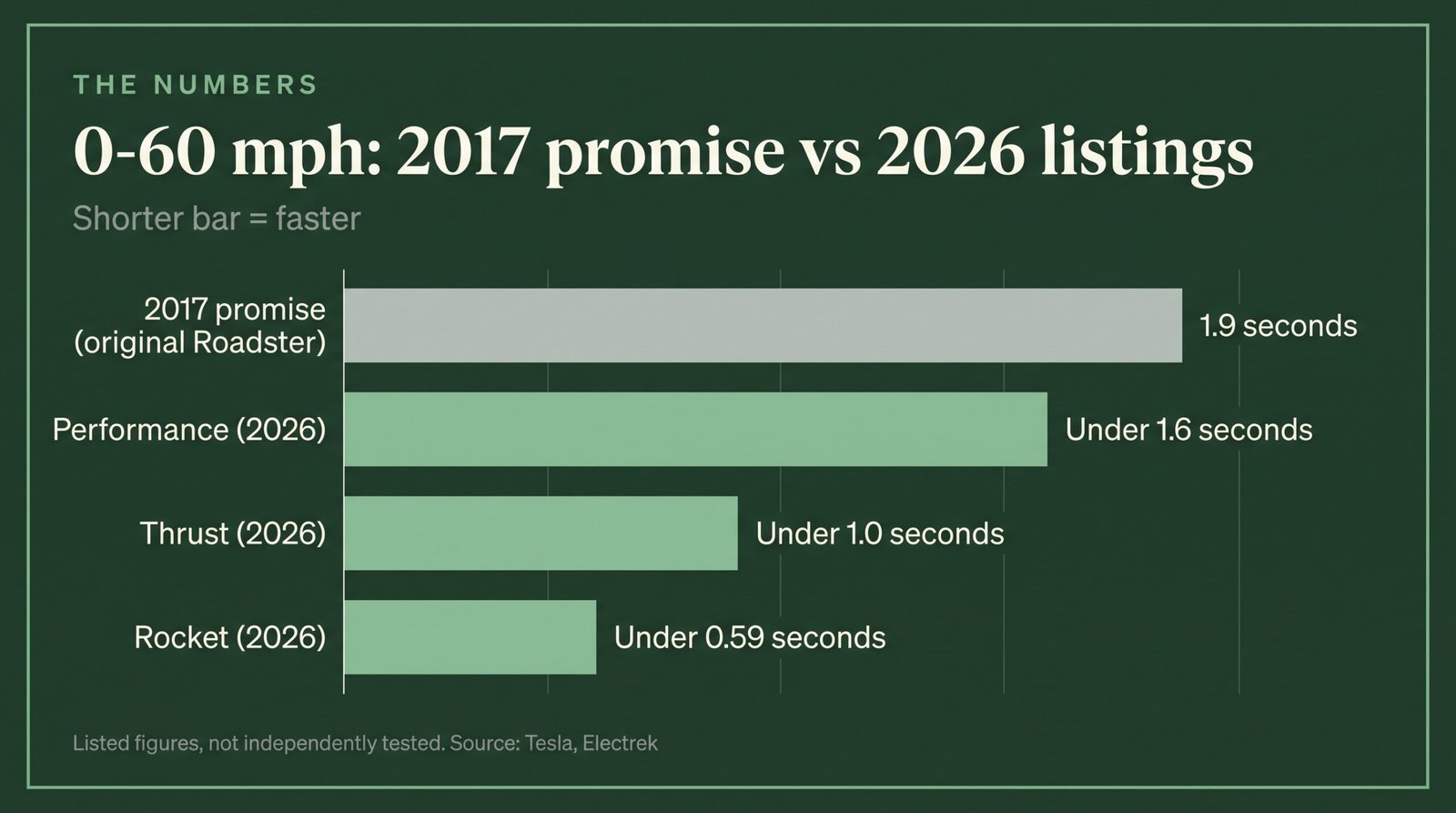
| Performance | “Road ready” | 2 | Under 1.6 seconds | $50,000 |
| Thrust | “Race ready” | 2 | Under 1 second | $250,000 |
| Rocket | “Air ready” | 1 | Under 0.59 seconds | Invite only |
Acceleration figures are Tesla’s listed targets, not independent tests. The single-seat Rocket carries ten thrusters around the car, and Tesla’s website says it is not approved for public road use.
Tesla gave no price for any version. The $50,000 and $250,000 figures are reservation payments, and the car shown was a demonstration model, so final specifications will depend on production and regulation.
Nine years of delays
The Roadster was first shown in November 2017 with a promised 2020 start of production, a $200,000 base price and a 1.9-second 0-60 time. Customers paid $50,000 deposits, and some paid $250,000 for one of 1,000 Founders Series cars. The production target later moved to 2024 before this week’s 2028 date. Thursday’s event was itself postponed from October 1 because of bad weather.