

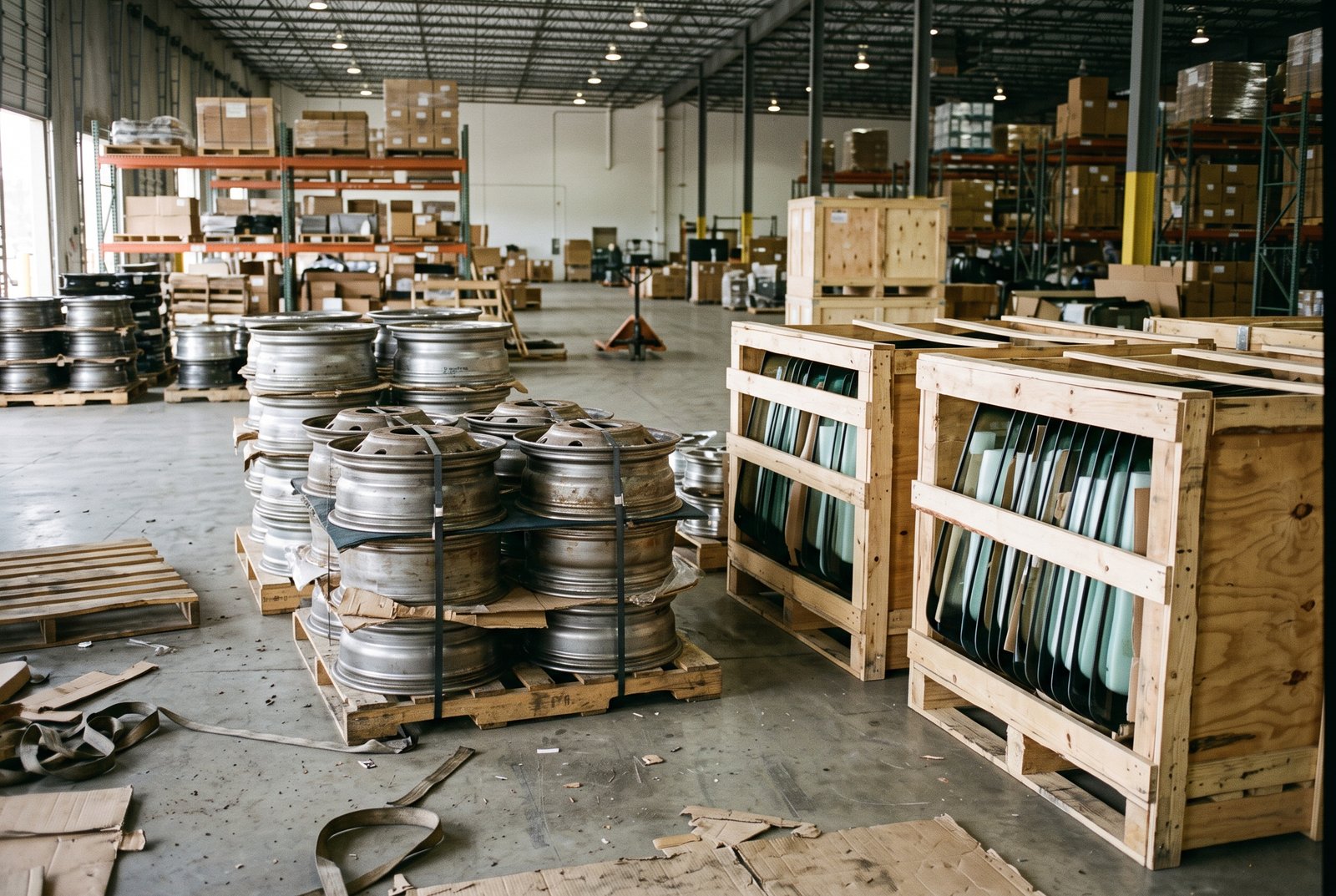
The federal government has formally approved the imposition of an 11 per cent additional customs duty on 13 specific automobile parts and components. The decision, ratified by the Economic Coordination Committee (ECC) of the cabinet, is designed to actively discourage the import of localized auto parts and provide a protective buffer for domestic manufacturers.
According to a summary submitted by the Revenue Division and the Federal Board of Revenue (FBR), the newly taxed items include tyres for heavy commercial vehicles, wheel assemblies, windscreens, seat bases, tail boxes, centre covers, licence plates, side reflectors, footrests, and associated brackets.
Deepening Auto-Sector Localization
The regulatory measure is anchored in SRO 693(I)/2006—a foundational policy tool issued under Section 18(5) of the Customs Act, 1969, which penalises the import of automobile parts that are already being manufactured within Pakistan.
Following a technical assessment by the Engineering Development Board (EDB) and the Ministry of Industries and Production, these 13 items were identified as having achieved sufficient domestic production capacity. The Ministry of Industries officially recommended updating the SRO list on 7 September 2026, prompting the Revenue Division to seek ECC approval to levy the higher tariff. Currently, more than 1,200 Pakistan Customs Tariff (PCT) codes covering various automotive components fall under this protective notification, with duties levied at varying, tier-based rates.
Also Read: Toyota Indus Halts Current Corolla Production, Prepares Third Cosmetic Update For Aging Platform
The Broader Economic Strategy
This tariff intervention reflects a dual-pronged macroeconomic strategy. First, by raising the cost of imported components, the government aims to force Original Equipment Manufacturers (OEMs) and assemblers to source directly from the local auto-parts ecosystem, thereby driving industrial growth and preserving employment in the manufacturing sector.
Second, the structural shift is intended to alleviate pressure on Pakistan’s external account. By curbing the dollar outflows traditionally associated with completely knocked down (CKD) kits and component imports, the government hopes to maintain foreign exchange reserves while eventually building the domestic capacity required to tap into export markets. The proposal was thoroughly vetted by the ministries of Finance and Commerce prior to securing the ECC’s final nod.