

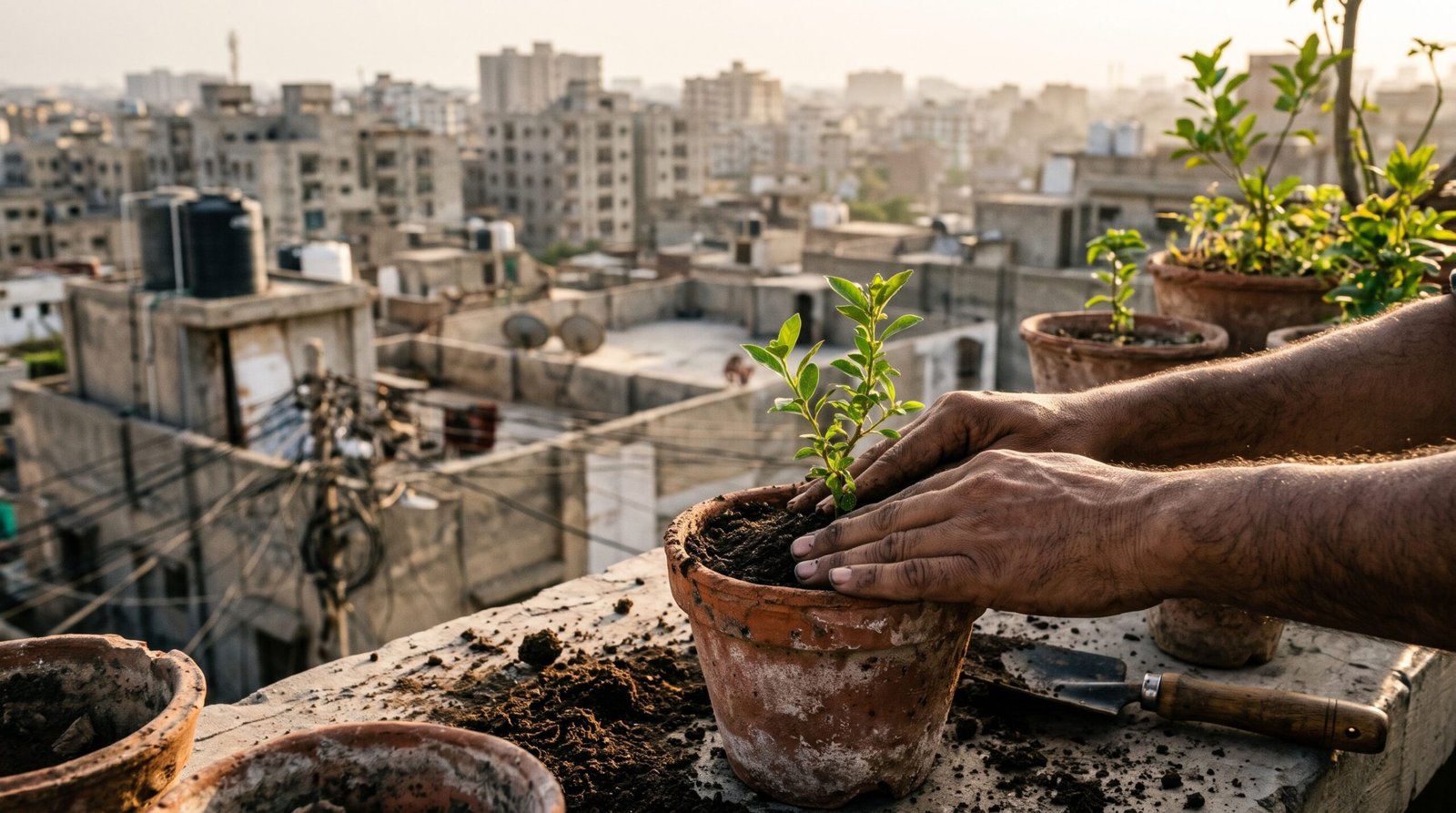
Despite growing anxieties regarding the severe impacts of global warming, a significant majority of Pakistanis maintain a strong belief in the power of individual environmental agency. According to the recently published WIN Worldviews Survey 2026, conducted nationally by Gallup Pakistan, nearly eight in ten citizens believe that their personal actions can materially improve the environment.
The survey reveals that 79 per cent of Pakistanis agree with the statement that individual actions can contribute to environmental improvement, placing the nation slightly above the global average of 77 per cent.
The National Breakdown and Gender Divide
When assessing the national data, the 79 per cent agreement among Pakistanis comprises 30 per cent who “totally agree” and 49 per cent who “somewhat agree” that their actions make a difference. Conversely, 18 per cent of respondents expressed disagreement, broken down into 8 per cent who “somewhat disagree” and 10 per cent who “totally disagree,” while the remaining 3 per cent offered no response.
A closer examination of the demographics reveals a slight but notable gender divide regarding environmental optimism. Pakistani women are marginally more likely to believe in the efficacy of personal action, with 80 per cent expressing agreement compared to 77 per cent of men. Among women, 29 per cent totally agreed and 51 per cent somewhat agreed, whereas 31 per cent of men totally agreed and 46 per cent somewhat agreed. Disagreement levels remained similar across genders, resting at 19 per cent for women and 18 per cent for men.
Pakistan’s Position in the Global Context
The WIN Worldviews Survey 2026 places Pakistan in the upper-middle tier of international environmental optimism. The global average shows that 77 per cent of people worldwide believe their actions matter (33 per cent totally agree, 44 per cent somewhat agree), while 19 per cent disagree.
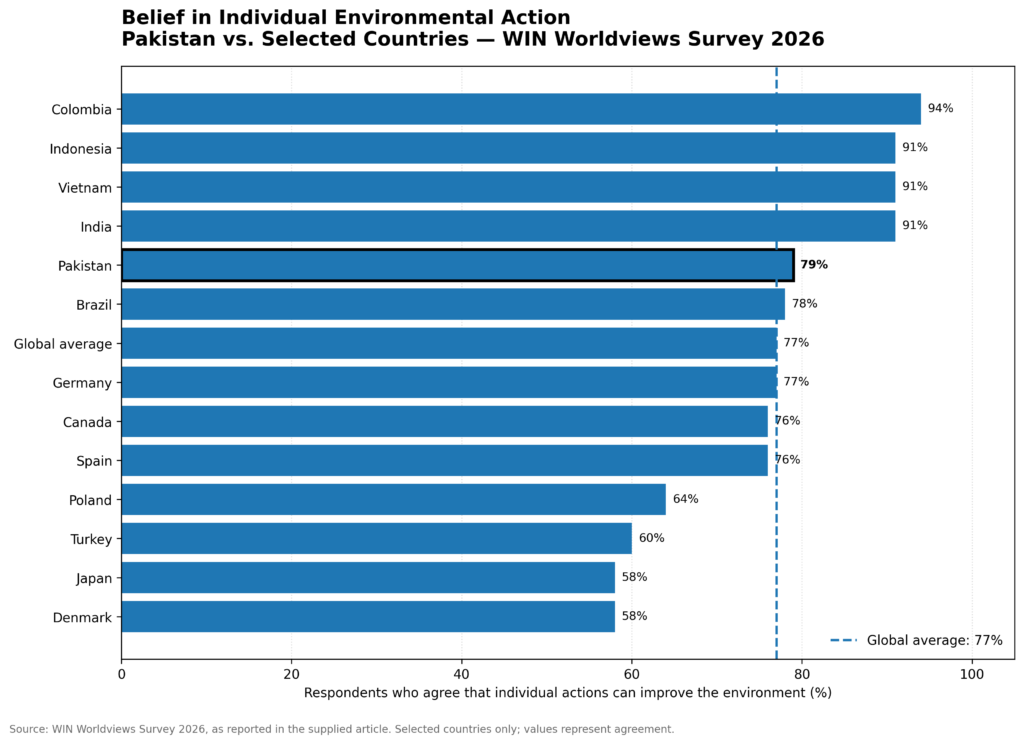
The highest levels of individual environmental confidence are concentrated in Latin America and Asia. Colombia leads the global index at 94 per cent, followed closely by Indonesia, Vietnam, and India at 91 per cent each. Pakistan’s 79 per cent agreement ranks it ahead of several major developed and developing economies, including Brazil (78 per cent), Germany (77 per cent), Canada (76 per cent), and Spain (76 per cent).
At the lower end of the international spectrum, nations such as Denmark and Japan recorded only 58 per cent agreement, followed by Turkey at 60 per cent and Poland at 64 per cent.
Also Read: Acquirers Officially Withdraw Bid For 6.02% Stake In Escorts Investment Bank
Individual Agency Amidst Systemic Challenges
For environmental policymakers and corporate sustainability officers, the Gallup findings present a unique domestic landscape. The survey analysts noted that this widespread recognition of personal responsibility coexists with a broader public apprehension regarding climate change.
Although previous data indicates that a large share of Pakistanis fear it may already be too late to reverse systemic climate change, this overwhelming belief in personal agency suggests that citizens remain willing to engage in sustainable practices—whether through energy conservation, waste reduction, or supporting eco-friendly businesses. It highlights a critical opportunity for both the public and private sectors to leverage this grassroots optimism into actionable environmental initiatives.