

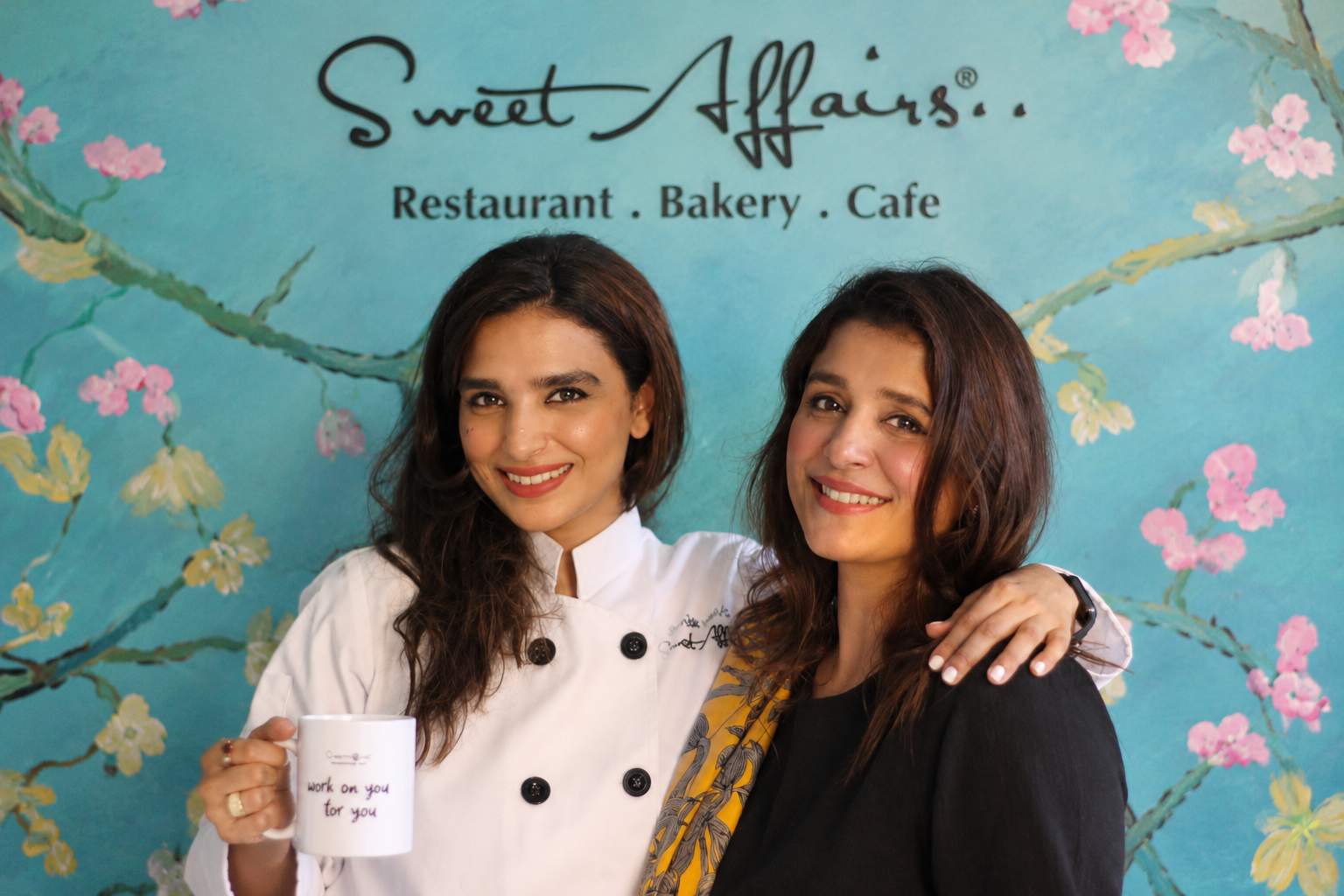
In 2011, when Saniya Waqar returned to Pakistan after completing a short course in desserts in Dubai, she could hardly have imagined that her experiments in the family kitchen would eventually lay the foundation for two ambitious hospitality brands. Fifteen years later, Sweet Affairs has established itself in Pakistan’s premium food and dessert market, while Crave the Caterers, developed under the leadership of her elder sister Asma Waqar, has expanded into luxury weddings, corporate functions, diplomatic gatherings and international catering projects.
Their journey illustrates how a modest home-based enterprise can evolve into a more diversified hospitality business through creativity, family support, operational discipline and a willingness to adapt to changing market conditions.
For Asma Waqar, Founder of Crave the Caterers and Director of Sweet Affairs (Pvt.) Ltd., the story is about much more than cakes, restaurants or elaborate events. It is about building businesses in a challenging economic environment, creating opportunities for others and transforming a family venture into an institution capable of competing internationally.
In an extensive interview with The Scoop, Asma discussed the evolution of both brands, the increasingly difficult economics of Pakistan’s food industry, the challenges confronting women entrepreneurs and the sisters’ ambitions to establish a diversified hospitality group.
Their future plans include a world-class central catering facility, expansion into new Pakistani cities, opportunities in the Middle East, specialised bakery concepts and potential diversification into corporate, institutional and airline catering.
Yet Asma’s understanding of business success has changed considerably over the years. Where expansion once meant opening more outlets and handling more events, she now places greater emphasis on profitability, financial discipline, operational independence and building an organisation that can function without its founders being involved in every decision.
The Beginning: Saniya Waqar’s Passion For Baking
The Sweet Affairs story began with Saniya Waqar, whose interest in desserts developed into an unexpected entrepreneurial opportunity.
After returning from Dubai in 2011, she began experimenting with recipes at the family home. Her desserts quickly attracted customers, encouraging her to explore more creative products.
She subsequently ventured into customised designer cakes, a relatively unfamiliar category in Pakistan’s mainstream bakery market at the time.
According to Asma, Saniya was among the early entrepreneurs who helped popularise personalised cakes designed around individual celebrations, themes and customer preferences.
“At a time when cakes were largely traditional, she was creating beautiful, personalised designs that told stories. Every cake was different, every creation had a personality, and people absolutely loved them,” Asma recalled.
What initially appeared to be a small home-based venture began attracting sufficient demand to suggest that it could develop into a sustainable commercial operation.
Approximately a year later, their father encouraged the family to establish a small coffee shop, marking Sweet Affairs’ transition from a domestic kitchen to a formal hospitality business.
“I don’t think he could have imagined how far that little decision would take us,” Asma said.
The family subsequently expanded the business, opening additional branches in 2015 and 2017.
Saniya remained central to the brand’s culinary identity and creative direction, while their brother Yousuf played an important role in operations.
Other family members contributed to the enterprise as it developed, creating a business structure rooted in shared ownership, trust and collective effort.
For Asma, the foundation established by her younger sister remains fundamental to everything that followed.
“Sweet Affairs began with my sister’s talent, my father’s encouragement and a family’s belief in one another,” she said.
Asma Waqar’s Journey: From Personal Challenges To Entrepreneurship
Although Saniya initiated the venture, Asma’s own entrepreneurial journey developed at a different stage of her life.
In 2014, she went through a divorce, an experience she described as a significant personal turning point.
As the family business expanded, she became increasingly involved in its operations.
The opportunity to develop a new business segment emerged in 2016, when Sweet Affairs undertook its first catering assignment.
Asma found herself responsible for managing the event, initially without any grand ambition to establish a separate catering company.
“Perhaps because I’ve always been a foodie, perhaps because I love people, or perhaps because I’m a bit of a people pleaser — which, in the hospitality industry, can actually be quite useful!” she remarked.
What began as an unexpected responsibility gradually became her professional passion.
She discovered that catering required a combination of culinary knowledge, customer relationships, creativity, planning and operational execution.
Unlike a conventional restaurant transaction, catering involved participating in significant personal and professional occasions, including weddings, family celebrations and corporate gatherings.
“I realised very quickly that catering was about so much more than cooking and serving food,” she explained.
“You’re being invited into people’s most important moments. Their weddings, their celebrations, their milestones. And they’re trusting you to make those moments special.”
For Asma, the business also became an important source of confidence and independence during a period of personal change.
“My work gave me purpose, confidence, independence and something to look forward to every day,” she said.
“In many ways, it became my own form of therapy.”
Why Sweet Affairs Catering Became Crave The Caterers
Initially, the catering division operated under the Sweet Affairs name.
However, as its operations expanded, the existing brand identity created an unexpected commercial limitation.
Sweet Affairs was strongly associated with cakes, desserts and café products, leading some prospective clients to assume that its catering services were similarly restricted.
In reality, the business had expanded into elaborate menus, international cuisines, luxury weddings, corporate events and large-scale celebrations.
Asma recognised that the catering operation required a separate identity capable of communicating its broader capabilities.
That decision eventually led to the creation of Crave the Caterers.
“People associated Sweet Affairs so strongly with desserts and cakes that they often assumed our catering division only offered sweet treats,” she explained.
The rebranding allowed the company to establish a distinct position in Pakistan’s catering and events market.
Today, the two businesses operate through different commercial models.
Sweet Affairs is primarily a restaurant and retail operation, dependent on fixed premises, regular customer traffic and recurring daily sales.
Crave operates through event-based assignments, with each project requiring customised menus, venue-specific planning, transportation, staffing and logistics.
According to Asma, Crave has grown from its first catering assignment in 2016 into an operation capable of serving intimate private dinners, high-profile corporate functions, diplomatic gatherings, luxury weddings and events involving thousands of guests.
The company has also undertaken international catering projects, including assignments in the United Kingdom.
The development of Crave demonstrates how the family leveraged its existing culinary experience and customer relationships to enter a different segment of the hospitality industry.
The Economics Of Pakistan’s Food Industry: Revenue Is Not Profit
Despite the success associated with established hospitality brands, Asma believes Pakistan’s food industry faces serious financial and operational challenges.
Her assessment challenges the perception that busy restaurants and elaborate events necessarily indicate strong profitability.
“From the outside, a busy restaurant or a beautifully executed event can look like a very successful business. But revenue and profitability are two completely different things,” she told The Scoop.
According to Asma, electricity tariffs, gas prices, commercial rents, taxation, employee salaries, transportation expenses, ingredients and equipment maintenance have collectively increased the cost of operating food businesses.
The challenge is particularly acute because restaurants and catering companies cannot continuously increase prices without affecting customer demand.
“There is a limit to what customers can reasonably pay,” she observed.
This creates pressure on operators to maintain quality while protecting margins and ensuring that customers continue receiving value.
For Sweet Affairs and Crave, the response has involved greater financial discipline and a stronger emphasis on food costing, inventory management, menu engineering, wastage reduction and operational efficiency.
Asma believes the days when restaurants could survive primarily on popularity and reputation are over.
“You can have a wonderful brand, loyal customers and a full restaurant, and still struggle financially if your systems are not strong,” she said.
Her comments highlight an important reality for Pakistan’s restaurant sector: sales growth and profitability must be evaluated separately.
A business can attract substantial customer traffic while struggling to generate sufficient returns after accounting for rent, utilities, labour, food costs and other operating expenses.
For Asma, understanding these financial fundamentals has become essential to building a sustainable hospitality enterprise.
“Passion may start a business, but strong systems and sound financial decisions are what keep it alive.”
Investment, Profit Margins And The Cost Of Expansion
Over the past fifteen years, the family has invested continuously in kitchens, equipment, infrastructure, training, staffing and brand development.
Asma described hospitality as a capital-intensive industry, particularly for companies operating in premium market segments.
The catering business presents additional financial and logistical challenges.
An event lasting only four or five hours can require weeks of preparation, with expenses incurred well before guests arrive.
These include procurement, food production, equipment, transportation, trained chefs, service personnel and event-specific arrangements.
Such requirements make working-capital management and operational planning particularly important.
Although Asma declined to disclose the exact revenue, investment and profitability figures of Sweet Affairs and Crave, she acknowledged that the businesses have experienced periods of strong growth and profitability alongside difficult economic conditions.
She explained that her approach to expansion has evolved from pursuing volume to evaluating financial sustainability.
“Earlier, growth was often about doing more — more events, more outlets, more customers,” she said.
“Today, I think much more carefully about margins, return on investment, scalability and whether a business model can grow without becoming increasingly difficult to manage.”
Asma sees particularly strong growth potential in Crave because catering can be extended into multiple geographical markets without necessarily requiring the same retail infrastructure as restaurants.
However, she also recognises that expanding catering operations requires significant investment in professional teams, production facilities, transportation and management systems.
Her ambition is therefore to create an organisation capable of expanding while maintaining profitability and service standards.
“My ambition is no longer simply to build a bigger business. It’s to build a stronger business — one that can grow, remain profitable and eventually function independently of its founders.”
How Pakistan’s Premium Food Market Is Changing
Consumer expectations in Pakistan’s premium food and hospitality market have evolved considerably since Sweet Affairs began operations.
According to Asma, international travel, social media, exposure to global food trends and growing familiarity with different cuisines have made customers more demanding.
Consumers increasingly evaluate not only taste but also presentation, ingredients, service standards and the overall experience.
In premium catering, clients are moving beyond conventional expectations of lengthy menus and elaborate buffets.
They increasingly seek distinctive concepts, interactive food stations, personalised menus and carefully designed dining experiences.
Asma believes this shift creates opportunities for businesses willing to invest in creativity and service quality.
However, inflation has also influenced spending decisions among affluent customers.
“I think people are willing to pay more, but only when they genuinely feel they’re getting something special in return,” she explained.
For Asma, premium hospitality is not necessarily defined by expensive ingredients or an excessive number of dishes.
“I don’t believe luxury is about putting the most expensive ingredients on a plate or offering fifty different dishes,” she said.
“Sometimes six beautifully executed dishes can create a far more memorable experience than an enormous buffet.”
She believes Pakistani hospitality companies have an opportunity to combine international presentation and service standards with the country’s traditional culinary strengths.
The ability to offer sophisticated international cuisines alongside authentic Pakistani flavours could become an important competitive advantage for businesses seeking international expansion.
Competing With Established Brands And Emerging Players
Pakistan’s food and hospitality industry has become increasingly competitive, with established restaurant groups, emerging local brands and international operators competing for customers.
Asma considers competition beneficial because it encourages innovation and prevents businesses from becoming complacent.
However, she believes long-term differentiation cannot be achieved simply by replicating successful concepts.
Sweet Affairs has built its identity around desserts, cakes, food quality and relationships developed over many years.
Crave, meanwhile, focuses on customised catering experiences, operational reliability and attention to detail.
For Asma, catering carries a particular responsibility because major events cannot easily be repeated if something goes wrong.
“If you’re catering someone’s wedding or a major corporate event, you have one opportunity to get it right,” she said.
She places considerable importance on menu sequencing, presentation, food temperature, crockery, service and the overall atmosphere.
Her philosophy is that customer loyalty often depends on details that guests may not consciously notice but nevertheless influence their experience.
She also believes long-term relationships can be more valuable than maximising profits from individual assignments.
“There are times when doing the right thing for a client may not be the most profitable decision in that moment, but I believe it creates something much more valuable in the long run.”
That value, she explained, is customer loyalty.
Women In Business: Why Pakistan Must Address Structural Barriers
Asma’s entrepreneurial journey has also shaped her views on women’s participation in Pakistan’s economy.
She believes the country has substantial untapped entrepreneurial potential among women, but structural barriers continue to restrict access to opportunities.
These include limited financing options, insufficient professional networks, inadequate mentorship and difficulties securing investment.
Asma acknowledged that her own journey benefited from family support, but questioned why such support is often treated as an exceptional privilege when discussing successful women.
She argued that male entrepreneurs also benefit from extensive domestic and family support, although these contributions frequently go unrecognised.
“Women deserve the same understanding and encouragement,” she said.
“I don’t believe women should have to do everything alone to prove they’re strong.”
She believes financial institutions should develop more effective mechanisms to support women-led businesses, while professional organisations and investment networks should encourage greater female participation.
Asma also emphasised the responsibility of established entrepreneurs to help other women through mentorship, employment and professional connections.
Her message to aspiring women entrepreneurs is that professional ambition and family responsibilities should not be viewed as mutually exclusive.
“We can be loving mothers, wives, daughters and sisters while also having ambitions and identities of our own,” she said.
For her, entrepreneurship has been as much about developing an independent identity and sense of purpose as achieving commercial success.
Crave’s Next Chapter: A World-Class Central Catering Facility
One of Asma’s most significant ambitions is to establish a large, professionally managed central catering facility capable of supporting operations across multiple cities.
The proposed facility would provide the production infrastructure, trained workforce and management systems necessary for Crave to expand beyond its existing markets.
She wants the company to become one of Pakistan’s most respected catering businesses, with the capacity to undertake large-scale assignments while maintaining consistent quality.
Crave already operates in Islamabad and has experience handling international catering projects in the United Kingdom.
Asma believes these experiences provide a foundation for exploring additional markets.
“I want Crave to become one of Pakistan’s most respected catering companies, with a strong presence beyond Lahore,” she said.
Her vision involves developing professional teams and systems capable of supporting growth without depending entirely on her personal supervision.
The central facility remains an ambition rather than a formally announced investment project, with Asma emphasising the importance of establishing the right infrastructure before accelerating expansion.
Middle East Expansion And International Hospitality Ambitions
International expansion is another important component of Crave’s long-term strategy.
Asma sees opportunities in the Middle East, where premium hospitality, corporate events, weddings and large South Asian communities could provide potential markets for specialised catering services.
She believes Pakistani businesses possess the culinary expertise, creativity and hospitality traditions required to compete internationally.
However, she recognises that international growth requires more than culinary talent.
Companies must develop professional management structures, consistent service standards, reliable supply chains and the ability to operate in different regulatory environments.
Crave’s experience in the United Kingdom has strengthened her interest in pursuing international opportunities.
“We’ve already worked on international projects, including in the United Kingdom, and I believe there are significant opportunities in the Middle East,” she said.
Her ambitions are not limited to serving overseas Pakistani communities.
She wants Crave to compete within broader international hospitality markets by combining culinary excellence with professional execution.
Corporate, Institutional And Airline Catering: New Growth Opportunities
Beyond luxury events and weddings, Asma is evaluating opportunities in several other segments of the food services industry.
These include corporate catering, institutional food services, airline catering and centralised food production.
Such diversification could potentially create different revenue streams and reduce dependence on individual events.
However, Asma acknowledged that these segments operate through different commercial and operational models.
Institutional and airline catering, for example, require specialised infrastructure, consistent production standards, extensive logistics and strong quality-control systems.
Consequently, she views these opportunities as part of a longer-term strategy rather than immediate extensions of Crave’s existing operations.
Her objective is to build the management capacity and infrastructure necessary to enter new markets intelligently.
“I want to build a business that is bigger than any one person, including myself,” she said.
Also Read: Otsuka Pakistan Announces Major Manufacturing Restructuring As Quarterly Profit Rises 14.6%
Sweet Affairs’ Future: Specialised Bakeries And Franchising
While Crave pursues opportunities in catering, Sweet Affairs could evolve through specialised bakery concepts.
Asma envisions contemporary bakeries offering freshly prepared breads, pastries and desserts in an environment where customers can observe the production process.
The concept would combine international bakery standards with a welcoming customer experience.
She believes such formats could eventually be replicated across different locations.
Franchising is also under consideration, although she emphasised that the company would only pursue it once operational systems and quality standards could be maintained consistently.
The family is additionally interested in partnerships and investment opportunities that support sustainable growth.
For Asma, the priority is not simply increasing the number of outlets but developing business models capable of delivering consistent returns and maintaining brand identity.
The Family Behind Sweet Affairs And Crave
Although Asma and Saniya have played particularly visible roles in developing the businesses, both emphasise the importance of their wider family.
Their father recognised the potential of Saniya’s home-based baking venture and encouraged the transition into a commercial operation.
Their brother Yousuf contributed significantly to operations during the early years.
Asma also acknowledged their sister Uzma, whom she described as a source of wisdom, encouragement and perspective.
Their sister-in-law Nosheen, also a partner in the business, has provided support and contributed to the family’s entrepreneurial efforts.
Their mother, meanwhile, instilled values of patience, kindness and compassion that Asma believes continue to influence the way the businesses are managed.
“Saniya and I may have spent countless hours in kitchens, at events, in meetings and dealing with the everyday challenges of growing these brands, but we’ve never been on this journey alone,” she said.
For Asma, the family’s collective involvement has been a source of strength.
However, she also recognises that the next stage of growth will require professional management structures capable of operating independently of individual family members.
Behind The Success: The Personal Sacrifices Of Two Entrepreneurial Sisters
Despite their commercial achievements, Asma acknowledged that building Sweet Affairs and Crave has required considerable personal sacrifices.
Long working hours, operational responsibilities and the demands of managing hospitality businesses have frequently affected family life.
She spoke candidly about the challenges of balancing motherhood, family relationships and professional ambitions.
“It’s the bedtime stories you couldn’t read because you were still at work. The lunches you promised your children you’d be home for but couldn’t make,” she recalled.
For Asma and Saniya, these experiences have influenced their understanding of success.
They remain committed to building internationally competitive businesses, but increasingly want to create an organisation that allows them greater personal freedom.
Their ambition is to develop professional teams and systems that can sustain the businesses without requiring the founders’ constant involvement.
That, Asma believes, would create more time for their children, families, parents and future generations.
“Because somewhere along this journey, we’ve realised that success isn’t just about how much you build. It’s also about being able to enjoy the life you’ve worked so hard for,” she said.
From A Family Venture To An International Hospitality Group
Looking ahead to the next decade, Asma envisions Sweet Affairs and Crave becoming part of a diversified hospitality enterprise with a presence beyond Pakistan.
The ambition includes world-class catering infrastructure, specialised bakery operations, international market expansion, professional management and employment opportunities.
She wants the businesses to become institutions capable of outlasting their founders.
That objective reflects a broader evolution in her entrepreneurial philosophy.
Where success was once measured through the number of branches, customers and events, she now places greater emphasis on sustainable profitability, organisational strength and long-term impact.
Asma believes young entrepreneurs should recognise that successful businesses do not necessarily begin with substantial investment or elaborate business plans.
The Sweet Affairs journey began with a short dessert course, experiments in a family kitchen and a father’s encouragement.
But she cautioned that entrepreneurship requires resilience, discipline and a willingness to make difficult decisions.
“Behind the beautiful photographs, successful events and growing businesses are years of hard work, sleepless nights, financial pressures, missed family moments and countless difficult decisions,” she said.
For the Waqar sisters, the next phase is about turning years of entrepreneurial experience into a sustainable hospitality institution.
Saniya’s creativity provided the original foundation. Asma’s development of the catering business opened a new commercial direction. Their family’s collective effort helped transform those opportunities into two established brands.
Whether their ambitions ultimately produce a major international hospitality group will depend on their ability to translate that experience into scalable operations, professional management and financially sustainable expansion.
But the vision is clear.
“At the end of the day, we don’t just want to leave behind successful businesses,” Asma said.
“We want to leave behind something meaningful, something that outlives us, and a legacy our children can be proud of.”
For two sisters whose entrepreneurial story began with homemade desserts in 2011, that ambition represents the next chapter of a family business still seeking to redefine the boundaries of its success.