

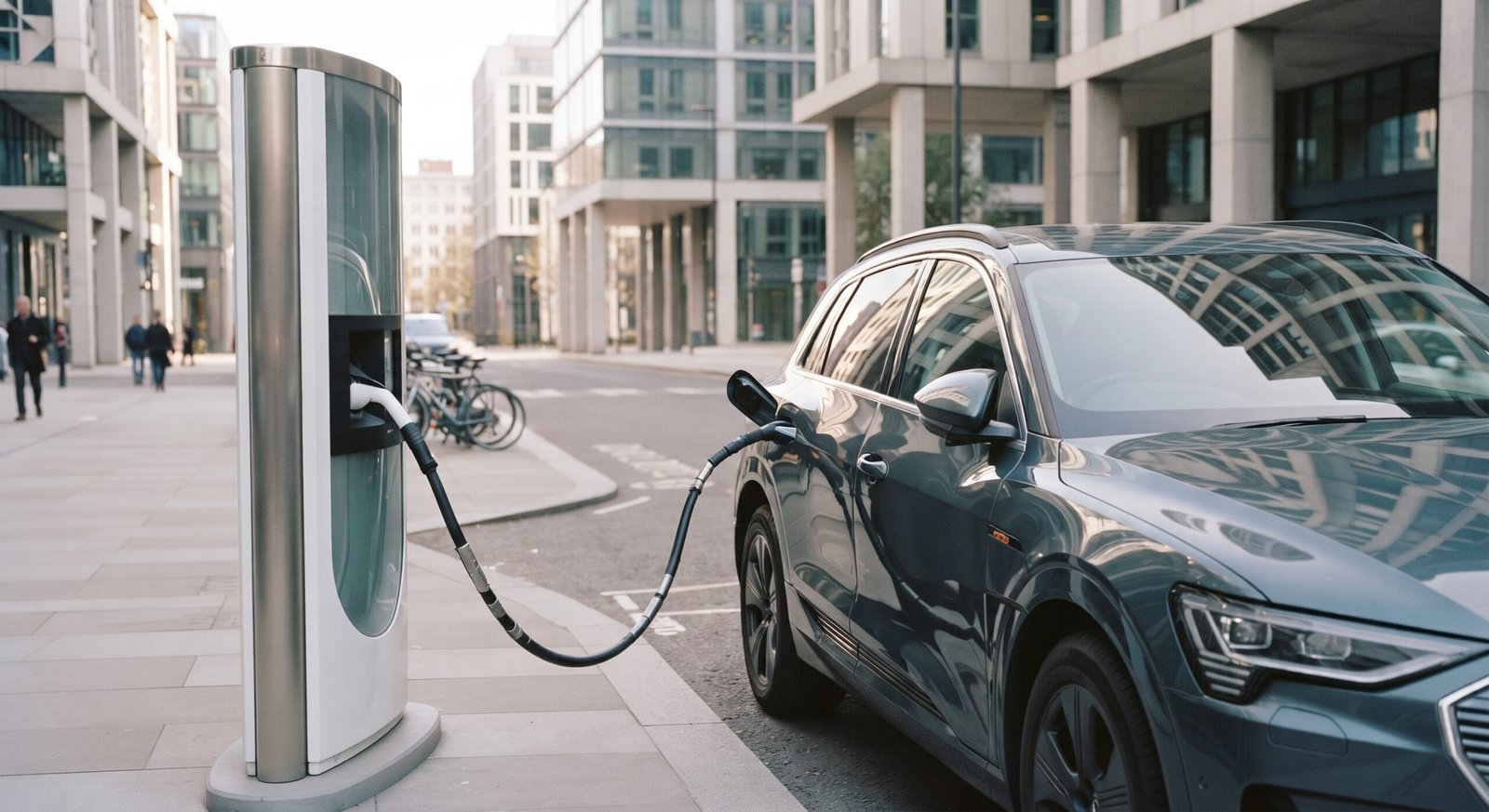
The federal government has officially approved the draft Automotive Industry Development and Export Policy 2026-31, a comprehensive strategy aimed at fundamentally restructuring Pakistan’s automobile sector. Approved by Prime Minister Shehbaz Sharif, the policy prioritises the rapid adoption of electric mobility, seeks to utilize idle manufacturing capacity, and sets an ambitious $6 billion export target. However, the proposed fiscal measures remain subject to final approval by the International Monetary Fund (IMF).
Strategic Tax Overhaul: Favouring Electric Over Petrol
A central pillar of the new policy is a sharply differentiated tax structure designed to make New Energy Vehicles (NEVs) significantly more competitive against internal combustion engine (ICE) vehicles. Resisting an 18% sales tax rate reportedly recommended by the IMF, the government has proposed a highly preferential tier for electrified vehicles. Under this framework, Battery Electric Vehicles (BEVs) will retain a nominal 1% sales tax, Range-Extended Electric Vehicles (REEVs) will face a 6% sales tax, and Plug-in Hybrid Electric Vehicles (PHEVs) will be taxed at 9%, provided they meet prescribed eligibility conditions. Furthermore, eligible NEVs will be exempt from federal excise duty (FED), special excise duty (SED), capital value tax (CVT), and withholding tax (WHT), except for high-end electric vehicles valued above $75,000, which will face a 10% FED.
Conversely, conventional petrol and diesel vehicles, whether locally manufactured or imported, will face a newly proposed Auto Development Levy (ADL) ranging from 2% to 10%. Two- and three-wheelers, tractors, and small vehicles with engine capacities up to 1,000cc are exempt from this levy. To protect lower-income consumers, the government also plans to eliminate the FED on vehicles up to 1,000cc.
Tariffs and Auto Financing Limits
To further lower the barrier to EV entry, the policy outlines a phased reduction in customs duties for imported fully built electric vehicles (CBUs). Smaller EVs valued up to $15,000 will attract a 5% customs duty during FY2027 and FY2028, temporarily rising to 25% before dropping to 15% by FY2031. For EVs valued above $15,000, the duty will start at 25% and similarly decline to 15% in the final year of the policy, with the overarching goal of bringing the general tariff rate down to 15% by 2030-31 to increase market competition.
Recognising the high upfront costs of EVs, the government has requested the State Bank of Pakistan (SBP) to increase the maximum automobile financing limit for NEVs from Rs 3 million to Rs 10 million, while extending the repayment tenure from three years to five years.
Read More: Is The Deepal S05 Pakistan’s New Automotive Love Affair?
The Auto Development Levy and Institutional Reforms
The newly introduced Auto Development Levy is projected to generate more than Rs 232 billion over the next five years, with the relevant legislation targeted for completion by December 2026. This revenue will not be absorbed into general funds; instead, it is ring-fenced to finance the Drawback of Local Taxes and Levies (DLTL) scheme for exporters, local vendor development, and the establishment of the Pakistan Automotive Testing Institute. This new institute will enforce international safety standards for both imported and locally produced vehicles, mandate consumer protection provisions in sales agreements, and conduct independent bi-annual audits. Additionally, Rs 2.1 billion from the ADL will be allocated to the Vendor Upgradation and Technology Transfer Programme, run jointly by the Engineering Development Board (EDB) and SMEDA, to integrate local small and medium enterprises into global supply chains.
Export Targets and Strict Penalties
The government is targeting $6 billion in automotive exports by the end of the policy period. To achieve this, it has introduced aggressive, performance-linked incentives and penalties. Exporters will receive a base compensation equivalent to 5% of their net free-on-board (FOB) value, alongside an additional 10% incentive for incremental exports if the value increases by at least 5% over the previous year. However, this comes with strict enforcement, as manufacturers who fail to meet mandatory export targets for two consecutive years could face the cancellation of their manufacturing certificates, while companies failing to meet localization requirements risk losing government incentives entirely.
Read More: Al-Ghazi Tractors Limited Stages Massive Turnaround With Rs1.66bn Net Profit
Battery-Swapping and Market Goals
To further reduce the initial purchase price of EVs, where the battery can account for 40% of the cost, the policy proposes a “Battery-as-a-Service” model that would allow consumers to rent or swap depleted batteries for charged ones. The EDB will work with manufacturers to design vehicles, particularly two- and three-wheelers, compatible with interchangeable batteries based on common technical standards.
The policy notes that domestic production of electric two- and three-wheelers has already surged from 21,656 units in FY24 to 226,106 units in FY26, while NEV cars and SUVs jumped from just 42 units to 16,126 units in the same period. By 2030, the government aims for NEVs to capture 30% of all new vehicle sales. If successful, this transition is projected to reduce carbon dioxide emissions by 4.51 million tonnes, generate $6.9 billion in fuel-import savings, and create demand for 1,544 gigawatt-hours of surplus electricity.