

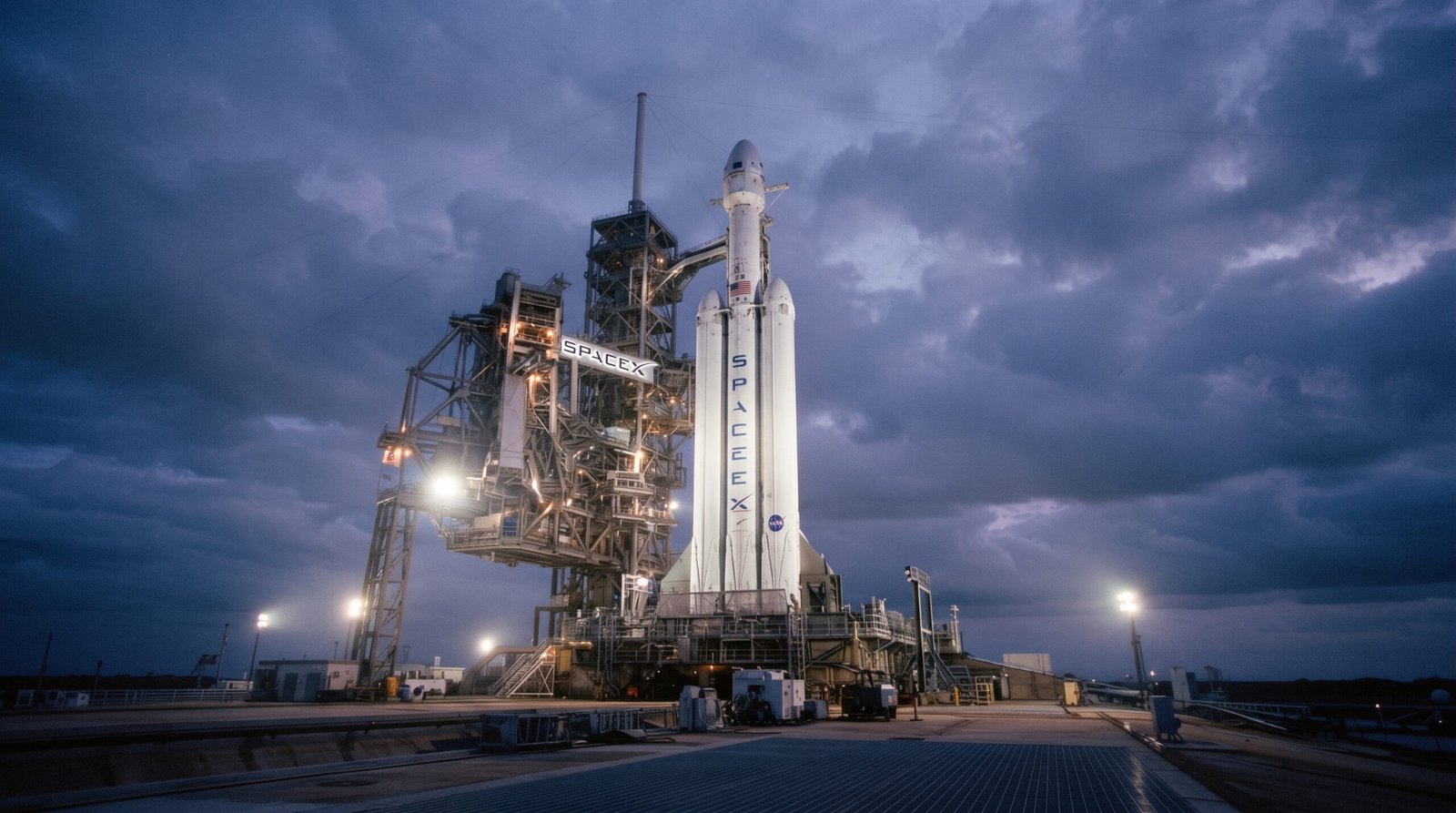
Speaking to investors on a conference call, Musk acknowledged that combining his two most prominent corporate entities is “a good idea”, citing profound technological overlaps and synergies. However, he emphasized that a deal is far from certain. Because he holds a controlling interest in both corporations—owning roughly a fifth of Tesla and just under half of SpaceX—Musk confirmed he has recused himself from the deliberations. The discussions are being handled entirely by independent special committees formed at the request of shareholders, who will ultimately hold voting power over any final transaction.
Speculation surrounding a buyout of the electric vehicle maker by the aerospace giant intensified recently, with financial institutions like Barclays suggesting a framework could emerge ahead of Tesla’s annual meeting. While market enthusiasm pushed shares upward in extended trading—with Tesla ticking up 1.8% and SpaceX shares climbing 8%—Musk cautioned against treating any consolidation as a foregone conclusion, noting that terms have not yet been settled.
Strategic Synergy and the “Superintelligence Singularity”
Detailing the rationale behind a prospective merger, Musk pointed toward the accelerated convergence of artificial intelligence, robotics, chip architecture, and orbital infrastructure.
“I do think there’s a lot of merit to combining the companies as we are pretty much in the superintelligence singularity, and there’s a lot to be gained from cooperating on developing superintelligence software, chip design, the Terafab obviously, robotics, mass-to-orbit with the Starmind constellation, connectivity,” Musk stated.
As part of their deepening cooperation, the two companies’ joint semiconductor manufacturing venture, the “Terafab,” is projected to roll out its initial test chip by May or June of next year, targeting full volume production by the third quarter of 2028.
Read More: Tesla Unveils Thruster-Equipped Roadster, Targets 2028 Production
AI Infrastructure Propels SpaceX to Record Profit
The merger announcement coincided with a blockbuster earnings report from SpaceX for the quarter ended September 30, highlighting a massive structural transformation for the aerospace firm. Total quarterly revenue skyrocketed 161% year-over-year to $14.58 billion, comfortably outstripping Wall Street expectations.
Most notably, SpaceX’s financial engine has experienced a dramatic pivot: revenue from its artificial intelligence division surged nearly tenfold to $7.56 billion. Rather than relying solely on proprietary consumer models, the vast majority of this windfall was generated by renting out high-performance data-center compute capacity to leading AI developers, including Anthropic, Alphabet’s Google, and Reflection AI.
This heavy pivot into cloud infrastructure has effectively positioned SpaceX closer to a massive hyperscale cloud provider than a traditional aerospace laboratory. Consequently, capital expenditures ballooned to $19.6 billion for the quarter—with $16.4 billion funneled directly into expanding data-center compute capacity, which scaled to 1.7 gigawatts. Despite these immense outlays, the company swung firmly into the black, reporting a net income of $4.4 billion compared to a net loss of $1.1 billion during the same period a year prior.
Starlink Scale Meets ARPU Headwinds
Meanwhile, SpaceX’s pioneering satellite-internet wing, Starlink, continued its aggressive global expansion. Total consumer subscribers surpassed expectations to reach 13.6 million in the third quarter, buoyed by expanded enterprise, maritime, aviation, and government contracts.
However, rapid scaling into emerging markets with lower-priced plans has driven down the average monthly revenue per user (ARPU), which dropped to $69 in the third quarter compared to $99 in 2023. Concurrently, the company’s next-generation reusable heavy-lift rocket system, Starship, completed crucial flights to deploy next-generation Starlink payloads, remaining central to the long-term deployment of orbital AI infrastructure.
As special committees evaluate the feasibility of merging Tesla and SpaceX, the convergence of autonomous driving systems, neural network software, and orbital cloud architecture suggests that the boundaries separating automotive transport, robotics, and space technology are rapidly dissolving.