

Picture a stadium. It once echoed with cheering crowds. Now it holds a different crowd, pushed into rows to watch. Guards stand at the edges. Phones are forbidden, because the rulers know what the world would see. In the middle, a woman kneels. Her crime may be a loose headscarf, a journey without a male chaperone, or a complaint about the man who beat her. The whip rises and falls. The crowd is made to watch, and a nation learns to be afraid. This is not a scene from the Middle Ages. It is Afghanistan in November 2026, and the world is watching it happen.
The Taliban promised in 2021 that their rule would be gentler than before. They have broken that promise in blood. The UN has found that at least 1,110 people were flogged in 2025, more than in all previous years combined. One Afghan rights organisation counted 2,745 people subjected to corporal punishment between February and April of the period it studied. The UN’s latest quarterly reporting shows the pattern still running. Between April and June, monitors recorded at least 137 judicial corporal punishments, 112 on men and 25 on women, including public floggings for breaking the Ramadan fast and for illicit relationships. Then the Taliban’s Supreme Court stopped publishing announcements of corporal punishment on April 22. Even so, the UN documented 28 people punished in the third quarter, six of them women, in public, with filming prohibited. That silence should alarm us, not comfort us. A lower number from a regime that has stopped publishing its own record is not mercy. It is a veil. The lash has not been put away. It has only been hidden from the cameras.
What makes this cruelty so monstrous is who is being whipped. Investigators found that women who went to Taliban courts to report domestic abuse, violence and even rape were themselves arrested, charged with moral crimes and sentenced to public lashing. Read that again. A woman gathers the courage to say she was beaten, or raped, and the state answers by flogging her in public. She is punished for the crime committed against her, and every other woman in the village learns that silence is the price of survival. The same violence runs through daily life. In Herat, at least 30 women were arrested over three days in June for “improper hijab.” In the same city, ten women were arrested for not wearing a chador, and a 13-year-old girl was held overnight. In Farah, the morality police told a crowd of men to police the clothing of the women in their families. In Parwan, two women were turned away from a medical facility because no male guardian was with them. A woman who cannot reach a doctor without a man’s permission can be left to die by rule. Earlier mass floggings showed where this road leads: 63 people lashed in a sports stadium in Sar-e-Pul, fourteen of them women, and 27 women and men flogged before a large crowd in Charikar.
The whip is the most visible weapon. The most lasting one is the closed school. Afghanistan is the only country in the world that formally prohibits girls and women from education beyond the primary level. Secondary schools were shut in March 2022, and women were barred from universities that December. This September, the ban entered its fifth year. UNESCO estimates that 2.4 million girls are shut out of secondary school, 200,000 more than last year, and that the number could approach four million by 2030. UNICEF puts the toll since 2021 at more than 2.6 million. By 2021, nearly one million girls had been enrolled in secondary school. A generation of daughters was learning chemistry, poetry and mathematics, and dreaming of becoming doctors, judges and teachers. A twelve-year-old who wept when her school closed in 2022 is seventeen now. She has spent the years that should have shaped her mind inside four walls, and she is about to be married off as the only future still on offer. UNICEF warns that Afghanistan risks losing up to 20,000 women teachers and 5,400 female health workers by 2030, and counts the cost of these restrictions at about $84 million a year in lost economic output. In a country where women are barred from being treated by male doctors, a missing midwife means a mother who bleeds to death, and a missing teacher means a child who never learns to read.
The lash and the locked classroom are two parts of one design. The UN says the Taliban have issued more than 100 decrees targeting women and girls. Women are barred from most work and from public life, and they cannot travel without a male guardian. Even the UN’s own premises are closed to them; the last quarter’s reporting counted the 296th consecutive day that Afghan women were barred from entering simply for being women. UNESCO’s verdict is stark: women have been erased from public life. The UN has called the system “gender apartheid.” The Taliban’s spokesman does not hide the logic. He described women who do not wear the hijab as criminals and rejected the idea that women have a right to work in offices. Even Muslim-majority nations have pleaded with the Taliban to reopen the schools, and the Taliban answer that it is a domestic matter. It is not. A girl’s mind is not the property of the men who rule her. The right to learn belongs to her by birth, and no flag or turban can cancel it.
For those of us who know Afghanistan, this grief is personal. One of us, Engineer Arshad H Abbasi, served in Afghanistan to improve its electricity sector. He went to help bring power to a country that had suffered decades of darkness, and he saw a people eager to rebuild. It is bitterly cruel that, in a land where so many worked to switch on the lights, the light of learning is now being switched off for half the population. A country cannot be powered by half its people. Electricity can warm a home, but it cannot make a nation whole while its daughters are shut out of the classroom and driven from the workplace.
The shame, then, is not only the Taliban’s. The Afghan girls did not fail. The world failed them, and it keeps failing them in every hearing that ends in a statement and every summit that ends in a photograph. Right now, governments are preparing to send Afghans back into this country. Human Rights First warns that those returned face arbitrary detention, executions and public flogging, and that women and girls face systematic denial of education, employment and public speech. To send a woman back to the stadium and the locked school is to hand her to the whip.
Words must now become action, and the United Nations and the European Union can begin with the following.
The United Nations should make the education and safety of women and girls the first condition of any engagement with the Taliban, and say so publicly and without exception. It should establish or strengthen an independent international mechanism to collect and preserve evidence of floggings, arbitrary detentions and gender persecution, so that perpetrators face justice in future courts. It should keep up its backing for the International Criminal Court’s work on gender persecution and for states pursuing cases under the Convention on the Elimination of All Forms of Discrimination against Women. It should refuse to accept the exclusion of Afghan women from its own offices and find ways to ensure that women staff and women-led organisations can work and be heard. It should also keep monitoring corporal punishment, even as the Taliban hide it, and publish what it finds.
The European Union should use its leverage to match its rhetoric. It should impose targeted sanctions, such as travel bans and asset freezes, on the officials who order and carry out floggings and who enforce the decrees against women. It should make any political contact, aid beyond the humanitarian minimum, or step towards recognition conditional on the reopening of secondary schools and universities for girls and women. It should halt deportations of Afghans, especially women and girls, to a country where they face persecution, and open safe legal routes for those at risk. It should fund community-based and online learning, scholarships for Afghan women, and the salaries of women teachers, so that the flame of education survives while the schools remain closed. And it should channel support through women-led and independent organisations, not through channels the Taliban can control.
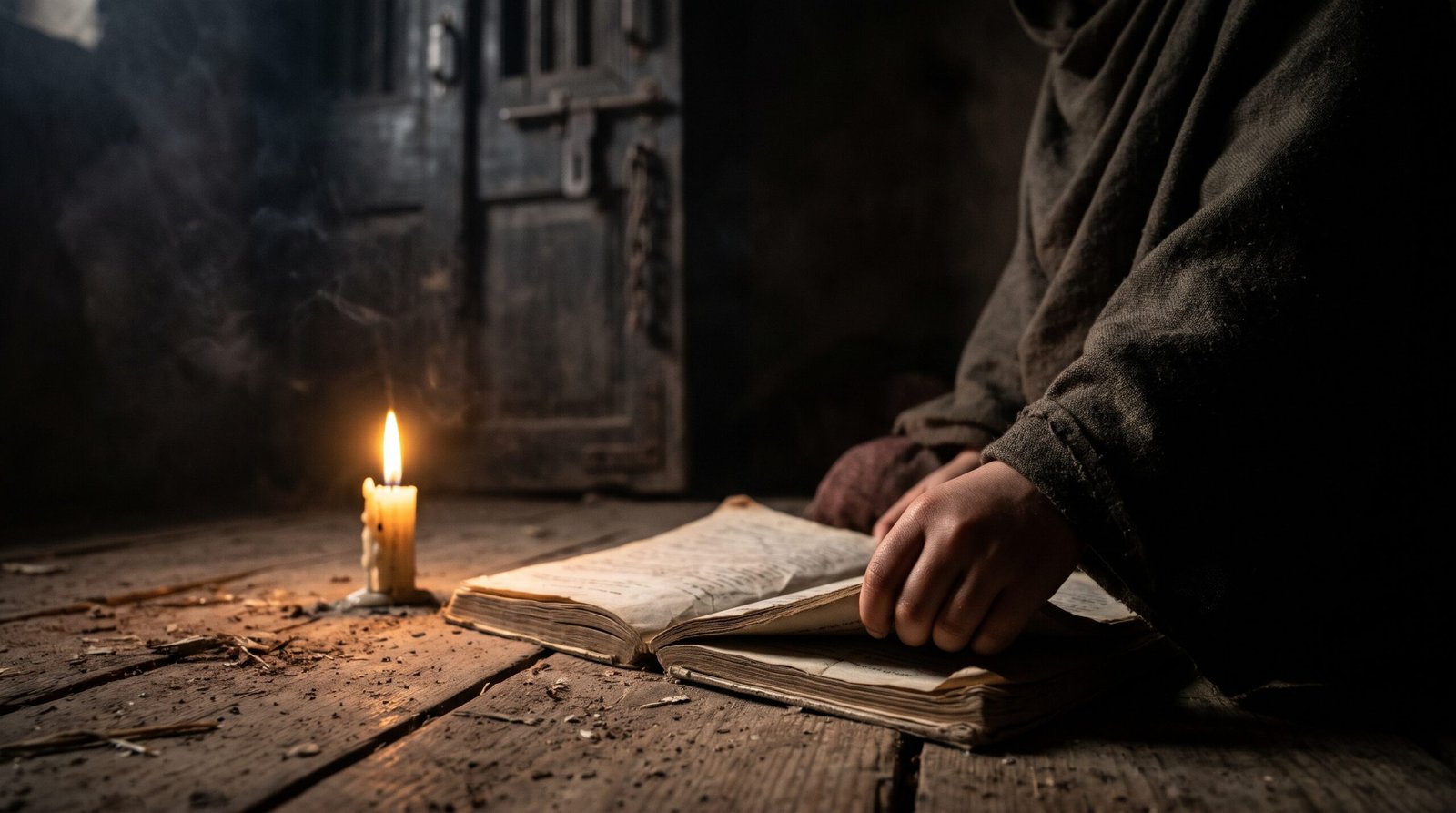
Above all, the world must not look away. The Taliban ban filming because they fear the sight of what they do. Our silence is their most useful ally. Somewhere in Afghanistan tonight, a girl is reading a smuggled textbook by candlelight with one ear on the door. She has done nothing wrong. She wants only to learn. Everything the world has said about human rights since 1948 is being tested against her small, stubborn flame. Let us not be the generation that watched it go out.