
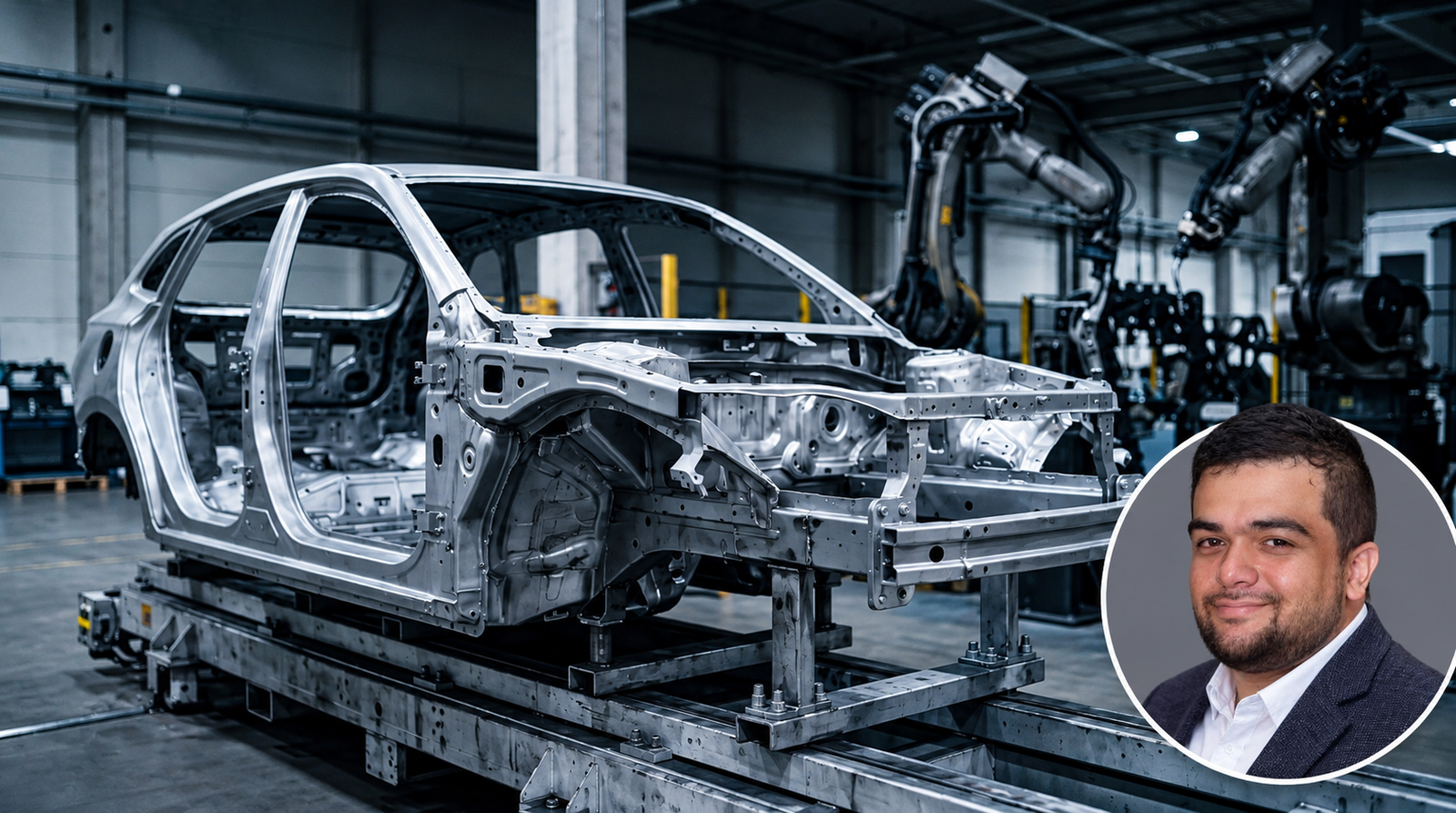
LAHORE/ISLAMABAD, November 6, 2026: Pakistan’s proposed Auto and Auto Parts Manufacturing Policy 2026–31 has triggered serious concerns within the domestic automotive industry, with well-placed sources alleging that three automobile assembly operations associated with Chinese and Korean manufacturers are exercising disproportionate influence over the emerging policy framework, potentially jeopardising three decades of investment in local automobile component manufacturing.
Speaking exclusively to The Scoop, industry sources warned that the proposed policy could fundamentally alter Pakistan’s automotive manufacturing landscape by allowing automobile assemblers to benefit from preferential tariff treatment without sufficiently stringent requirements for domestic component production.
The sources also questioned the localisation performance of several established automobile assembly operations, including Sazgar Engineering, Hyundai Nishat, Lucky Motor and Master Group, while expressing concerns about the entry of additional international automobile brands, including Chinese manufacturer Geely through Bestway Group.
According to the sources, certain established vehicle models have achieved localisation levels of approximately 65 per cent after decades of investment in engineering, machinery, technology, tooling and domestic supplier development.
However, the proposed policy reportedly envisages considerably lower domestic value addition requirements for new energy vehicle assemblers, raising concerns that Pakistan could increasingly become an assembly destination for imported vehicle kits rather than developing a competitive domestic automotive manufacturing industry.
An industry source alleged that three automobile assembly plants associated with Chinese and Korean manufacturers were influencing the policy and putting at risk industrial capabilities developed over the past 30 years.
The source further warned that domestic component manufacturers could struggle to survive if the proposed tariff and localisation provisions were implemented without substantial amendments.
The allegation concerning the influence of three assembly operations has not been independently substantiated. The sources did not identify the three plants or provide documentary evidence establishing control over government policy decisions.
The controversy comes as the federal government attempts to transform Pakistan’s automobile sector through tariff liberalisation, electric mobility incentives, increased competition and ambitious export targets.
While the government maintains that these reforms are intended to make vehicles more affordable, encourage technological advancement and integrate Pakistan into global automotive supply chains, domestic manufacturers fear that the transition could undermine the existing industrial ecosystem.
Five Years Of Assembly, But Where Is The Localisation?
One of the most significant questions raised by industry sources concerns the localisation record of automobile manufacturers that entered or expanded in Pakistan under earlier incentive programmes.
Sources specifically questioned the performance of Sazgar Engineering, Hyundai Nishat, Lucky Motor and Master Group, arguing that the benefits of previous policies should be assessed against independently verified domestic component manufacturing.
Their concerns extend to new investments being announced by additional international automobile brands, including Geely through Bestway Group.
The issue is not simply whether companies have established assembly facilities, introduced new models or expanded dealerships.
The more consequential question is how much of each vehicle’s value is actually produced in Pakistan and how that contribution has changed over time.
The Pakistan Association of Automotive Parts and Accessories Manufacturers (PAAPAM) has publicly cited localisation levels of approximately 50–65 per cent for Japanese vehicles, 20–25 per cent for Korean vehicles and zero to 10 per cent for Chinese vehicles.
These are association-level estimates rather than independently audited company-specific figures and should not be applied indiscriminately to individual manufacturers.
Nevertheless, they reveal a substantial disparity in reported domestic component development between different categories of assemblers.
For industry sources, the difference raises questions about the effectiveness of incentives introduced under the Automotive Development Policy 2016–21 and subsequent frameworks.
If established manufacturers have developed substantial domestic supplier networks, they argue, newer entrants should also demonstrate measurable progress towards localisation.
The concerns are particularly significant because the companies under scrutiny represent different international partnerships and stages of industrial development.
Sazgar Engineering has expanded its portfolio through Chinese automotive brands associated with Great Wall Motor, including Haval, Tank and ORA, alongside BAIC.
Hyundai Nishat operates through its Korean partnership with Hyundai, while the Nishat Group has also expanded into Chinese automotive brands Omoda and Jaecoo.
Lucky Motor’s automotive portfolio includes Kia, Peugeot and GAC, representing Korean, French and Chinese manufacturers.
Master Group has developed its automotive operations through Chinese brands Changan and Deepal.
Bestway Automotive, meanwhile, has announced plans to introduce Geely vehicles, initially through imports followed by local assembly.
These investments have expanded Pakistan’s automotive market and introduced new vehicle technologies. However, the localisation performance of individual models requires independent assessment.
Sazgar has disclosed an ongoing four-wheeler localisation programme, while Lucky Motor has identified several locally manufactured components, including seats, wiring harnesses, bumpers, batteries and interior parts.
Consequently, claims that these companies have undertaken no localisation would not be supported by the available evidence.
The central issue is whether their domestic component sourcing has increased sufficiently over time and whether their achievements comply with the commitments made under earlier automobile policies.
For newer entrants such as Bestway, the relevant question concerns the localisation targets, supplier-development commitments and technology-transfer arrangements that will apply when local assembly begins.
Also Read: LSE Capital Partners With LABLINK Enterprises To Target Strategic Healthcare Project In Sindh
PIDE Research Exposes A Deeper Structural Problem
The concerns raised by industry sources are reinforced by research from the Pakistan Institute of Development Economics (PIDE), which has questioned the effectiveness of successive automobile policies.
In its recommendations for the Auto Policy 2026–31, PIDE observed that Pakistan had encouraged the entry of numerous automobile brands without achieving a corresponding expansion in overall vehicle production or export competitiveness.
The institute found that more than 10 new original equipment manufacturers or automobile brands had entered the market following the Automotive Development Policy 2016–21.
Yet the expansion of assembly capacity had not produced the sustained growth originally anticipated.
According to PIDE, Pakistan’s installed vehicle production capacity increased from approximately 275,000 units in 2006 to more than 500,000, while actual production remained considerably below capacity.
The research also highlighted continued dependence on imported CKD kits and the limited integration of Pakistani component manufacturers into global automotive supply chains.
PIDE recommended a five-year moratorium on new automobile manufacturing and assembly licences, reflecting concerns that additional brands without sufficient production volumes could further fragment an already limited domestic market.
This finding raises a fundamental policy question.
If Pakistan has repeatedly expanded assembly capacity without achieving corresponding improvements in domestic component production, exports or economies of scale, what guarantees exist that the next generation of electric vehicle assemblers will produce a different outcome?
Industry Demands Mandatory 65pc Local Content
Sources speaking to The Scoop demanded that no new electric or conventional vehicle assembly operation be allowed without achieving, or making an enforceable commitment towards, at least 65 per cent locally manufactured components.
They argued that government incentives should be conditional on measurable domestic component production, supplier development and technology transfer.
The demand is substantially more ambitious than the domestic value addition thresholds reported in recent versions of the proposed Auto Policy 2026–31.
One reported draft envisages minimum domestic value addition for new energy vehicle manufacturers beginning at 10 per cent during the first two years, increasing to 15 per cent during the third and fourth years and reaching 20 per cent in the fifth year.
An earlier version referred to a 15 per cent target for NEVs by FY2030–31.
The difference between these drafts demonstrates that the policy has undergone revisions and that its final legally enforceable provisions remain critical to the debate.
Importantly, domestic value addition and component localisation are not necessarily identical measures.
Domestic value addition may include eligible manufacturing costs and local sourcing, whereas component localisation can be calculated by the value of domestically manufactured parts.
Without a transparent and consistent calculation methodology, comparisons between different assemblers may be misleading.
An immediate 65 per cent requirement would also create significant challenges for new electric vehicle manufacturers, particularly where batteries, motors and power electronics are not yet available from domestic suppliers at the required scale.
Nevertheless, industry sources argue that phased localisation requirements should be ambitious enough to prevent prolonged dependence on imported kits.
Rs700 Billion Domestic Component Supply At Risk
The economic stakes are substantial.
PAAPAM has warned that locally manufactured automotive components worth more than Rs700 billion annually could face increased competition from imported parts under the proposed tariff structure.
According to industry estimates, Pakistan’s automotive component manufacturing sector comprises approximately 1,200 companies, directly employs around 300,000 workers and supports between 1.5 million and 1.8 million indirect employment linkages.
The industry has also been associated with approximately $4 billion in accumulated investment, $6 billion in annual domestic production and Rs600 billion in tax contributions.
These are industry-reported estimates rather than independently audited projections of potential losses.
The actual impact of the proposed policy would depend on tariff implementation, exchange rates, production costs, vehicle demand and manufacturers’ sourcing decisions.
Nevertheless, the sector represents a substantial network of engineering enterprises, metal fabricators, plastics manufacturers, electrical equipment suppliers and specialised component producers.
Many have invested in expensive tooling and production equipment designed for particular vehicle models.
A sustained decline in domestic orders could reduce factory utilisation, weaken profitability and discourage future investment.
Smaller manufacturers with limited financial resources could be particularly exposed.
PAAPAM has separately claimed that domestic component manufacturing saves Pakistan more than $1.8 billion annually through import substitution.
Tariff Reductions Could Change The Economics Of Local Manufacturing
One of the principal concerns surrounding the proposed policy involves reductions in import duties on vehicles and components.
According to publicly reported versions of the draft, duties on certain localised conventional vehicle components could decline from approximately 46 per cent to 30 per cent in FY2026–27 and eventually to 15 per cent by FY2030–31.
Duties on non-localised conventional components could fall from 30 per cent to 10 per cent initially and eventually to 5 per cent.
The draft also reportedly proposes preferential treatment for new energy vehicles, including low duties on certain imported EV-specific components.
Industry representatives argue that these measures could make imported components more attractive to assemblers than products manufactured domestically.
For local suppliers operating at smaller production volumes than their international competitors, lower tariff protection could create substantial commercial pressure.
However, lower import duties could also reduce vehicle prices, encourage competition and improve consumer choice.
Pakistan’s automotive industry has historically faced criticism over high vehicle prices, limited competition and the slow development of export capabilities.
Consequently, the question is not simply whether tariffs should remain high or be reduced.
It is whether tariff liberalisation can be implemented alongside credible programmes for domestic supplier competitiveness, technological upgrading and export development.
The Government’s Own Draft Recognises The Localisation Problem
The proposed policy itself acknowledges inadequate domestic parts integration in new energy vehicles and models introduced since 2016.
This recognition is important because it establishes that the localisation problem is not merely an allegation raised by domestic vendors.
The reported draft identifies weak domestic component integration, limited exports and structural production-cost disadvantages among the industry’s major challenges.
The government has also proposed localisation obligations, export-performance requirements, third-party audits and penalties for non-compliance.
Under the October draft, manufacturers failing to meet local production targets could lose incentives, while repeated failures to meet export obligations could lead to penalties or cancellation of manufacturing certificates.
The framework also envisages establishing a Pakistan Automotive Testing Institute and providing support for research, certification and technology upgrades.
The central disagreement therefore concerns whether these obligations are sufficiently demanding and enforceable, rather than whether the government has proposed localisation requirements at all.
Six Billion Dollars In Exports: Ambition Versus Reality
The proposed Auto Policy 2026–31 envisages cumulative automotive exports of approximately $6.01 billion over five years.
This is a cumulative target, not an annual export target.
The October draft sets out annual export ambitions rising from approximately $256.6 million in FY2026–27 to $2.19 billion in FY2030–31.
The target represents a substantial increase from the approximately $190 million in automotive exports cited in recent policy discussions.
The government’s strategy includes linking incentives to export performance and encouraging integration into international supply chains.
However, PIDE’s research highlights the difficulty of developing a globally competitive automobile export industry when domestic production remains fragmented across numerous brands and heavily dependent on imported high-value components.
For Pakistan to achieve its export ambitions, manufacturers would need improvements in production scale, international certification, product quality, logistics, energy costs and access to overseas markets.
Industry sources argue that localisation and export competitiveness should be developed together.
They maintain that an assembly industry relying heavily on imported kits may struggle to generate the domestic value addition required for sustainable export growth.
Electric Mobility Must Not Become Another Import-Dependent Industry
Pakistan’s National Electric Vehicle Policy 2025–30 seeks to increase the share of new energy vehicles to 30 per cent of new vehicle sales by 2030.
The government has projected substantial fuel savings and foreign exchange benefits from greater EV adoption.
Electric vehicles could reduce petroleum consumption, improve urban air quality and introduce newer automotive technologies.
However, the economic impact would depend partly on the extent to which vehicles and components are manufactured domestically.
An electric vehicle assembled predominantly from imported kits may reduce petroleum imports while increasing demand for imported batteries, motors and electronic systems.
The net foreign exchange benefit therefore requires an assessment of both fuel savings and automotive import costs.
Pakistan’s existing component manufacturers could potentially supply numerous parts common to conventional and electric vehicles, including seats, glass, tyres, suspension systems, wiring and interior assemblies.
Specialised electric vehicle components would require additional investment and technology transfer.
Industry sources argue that the government should encourage foreign assemblers to develop these capabilities locally instead of allowing permanent dependence on imported components.
Three Assembly Plants Allegedly Influencing Policy: What Evidence Exists?
The most serious allegation made to The Scoop concerns the purported influence of three automobile assembly operations associated with Chinese and Korean manufacturers over the emerging policy framework.
Industry sources contend that the proposed tariff structure and localisation requirements are disproportionately favourable to businesses relying on imported vehicle kits.
However, the sources have not identified the three operations or supplied documentary evidence demonstrating improper influence over policy decisions.
The allegation therefore remains unverified.
Participation by foreign-invested automobile companies in government consultations would not itself constitute improper conduct.
Automotive policy development normally involves discussions with manufacturers, component suppliers, regulators and other stakeholders.
The relevant questions concern transparency, equal access and whether specific provisions can be justified through independent economic analysis.
The government should therefore clarify which assemblers and industry associations participated in consultations, what representations were made and how competing proposals were evaluated.
Publication of consultation records, economic impact assessments and manufacturer-wise localisation data would help establish whether the final framework treats stakeholders fairly.
Three Senior Government Officials Approached, No Response Received
Given the seriousness of the allegations and the potential implications for Pakistan’s automotive manufacturing sector, The Scoop approached three senior federal government officials seeking their responses.
Haroon Akhtar Khan, Adviser to the Prime Minister on Industries and Production, was approached regarding the alleged influence of three automobile assembly plants, proposed localisation requirements, tariff concessions and the possible consequences for domestic component manufacturers.
Azam Nazeer Tarar, Federal Minister for Law and Justice, who chaired inter-ministerial consultations on the proposed policy, was approached regarding the transparency of the formulation process, stakeholder participation, potential conflicts of interest and the assessment of consequences for existing manufacturers.
Rana Tanveer Hussain, Federal Minister for Industries and Production, was approached regarding measures to safeguard domestic component manufacturers, encourage technology transfer and ensure that foreign automobile investment contributes meaningfully to Pakistan’s industrial development.
None of the three officials had responded to The Scoop’s questions by the time of filing this report.
Their responses will be incorporated if received after publication.
The absence of a response does not establish the accuracy of the allegations made by industry sources.
The government has previously emphasised the importance of developing domestic EV manufacturing capabilities rather than relying exclusively on imported vehicles.
Official statements issued following September meetings also confirm that the proposed policy underwent clause-by-clause review and consideration of stakeholder recommendations.
Why Pakistan Needs Manufacturer-Wise Localisation Disclosure
The controversy has exposed a significant information gap in Pakistan’s automobile industry.
While manufacturers routinely announce vehicle launches, production milestones, sales achievements and new investments, comprehensive and independently verified model-wise localisation figures are not consistently available to the public.
Without such information, it becomes difficult to determine whether industrial incentives have achieved their intended objectives.
The Engineering Development Board could address this gap by publishing annual manufacturer-wise and model-wise localisation data, including the value of domestically sourced components, progress against approved targets and any compliance actions.
Such disclosures would allow policymakers to compare the performance of established Japanese manufacturers with newer Korean, Chinese and other international partnerships.
They would also help distinguish genuine manufacturing development from operations that remain predominantly dependent on imported kits.
For Sazgar, Hyundai Nishat, Lucky Motor and Master, the relevant question is not whether they have introduced new brands or expanded assembly operations, but how their domestic value addition has developed over time.
For Bestway and other new entrants, the question is what enforceable localisation and supplier-development commitments will apply before and after assembly begins.
These are measurable matters that should be resolved through documented production data rather than competing assertions.
The Bigger Question: Is Pakistan Building Cars Or Merely Assembling Imported Kits?
Pakistan’s automobile industry stands at a critical policy crossroads.
The entry of Chinese and Korean automobile brands has expanded consumer choice, introduced new technologies and increased competition in a market historically dominated by a small number of established manufacturers.
Electric and hybrid vehicles also offer opportunities to reduce fuel consumption and modernise the transport sector.
However, greater choice and technological advancement do not automatically translate into deeper domestic manufacturing.
The concerns raised by industry sources, together with PAAPAM’s public objections and PIDE’s research, highlight a longstanding structural challenge: Pakistan has repeatedly expanded automobile assembly capacity without achieving a comparable transformation in high-value component manufacturing and exports.
The proposed Auto Policy 2026–31 now offers the government an opportunity to address that imbalance.
Its success will depend on whether tariff reforms are accompanied by credible localisation targets, transparent compliance mechanisms, supplier-development programmes and commercially realistic export obligations.
Industry sources insist that a 65 per cent local-content requirement should form the basis of future assembly approvals.
Whether that threshold is achievable across all vehicle technologies, and over what period, requires independent technical and economic assessment.
What is clear is that the future of Pakistan’s automotive industry cannot be judged solely by the number of foreign brands entering the market or the number of vehicles assembled.
It must also be measured by the components manufactured in Pakistani factories, the engineering capabilities developed domestically, the jobs sustained and the export markets created.
For the government, the challenge is to reconcile cleaner transportation and affordable vehicles with the development of a competitive manufacturing base.
For domestic suppliers, the stakes involve investments and industrial capabilities built over decades.
And for Pakistan’s economy, the fundamental question remains whether the next automobile policy will produce a genuine manufacturing transformation or perpetuate dependence on imported vehicle kits under the appearance of industrial expansion.