
Pakistan’s recurring economic crises are not simply the result of financial mismanagement, insufficient taxation or external pressures. They reflect a deeply entrenched institutional system that protects powerful interests, restricts competition, discourages entrepreneurship and prevents the country from achieving its economic potential.
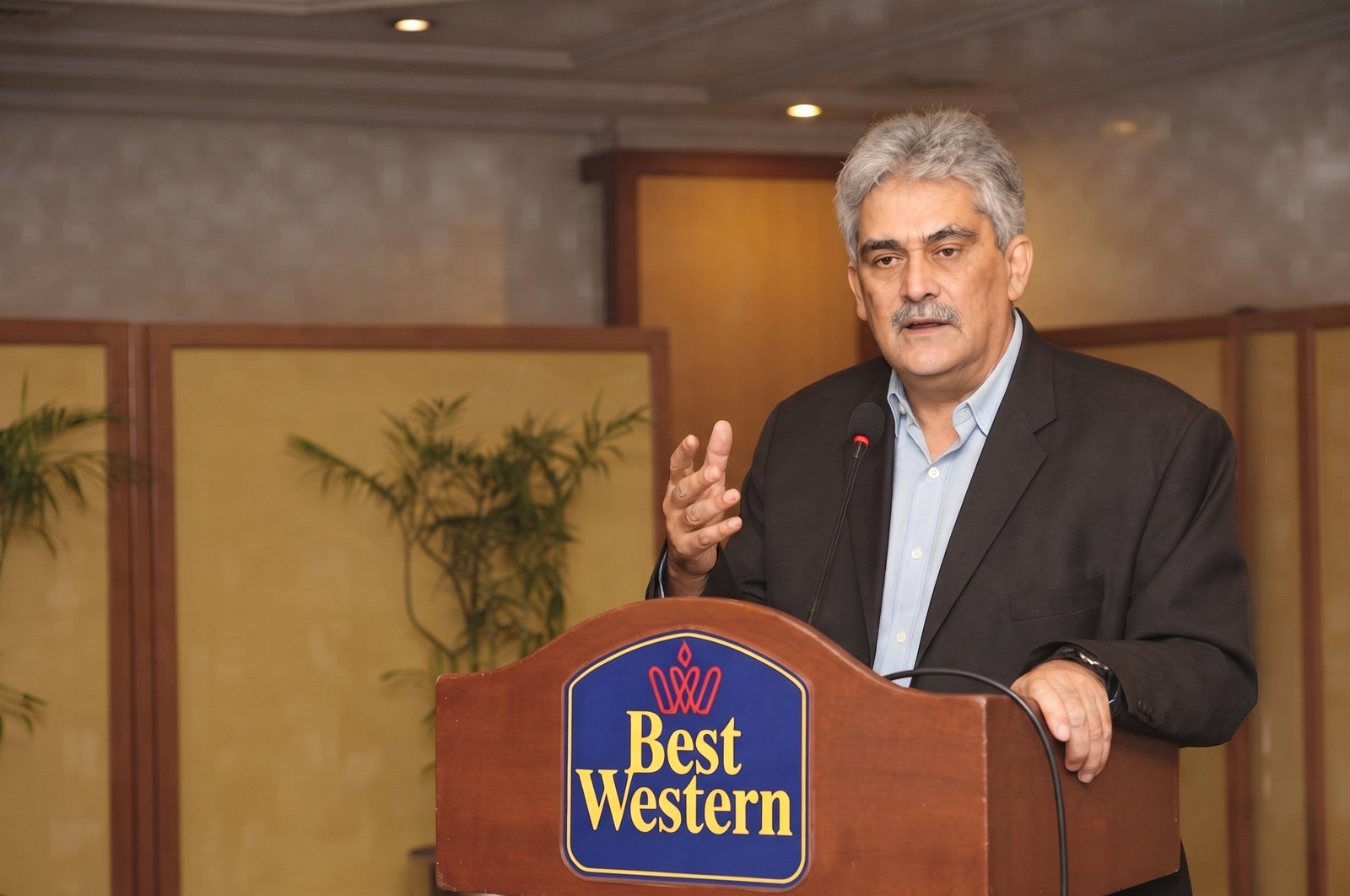
This sweeping assessment comes from Dr Nadeemul Haque, former Deputy Chairman of Pakistan’s Planning Commission, former Vice-Chancellor of the Pakistan Institute of Development Economics (PIDE) and former International Monetary Fund (IMF) economist, who believes Pakistan must fundamentally dismantle what he describes as its “permission economy” to escape decades of economic stagnation.
In an exclusive interview with The Scoop, Dr Haque delivered a sharp critique of Pakistan’s economic governance, questioning the roles played by successive governments, bureaucrats, protected industrial groups, economic advisers and international development institutions in perpetuating a system that rewards connections rather than productivity.
His assessment challenges the conventional narrative that Pakistan’s economic problems can be resolved through higher taxation, foreign borrowing, IMF programmes or government-sponsored development projects.
Instead, he argues that the country requires a radical restructuring of its institutions, regulatory environment, cities, financial markets and public administration.
“We have repeatedly changed governments and economic managers without changing the economic operating system. That is why the results remain so similar,” he said.
For Dr Haque, the central question is no longer who will finance Pakistan’s next economic rescue package, but why the country has failed to establish an environment in which millions of citizens can invest, compete, innovate and prosper.
Pakistan’s Economic Model: A System Built Around Privileges
Dr Haque believes Pakistan’s economic difficulties originate in a development model that has historically prioritised government control over market competition.
Rather than facilitating entrepreneurship and productivity, successive administrations have constructed an elaborate framework of administrative permissions, subsidies, import restrictions, licensing requirements and preferential treatment.
The result, according to him, is an economy in which access to government institutions frequently matters more than innovation or commercial competitiveness.
“The state decides who may enter markets, where businesses may operate, what can be built, what can be imported, and often who gets access to finance and public contracts,” he explained.
He argued that Pakistan’s economic discourse has remained disproportionately focused on fiscal deficits, balance-of-payments crises, tax collection and foreign financing.
Although these issues require attention, he maintained that macroeconomic stabilisation cannot substitute for a comprehensive strategy to increase productivity and generate sustainable economic growth.
Recalling his tenure at the Planning Commission, Dr Haque said the Framework for Economic Growth prepared in 2011 had advocated shifting national priorities away from traditional development projects and sector-specific subsidies towards competitive cities, entrepreneurship, innovation and market-led growth.
More than 15 years later, much of that reform agenda remains unimplemented.
Responsibility, he argued, cannot be assigned exclusively to politicians.
Pakistan’s civil service, economic ministries, regulatory bodies, protected business groups and policy advisers have all played roles in maintaining the existing institutional structure.
He also questioned the influence of international development agencies, arguing that their emphasis on externally financed projects and reform packages has reinforced rather than fundamentally transformed Pakistan’s development model.
IMF Bailouts: Stabilisation Without Economic Transformation
Pakistan’s repeated reliance on the IMF represents another major concern for the former IMF economist.
Dr Haque acknowledged that macroeconomic stabilisation is essential for controlling inflation, managing external financing pressures and restoring fiscal sustainability.
However, he argued that successive programmes have failed to establish the institutional foundations necessary for durable economic expansion.
“Stabilization is necessary, but it cannot substitute for creating an economy that continuously discovers new products, enterprises, technologies, and markets,” he said.
Pakistan’s familiar economic cycle, he explained, begins with a balance-of-payments crisis, followed by external borrowing, fiscal adjustment, demand compression and the rebuilding of foreign exchange reserves.
Governments subsequently celebrate economic stabilisation, but investment, exports and productivity frequently remain too weak to prevent another crisis.
The underlying problem is that fiscal targets, energy-price adjustments and monetary restraint do not automatically remove barriers to entrepreneurship or improve the functioning of markets.
Dr Haque questioned why economic reform programmes have not sufficiently addressed restrictive urban land policies, weak local governments, financial market development, bureaucratic discretion and competition in the energy sector.
He also highlighted policy unpredictability as a major deterrent to private investment.
Businesses, he said, make long-term decisions based not merely on current interest rates or taxation but on expectations about future regulations, exchange-rate management and institutional credibility.
Repeated policy reversals undermine confidence even when short-term macroeconomic targets are achieved.
“The IMF cannot be expected to redesign Pakistan’s economy. That responsibility belongs to Pakistan,” he said.
He argued that Pakistan can escape recurring IMF dependence only by developing a domestically owned reform strategy capable of surviving political transitions.
Elite Capture: How Pakistan’s Powerful Protect Their Privileges
One of Dr Haque’s strongest criticisms concerns the institutionalisation of economic privileges.
He believes elite capture extends far beyond wealthy individuals influencing political decisions.
Instead, he describes a system in which bureaucratic authority, political influence, protected businesses, landholding interests and access to state resources combine to distribute economic opportunities selectively.
According to Dr Haque, the foundations of this arrangement can be traced to Pakistan’s inherited colonial administrative structure, which vested extensive discretionary authority in government officials.
Over time, these powers became closely associated with privileges involving land, official residences, vehicles, allowances and appointments.
Government residences occupying valuable urban land, preferential plots and other non-salary benefits are, in his assessment, more than employment incentives.
They reinforce a hierarchy in which administrative authority can offer greater rewards than productive enterprise.
His research on government compensation and the state’s economic footprint has examined the wider costs and incentives associated with these arrangements.
Dr Haque also identified protected industries, preferential land allocations, opaque subsidies and restrictive market-entry regulations as mechanisms through which established interests retain advantages over potential competitors.
For younger entrepreneurs, the challenge is particularly severe.
A new business may face extensive approvals and administrative requirements while competing against established companies with stronger access to government decision-makers.
The solution, he argued, is not simply public criticism of influential individuals but the removal of institutional mechanisms that generate economic privileges.
“We must replace an economy of connections with an economy of opportunity,” he declared.
Pakistan’s Bureaucracy: A Colonial Structure Running A Modern Economy
Dr Haque’s criticism of Pakistan’s civil service is equally uncompromising.
He believes the country’s administrative structure remains fundamentally unsuitable for the demands of a modern, competitive economy.
The central problem, he argued, is the continued dominance of generalist bureaucrats over institutions requiring specialised professional expertise.
Under the existing arrangement, officials can move between district administration, economic ministries, regulatory authorities, universities and state-owned enterprises, often without substantial sector-specific experience.
Dr Haque questioned whether such a structure can effectively manage increasingly complex economic institutions.
His proposed alternative rests on three principles: decentralisation, professionalisation and institutional autonomy.
He advocates empowering elected city governments with independent finances, professional administrations and authority over urban development, land use and municipal services.
He also wants senior government appointments opened to qualified economists, engineers, financial specialists, educators, technology professionals and experienced managers.
In his view, universities, hospitals, regulators and public enterprises should operate with professional independence rather than remain subject to routine ministerial interference.
Another major proposal involves eliminating the traditional system of official residences, vehicles, plots and hidden benefits.
These privileges, he argued, should be replaced with transparent monetary compensation, while valuable government-controlled urban land should be released for productive development.
Dr Haque also questioned the tendency to present digitisation as administrative reform.
“We must first eliminate unnecessary permissions and procedures rather than simply put the same bureaucracy online,” he said.
His argument is not for a state incapable of governing, but for a government that exercises fewer unnecessary economic controls while becoming significantly more competent in its essential responsibilities.
Taxation: Pakistan Is Punishing Its Documented Economy
Pakistan’s approach to taxation has become increasingly disconnected from the objective of economic growth, according to Dr Haque.
He argued that successive governments have developed an excessive preoccupation with revenue targets while paying insufficient attention to the economic consequences of taxation.
Formal businesses and salaried individuals, because their incomes and transactions are more readily documented, often bear a disproportionate burden of enforcement.
Meanwhile, uneven compliance across other economic activities creates distortions and undermines confidence in the tax system.
Dr Haque questioned the logic of continually extracting additional revenue from a relatively narrow formal tax base without first expanding economic activity.
The problem, he explained, extends beyond headline tax rates.
Pakistan’s complex arrangements involving withholding taxes, advance payments, exemptions, surcharges and frequent regulatory changes create uncertainty and increase compliance costs.
Referring to his work with other economists on tax reform, he advocated a simplified framework built around fewer rates, predictable rules, broader coverage and reduced discrimination between economic activities.
Property and land taxation should also be modernised, while overlapping federal and provincial tax arrangements require rationalisation.
However, Dr Haque insisted that revenue reform cannot be separated from government expenditure.
He questioned why taxpayers should accept increasingly demanding revenue measures without a corresponding examination of official privileges, wasteful development projects, inefficient public agencies and losses generated by state-owned enterprises.
“Taxation should finance necessary public services. It should not become an instrument for preserving an oversized and unproductive state,” he maintained.
His central argument is that a sustainable tax system must encourage investment and economic expansion rather than discourage the very activities that generate future revenue.
Pakistan’s Plot Economy: Why Speculation Has Replaced Productive Investment
Pakistan’s fascination with real estate plots represents another structural weakness identified by Dr Haque.
He argued that urban development has become excessively focused on housing schemes, roads, flyovers and land appreciation instead of productive commercial activity.
According to him, restrictive zoning regulations, limitations on building density, excessive parking requirements and administrative barriers to mixed-use development prevent Pakistani cities from achieving their full economic potential.
These restrictions discourage the construction of offices, apartment buildings, commercial centres and other facilities that could support businesses and employment.
Consequently, substantial investment is channelled towards acquiring land and waiting for its value to increase.
Dr Haque distinguished between productive property development and speculative landholding.
Real estate itself, he emphasised, is essential for economic growth.
The problem arises when regulatory arrangements reward holding vacant plots while obstructing construction and productive use.
“We need to move from plot development to city development,” he said.
His proposed reforms include liberalising zoning restrictions, permitting higher-density construction, encouraging mixed-use neighbourhoods, strengthening land registration systems and improving property rights.
He also supports appropriately designed land taxation, particularly where publicly financed infrastructure generates substantial private gains.
Government-owned land occupying prime commercial locations should be examined for alternative productive uses.
Dr Haque believes that empowering municipal governments is essential to these reforms.
Cities, rather than centrally administered development schemes, should become engines of entrepreneurship, innovation, employment and economic exchange.
His position challenges the longstanding assumption that building more housing societies and road infrastructure automatically translates into sustainable urban development.
Industrial Protection: Are Subsidies Keeping Inefficient Businesses Alive?
Pakistan’s industrial policies have frequently protected established businesses without generating the export competitiveness and technological development required for sustained growth, Dr Haque argued.
He questioned the country’s longstanding reliance on high import tariffs, subsidised financing, preferential energy arrangements, tax concessions and industry-specific government packages.
Although such measures are often justified as support for domestic production, he believes they can become permanent privileges when they lack transparent performance conditions and credible expiry mechanisms.
Protected companies may have little incentive to improve efficiency when government policies shield them from competition.
Consumers consequently face higher prices, while exporters can encounter expensive imported inputs and limited access to competitive supply chains.
Dr Haque argued that industrial development should be driven by investment, technological adoption, skills, efficient infrastructure, access to finance and competitive markets.
These capabilities benefit the wider economy rather than selected businesses.
He did not rule out temporary industrial support altogether.
However, he insisted that assistance should be transparent, independently evaluated, time-bound and conditional on measurable results.
Trade policy, he maintained, should facilitate competition and access to internationally priced inputs.
Energy markets must provide reliable electricity at economically sustainable prices, while exchange-rate management should avoid persistent overvaluation.
He also challenged the assumption that Pakistan’s export potential lies primarily in traditional manufacturing industries.
Technology, engineering, design, agriculture, logistics and other services could become important sources of export growth if businesses were allowed to experiment and compete.
“The role of government is to enable discovery, not to prescribe the country’s industrial future,” he said.
Youth Unemployment: Degrees Without Economic Opportunity
Dr Haque believes Pakistan’s youth employment crisis cannot be resolved through education reform alone.
The country’s universities continue to produce graduates, but the economy does not generate sufficient productive opportunities to absorb their skills.
He argued that policymakers repeatedly emphasise degrees, professional training and skills development without addressing the barriers preventing businesses from expanding.
Research undertaken during his association with PIDE examined graduate employability, including skills mismatches, inadequate practical experience, weak career guidance and limited collaboration between universities and employers.
However, Dr Haque maintained that even improvements in educational quality would have limited impact without stronger enterprise creation.
Jobs, he argued, are primarily generated by expanding businesses rather than government employment schemes.
Young entrepreneurs require affordable commercial premises, reliable electricity, predictable taxation, access to finance and fewer administrative restrictions.
He also highlighted the need to develop Pakistan’s capital markets.
A financial system heavily dependent on conventional bank lending cannot adequately support every form of entrepreneurship, particularly innovative businesses requiring risk capital.
Venture capital, equity financing, corporate bonds and other financial instruments should therefore play a larger role.
Dr Haque also addressed the departure of educated and skilled Pakistanis seeking opportunities abroad.
He rejected the tendency to interpret migration primarily as a lack of patriotism.
Instead, he argued that talented individuals respond to professional opportunities, institutional credibility, recognition and living standards.
Pakistan should examine why its institutions struggle to retain talent rather than criticise those who leave.
His message to policymakers was straightforward: young Pakistanis need economic opportunity, not another government relief package.
State-Owned Enterprises: Political Patronage At Taxpayers’ Expense
Dr Haque also questioned successive governments’ inability to reform or privatise loss-making state-owned enterprises.
He argued that the persistence of public ownership in commercial activities cannot be understood solely through economic considerations.
State enterprises can provide opportunities for political appointments, bureaucratic influence, public contracts and control over substantial resources.
These incentives, he suggested, can create resistance to restructuring even when enterprises impose significant financial burdens on taxpayers.
Governments frequently announce privatisation initiatives, appoint advisers and prepare transaction plans, yet implementation remains inconsistent.
One particularly serious governance concern, according to Dr Haque, is the appointment of serving bureaucrats and politically connected individuals to enterprise boards.
He argued that officials responsible for public policy should not simultaneously exercise commercial oversight in ways that blur accountability.
His proposed approach begins with questioning whether government ownership is necessary in a particular commercial activity.
Businesses operating in competitive markets should generally be considered for privatisation, subject to transparent transactions and effective competition safeguards.
However, he warned that transferring a public monopoly into private hands without reforming the market would not necessarily benefit consumers.
Natural monopolies and strategically important activities may require different ownership and regulatory arrangements.
Where continued state ownership is justified, enterprises should have professional management, independent boards, published financial statements and clearly defined performance requirements.
Dr Haque also warned against privatisation processes that could transfer valuable public assets to favoured investors at discounted prices.
Broader ownership and transparent capital-market transactions should be explored where appropriate.
For him, the ultimate objective is not privatisation as an ideological goal, but the establishment of productive, competitive and professionally managed enterprises.
Five Radical Reforms Pakistan Needs Over The Next Five Years
Asked what he would prioritise if given the opportunity to redesign Pakistan’s economic strategy, Dr Haque rejected the conventional practice of producing another lengthy development plan dominated by government projects and foreign financing.
Instead, he identified five interconnected structural reforms.
First, dismantle the permission economy. Unnecessary licences, no-objection certificates, permits, inspections and administrative restrictions should be eliminated wherever they cannot be justified on clear public-interest grounds.
Second, fundamentally reform government. Local administrations should be empowered, public-sector recruitment professionalised, institutions granted operational autonomy and unnecessary official privileges removed.
Third, liberate cities and urban land markets. Zoning restrictions should be relaxed, mixed-use development encouraged, underutilised public land released and local governments given greater financial and planning authority.
Fourth, develop competitive financial, energy and product markets. Pakistan should strengthen equity and corporate debt markets, encourage venture financing, improve electricity-sector competition, rationalise trade protection and reform commercial state enterprises.
Fifth, establish a growth-oriented fiscal system. Taxation should become simpler and more predictable, government expenditure should face greater scrutiny, and education policy should be better aligned with employability and entrepreneurship.
Dr Haque stressed that these reforms must operate as a coherent national strategy rather than isolated initiatives implemented by individual ministries.
Also Read: Pakistan’s Cement Sales Set To Decline In October As Prices Surge 15%, Exports Weaken
The Economic Targets: 7% Growth And Millions Of New Jobs
Dr Haque outlined an ambitious set of proposed five-year economic objectives, while acknowledging that their achievement would depend on political stability, credible implementation, macroeconomic conditions and external developments.
His proposed targets include:
- Real GDP growth: Sustain 6–7 per cent annually by year five.
- Total investment: Increase investment to at least 20 per cent of GDP.
- Exports: Increase exports of goods and services by at least 75 per cent in nominal US-dollar terms.
- Employment: Create conditions for two to three million net additional productive jobs annually.
- Private-sector credit: Raise credit to the private sector to at least 25 per cent of GDP.
- Business regulation: Eliminate or substantially simplify at least half of identified unnecessary permissions.
- Urban governance: Establish empowered and fiscally accountable governments in major cities.
These figures represent proposed reform objectives rather than official government targets or unconditional economic forecasts. Credible starting baselines and detailed costing would be required.
The proposed targets represent a significant departure from the relatively narrow benchmarks traditionally associated with Pakistan’s economic adjustment programmes.
Rather than measuring progress primarily through fiscal balances, tax collection and foreign exchange reserves, Dr Haque wants policymakers to focus on investment, enterprise formation, productivity, employment and institutional transformation.
However, the employment ambition is particularly demanding.
Creating conditions for two to three million additional productive jobs annually would require a substantial and sustained expansion of private-sector activity, alongside improvements in the quality and availability of employment.
Similarly, achieving sustained growth of 6–7 per cent would depend on a significant improvement in investment and productivity rather than short-lived consumption or borrowing-driven expansion.
Dr Haque acknowledged these challenges, emphasising that the targets should be treated as objectives requiring credible baselines and detailed implementation plans.
From PIDE To The Planning Commission: A Longstanding Call For Reform
Dr Haque’s arguments reflect a broader body of economic research and policy advocacy developed over his career.
Having served at the IMF, led Pakistan’s Planning Commission as Deputy Chairman and subsequently headed PIDE as Vice-Chancellor, he has examined Pakistan’s economic problems from the perspectives of international financial institutions, domestic policymaking and academic research.
His work has consistently challenged conventional development thinking, particularly the emphasis on government-led projects, bureaucratic administration and sector-specific economic privileges.
The 2011 Framework for Economic Growth advocated a greater focus on competitive cities, productivity, innovation and entrepreneurship.
During his association with PIDE, research and policy discussions further examined regulatory barriers, government privileges, public-sector reform, taxation, urban development and the obstacles confronting young entrepreneurs.
His wider reform philosophy places institutional incentives at the centre of Pakistan’s development challenge.
Rather than assuming that more government expenditure automatically produces development, he argues that the quality of institutions and the freedom to undertake productive economic activity are crucial determinants of long-term prosperity.
This perspective also explains his criticism of development strategies built primarily around public investment programmes and foreign financing.
Dr Haque believes Pakistan has devoted too much attention to identifying sources of funding and too little to examining why its economy struggles to generate sustained investment and productivity growth.
Pakistan’s Real Economic Test: Can Ordinary Citizens Succeed Without Connections?
Perhaps the most consequential aspect of Dr Haque’s assessment is his insistence that economic success should be measured through the opportunities available to ordinary citizens.
He questioned whether young entrepreneurs can establish businesses without seeking political or bureaucratic assistance.
He also asked whether investors can develop commercial properties without prolonged administrative approvals, whether qualified professionals can lead public institutions without belonging to privileged civil-service cadres, and whether businesses can compete without subsidies or protection.
These questions, he argued, are more revealing than temporary improvements in headline economic indicators.
An economy may experience periods of GDP growth, improved foreign exchange reserves or greater fiscal stability while retaining the institutional restrictions that prevent sustained prosperity.
For Dr Haque, meaningful reform requires changing how economic opportunities are created and distributed.
That means reducing administrative discretion, strengthening competition, professionalising institutions, empowering cities and ensuring that entrepreneurship is not dependent on privileged access to the state.
His assessment also presents a challenge to Pakistan’s political and economic leadership.
If the country’s structural problems are rooted in institutions and incentives, changing finance ministers, negotiating additional loans or announcing new investment packages cannot independently deliver a lasting solution.
The reforms he advocates would also confront powerful interests benefiting from existing arrangements, making political commitment and continuity essential.
The Choice Before Pakistan: Another Bailout Or A Different Economic System?
Dr Haque’s interview ultimately raises a fundamental question about Pakistan’s economic future.
Can the country achieve sustained prosperity while retaining an institutional structure that restricts competition, rewards administrative privileges, discourages innovation and channels investment towards protected activities?
His answer is that Pakistan must change the economic system itself.
The former Planning Commission deputy chairman does not dismiss the importance of macroeconomic discipline, public revenue or effective government.
Rather, he argues that these elements must support a broader strategy focused on productivity, entrepreneurship and economic freedom.
The country’s repeated crises, in his assessment, demonstrate the limitations of treating financial stabilisation as a substitute for development.
Pakistan needs competitive markets, professionally managed institutions, productive cities, better financial systems and an environment in which private enterprises can emerge without depending on government patronage.
For policymakers, this would require moving beyond short-term economic management towards institutional reforms that may challenge entrenched privileges.
For businesses and investors, it would mean competing through productivity and innovation rather than relying on administrative protection.
And for millions of young Pakistanis, it could determine whether their future lies in domestic entrepreneurship and professional opportunity or continued migration in search of better prospects.
Dr Haque concluded with a message that captures the central argument running through his interview:
“We do not need another economic rescue plan. We need to liberate the economy from the institutions that prevent it from growing.”
For Pakistan, the question is whether those responsible for managing the economy are prepared to reform the very institutions through which they exercise power.