

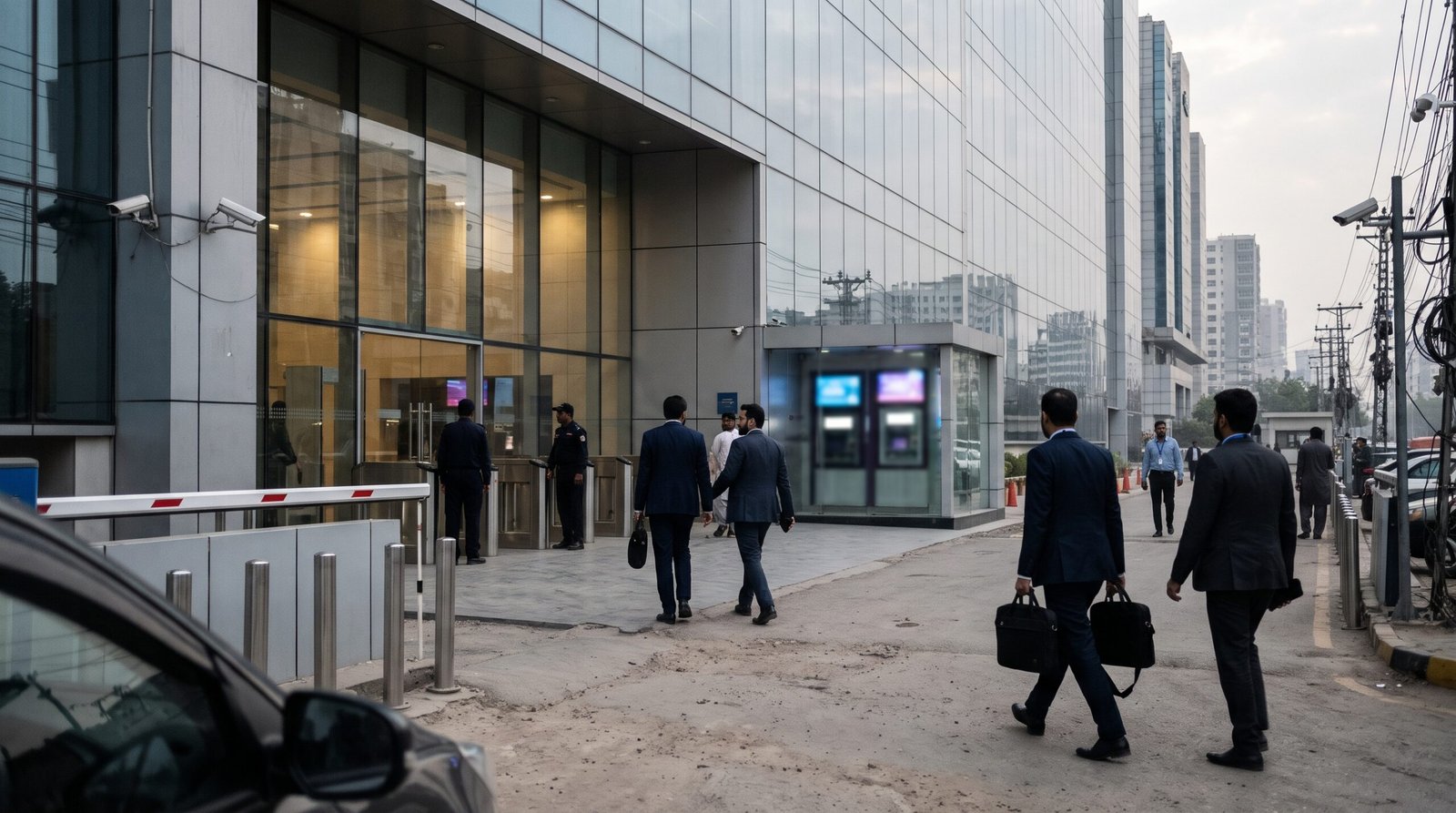
Pakistan’s persistent reliance on domestic commercial banks to finance acute fiscal deficits has tightened the structural nexus between sovereign borrowing and banking sector stability, exposing the economy to heightened systemic vulnerability, according to the World Bank’s Finance and Prosperity 2026 report.
In its regional assessment of the Middle East, North Africa, Afghanistan, and Pakistan (MENAAP), the multilateral lender identified Pakistan alongside Egypt and Tunisia as jurisdictions where state dependence on domestic banking liquidity warrants heightened regulatory scrutiny. Across the MENAAP region, commercial lenders have expanded their holdings of government debt to the highest level since 2012, leaving financial institutions heavily exposed to fragile sovereign balance sheets.
“Pakistan continues to rely heavily on domestic banks to meet pressing financing needs, tightening the link between government borrowing and the banking system, according to the World Bank’s Finance and Prosperity 2026 report.”
The World Bank noted that high-risk financial sectors are concentrated across MENAAP and Sub-Saharan Africa, where sovereign-bank concentration typically intersects with macro-fiscal imbalances, shallow and undiversified capital markets, poverty, conflict, commodity dependence, and climate vulnerability. To contain systemic risks, the institution called on authorities—particularly in lower-income economies—to enforce rigorous “prudential supervision” and maintain operational “financial safety nets”. Specifically, regulators were urged to tighten oversight of currency- and commodity-linked exposures, “stress test” bank capital buffers, and ensure crisis management frameworks are fully operational.
External geopolitical shocks have compounded these domestic balance-sheet pressures. The report observed that the escalation of Middle East tensions in March 2026 has elevated macroeconomic uncertainty, driven up global commodity prices, and tightened international financial conditions.
“It identified capital outflows, currency depreciation, sovereign-bank feedback loops and disruption to remittances as the main channels through which developing economies could be affected.”
Alongside sovereign crowding-out risks, the report underscored severe financing bottlenecks facing micro, small, and medium enterprises (MSMEs), which account for 90% of all businesses and roughly 75% of total employment across developing economies. The World Bank estimated the credit gap for formal MSMEs in emerging and developing markets at $4 trillion in 2023, equivalent to approximately 11% of their combined gross domestic product (GDP), while the annual equity financing gap stood at no less than $1.4 trillion during 2022–24.
Citing empirical evidence, the World Bank noted that access to a formal loan expands employment at small and medium enterprises by an average of 12% and boosts corporate sales and profits by roughly 18%. With 1.2 billion young people projected to enter the working-age population over the next 10 to 15 years against an estimated 420 million new jobs, easing private-sector credit constraints is critical to averting severe labor market shortfalls.
The report also highlighted structural underinsurance against natural disasters as a major macroeconomic vulnerability, noting that uninsured losses exceeded 80% of total disaster damages across parts of Asia, Africa, and Latin America over the past decade. To narrow this “protection gap”, the World Bank recommended pairing physical disaster risk reduction with policies that expand the availability and affordability of commercial insurance coverage.