

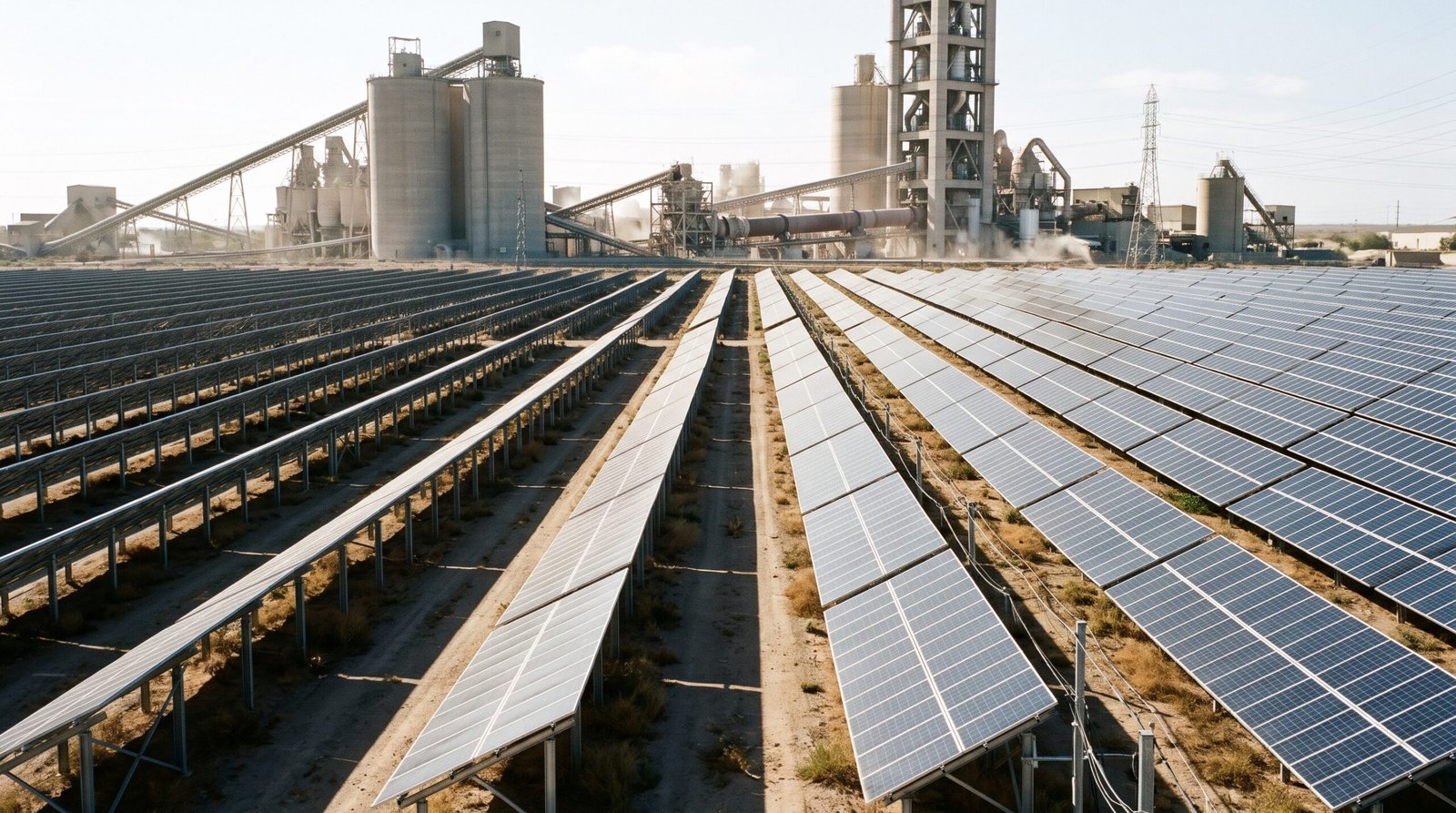
KHUSHAB, November 3, 2026: In a major leap towards sustainable manufacturing and cost reduction, Pioneer Cement Limited (PIOC) has officially commissioned and energised a 28.265-megawatt (MW) solar power plant at its production facility in Chenki, District Khushab, Punjab.
In a regulatory filing submitted to the Pakistan Stock Exchange (PSX) on Tuesday, the company confirmed the successful completion of the initial phase and revealed that the project’s total planned capacity has been expanded to 31 MW. The additional capacity is scheduled to be integrated and energised within the coming month.
Transforming the Energy Mix
The commissioning of this captive solar facility marks a critical operational milestone for Pioneer Cement. According to the company’s PSX notice, this massive injection of environmentally sustainable power is projected to meet approximately 45 per cent of the cement manufacturer’s total annual electricity requirements.
By substituting expensive grid power with on-site solar generation, the company anticipates substantial financial benefits. “This milestone is expected to significantly reduce power costs, improve operational efficiency and contribute positively to the Company’s profitability and sustainability objectives,” Pioneer Cement stated in its official disclosure.
Also Read: Zarea’s Rs3 Billion Rights Issue: Why Is A Profitable Company Raising Equity To Repay Sukuk?
Financial Momentum and Cost Control
The activation of the Khushab solar plant aligns perfectly with Pioneer Cement’s broader strategy of aggressive cost management and margin expansion. The company has been enjoying a period of strong financial health following its acquisition by Maple Leaf Cement Factory.
For the first quarter of the 2026-2027 fiscal year (ending September 30, 2026), Pioneer Cement reported a massive 73 per cent year-on-year surge in net profit, reaching Rs2.21 billion. This growth was heavily supported by a 50 per cent increase in gross profit and a staggering 94 per cent reduction in finance costs.
Brokerage firm AHL Research recently noted that the company’s gross margins have already expanded from 29.8 per cent to 34.7 per cent due to stronger cost absorption. The integration of 31 MW of virtually free solar electricity into their production cycle is expected to widen these margins even further in the upcoming quarters, providing a strong buffer against the volatility of imported coal prices and domestic energy tariffs.
Industry-Wide Shift to Renewables
Pioneer Cement’s aggressive move into solar reflects a broader existential shift within Pakistan’s heavy industries. With industrial grid electricity tariffs in Pakistan now surpassing $0.22 per unit, traditional manufacturing operations are finding it increasingly difficult to remain financially feasible without captive renewable generation.
By securing nearly half of its power from the sun, Pioneer Cement has not only drastically reduced its carbon footprint but also insulated a significant portion of its production costs from future grid tariff hikes and grid reliability issues.