

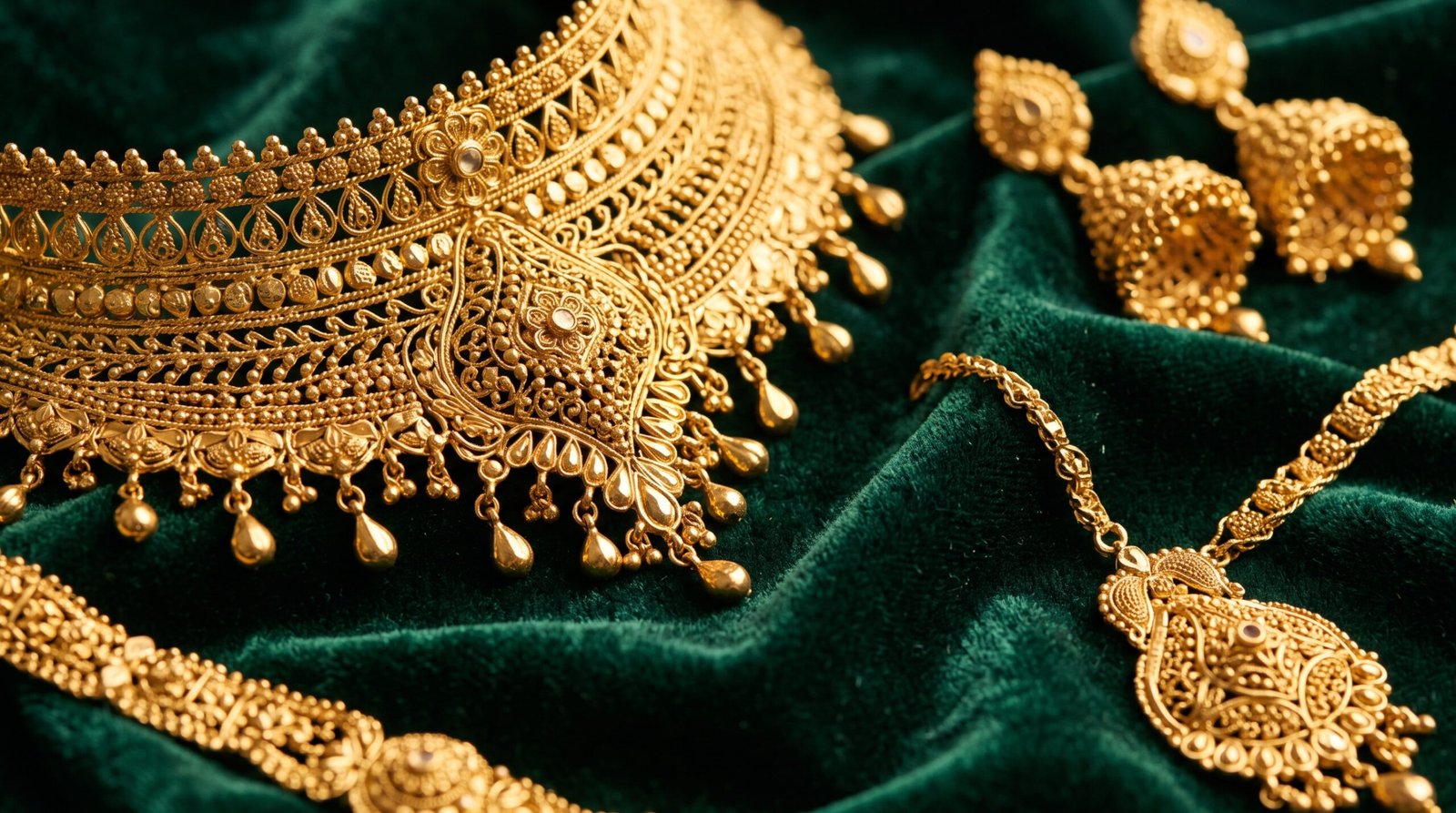
KARACHI: Gold prices in Pakistan have suffered a catastrophic single-day contraction, plummeting below the critical Rs400,000 psychological threshold on Wednesday as a brutal bearish wave swept through international commodities markets.
In the local bullion market, the price of gold per tola crashed by a staggering Rs10,000, settling at Rs398,936. Similarly, the price of 10-gram gold fell by Rs8,573, closing the day at Rs342,023. The dramatic downward correction, reported by the All-Pakistan Gems and Jewellers Sarafa Association (APGJSA), immediately wiped out months of sustained bullish momentum.
Just a day prior, the precious metal had stagnated, with the per-tola rate remaining completely unchanged at Rs408,936. The sudden market capitulation marks a return to price levels not seen since late last year.
“Last year on September 27, gold was at Rs397,700 per tola. Then the market boomed and crossed Rs400,000. Today, after almost a year, prices have come down again,” stated Abdullah Chand, a senior representative of the APGJSA, highlighting the cyclical nature of the current precious metals market.
Silver also failed to escape the broader commodities sell-off, with local prices decreasing by Rs180 to settle at Rs5,048 per tola.
The Global Catalyst: A Surging Dollar and Rising Yields
The local crash is a direct reflection of aggressive profit-taking and technical sell-offs in the global arena. The international rate of gold declined by a massive $100 during Wednesday’s trading sessions, plunging to $3,764 per ounce (inclusive of a $20 premium).
Global market analysts point directly to shifting macroeconomic fundamentals in the United States as the primary catalyst. “The bearish movement in gold prices has been primarily driven by sentiment and technicality, with hawkish reaffirmation from Fed officials and a push up in the US Treasury yields in turn leading to a firmer US dollar,” explained Kelvin Wong, a senior market analyst at OANDA.
Also Read: State-Owned SSGC Injects Record 15,000-Tonne LPG Shipment To Avert Winter Supply Crisis
The US dollar is currently holding steady near a formidable 19-month high. Because gold is globally priced in dollars, a surging greenback makes the bullion significantly more expensive for overseas buyers holding other currencies, inherently suppressing international demand.
Federal Reserve Hawkishness and Opportunity Costs
The macroeconomic pressure was further compounded by recent commentary from the Federal Reserve. Federal Reserve Bank of New York President John Williams indicated on Tuesday that the US central bank will likely need to execute further rate hikes to lean against persistent inflationary pressures, though he did push back against the notion that the Fed needs to adopt a radically more aggressive path.
Financial markets have rapidly priced in these expectations. According to CME’s FedWatch tool, futures markets currently project a massive 95.7 per cent probability of a 25-basis-point US rate hike in December, leaving only a 4.3 per cent chance for a larger 50-basis-point move.
For the gold market, this monetary tightening is toxic. As interest rates climb, the opportunity cost of holding non-yielding assets like physical bullion increases sharply, prompting institutional investors to dump gold in favor of high-yield bonds and government treasuries. Until the US Federal Reserve signals a definitive pause or reversal in its interest rate trajectory, local Pakistani consumers and jewelers can expect continued volatility heavily dictated by the strength of the US dollar.