

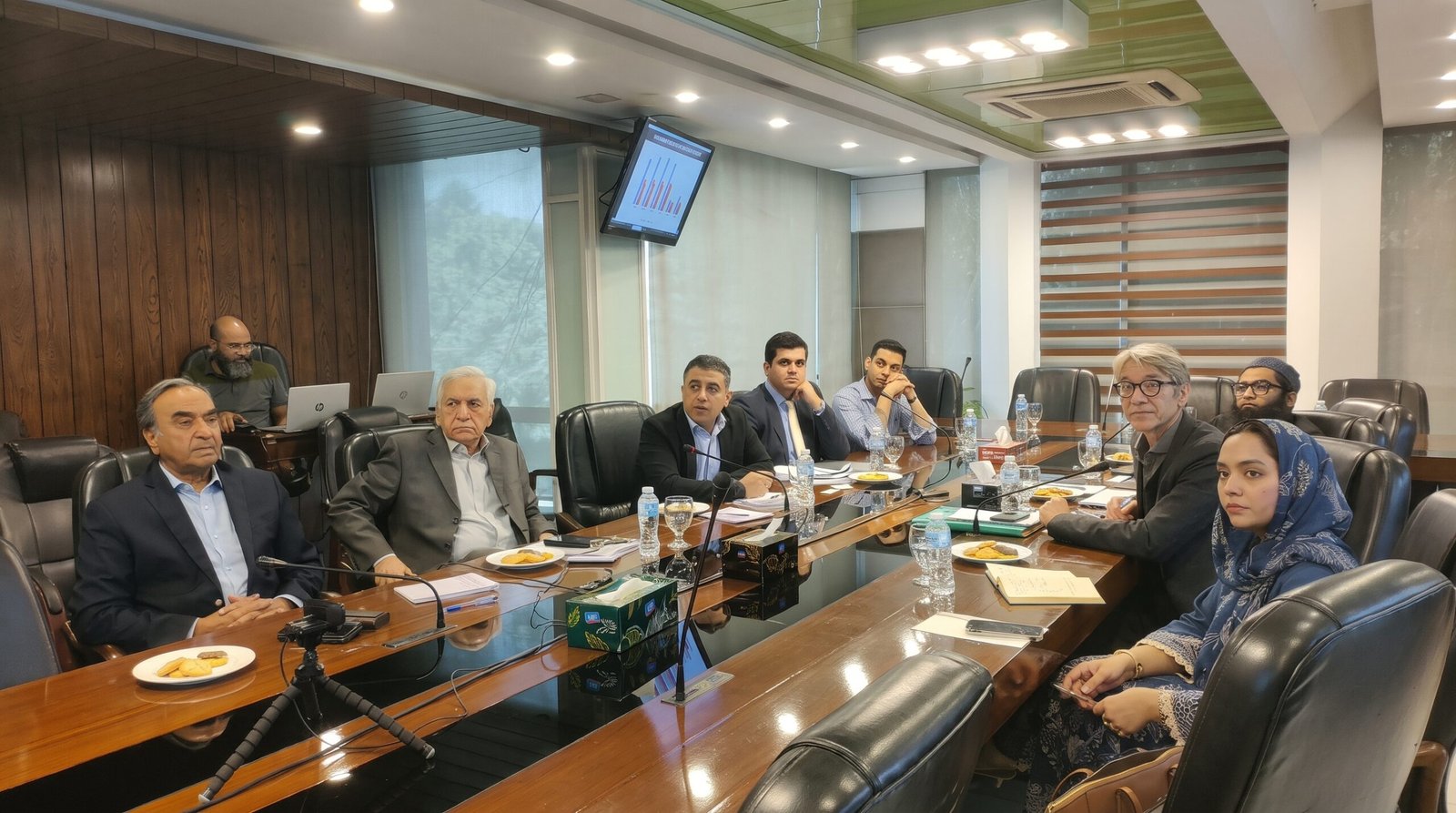
LAHORE: The All Pakistan Textile Mills Association (APTMA) and the German Importers Association (VFI e.V.) have agreed to adopt joint measures aimed at strengthening sustainability reporting and expanding bilateral textile trade between Pakistan and Germany.
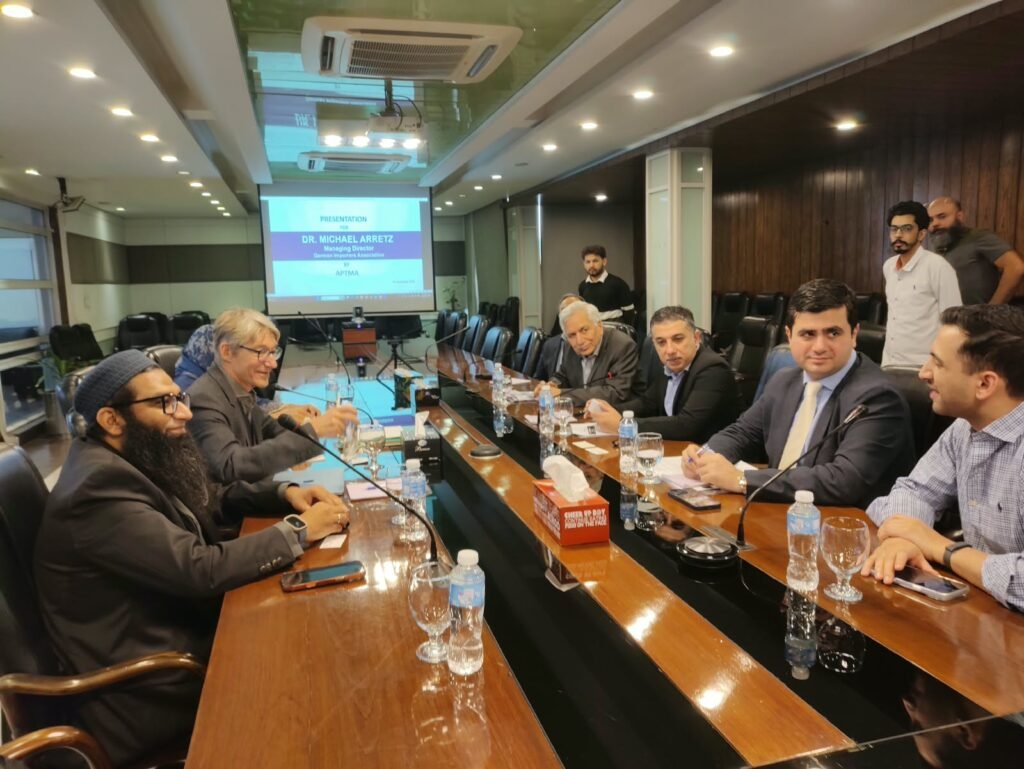
The understanding was reached during a high-level visit to APTMA by Dr. Michael Arretz, Managing Director of VFI e.V. German Importers, accompanied by Sarim Mahmood, Chief Executive Officer of Fruit of Sustainability (FOS), and Saman Aslam, Deputy Managing Special Projects at FOS. The visiting delegation was received by APTMA Chairman Asad Shafi, alongside senior members Haroon Elahi Shaikh, Danish Aslam, Energy Advisor Engr. Tahir Basharat Cheema, and Secretary General Mohammad Raza Baqir.
German Importers Eye Supply-Chain Diversification
Focused on identifying operational synergies across the textile value chain, the delegation underscored Germany’s strategic push to deepen trade and economic ties with medium-sized partner economies such as Pakistan.
Dr. Arretz praised Pakistan’s textile manufacturing base and the compliance standards maintained by APTMA member mills. Representing more than 300 German companies, VFI e.V. expressed a clear preference for expanding procurement and collaboration with Pakistani exporters—particularly in light of changing textile operating environments in China.
Backed by German government financing to bridge overseas exporters with German importers, VFI e.V. intends to engage both the Government of Pakistan and domestic trade bodies. Dr. Arretz clarified that the association’s core facilitation services are currently available at no cost, with fees applying solely to specialized, dedicated sustainability and compliance reports.
GSP+ Gains and International Standards
Highlighting the commercial backbone of Pakistan–Europe trade, APTMA Chairman Asad Shafi emphasized the critical role of the European Union’s Generalised Scheme of Preferences Plus (GSP+) facility. With 78 per cent of Pakistani products eligible for duty-free access to EU markets, the framework enables domestic exporters to compete directly against regional rivals including Bangladesh and Sri Lanka.
According to figures cited by Shafi, Pakistan’s exports to the European Union have expanded by 73 per cent since 2013 under the GSP+ regime, while exports to Germany alone have grown by 40 per cent. He expressed optimism that a 10-year extension of the facility would sustain Pakistan’s export momentum while reinforcing domestic progress on human rights, labour protections, and environmental standards.
Shafi assured the German delegation that APTMA member mills maintain full compliance with all 27 international GSP+ conventions and are actively preparing to meet emerging regulatory obligations. Member facilities adhere to rigorous global and local sustainability benchmarks—including SA 8000 and Oeko-Tex certifications—aligning textile production with the Sustainable Development Goals (SDGs).
Green Manufacturing and the National Compliance Entity
To sustain European market access as due-diligence rules tighten, APTMA’s in-house research wing continuously tracks evolving international trade compliance frameworks, briefing member mills and publishing research-driven analysis to promote industry-wide adherence. The association is also actively collaborating with stakeholders to draft a comprehensive legal framework for Pakistan’s proposed National Compliance Entity (NCE).
On the factory floor, Shafi noted that domestic textile producers are accelerating a structural shift away from fossil fuels. Mills are increasingly transitioning toward preferred sustainable fibres—such as organic cotton and recycled polyester—while investing heavily in effluent and water treatment plants to establish an environmentally and socially responsible export supply chain capable of capturing greater European demand.