


LAHORE, November 8, 2026: Pakistan’s ambitious plan to privatise its state-owned electricity distribution companies faces a defining test as financial losses, expensive electricity procurement, restrictive regulatory structures and uncertainty over investor returns threaten to complicate one of the country’s most consequential economic reform programmes.
The government has attracted interest from major Pakistani industrial groups and three Turkish energy companies, raising expectations that international expertise and domestic capital could help modernise the country’s electricity distribution infrastructure.
However, a closer examination of Pakistan’s existing electricity market, the proposed post-privatisation arrangements and Türkiye’s experience in transferring 21 electricity distribution regions to private operators reveals that ownership changes alone cannot resolve the structural weaknesses that have burdened the sector for decades.
The financial stakes are enormous.
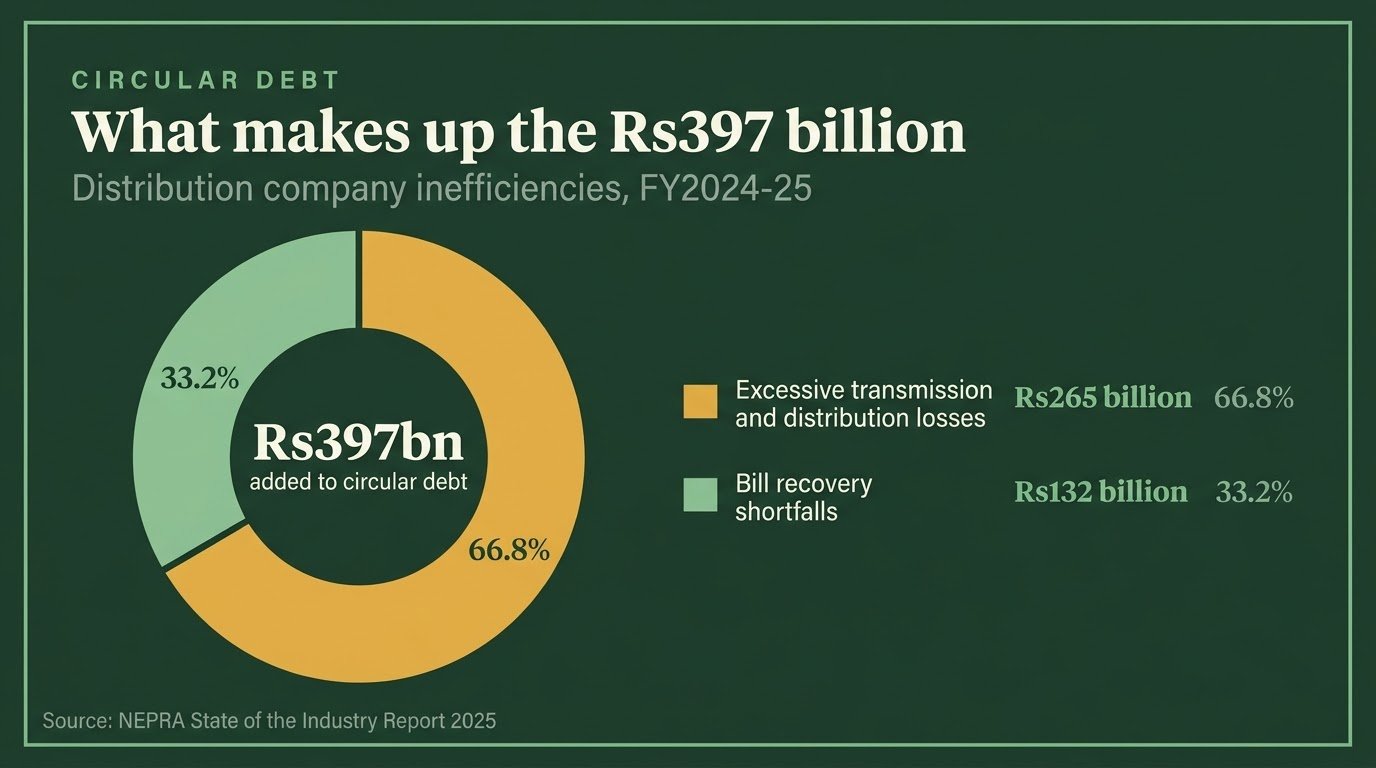
According to the National Electric Power Regulatory Authority’s State of the Industry Report 2025, inefficiencies at public-sector electricity distribution companies contributed approximately Rs397 billion to circular debt during FY2024-25.
Of this amount, around Rs265 billion resulted from excessive transmission and distribution losses, while approximately Rs132 billion arose from electricity bill recovery shortfalls.
These figures expose a fundamental challenge confronting prospective investors: acquiring a distribution company does not automatically eliminate electricity theft, high procurement costs, inadequate infrastructure, regulatory restrictions or the financial obligations embedded in Pakistan’s electricity market.
The central question is whether the government intends to privatise electricity distribution companies under essentially the existing operating framework or introduce comprehensive reforms that allow private operators to improve efficiency, invest in infrastructure and generate commercially sustainable returns.
Rs397 Billion In Losses: The Scale Of Pakistan’s Distribution Crisis
Pakistan’s electricity distribution companies remain a major source of financial pressure on the national power system.
NEPRA’s FY2024-25 findings identified approximately Rs265 billion in financial losses attributable to excessive transmission and distribution losses and Rs132 billion arising from inadequate revenue recoveries.
Average transmission and distribution losses stood at approximately 17.4%, compared with the regulator’s allowed benchmark of 11.43%.
This means that the electricity distribution system continued to lose a substantially higher proportion of purchased electricity than permitted under regulatory performance standards.
The losses arise from a combination of technical inefficiencies, deteriorating infrastructure, electricity theft, inaccurate metering and other commercial weaknesses.
The performance of individual companies varies considerably.
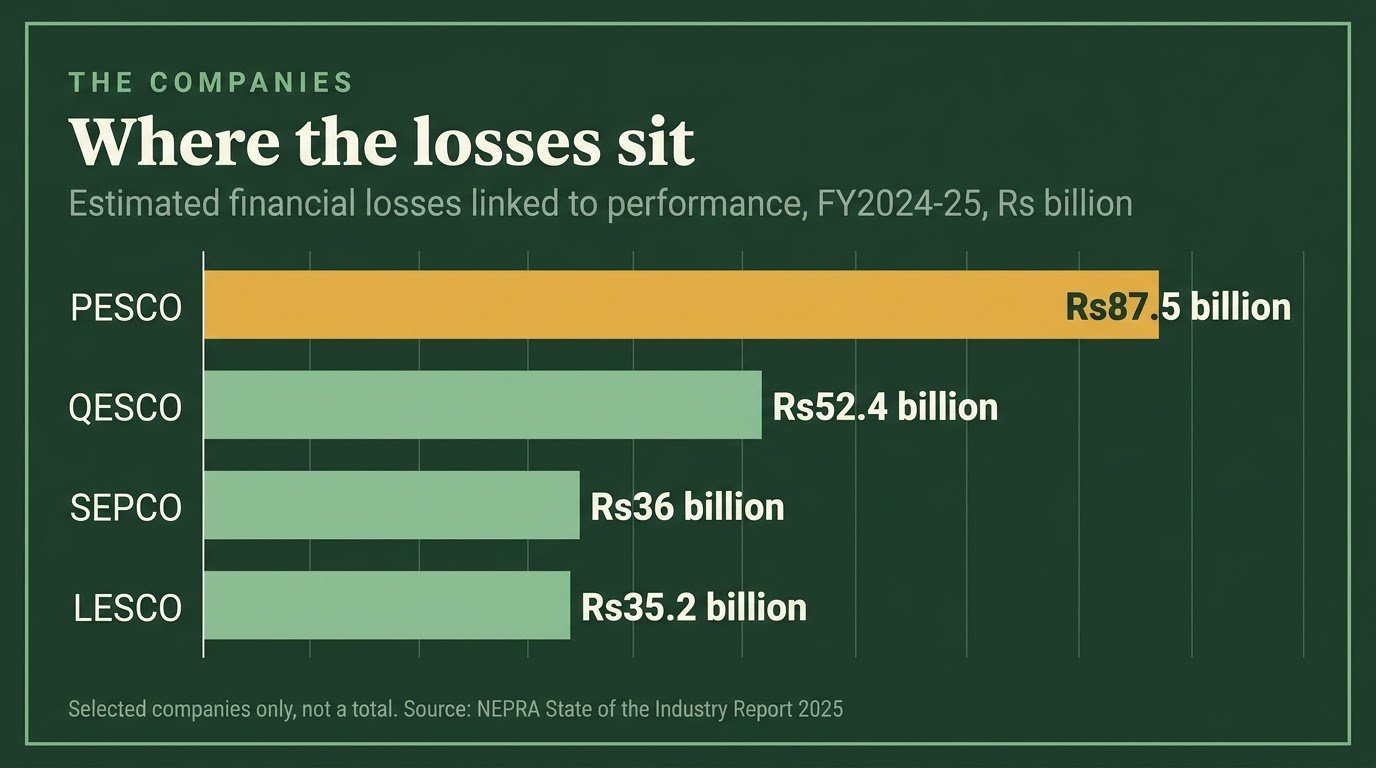
Peshawar Electric Supply Company (PESCO) alone accounted for approximately Rs87.5 billion in financial losses linked to performance deficiencies, while Quetta Electric Supply Company (QESCO) and Sukkur Electric Power Company (SEPCO) contributed approximately Rs52.4 billion and Rs36 billion respectively.
Lahore Electric Supply Company (LESCO) recorded actual distribution losses of approximately 13.70%, compared with an allowed benchmark of 9.46%, resulting in an estimated financial impact of Rs35.2 billion.
Faisalabad Electric Supply Company (FESCO), by contrast, performed considerably closer to its regulatory benchmark, exceeding the allowed loss level by approximately 0.64 percentage points.
These differences are significant because the government’s first privatisation batch focuses on relatively attractive distribution companies rather than the weakest performers.
FESCO, Gujranwala Electric Power Company (GEPCO) and Islamabad Electric Supply Company (IESCO) form the first batch.
Their privatisation could provide a foundation for subsequent transactions involving companies with substantially more challenging operational and financial conditions.
However, the financial performance of the first batch cannot automatically be treated as representative of the entire sector.
The Rs35-Per-Unit Question: Can The Economics Attract Investors?
One of the most important issues in Pakistan’s electricity distribution privatisation concerns the relationship between wholesale electricity procurement costs, distribution margins and the returns available to private operators.
A model involving electricity procurement at approximately Rs35 per unit and a distribution margin of 8% illustrates the commercial challenges that could arise if investors were required to operate within tightly controlled financial parameters.
These figures should be treated as an illustrative scenario rather than confirmed, universally applicable terms of the government’s final privatisation framework.
At a procurement price of Rs35 per unit, an 8% margin calculated on that price would represent Rs2.80 per unit.
The combined amount would be Rs37.80 per unit before accounting for the precise treatment of taxes, adjustments, approved distribution costs and other tariff components.
On a hypothetical annual procurement volume of 10 billion electricity units, the Rs2.80 allowance would represent Rs28 billion in gross revenue attributable to the distribution margin.
That figure would not represent profit.
The operator would still face expenditure on network maintenance, employees, infrastructure upgrades, financing, metering, billing systems and other operational obligations, depending on the final regulatory arrangements.
The financial calculation becomes even more challenging when electricity losses and incomplete recoveries are considered.
For example, if a distribution company purchases 100 electricity units and loses 17.4% through technical and commercial losses, approximately 82.6 units remain for billing.
If it subsequently collects 96.6% of the billed amount, the equivalent of approximately 79.8 units generates collected revenue.
This simplified illustration uses sector-wide indicators and assumes uniform tariffs; actual company-level results would differ.
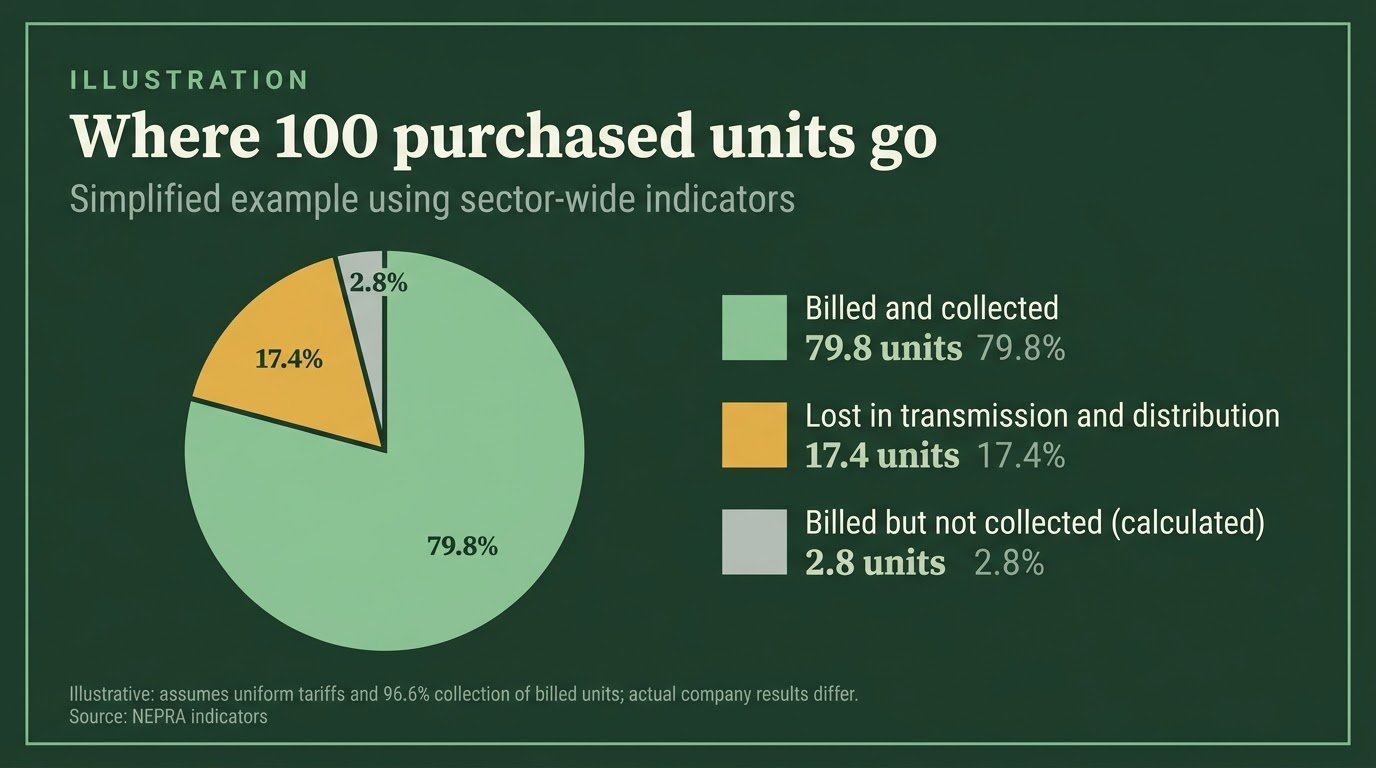
It nevertheless demonstrates why investors focus on the allocation of losses, recovery risks and regulatory allowances.
If the private operator bears substantial collection and loss-related risks without sufficient flexibility to improve performance or recover legitimate costs, the financial attractiveness of the transaction could be materially affected.
Conversely, an arrangement that guarantees investor returns regardless of operational performance could weaken incentives to reduce theft, improve collection efficiency and modernise infrastructure.
The design of the regulatory framework is therefore as important as the purchase price of the distribution company itself.
Government Proposes Returns Of Up To 20%, But Conditions Matter
The Privatisation Commission has acknowledged that the existing electricity distribution model requires changes to attract serious investors.
Adviser to the Prime Minister on Privatisation Muhammad Ali outlined a proposed framework in July 2026 under which investors could receive base returns of approximately 14% to 15%, potentially increasing to 18% to 20% through improvements in operational efficiency.
The proposed arrangements also contemplated multi-year tariff structures, regulatory protection and performance-linked incentives.
Investors have reportedly sought longer tariff determination periods, potentially extending to eight to ten years, to provide greater predictability for capital investment.
The proposed regulatory framework has included discussion of returns of approximately 13.2% to 13.4% under a multi-year tariff arrangement.
These figures require careful interpretation.
A regulated return on an approved asset or investment base is fundamentally different from a distribution margin calculated as a percentage of electricity procurement costs.
Similarly, a projected 20% return does not necessarily mean that investors would receive a guaranteed 20% annual cash profit on the amount paid to acquire a company.
The actual outcome depends on the approved regulatory asset base, investment obligations, financing costs, loss-reduction targets, collection performance and the precise contractual structure.
These distinctions are essential when assessing whether the proposed privatisation programme offers sustainable returns or merely shifts financial risks between the government, investors and electricity consumers.
Türkiye Privatised 21 Distribution Regions: What Pakistan Can Learn
Türkiye’s electricity distribution privatisation programme provides an important comparison for Pakistan.
The Turkish government initiated major electricity market reforms following the Electricity Market Law of 2001, which established the foundations for a more competitive and independently regulated electricity sector.
A subsequent strategy adopted in 2004 accelerated the restructuring and privatisation of electricity distribution activities.
Between 2008 and 2013, Türkiye completed the privatisation of its 21 regional electricity distribution companies.
The programme involved far more than the transfer of ownership.
It was accompanied by changes to electricity market regulation, the separation of distribution network operations from retail supply activities, performance monitoring and new arrangements for private investment.
The Turkish Energy Market Regulatory Authority, commonly known as EMRA, played a central role in overseeing the evolving market structure.
Private operators assumed responsibility for managing regional distribution networks and undertaking investments required to improve infrastructure and service quality.
The reforms sought to reduce technical and non-technical electricity losses, improve billing and collection systems, encourage network investment and establish clearer commercial incentives.
World Bank assessments of Türkiye’s electricity-sector reforms have highlighted improvements in private investment, operational performance and sector governance, while also identifying continuing challenges.
Importantly, the Turkish programme did not proceed without difficulties.
Some early tenders encountered delays or failed to reach completion because of financing constraints, unrealistic bidding assumptions and changing economic conditions.
The experience demonstrates that investor interest during a privatisation tender does not guarantee successful completion or long-term financial sustainability.
It also illustrates the importance of establishing credible regulatory arrangements before private investors assume responsibility for essential infrastructure.
Why The Turkish Model Cannot Simply Be Copied
Although Türkiye provides useful lessons, Pakistan’s electricity sector differs in several important respects.
Pakistan faces a substantial circular debt burden, extensive capacity-payment obligations, uneven distribution company performance, electricity theft, affordability pressures and a complicated system of subsidies and tariff adjustments.
The country’s electricity distribution companies also operate under a centralised procurement framework in which electricity costs are strongly influenced by generation contracts and national-level policy decisions.
Private distribution operators may improve recoveries and reduce network losses, but they cannot independently renegotiate all national generation contracts or eliminate existing capacity-payment obligations.
Türkiye’s experience therefore offers a framework for reform rather than a ready-made solution.
Any adaptation would need to reflect Pakistan’s fiscal constraints, consumer affordability, industrial demand, electricity generation mix and regulatory institutions.
The most relevant lesson is that privatisation and market reform must be designed together.
Three Turkish Energy Companies Join The Race
The international dimension of Pakistan’s privatisation programme became particularly significant when the Privatisation Commission confirmed the prequalification of ten interested parties for IESCO on October 22, 2026.
Among them were three Turkish companies:
Cengiz Enerji Sanayii ve Ticaret A.S., a Turkish energy company associated with the wider Cengiz business group.
Aktor Elektrik Enerji Yatirimlari San. ve Tic. A.S., another Turkish participant in the electricity sector.
Genvera Enerji A.S., which also secured prequalification for the transaction.
Their participation brings the possibility of international investment and operational expertise in electricity distribution.
The presence of Turkish bidders is especially relevant because Türkiye has already undertaken a nationwide electricity distribution privatisation programme.
Turkish participation could provide access to experience in network management, performance regulation, electricity loss reduction and infrastructure modernisation.
However, prequalification represents only an initial stage of the transaction process.
It does not constitute a binding acquisition, final investment commitment or acceptance of the eventual tariff and regulatory arrangements.
The interested parties must still complete due diligence and participate in subsequent transaction stages before any acquisition can be finalised.
Pakistan’s Industrial Heavyweights Enter The Privatisation Race
Alongside the Turkish companies, several major Pakistani business groups and investment consortia have entered the competition.
The prequalified IESCO investors include Engro Energy Limited, Sapphire Fibers Limited, Novatex Limited and Bestway Cement Limited.
An Artistic Milliners-led consortium includes The Lake City Holdings, Fatima Capital Limited, Din Ventures and Fazal Cloth Mills Limited.
A separate Hub Power Holding-led consortium comprises Lucky Cement Limited, Kohat Cement Limited and Metro Ventures.
Another consortium, led by Hasnaat Brothers Construction, includes Dhilal Holding Group, Pak Steel, Bio-Labs and Farid Steel Casting.
The participation of these groups is important because large Pakistani industrial businesses possess experience in capital-intensive operations, corporate management, industrial infrastructure and long-term investment.
Some also have direct experience in electricity generation and related energy-sector activities.
Partnerships between Pakistani industrial groups and experienced international electricity operators could potentially combine domestic financial capacity and market knowledge with specialised technical expertise.
Such partnerships could support network modernisation, digital metering, improved collection systems, infrastructure investment and stronger operational management.
However, the success of these arrangements would depend on clearly defined responsibilities, financial commitments and regulatory obligations.
The privatisation process must also maintain competitive safeguards to prevent excessive concentration of ownership or conflicts of interest within the electricity market.
FESCO, GEPCO And IESCO: The First Test Of Reform
The first batch of Pakistan’s DISCO privatisation programme comprises FESCO, GEPCO and IESCO.
Under the transaction framework, investors may acquire between 51% and 100% of the relevant company’s shareholding, together with management control.
The government has also proposed restructuring measures intended to improve the commercial viability of the transactions.
These include separating selected legacy assets and liabilities from the companies offered to investors.
The Privatisation Commission has proposed establishing a government-owned special purpose vehicle to facilitate the restructuring.
The arrangements are based on audited financial statements for the period ending March 31, 2026.
This approach could allow private operators to begin with cleaner balance sheets and reduce uncertainty surrounding historical financial obligations.
However, it also raises important questions about the financial responsibilities retained by the government.
If the state assumes substantial legacy liabilities while transferring operational control and future revenue streams to private investors, the fiscal consequences must be transparently disclosed.
The public should be able to assess the value of the assets transferred, the liabilities retained, the expected privatisation proceeds and the future investment obligations of the buyers.
Rs2.39 Trillion Circular Debt: Why Financial Restructuring Remains Essential
Pakistan’s power-sector circular debt stood at approximately Rs2.393 trillion at the end of FY2023-24.
By June 2025, the reported outstanding stock had declined to approximately Rs1.614 trillion, representing a reduction of roughly Rs779 billion.
The reduction reflected a combination of government interventions, financial arrangements and improvements in certain operational indicators.
However, NEPRA cautioned that the decline did not necessarily represent a permanent structural improvement.
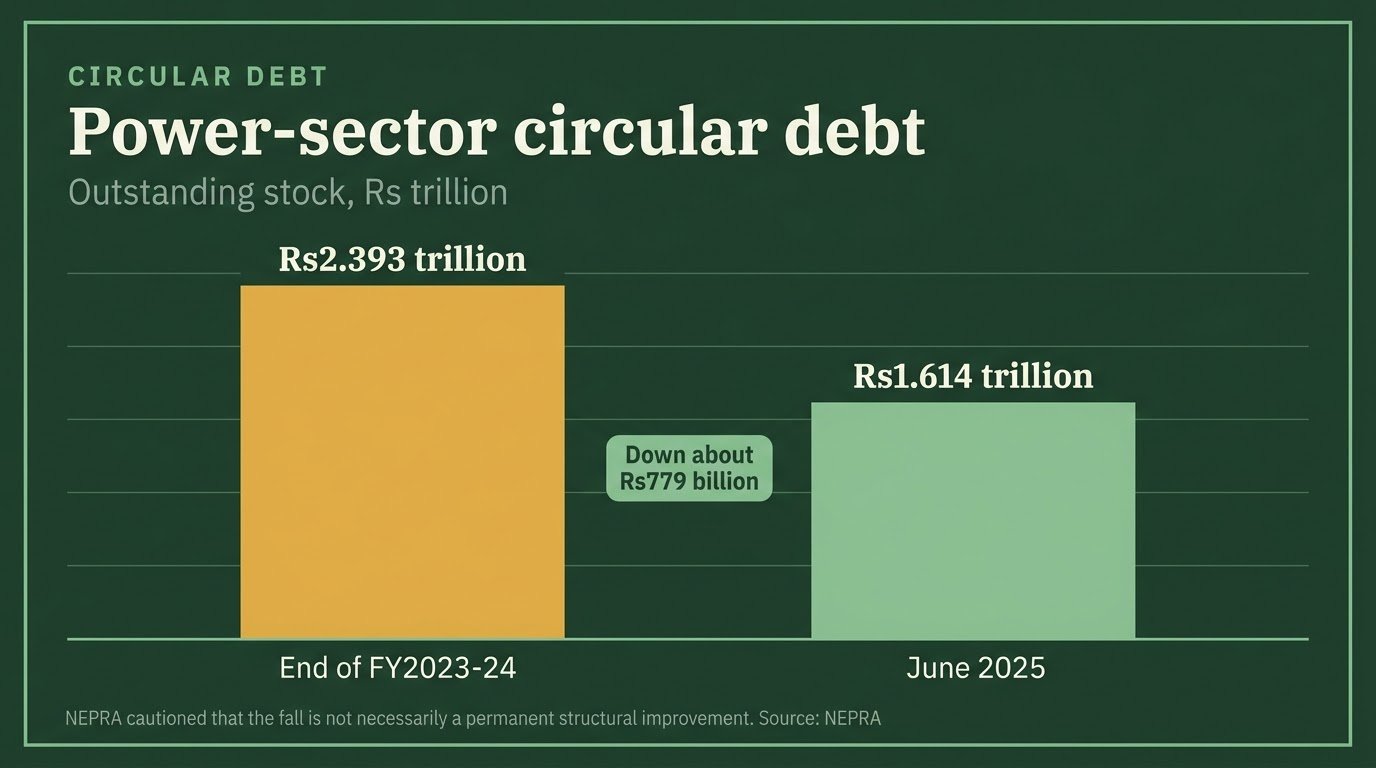
A reduction in the outstanding debt stock can result from refinancing, settlement arrangements, government payments or other financial interventions without eliminating the underlying causes of new debt accumulation.
This distinction is crucial.
If electricity procurement remains expensive, distribution losses exceed regulatory allowances and bill recoveries remain incomplete, fresh financial obligations can continue to accumulate even after historical liabilities have been reduced.
A sustainable privatisation programme therefore requires more than a one-time restructuring of company balance sheets.
It requires a framework that prevents recurring financial losses.
Capacity Payments: The Burden Private Operators Cannot Eliminate Alone
Pakistan’s electricity generation system includes long-term power purchase agreements under which certain payments are linked to the availability of generating capacity rather than electricity actually consumed.
These capacity-payment obligations are an important component of the country’s overall electricity costs.
They also complicate the financial economics of electricity distribution.
A private operator may reduce theft, improve billing, modernise the network and increase collections, yet still face high electricity procurement costs determined by contracts and policies outside its control.
This is particularly important when industrial and commercial consumers reduce their dependence on grid electricity.
Businesses facing high tariffs may increasingly adopt captive generation, solar power or alternative energy arrangements.
As demand from the grid changes, fixed system costs must be allocated across the remaining electricity sales unless the underlying obligations or tariff structure are adjusted.
This can create additional affordability challenges for consumers who remain dependent on the national grid.
Consequently, reforms to distribution companies cannot be separated entirely from generation costs, capacity payments, transmission constraints and the broader electricity market.
Competitive Electricity Markets Could Change The Economics
Pakistan has already pursued the development of a competitive wholesale electricity market through the Competitive Trading Bilateral Contract Market framework, commonly known as CTBCM.
The objective is to gradually introduce greater competition in electricity trading and allow eligible market participants to purchase and sell electricity under regulated arrangements.
However, the transition from a centrally managed procurement system to a more competitive market involves substantial institutional and financial challenges.
These include the treatment of existing generation contracts, transmission and distribution charges, market settlement arrangements, payment security and the allocation of stranded costs.
Private distribution operators could benefit from greater commercial flexibility if they are eventually allowed to participate in more competitive procurement and supply arrangements.
Such reforms could also encourage innovation in electricity services and create opportunities for industrial consumers to access alternative suppliers.
Nevertheless, electricity distribution networks remain natural monopolies within their geographical service areas.
Even in a more competitive market, strong regulatory oversight would be required to prevent discriminatory network access, excessive charges and deterioration in service standards.
Government’s Emerging Reform Framework
The Privatisation Commission has been examining a post-privatisation framework involving changes to the existing electricity distribution model.
Proposals under discussion include longer multi-year tariff periods, greater operational flexibility, revised investment incentives and changes to electricity procurement arrangements.
Other potential reforms involve separating distribution network activities from retail electricity supply and reconsidering the uniform tariff structure.
Such changes could significantly affect the commercial attractiveness of the privatisation programme.
However, draft proposals should not be confused with final regulatory decisions.
Investors will ultimately assess the enforceable transaction documents, tariff determinations, contractual obligations and applicable laws rather than policy intentions alone.
The government’s challenge is to translate reform proposals into a coherent and predictable framework before bidders make binding financial commitments.
The Risk Of Guaranteed Returns Without Performance
One of the most sensitive questions surrounding infrastructure privatisation is the extent to which investors should receive guaranteed financial returns.
Reasonable and predictable returns can encourage investment in electricity networks, which require substantial upfront capital and long-term maintenance.
However, guarantees that are disconnected from actual performance can create financial risks for consumers and taxpayers.
If private operators receive protected returns regardless of electricity losses, billing efficiency, service quality or investment delivery, the incentive to improve operations may be weakened.
A more effective regulatory design would link a meaningful portion of financial rewards to measurable outcomes.
These could include reductions in technical and commercial losses, improved revenue recovery, fewer power interruptions, faster complaint resolution and verified infrastructure investment.
Regulators would also need to distinguish between costs genuinely controlled by private operators and those arising from national electricity procurement policies.
Without this distinction, investors could be penalised for costs they cannot control or rewarded for improvements unrelated to their management performance.
Consumers Must Not Become The Forgotten Stakeholders
Privatisation is frequently presented as a mechanism for improving efficiency and reducing the financial burden on the government.
However, electricity distribution is an essential public service.
Any reform programme must therefore consider the consequences for households, businesses, farmers and industrial consumers.
Private ownership does not automatically guarantee lower electricity tariffs.
Tariffs depend on generation costs, distribution efficiency, taxes, subsidies, financing arrangements and regulatory decisions.
Improved distribution efficiency can reduce financial losses and potentially ease tariff pressures over time, but those benefits must be passed on through a transparent regulatory mechanism.
Consumer protection should include enforceable standards for billing accuracy, complaint resolution, electricity reliability, metering and network maintenance.
The government must also clarify how targeted subsidies for vulnerable consumers would operate under a privatised distribution system.
The experience of electricity market reform internationally demonstrates that private investment and consumer protection are not mutually exclusive, but both require credible regulation.
What Pakistan Must Resolve Before The First Sale
Several policy and commercial questions remain central to the success of Pakistan’s DISCO privatisation programme.
The first concerns electricity procurement. Prospective investors need clarity on whether they will remain dependent on centrally determined electricity purchase prices or eventually gain greater flexibility through competitive market arrangements.
The second concerns regulatory returns. The government must establish transparent rules for the approved investment base, capital expenditure, operating costs, depreciation and performance incentives.
The third involves technical and commercial losses. Investors need realistic benchmarks, while consumers require safeguards against the automatic transfer of inefficiency costs into tariffs.
The fourth relates to historical liabilities. The financial obligations retained by the government must be clearly disclosed to avoid unexpected fiscal burdens.
The fifth concerns electricity market reform. Privatisation must be coordinated with changes to procurement arrangements, capacity-payment obligations and competitive trading mechanisms.
The sixth involves regulatory credibility. NEPRA must have sufficient independence, institutional capacity and enforcement authority to supervise private operators effectively.
Finally, the government must establish measurable service standards so that the success of privatisation is judged not merely by transaction proceeds but by long-term operational and consumer outcomes.
A Historic Opportunity With Major Economic Consequences
Pakistan’s electricity distribution privatisation programme has reached an important stage.
The participation of major Pakistani industrial groups and established Turkish energy companies demonstrates substantial interest in the country’s electricity infrastructure.
The programme also creates opportunities for foreign direct investment, infrastructure modernisation, technological improvements and more efficient management.
However, the financial condition of the existing distribution system demonstrates the scale of the challenge.
With approximately Rs397 billion in additional circular debt pressure attributed to distribution company inefficiencies during FY2024-25, Pakistan cannot afford to treat privatisation as a purely transactional exercise.
Türkiye’s experience shows how electricity distribution privatisation can form part of a wider programme of market restructuring, regulatory reform and private investment.
It also demonstrates that poorly designed incentives, unrealistic financial assumptions and uncertainty over future market rules can undermine transactions.
For Pakistan, the outcome will depend on the final regulatory and commercial arrangements.
The government must reconcile the interests of investors seeking predictable returns, consumers demanding affordable and reliable electricity, and taxpayers who ultimately bear the consequences of persistent public-sector financial losses.
The entry of Turkish companies and leading Pakistani industrial groups offers an opportunity to combine international operational experience with domestic investment capacity.
Whether that opportunity translates into lasting improvements will depend on reforms extending well beyond the transfer of ownership.
Pakistan’s electricity distribution sector does not merely need new shareholders. It needs a financial and regulatory structure capable of rewarding efficiency, attracting sustainable investment and protecting consumers from the costs of decades of systemic weaknesses.