

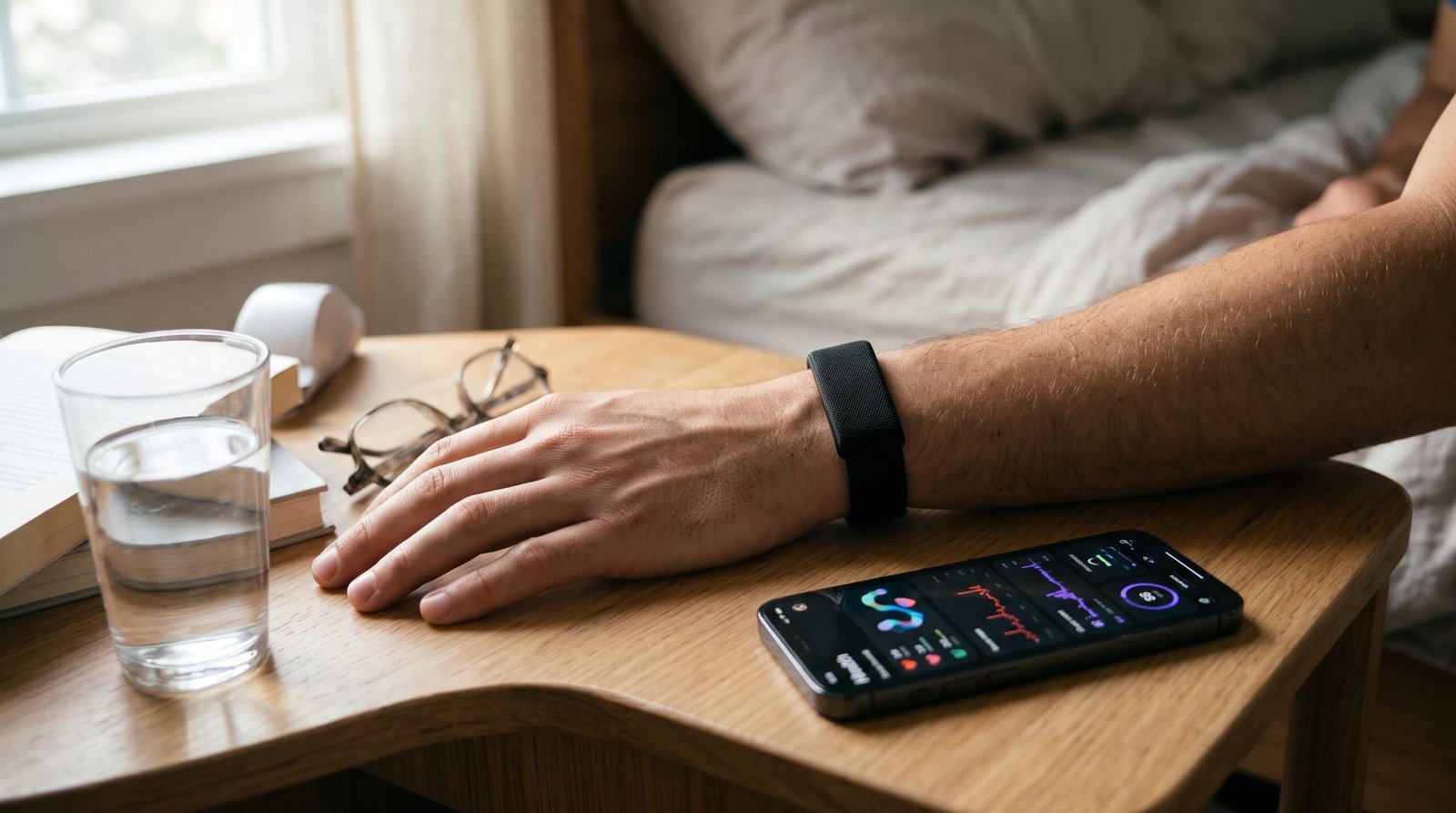
LAHORE: As wearable technology transforms the way consumers monitor their health, the competition between WHOOP and Google’s Fitbit Air is raising an important question: should consumers pay hundreds of dollars annually for advanced recovery analytics, or can a relatively inexpensive fitness tracker deliver everything they actually need?
Fitness trackers have evolved far beyond counting steps and calculating calories. Modern wearables monitor heart rate, sleep patterns, physical exertion, recovery, stress-related indicators and physiological trends, increasingly using artificial intelligence to convert collected information into personalised recommendations.
WHOOP has established itself as a premium performance-monitoring platform, particularly among athletes, professional trainers and fitness enthusiasts. Fitbit, meanwhile, has traditionally appealed to a broader consumer market through accessible devices and everyday health-monitoring features.
The introduction of Fitbit Air, Google’s screen-free wearable, has brought the two companies into more direct competition.
While both devices promise continuous health monitoring without the distractions of a smartwatch screen, their business models, analytical capabilities, battery performance and long-term ownership costs differ considerably.
For Pakistani consumers, the comparison is particularly relevant as interest in fitness technology grows alongside concerns about obesity, cardiovascular health, physical inactivity and lifestyle-related illnesses.
WHOOP Vs Fitbit Air: Two Different Approaches To Personal Health
WHOOP is designed primarily around three interconnected areas: physical strain, recovery and sleep.
Rather than encouraging users simply to achieve a daily step target, the device attempts to determine how much physiological stress their bodies have experienced, how effectively they have recovered and whether they are prepared for additional physical exertion.
Fitbit Air takes a broader approach, combining everyday activity monitoring, sleep analysis and health-related insights with Google’s expanding artificial-intelligence ecosystem.
Both devices operate without conventional smartwatch displays, encouraging users to examine detailed information through their smartphones rather than constantly checking their wrists.
However, WHOOP’s emphasis remains on performance optimisation, while Fitbit Air is positioned as a more accessible wellness-monitoring solution.
WHOOP’s Biggest Advantage: Understanding Recovery And Physical Performance
One of WHOOP’s most distinctive features is its recovery analysis.
The platform uses physiological indicators, including heart-rate variability, resting heart rate and sleep-related measurements, to generate a daily Recovery Score.
This score is intended to help users understand whether their bodies appear prepared for demanding physical activity or whether additional recovery may be beneficial.
WHOOP also calculates Strain, a measure of cardiovascular exertion accumulated during physical activity and throughout the day.
For athletes following structured training programmes, these measurements can provide useful context when deciding whether to undertake an intense workout or prioritise recovery.
The device also allows users to examine relationships between lifestyle habits and physiological responses.
Factors such as caffeine consumption, alcohol intake, sleep consistency, late meals and exercise routines can be recorded and compared against recovery trends.
However, associations identified through wearable data do not necessarily establish cause and effect.
For serious fitness enthusiasts, WHOOP’s ability to bring multiple physiological measurements into one performance-oriented platform remains a major selling point.
Battery Life: WHOOP Takes The Lead
Battery performance is another area where WHOOP enjoys an advantage.
WHOOP 5.0 advertises more than 14 days of battery life, while Fitbit Air offers approximately seven days under typical advertised conditions.
WHOOP also supports charging while the device remains on the wrist through compatible charging accessories.
This allows users to maintain more continuous monitoring without removing the tracker for conventional charging sessions.
For individuals who want uninterrupted sleep and recovery data, this can be particularly useful.
Fitbit Air’s battery life remains practical for everyday use, but consumers seeking longer intervals between charges may prefer WHOOP.
Actual battery performance for either device will depend on usage patterns, settings and battery condition.
Also Read: How AI Is Giving Athletes A New Way To See Their Game
The Biggest Problem With WHOOP: Subscription Costs
Despite its advanced capabilities, WHOOP’s subscription-dependent business model is one of its most significant disadvantages.
Unlike conventional fitness trackers purchased through a one-time payment, WHOOP requires an active membership for its core monitoring experience.
Its principal membership tiers include WHOOP One, WHOOP Peak and WHOOP Life.
Based on published US pricing, WHOOP One costs approximately $199 annually, Peak around $239 and Life approximately $359.
Over three years, these subscriptions could cost approximately $597, $717 and $1,077 respectively, assuming prices remain unchanged.
For consumers who actively use advanced recovery analytics, the expense may be justified.
However, for individuals primarily interested in tracking daily steps, heart rate and sleep duration, paying hundreds of dollars annually may offer limited additional value.
Another concern is that some advanced features are restricted to higher membership tiers.
Consumers must therefore examine the specific features included in each subscription rather than assuming every WHOOP device provides identical functionality.
Fitbit Air’s Biggest Advantage: Affordable Health Monitoring
Fitbit Air’s strongest competitive advantage is affordability.
With a reported starting price of approximately $99.99 in the United States, the device offers a substantially lower initial financial commitment than WHOOP’s annual membership plans.
Its core capabilities include continuous heart-rate monitoring, activity tracking, sleep analysis and various physiological measurements.
The device also incorporates Google’s broader health and fitness ecosystem, including readiness-related insights and AI-supported coaching capabilities.
For consumers who want to understand their activity levels, improve sleeping habits and maintain a more consistent fitness routine, these features may be sufficient.
Unlike WHOOP, Fitbit Air’s basic tracking experience does not depend entirely on an expensive annual subscription.
Google Health Premium, priced at approximately $99 annually in its principal market, provides access to additional coaching and personalised insights.
This allows consumers to choose between basic monitoring and a more comprehensive paid experience.
The distinction is important because many wearable users do not necessarily need sophisticated performance analytics.
For someone whose primary goals involve walking regularly, improving sleep consistency and monitoring heart-rate trends, Fitbit Air may provide better financial value.
Fitbit Air Is Lighter And Designed For Everyday Comfort
Comfort is another important consideration, particularly for consumers who wear fitness trackers continuously.
Fitbit Air weighs approximately 12 grams including its band, compared with around 27 grams for WHOOP 5.0.
The lighter design could appeal to users who dislike wearing heavier watches during sleep, exercise or office hours.
Both devices eliminate conventional screens, creating a minimalist appearance that can be worn alongside traditional watches or other accessories.
However, the absence of a display also creates limitations.
Neither device provides the same immediate on-wrist experience as a conventional smartwatch.
Users who want to check notifications, view detailed workout information or interact directly with applications may find a smartwatch more convenient.
Sleep Tracking: Which Device Performs Better?
Sleep monitoring has become one of the most important selling points in the wearable technology industry.
Both WHOOP and Fitbit Air attempt to estimate sleep duration, sleep stages and patterns using physiological signals and movement data.
WHOOP places particular emphasis on the relationship between sleep and recovery.
Its system attempts to estimate sleep requirements based on previous activity, recovery needs and accumulated sleep debt.
Fitbit Air offers sleep-related measurements and integrates them into Google’s wider wellness platform.
For consumers primarily interested in identifying inconsistent sleeping patterns, both systems can provide useful information.
However, neither device should be regarded as equivalent to clinical sleep testing.
Wearables estimate sleep stages indirectly, whereas laboratory polysomnography uses specialised measurements, including brain activity, to assess sleep.
Consequently, estimates of deep sleep and rapid eye movement sleep should not be treated as definitive medical findings.
Individuals experiencing persistent insomnia, suspected sleep apnoea or excessive daytime sleepiness should seek professional medical assessment rather than relying exclusively on wearable-generated scores.
Heart Health, ECG And Blood Pressure: What Consumers Must Understand
Health-monitoring features have become increasingly sophisticated, but their limitations require careful attention.
WHOOP MG, available through the company’s higher-tier offering, provides additional heart-related capabilities, including ECG functionality in supported markets.
It also offers blood-pressure-related insights, subject to applicable limitations and availability.
Fitbit Air provides continuous heart-rate monitoring and certain heart-health-related insights but does not offer an on-demand ECG feature.
Neither device should be treated as a replacement for professional medical evaluation.
Wearable-generated blood-pressure estimates are not equivalent to measurements obtained through a clinically validated blood-pressure monitor.
Similarly, heart-rate trends and irregular-rhythm notifications cannot independently establish or exclude cardiovascular disease.
Consumers should distinguish between wellness monitoring, medical screening and clinical diagnosis.
Artificial Intelligence: The Next Battleground
Artificial intelligence is emerging as a major competitive factor in the wearable technology market.
WHOOP’s coaching system interprets recovery, sleep and activity measurements to provide personalised fitness-related guidance.
Google is incorporating Gemini-powered capabilities into its health ecosystem, aiming to offer recommendations based on users’ physical activity, sleep habits and personal goals.
This represents a significant shift in the industry.
Instead of merely presenting graphs and numerical scores, wearable companies increasingly want to explain what those measurements mean and recommend behavioural changes.
However, the reliability of AI-generated health recommendations depends on the quality of underlying data, the limitations of the algorithms and the appropriateness of the advice.
Consumers should also consider privacy.
Wearable devices collect sensitive information about sleeping habits, activity patterns and physiological measurements.
Users should review data-sharing permissions, privacy policies and available controls before connecting their health information to additional services.
WHOOP Vs Fitbit Air: The Real Three-Year Cost
The financial difference between the two devices becomes more significant over time.
Based on indicative US pricing, the estimated three-year ownership costs are:
|
Device Or Plan |
Estimated Three-Year Cost |
|
Fitbit Air without Premium |
$100 |
|
Fitbit Air with Google Health Premium |
$397 |
|
WHOOP One |
$597 |
|
WHOOP Peak |
$717 |
|
WHOOP Life |
$1,077 |

These estimates assume unchanged subscription prices and exclude shipping, taxes, currency-conversion charges, accessories and potential hardware replacement.
The comparison demonstrates that WHOOP’s subscription model can create a considerably higher long-term financial commitment.
However, cost alone does not determine value.
An athlete using WHOOP’s detailed training and recovery insights every day may derive greater practical benefit than a casual user purchasing an inexpensive tracker.
Conversely, consumers who primarily want to monitor activity and sleep may find little justification for paying substantially more.
What About Pakistani Consumers?
The Pakistani market presents additional challenges for wearable technology buyers.
Most premium international fitness trackers are sold through importers, independent retailers or overseas purchasing channels.
This can create uncertainty over warranty coverage, replacement accessories, after-sales support and final retail pricing.
International subscription payments also expose consumers to exchange-rate fluctuations and potential banking charges.
For WHOOP users, recurring foreign-currency payments may become a significant consideration over several years.
Fitbit Air’s lower initial price and optional premium subscription could make it a more attractive proposition for price-conscious consumers.
However, Pakistani buyers should confirm whether the specific device is officially available, whether subscriptions can be activated locally and whether advanced health features are supported in Pakistan.
Some medical-related features, particularly ECG and irregular-heart-rhythm functionality, may be restricted by regional regulatory requirements.
International advertised prices should not be confused with verified Pakistani retail prices.
Which Tracker Is Better For Gym Enthusiasts And Athletes?
For serious athletes, competitive runners and individuals following demanding training schedules, WHOOP offers several advantages.
Its recovery analysis, strain monitoring, sleep recommendations and performance-focused ecosystem are designed to support structured training decisions.
Users who consistently adjust their exercise intensity and recovery routines based on physiological information may find WHOOP particularly useful.
However, these metrics should complement rather than replace professional coaching, physical feedback and medical guidance.
Fitbit Air may be more suitable for recreational gym users who want to monitor exercise frequency, daily activity and sleep without paying for an expensive performance platform.
Which Tracker Is Better For Office Workers And Entrepreneurs?
For professionals spending long hours in offices, attending meetings or managing businesses, everyday activity and sleep consistency may be more relevant than advanced athletic performance metrics.
Fitbit Air’s lighter design, lower ownership cost and accessible monitoring features make it a practical option for this category.
WHOOP may still appeal to professionals who are particularly interested in analysing recovery trends, sleep patterns and the physiological effects of demanding routines.
However, neither device can directly measure workplace productivity or establish the medical causes of fatigue and stress.
Wearable data should be interpreted as supplementary information rather than a comprehensive assessment of health.
The Verdict: WHOOP Wins On Performance, Fitbit Air On Affordability
The comparison reveals two distinct approaches to wearable technology.
WHOOP remains a strong choice for users who prioritise advanced recovery analysis, cardiovascular strain monitoring and structured fitness performance.
Its longer battery life and specialised analytical ecosystem provide meaningful advantages for dedicated athletes and serious fitness enthusiasts.
However, its subscription model creates a substantial recurring expense that may not be justified for casual users.
Fitbit Air offers a more accessible alternative through lightweight hardware, everyday health-monitoring features and an optional premium coaching service.
For consumers seeking to improve sleep consistency, monitor activity and develop healthier routines, it may provide a more economical solution.
Neither device is universally superior.
The appropriate choice depends on individual fitness goals, financial priorities and the extent to which users intend to act on the information collected.
For Pakistani consumers in particular, subscription affordability, warranty support and regional feature availability should be considered before purchasing either product.
Ultimately, the competition between WHOOP and Fitbit Air reflects a broader transformation in the wearable technology industry.
The future of fitness tracking will increasingly depend not merely on how much data devices collect, but on whether their software, algorithms and artificial-intelligence systems can turn that information into reliable, understandable and useful guidance.
The Scoop’s assessment is that WHOOP offers greater value for dedicated performance-focused users, while Fitbit Air represents the more economical proposition for everyday health and fitness monitoring.