

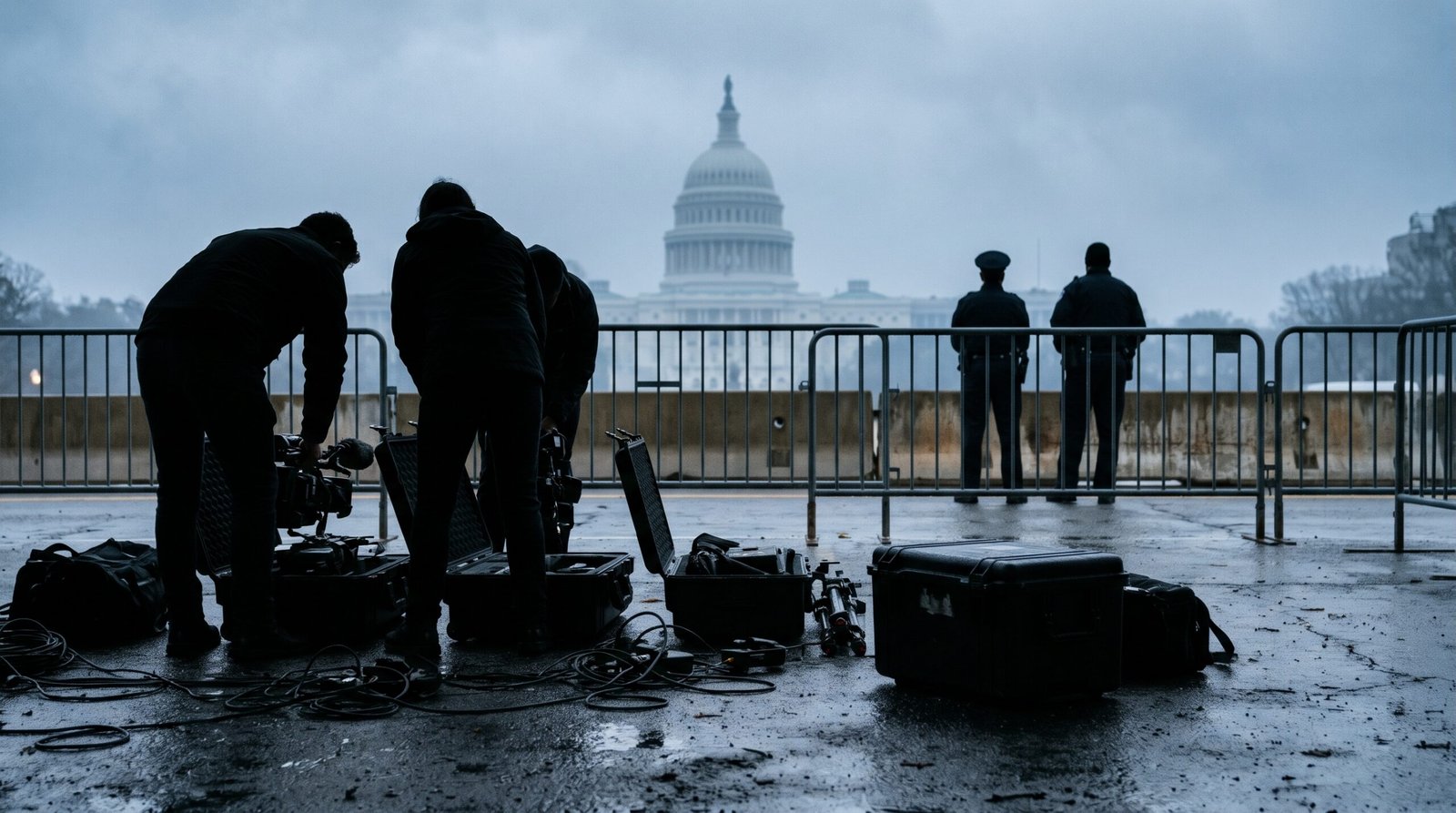
The political landscape in Washington D.C. has fractured dramatically following the 2026 midterm elections, with the Democratic Party’s sweeping congressional victories immediately paralyzing the incumbent administration’s unilateral legislative agenda.
Facing a severe repudiation from the electorate, President Donald Trump rapidly distanced himself from the Republican Party’s widespread electoral defeats. In an early Wednesday morning interview on Fox News, Trump stated that Democrats “did a good job” while explicitly blaming his own party’s candidates for failing to secure their respective races.
Conversely, House Democratic Leader Hakeem Jeffries, who is now positioned to assume control of the lower chamber, signaled a stark pivot in federal policy, declaring publicly that “America is back”.
Also Read: Democrats Seize Control Of US Congress In Decisive Midterm Sweep
Public sentiment data reveals the political realignment was heavily driven by domestic economic discontent. According to The AP Voter Poll, a majority of the electorate blamed the current administration for elevated household costs and explicitly demanded that Congress impose stricter “checks and balances” on the executive branch.
“While Trump urged voters to pretend he was on the ballot, most appear to blame his administration for high costs and want Congress to impose more checks on him.”
The systemic power shift extends far beyond the federal capital, reaching deep into reliable GOP territory. In the House of Representatives, Democrats successfully flipped multiple districts that had previously voted for Trump by margins as wide as 18 points during the 2024 election cycle.
At the state level, Democratic challengers executed major upsets to capture key governorships across historically conservative strongholds. Keisha Lance Bottoms in Georgia, Amy Acton in Ohio, Rod Sand in Iowa, and Gina Hinojosa in Texas successfully ousted GOP-held offices, dismantling long-held Republican monopolies on state power.
“Ohio’s Republican trifecta ended, after the governorship went to Democrats. The state will have a divided government.”
These gubernatorial shifts, combined with the loss of the Indiana secretary of state office to Democrat Beau Bayh, have officially ended Republican “trifectas” in both Ohio and Indiana, forcing an immediate return to divided government across the industrial Midwest.