

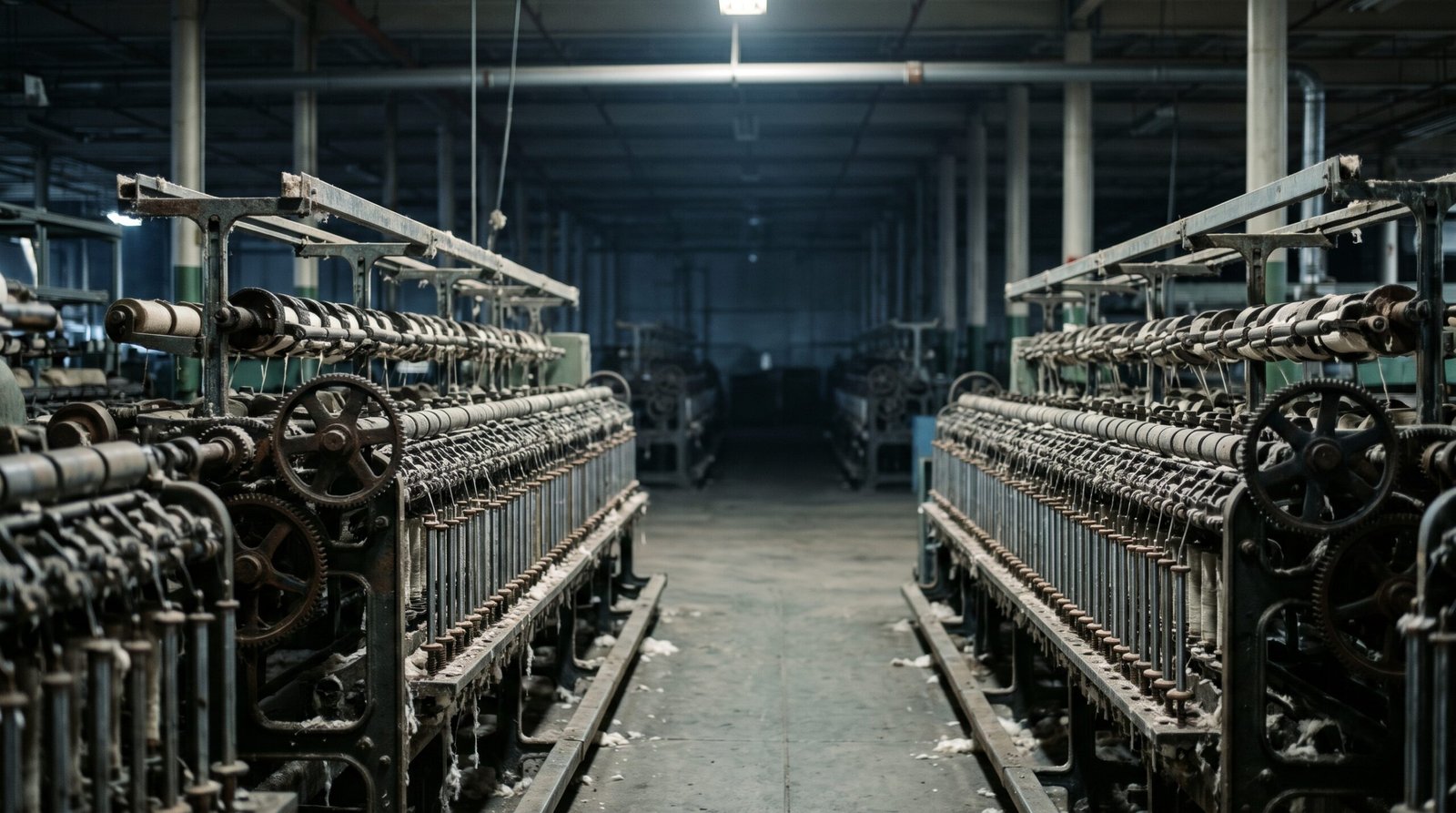
LAHORE, October 28, 2026: Kohinoor Spinning Mills Limited (KSML), one of Pakistan’s established textile manufacturers, has reported a net loss of Rs 23.51 million for the quarter ended September 30, 2026, as persistent operational challenges, substantial financial liabilities and rising business costs continue to undermine its financial position.
According to the company’s latest unaudited quarterly financial statements, approved by its board of directors on October 28, Kohinoor Spinning Mills remains heavily dependent on financial support from its directors, who provided Rs 95.29 million during the reporting period to sustain the company’s operations.
The financial results reveal a company struggling to generate sufficient revenue to cover its expenses despite possessing fixed assets worth billions of rupees.
Although the quarterly loss narrowed from Rs 35.49 million in the corresponding period last year, the improvement has yet to translate into a meaningful recovery in its core manufacturing operations.
The company’s negative equity, substantial liabilities and weak operating cash flows highlight the continuing financial pressure facing the business.
Sales Remain Weak As Operational Challenges Persist
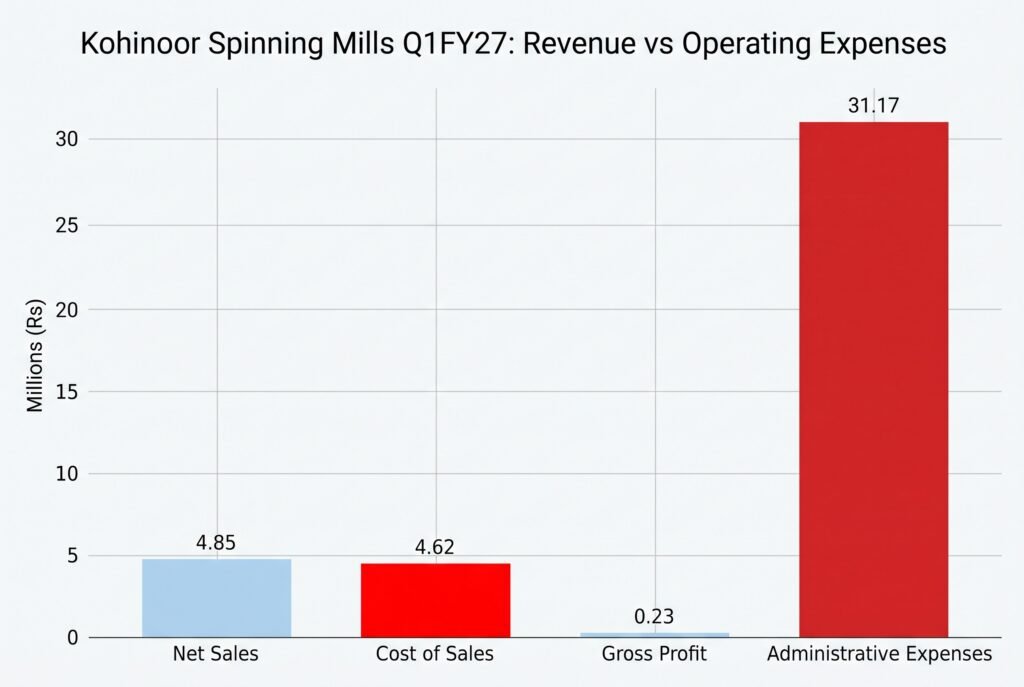
Kohinoor Spinning Mills reported net sales of approximately Rs 4.85 million during the September 2026 quarter, reflecting the limited scale of its revenue-generating activities.
Its cost of sales stood at approximately Rs 4.62 million, resulting in a gross profit of just Rs 232,521.
The figures suggest that the company’s manufacturing operations are generating insufficient gross earnings to support its administrative and other operating expenses.
Administrative expenses alone amounted to approximately Rs 31.17 million during the quarter, significantly exceeding the revenue generated from sales.
This imbalance illustrates the scale of the financial challenges confronting the company.
The quarterly results also show other operating income of approximately Rs 7.5 million, which helped partially offset operating expenses.
However, such income does not necessarily indicate an improvement in the underlying spinning business.
The company’s directors acknowledge that Pakistan’s spinning industry continues to face severe challenges arising from high electricity and gas tariffs, expensive imported yarn and declining competitiveness.
According to the directors’ report, the high cost of doing business has significantly reduced the ability of local spinning mills to compete in domestic and international markets.
The report further states that many spinning units are operating below capacity, while others have been forced to suspend operations altogether.
For Kohinoor Spinning Mills, these wider industry difficulties have compounded its existing profitability and working-capital constraints.
Quarterly Loss Narrows By Nearly 34 Per Cent
Despite the difficult operating environment, the company managed to reduce its quarterly net loss compared with the corresponding period of the previous year.
The loss declined from Rs 35.49 million in September 2025 to Rs 23.51 million in September 2026, representing an improvement of approximately 33.7 per cent.
However, the reduction in losses must be viewed alongside the company’s limited sales and continued financial dependence on its directors.
A lower accounting loss does not necessarily mean that the company’s underlying financial position has strengthened.
The financial statements indicate that the company continues to face substantial operating expenses and liquidity pressures.
Its ability to achieve sustainable profitability will depend on restoring meaningful revenue generation, improving cost efficiency and managing its existing financial obligations.
Directors Inject Rs 95.29 Million To Keep Company Operational
One of the most significant disclosures in the quarterly report concerns the financial assistance provided by the company’s directors.
According to the directors’ report, Rs 95.29 million was injected into Kohinoor Spinning Mills during the reporting period to support its operations.
The cash-flow statement identifies this financial support as loans from directors rather than fresh equity investment.
This distinction is important because director loans ordinarily remain financial obligations unless they are converted into equity, waived or restructured.
The company’s financial position demonstrates its continuing reliance on financial support from its sponsors and management.
Although the fresh financing provided immediate liquidity, it did not eliminate the underlying challenges affecting the company’s operations.
The quarterly accounts do not provide sufficient information to establish the repayment terms, security arrangements or maturity profile of the director financing.
Continued reliance on such support could become an important factor in determining the company’s financial sustainability.
Also Read: Ghani Chemical Industries Pioneers Tracking Shares To Fund Rs 6 Billion Natural Gas Ventures
Liabilities Exceed Assets As Negative Equity Persists
Kohinoor Spinning Mills’ balance sheet reveals a financially strained capital structure.
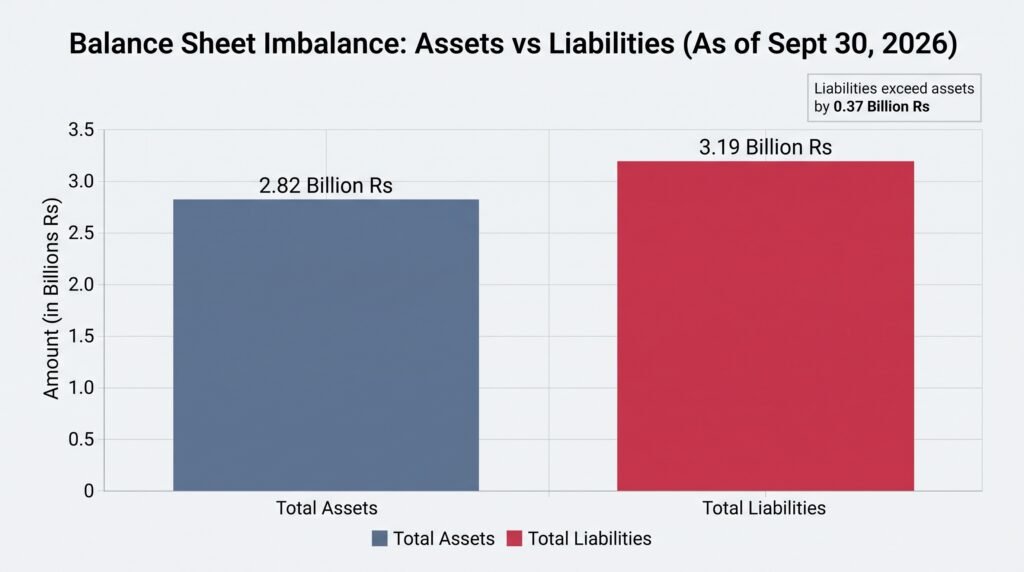
As of September 30, 2026, the company reported total assets of approximately Rs 2.82 billion, while its liabilities stood at approximately Rs 3.19 billion.
Consequently, the company remained in a negative equity position, reflecting the impact of accumulated losses on its financial standing.
Negative equity indicates that a company’s recorded liabilities exceed its recorded assets, although it does not automatically mean that liquidation or insolvency proceedings are imminent.
The company’s property, plant and equipment were valued at approximately Rs 2.81 billion, representing the overwhelming majority of its reported asset base.
This substantial concentration of assets in property and industrial equipment highlights the importance of restoring productive operations.
The company also carries a significant revaluation surplus associated with its fixed assets.
However, accounting revaluations do not directly generate cash and cannot independently address operating losses or liquidity shortages.
The financial position therefore presents a difficult contrast: substantial industrial assets on one side and persistent financial obligations on the other.
For shareholders, the central concern is whether the company’s existing assets can be utilised effectively enough to generate sustainable earnings.
Operating Cash Outflow Crosses Rs 102 Million
An examination of the cash-flow statement reveals another concerning development.
Kohinoor Spinning Mills reported net cash used in operating activities of approximately Rs 102.83 million during the September 2026 quarter, compared with Rs 88.28 million in the corresponding period last year.
This represents a deterioration in operating cash flow despite the reduction in the company’s reported net loss.
The figures demonstrate that the company’s cash requirements remain substantial.
Payments against trade and other payables contributed to the operating cash outflow during the period.
Meanwhile, cash and cash equivalents stood at approximately Rs 915,830 at the end of September 2026, compared with Rs 953,048 at the beginning of the quarter.
The extremely limited closing cash balance is particularly noteworthy when compared with the company’s operating expenses and financial obligations.
Despite receiving substantial financing from directors, Kohinoor Spinning Mills ended the quarter with less than Rs 1 million in cash and cash equivalents.
This suggests that incoming financial support was largely absorbed by the company’s cash requirements.
Sustained negative operating cash flows could increase the company’s dependence on additional financing unless its underlying business performance improves.
Pakistan’s Textile Industry Under Pressure
Kohinoor Spinning Mills’ financial difficulties reflect some of the broader structural challenges facing Pakistan’s textile sector.
The spinning industry forms an essential component of the country’s textile value chain, supplying yarn to weaving, knitting and garment manufacturers.
However, the sector has faced persistent pressure from high energy costs, expensive financing, imported raw materials and international competition.
Energy costs are particularly important for spinning mills because electricity constitutes a significant component of manufacturing expenditure.
The company’s directors have specifically identified high electricity and gas tariffs as major obstacles to competitiveness.
They have also pointed towards competition from imported yarn, which has affected the ability of domestic manufacturers to maintain their market position.
These challenges become particularly severe for companies already facing financial constraints.
Businesses with weak cash flows and substantial liabilities may find it increasingly difficult to invest in modern machinery, improve efficiency or restore production capacity.
Kohinoor Spinning Mills’ results therefore illustrate how wider industrial pressures can intensify the financial difficulties of individual textile manufacturers.
Also Read: Pakistan To Host Minerals Investment Forum To Unlock $8 Trillion Untapped Potential
Billions In Assets, But Where Is The Recovery?
The company’s financial statements raise an important question about the future of its manufacturing operations.
With property, plant and equipment valued at approximately Rs 2.81 billion, Kohinoor Spinning Mills possesses a substantial recorded industrial asset base.
However, the latest quarterly results demonstrate that these assets are not currently generating revenue at a scale sufficient to cover the company’s operating costs.
The directors acknowledge that profitability and working-capital constraints have adversely affected the company.
Management nevertheless remains hopeful about an improvement in the spinning industry’s operating environment.
The directors’ report states that the company is optimistic about better prospects in the future and remains committed to overcoming the challenges facing its business.
However, the quarterly report does not provide a detailed turnaround strategy, quantified production targets or a timetable for restoring profitability.
It also does not establish when the company expects to achieve positive operating cash flows.
For investors and other stakeholders, these omissions leave several important questions unanswered.
Can Kohinoor Spinning Mills restore commercially viable production? Will its directors continue providing financial support? Can the company reduce its operating expenses and financial obligations? And how long will it take for its substantial fixed-asset base to begin generating sustainable returns?
These questions will become increasingly relevant if the company continues reporting losses in subsequent quarters.
What Lies Ahead For Kohinoor Spinning Mills?
The September 2026 quarterly results offer limited evidence of financial improvement.
The reduction in net losses is a positive development, but the company’s underlying financial position remains challenging.
Its limited revenue, negative equity, substantial liabilities and deteriorating operating cash flows indicate that the business has yet to achieve a sustainable recovery.
The Rs 95.29 million provided by directors has helped support the company’s operations, but financial assistance alone cannot resolve the structural problems affecting its profitability.
A meaningful turnaround would require improved manufacturing activity, stronger sales, better cost management and sustained positive operating cash generation.
The company may also need to address its financial structure to reduce its dependence on continuing director support.
Ultimately, the future of Kohinoor Spinning Mills will depend on its ability to translate its substantial industrial asset base into commercially sustainable operations.
For now, the company’s latest financial statements present a sobering picture of the difficulties facing parts of Pakistan’s textile manufacturing sector.
Unless operational performance improves, the company could remain dependent on financial assistance while continuing to face pressure from accumulated losses and cash-flow constraints.
Its next financial results will be closely watched for evidence that the reduction in quarterly losses represents the beginning of a sustainable recovery rather than another temporary improvement in an otherwise difficult financial position.