

LAHORE: Sazgar Engineering Works Limited has announced sweeping price reductions ranging from Rs400,000 to Rs3.8 million across its plug-in hybrid electric vehicle (PHEV) lineup, moving proactively ahead of the formal rollout of proposed tax concessions under the federal government’s Automotive Industry Policy 2026–31.
Unveiled on Friday, the steepest cut applies to the flagship GWM Tank 500 PHEV, whose ex-factory price has been slashed by Rs3.8 million—a 16.9 per cent drop—bringing the luxury SUV down from Rs22.5 million to Rs18.7 million. The adjustment creates a notable pricing inversion within Sazgar’s own showroom: the plug-in hybrid Tank 500 now undercuts its conventional hybrid counterpart by Rs1.8 million, reversing the gap established when Sazgar launched the two variants in January 2026 at Rs22.5 million and Rs20.5 million, respectively.
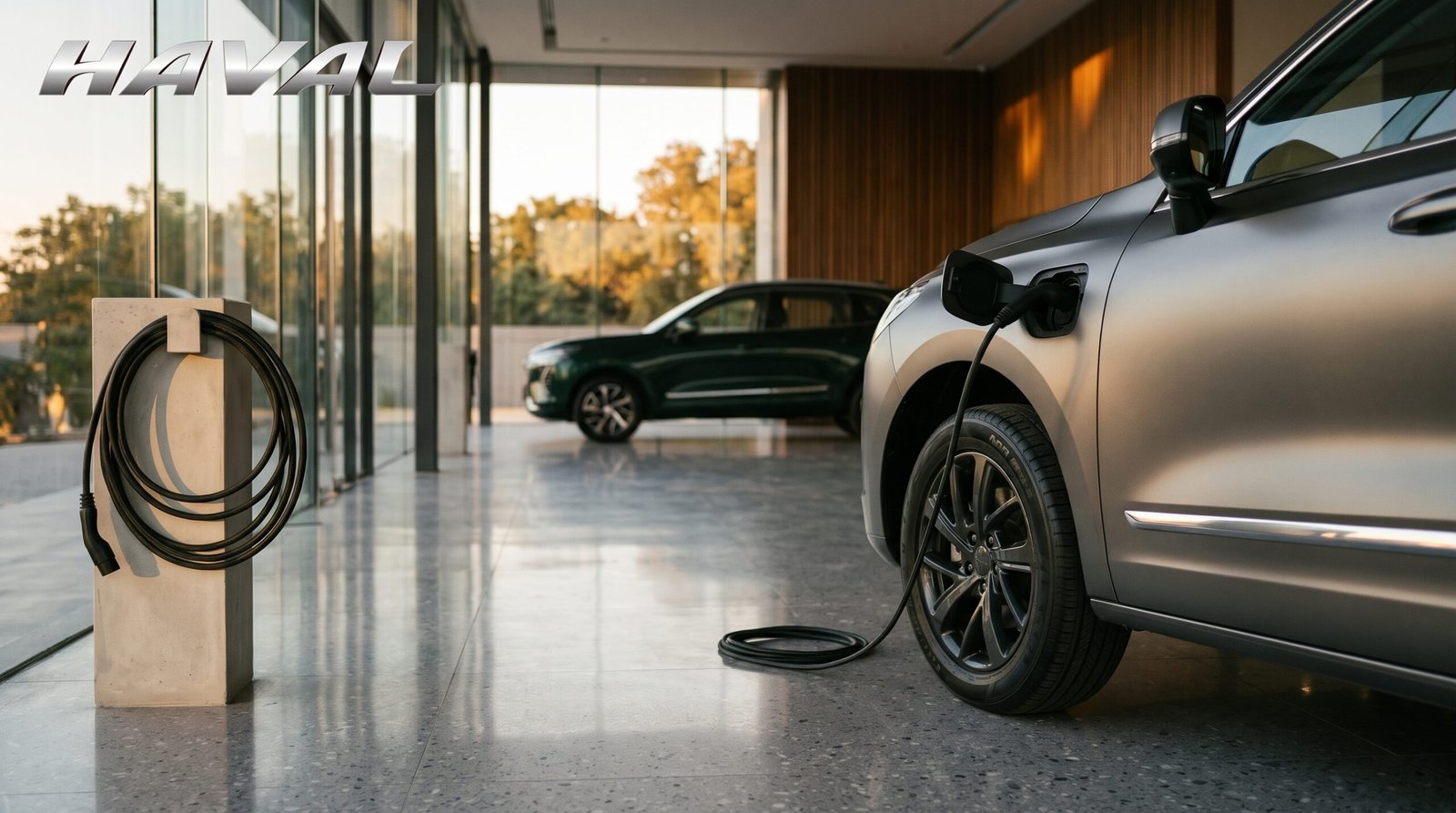
Across the Haval portfolio, the Haval H6 Hi4 all-wheel-drive PHEV has been reduced by Rs1.6 million, dropping from Rs12.895 million to Rs11.295 million. Meanwhile, the Haval H6 GT PHEV will now retail at Rs11.995 million compared with its previous tag of Rs12.949 million following a Rs954,000 reduction, while the Haval H6 front-wheel-drive PHEV receives a Rs400,000 cut, moving from Rs10.849 million to Rs10.449 million.
In a relief to pending buyers, Sazgar confirmed that the revised ex-factory prices will apply not only to fresh orders but also to all existing bookings awaiting delivery—including those against which customers have already made partial or full payments.
Anticipating a Differentiated Powertrain Tax Structure
The aggressive repricing follows Prime Minister Shehbaz Sharif’s approval of the proposed Automotive Industry Policy 2026–31, which outlines a tiered sales tax structure tied directly to powertrain technology. Under the proposed framework, battery electric vehicles (BEVs) would attract a 1 per cent sales tax, range-extended electric vehicles (REEVs) would be taxed at 6 per cent, and PHEVs would face a 9 per cent levy, while conventional hybrids and internal combustion engine (ICE) vehicles would remain subject to the standard 18 per cent rate.
Crucially, however, Sazgar’s price cuts come before those concessions take legal effect. The proposed tax reductions remain subject to International Monetary Fund (IMF) clearance and formal statutory implementation. To address potential fiscal slippage, the government has proposed offsetting the revenue impact through an Automotive Development Levy on conventional vehicles exceeding 1,000cc. Together, the measures are designed to reinforce Pakistan’s New Energy Vehicle Policy 2025–30, which targets a 30 per cent share for new energy vehicles in annual new vehicle sales by the end of the decade.
Margin Pressures and Volume Headwinds Behind the Pricing Bet
Sazgar’s willingness to pass on anticipated tax relief early reflects both its competitive push in the high-end SUV segment and recent pressures on volumes and profitability. The automaker had previously absorbed elevated taxation costs after the government raised the sales tax on hybrid vehicles to 18 per cent from earlier concessionary slabs of 8.5 per cent and 12.75 per cent.
Those cost pressures were visible in the company’s financial performance for the first quarter of FY27. Four-wheeler sales declined by roughly 12 per cent year-on-year to 3,137 units, while gross profit margins compressed from 25.19 per cent to 20.41 per cent. Although quarterly revenue expanded by 23.3 per cent to Rs41.71 billion, profit after tax fell 8.6 per cent to Rs4.04 billion. By lowering retail prices ahead of formal policy enactment, Sazgar is positioning its plug-in hybrid portfolio to recapture showroom momentum and lock in demand as Pakistan’s automotive market pivots toward electrified powertrains.