

Pakistan stands at a defining moment in its national and regional history. The country faces a complex combination of security threats, economic pressures, geopolitical rivalries and diplomatic challenges that demand coordinated responses from its civilian and military institutions.
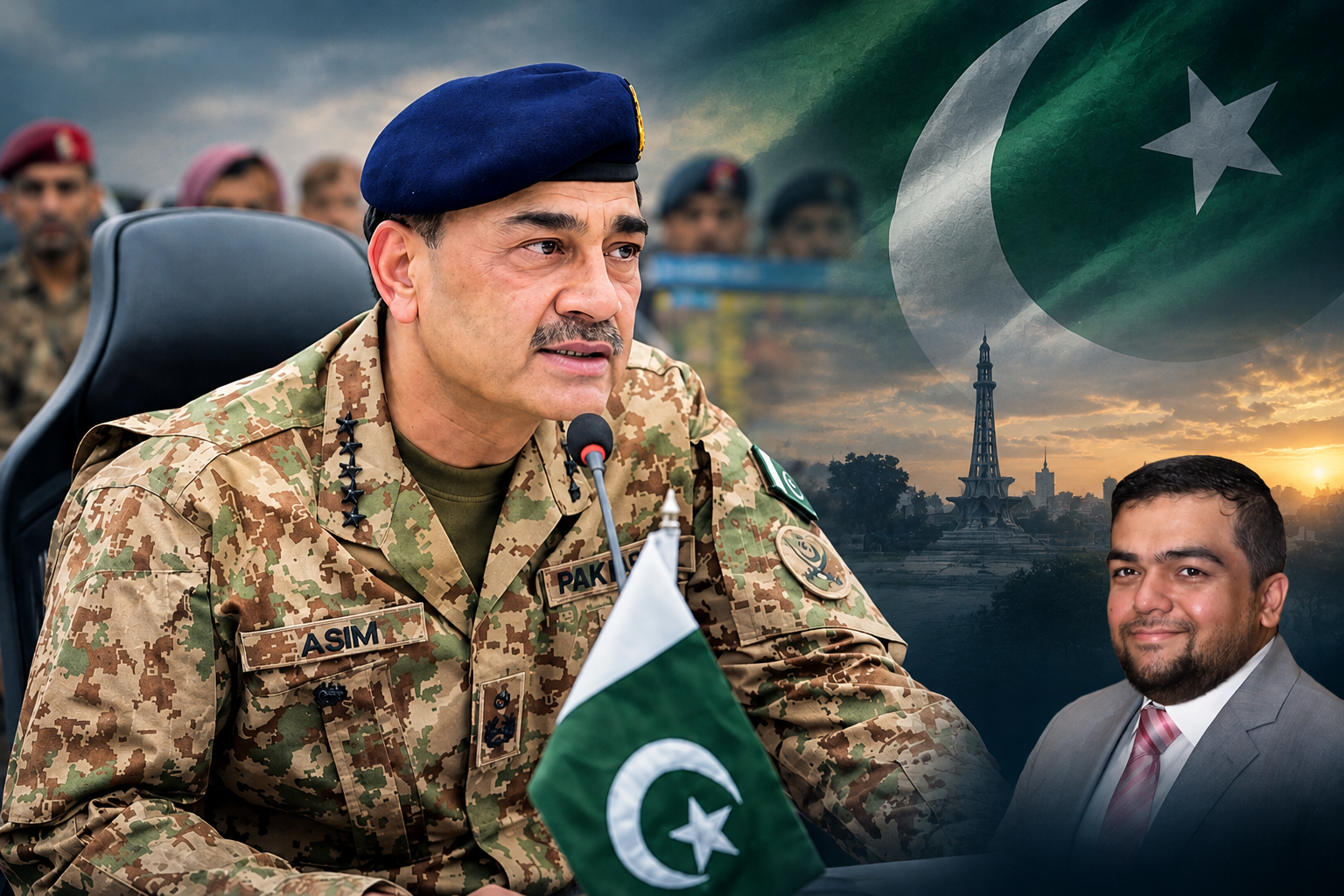
At the centre of Pakistan’s evolving military command structure stands Field Marshal Syed Asim Munir, whose elevation to the country’s highest military rank in May 2025 and subsequent appointment as Chief of Defence Forces in December represented significant institutional developments.
His tenure has coincided with major changes in the regional security environment, including the military confrontation with India in May 2025, escalating tensions involving Iran and the United States, and renewed efforts to establish regional security arrangements.
His repeated diplomatic engagements with Tehran, particularly the meetings of October 20 and October 26, 2026, have also placed Pakistan’s military leadership at the centre of important regional discussions.
These developments raise a fundamental question: can Pakistan convert its military capabilities and diplomatic access into sustainable national security, regional stability and economic progress?
The Significance Of The Field Marshal Rank
The federal government’s decision to elevate General Asim Munir to Field Marshal followed the military confrontation between Pakistan and India in May 2025.
The government attributed the decision to his leadership during Operation Bunyanum Marsoos and the wider confrontation. The elevation carried considerable symbolic significance, given the rarity of the five-star rank in Pakistan’s military history.
Military honours, however, are accompanied by responsibilities extending beyond the circumstances in which they are conferred.
The lasting significance of such recognition must be assessed through operational preparedness, institutional development, the professional advancement of military personnel and the country’s ability to protect its sovereignty.
Pakistan’s experience in May 2025 also demonstrated the importance of credible deterrence in a region where military miscalculations can have exceptionally serious consequences.
For two nuclear-armed neighbours, the prevention of escalation remains as important as military readiness.
National Security In An Increasingly Uncertain Region
Pakistan’s geographical position creates a security environment unlike that faced by many other countries.
To the east lies India, with which Pakistan has a history of armed conflict and unresolved disputes. To the west, instability in Afghanistan and persistent militant threats continue to demand military and intelligence resources.
The security situation in Balochistan and the continuing threat of terrorism further complicate national defence planning.
Under Field Marshal Munir’s leadership, Pakistan’s armed forces face the responsibility of maintaining conventional deterrence while adapting to emerging threats involving drones, cyberwarfare, artificial intelligence, intelligence coordination and increasingly sophisticated military technologies.
Modern national security cannot depend upon conventional military strength alone.
It requires the integration of intelligence, technology, diplomacy, economic resilience and effective governance.
Pakistan’s security institutions must therefore prepare not only for the possibility of conventional conflict but also for asymmetric threats, cross-border militancy and the growing importance of information warfare.
A New Era Of Joint Military Command
Field Marshal Munir’s appointment as Pakistan’s first Chief of Defence Forces in December 2025 introduced an important change in the country’s military leadership structure.
Holding the positions of Chief of Army Staff and Chief of Defence Forces simultaneously places substantial responsibilities within a unified command arrangement.
Modern warfare increasingly requires close coordination between land, air, maritime, cyber and intelligence capabilities.
The effectiveness of this structure will depend upon its ability to improve joint operational planning while preserving the professional expertise of the army, navy and air force.
Institutional reforms must also establish clear command responsibilities, professional accountability and effective coordination with civilian authorities.
The durability of military modernisation depends upon the strength of the institutions created, rather than the authority exercised by any individual commander.
Tehran Diplomacy And Pakistan’s Emerging Regional Role
Perhaps one of the most consequential developments in Pakistan’s recent diplomatic engagement has been the country’s involvement in efforts to reduce tensions between Iran and the United States.
Field Marshal Munir’s repeated visits to Tehran have taken place against the backdrop of military confrontation, disrupted regional trade and growing concerns about a wider Middle Eastern conflict.
On October 20, 2026, Munir travelled to Tehran alongside Interior Minister Mohsin Naqvi and held discussions with Iranian President Masoud Pezeshkian and other senior political and security officials.
The meetings addressed the possibility of reviving negotiations between Washington and Tehran, alongside bilateral issues affecting Pakistan and Iran.
Iranian officials communicated their position that Washington would need to take steps to restore confidence before negotiations could advance.
Although the visit did not produce an immediate diplomatic breakthrough, it maintained a channel of communication at a particularly sensitive moment.
Just six days later, on October 26, Field Marshal Munir participated in a quadrilateral meeting in Tehran involving Pakistan, Iran, Saudi Arabia and Türkiye.
The discussions brought together senior representatives of four countries with substantial influence over regional security.
Among the participants were Iranian security official Mohsen Rezaei, Saudi Defence Minister Prince Khalid bin Salman and Turkish intelligence chief Ibrahim Kalin.
The meeting addressed regional stability, the consequences of the conflict involving Iran, the security of neighbouring states and prospects for continued diplomatic engagement.
The participating countries agreed to continue their dialogue on regional peace and security.
These meetings illustrate the importance of Pakistan’s relationships with countries whose strategic priorities sometimes differ considerably.
Pakistan maintains longstanding defence and economic relationships with Saudi Arabia, shares a sensitive border with Iran, enjoys close ties with Türkiye and continues to engage Washington on matters of security and diplomacy.
Maintaining these relationships simultaneously requires careful coordination and a consistent foreign policy.
Military diplomacy can support this process by creating direct channels of communication, particularly during periods when conventional diplomatic engagement encounters obstacles.
However, diplomatic access should not be confused with diplomatic success. The ultimate measure of Pakistan’s contribution will be whether these engagements help prevent further escalation and produce workable agreements.
Pakistan’s Role In US–Iran Mediation
Pakistan’s involvement in efforts to reduce tensions between Washington and Tehran has brought renewed international attention to Islamabad’s diplomatic position.
Following the outbreak of hostilities involving Iran, the United States and Israel in February 2026, Pakistan became involved in efforts to facilitate negotiations and reduce the risk of further confrontation.
Islamabad helped broker an April ceasefire and subsequently participated in negotiations that produced an interim understanding in June.
However, disagreements over sanctions, maritime restrictions, Iran’s nuclear programme and the implementation of earlier commitments have continued to obstruct a lasting settlement.
Field Marshal Munir’s engagements with Iranian officials form one component of these wider diplomatic efforts.
The process also involves Pakistan’s elected leadership, Foreign Office and international partners, including Qatar.
Pakistan’s ability to communicate with different regional and international actors gives it opportunities to facilitate dialogue, but those opportunities also involve significant diplomatic risks.
The country must avoid becoming entangled in competing regional agendas while maintaining its commitment to peaceful dispute resolution.
The consequences of renewed conflict would extend far beyond the immediate participants, affecting energy markets, shipping routes, regional investment and economic stability.
For Pakistan, whose economy remains sensitive to external shocks, the stakes are particularly high.
Saudi Arabia, Türkiye And Regional Security Cooperation
Pakistan’s relationship with Saudi Arabia has long included defence cooperation, economic assistance and close political engagement.
The signing of the Makkah Joint Defence Agreement involving Pakistan, Saudi Arabia and Türkiye in August 2026 introduced an additional dimension to regional security cooperation.
The agreement emerged amid growing concerns about threats to regional infrastructure, maritime security and the stability of the Arabian Peninsula.
The subsequent October 26 meeting in Tehran brought representatives of the three participating countries into direct discussions with Iranian officials.
This development raises important questions about whether regional states can establish arrangements that reduce the likelihood of confrontation while recognising their different security interests.
For Pakistan, cooperation with Saudi Arabia and Türkiye must be balanced with its relationship with neighbouring Iran.
The challenge is particularly sensitive because the country cannot afford a prolonged deterioration in relations with any of these partners.
An effective regional security framework would need to combine deterrence with dialogue, respect for sovereignty and mechanisms for preventing military escalation.
Military Diplomacy And Pakistan’s International Position
The growing importance of military diplomacy reflects changes in the international security environment.
Defence cooperation, intelligence sharing, military training and strategic dialogue increasingly form part of broader diplomatic relationships.
Field Marshal Munir’s engagements with foreign political and military leaders have occurred at a time when Pakistan is seeking to maintain constructive relations with China, the United States, Saudi Arabia, Iran, Türkiye and other important partners.
These relationships involve different strategic priorities.
China remains central to Pakistan’s economic and defence cooperation, while engagement with Washington continues to influence regional security discussions.
Pakistan’s relationships with Gulf countries are closely connected to investment, employment, energy security and defence cooperation.
The task for Islamabad is to maintain consistency across these relationships while ensuring that national interests remain the principal consideration.
Military diplomacy can contribute to this objective, but it must remain coordinated with civilian foreign-policy institutions.
Pakistan’s international credibility ultimately depends upon the reliability of its commitments, the consistency of its diplomatic positions and its ability to contribute constructively to regional stability.
Also Read: Saudi Developer Hails Gohar Ejaz’s Vision As Lake City Lahore Impresses International Investors
Economic Security Is National Security
Pakistan’s strategic challenges cannot be separated from its economic difficulties.
A country facing fiscal constraints, inadequate exports, limited industrial competitiveness and investment uncertainty cannot achieve lasting strategic independence through military preparedness alone.
Economic strength provides the resources required for defence modernisation, technological development, infrastructure and institutional capacity.
It also gives governments greater flexibility in international negotiations.
Pakistan’s economic future depends upon improving productivity, increasing exports, attracting sustainable investment and creating an environment in which businesses can operate with confidence.
Security institutions contribute by helping maintain stability and protecting the country against threats.
However, economic policy remains the responsibility of civilian authorities, regulators and institutions entrusted with managing public finances and development.
Investors require predictable policies, functioning courts, transparent regulation and political continuity.
These conditions cannot be established through security measures alone.
Pakistan’s long-term strategic strength will therefore depend upon the combined effectiveness of its security, political and economic institutions.
Institutional Continuity And The Responsibilities Of Leadership
Pakistan’s history has frequently associated national expectations with prominent political and military personalities.
Yet lasting national progress requires institutions capable of functioning effectively beyond individual tenures.
The responsibilities entrusted to Field Marshal Munir are substantial.
They include military preparedness, joint command coordination, the development of defence capabilities and engagement with a changing regional security environment.
The effectiveness of these responsibilities must ultimately be assessed through institutional outcomes.
Professional advancement, technological modernisation, merit-based appointments, operational preparedness and transparent accountability are essential elements of military development.
Strong institutions also require clearly defined responsibilities and coordination with the country’s constitutional authorities.
The objective should be to create systems that remain effective regardless of changes in military or political leadership.
National Strength And Constitutional Stability
Pakistan’s armed forces have a fundamental constitutional responsibility to defend the country’s sovereignty and territorial integrity.
Their operational effectiveness is closely connected to the stability of the wider constitutional system.
Parliament, the elected government, the judiciary and the armed forces each have distinct responsibilities.
A durable national security framework depends upon these institutions functioning within their respective constitutional roles while cooperating on matters of national importance.
The country’s history demonstrates the consequences of political instability and institutional confrontation.
It also highlights the importance of maintaining public confidence in the state’s ability to protect citizens, uphold the law and provide economic opportunities.
Military preparedness and constitutional governance should therefore be understood as complementary elements of national stability.
The Test Of Lasting Leadership
Field Marshal Asim Munir’s tenure coincides with a period of considerable change in Pakistan’s military organisation and regional diplomatic environment.
His elevation to Field Marshal, appointment as Chief of Defence Forces and involvement in high-level regional engagements have placed him at the centre of decisions with potentially lasting implications for Pakistan.
The October 2026 Tehran meetings demonstrate the complexity of the diplomatic environment in which the country’s military leadership now operates.
They also illustrate the opportunities and limitations associated with Pakistan’s position between competing regional interests.
The significance of these developments will ultimately be determined by their results.
Can Pakistan contribute to reducing regional tensions? Can it strengthen deterrence without becoming drawn into wider conflicts? Can military modernisation improve institutional preparedness? And can a more stable security environment create opportunities for economic progress?
These are the questions through which this period of military leadership should be assessed.
Pakistan’s soldiers and officers continue to serve in demanding conditions, often facing threats that impose considerable sacrifices upon their families and communities.
Their service deserves recognition, while senior leadership carries the responsibility of ensuring that those sacrifices contribute to lasting national security.
The central challenge is to translate military capabilities and diplomatic influence into enduring institutional strength.
For Pakistan, sustainable progress will depend upon credible defence, constructive diplomacy, economic resilience and constitutional stability.
The ultimate measure of leadership will not be the prominence of an individual or the significance of a military title, but the security, stability and opportunities available to the country and its people.