

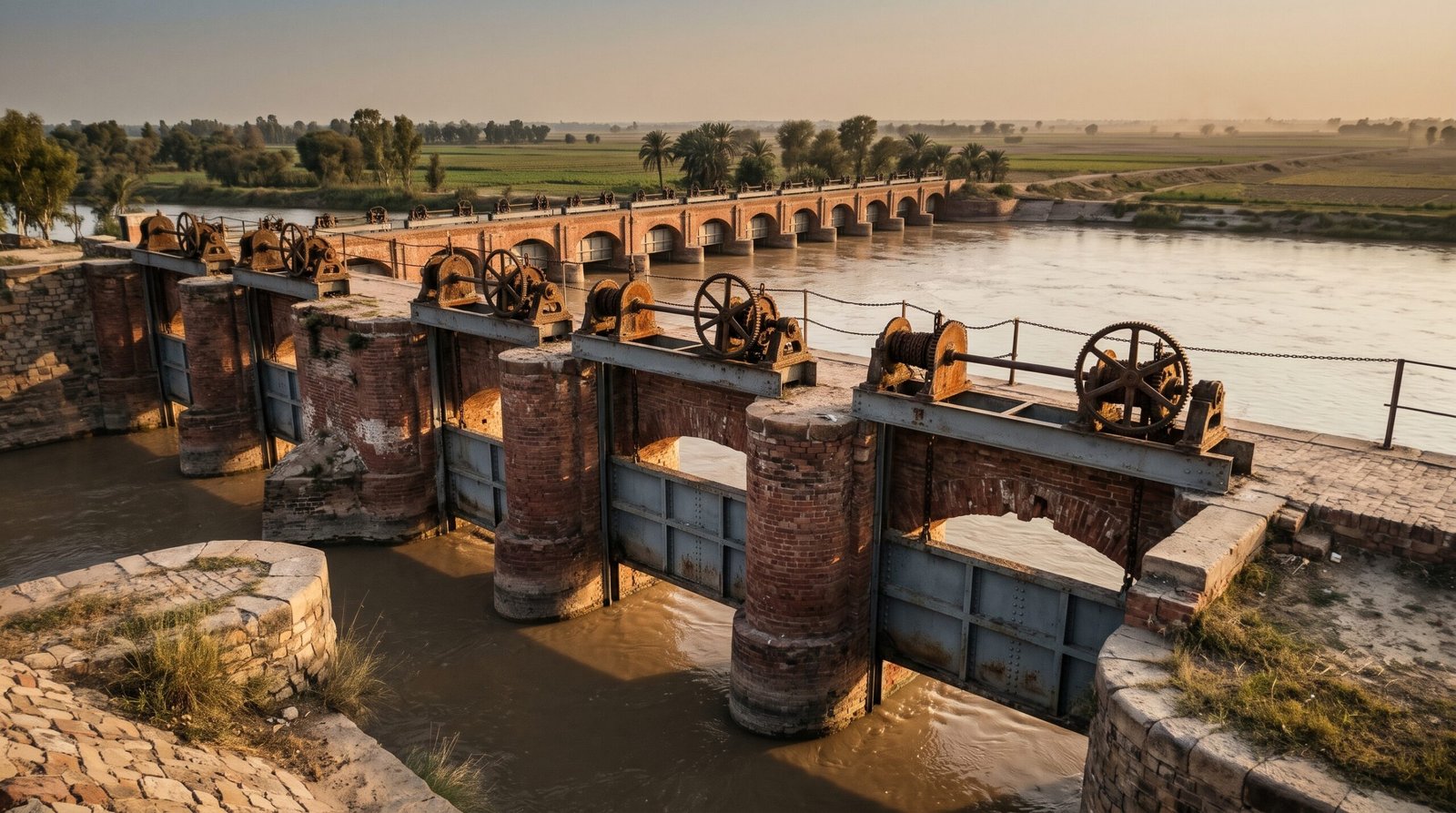
On May 9, 2012, members on both sides of the Punjab Assembly agreed that the province could be redrawn. What they adopted that day bears remembering. There were two resolutions. One called for the restoration of Bahawalpur province. The other sought a new province in southern Punjab.
Fourteen years later, a citizen listening to a television discussion about whether Pakistan needs more provinces could be forgiven for thinking that nobody had ever put the question to elected representatives. Punjab did. The business left unfinished was to agree on a territory, ascertain the wishes of its people and put before them an account of what the change would cost and what authority it would confer.¹
There is a federal case for beginning with Punjab. The 2023 census counted 127.69 million people in the province out of a national enumeration of 241.50 million. Of the 266 general seats used for National Assembly elections, 141 fall within Punjab.
A party deciding where to spend the last fortnight of a national campaign can read that arithmetic. So can a chief minister who speaks at an intergovernmental meeting for a province containing more than half the population counted. The democratic difficulty lies in how much institutional weight a single provincial capital commands. A voter in Rajanpur who has little influence over Lahore cannot reasonably be held responsible for Lahore’s predominance.²
Dividing Punjab would change some of that arithmetic and leave an important part of it intact. If National Assembly representation continues to follow population, the people who live within Punjab’s present boundaries would collectively retain substantially the same electoral weight. What they could gain is a choice of provincial governments with different priorities.
An elected government in the south might take a different position from Lahore on canal maintenance, agricultural research or the location of a teaching hospital. Its chief minister could make that case in the Council of Common Interests. At present, differences within Punjab have to be settled, or suppressed, before its one chief minister takes a seat there.³
Consider the same proposal from Quetta or Peshawar. The Senate gives the provinces equal representation. If that principle is extended to every successor province, the territory now comprising Punjab would elect additional groups of senators.
A reform advocated to reduce a concentration of power could increase the combined representation from the same territory in the upper House. Of course senators from Bahawalpur, Multan and Lahore might disagree.
That is part of the democratic case for change. But Sindh, Balochistan and Khyber Pakhtunkhwa are entitled to see the proposed seat allocations and the consequences for federal decisions before their senators vote. Calling a change administrative scarcely answers a question about who will make the laws.³
Punjab’s own history also cautions against treating the south as a constituency with a single settled preference. One bill placed before the National Assembly envisaged Bahawalpur division as a province in its own right and the divisions of Multan and Dera Ghazi Khan as another. A resident who favours a southern assembly may have good reasons to prefer a larger province with a broader revenue base.
Also Read: Petrol Price Cut To Rs313, Diesel to Rs346 As Pakistan Navigates Global Oil Market Volatility
A Bahawalpur resident may attach equal importance to the former state’s distinct history and the right to govern closer to home. A Saraiki-speaking household may care most about the language its children can use in school and in public offices. Publishing rival proposals district by district would give each of these citizens something definite to support, amend or oppose.¹
Punjab Assembly Speaker Malik Ahmad Khan’s intervention this week usefully returned the debate to Article 239. A bill altering provincial limits needs the support of at least two-thirds of the total membership of each House of Parliament and, before presentation to the President, at least two-thirds of the total membership of the affected provincial assembly.
A referendum has been suggested. A public consultation can tell legislators why a community prefers one arrangement over another. The votes prescribed by the Constitution remain necessary. The civil and military leadership could do the federation a service by giving elected members the time and freedom to hear those reasons, publish competing maps and defend their votes in their own constituencies.³ ⁴
Before a vote, put one ordinary public institution on each proposed map. Take a teaching hospital in Multan serving patients across a prospective boundary. Who would own its buildings, employ its nurses and pay the pensions already earned? Would a woman referred from a neighbouring district retain access to specialist care on the same terms?
The sensible answer may be a funded agreement between two successor governments. Drafting that agreement before the boundary takes effect would tell a family more about the merits of the proposal than naming a new capital. The same exercise should produce opening accounts for each successor, showing debt, guarantees, payroll, assets, tax receipts and the cost of keeping shared services running.
Water will demand comparable care. A canal can cross a proposed boundary without its head regulator or its tail-end farms moving an inch. The cultivator at the tail needs to know who will honour the delivery schedule, hear a complaint and pay for desilting. The other provinces need assurance that redistributing Punjab’s existing responsibilities will not be used to reopen their water claims by implication.
A draft settlement should show how the successor governments would administer deliveries within Punjab’s existing share and how a shortage would be borne. The parties would then know which matters they could settle among themselves and which required agreement beyond Punjab.
Part IV followed receipts from a producing field or power station to the provincial accounts. The same discipline belongs in a boundary bill. Show which wellheads and stations lie in each proposed province, the receipts attributable to them, the treatment of arrears and the basis for any transitional payment. Article 161 ties specified receipts to the location of the wellhead or station. Article 160 deals separately with the National Finance Commission.
Dividing a province cannot create an additional rupee in the divisible pool. Publish the assumptions behind the proposed shares, including the sums each successor would need to maintain existing services. The other provinces could then judge the proposal from their own budget books.³ ⁵
There is work Punjab can undertake while these larger questions are decided. Under Article 140A of the Constitution, provinces must devolve political, administrative and financial responsibility and authority to elected local representatives. As Huzaima Bukhari and this writer argued in Devolution before division, the case for local government stands on its own.
Give an elected council the staff and predictable funds to repair a drinking-water scheme, and voters can judge its performance at the next election. Give a new provincial secretariat the power to withhold every release, and the councillor will still spend the working day pursuing a signature. Moving the desk from Lahore to Multan would shorten the journey for some. Giving the council authority over the repair would remove the journey altogether.³ ⁶
Punjab should take the initiative in redrawing itself. It should do so with the generosity to hear Bahawalpur separately, the confidence to let southern districts question Lahore and one another, and the courtesy to ask what the change would mean for the rest of the federation.
By 2047 a voter in any successor province ought to be able to name the council responsible for her water supply, question the assembly that voted its funds and see how her province voted when the federation settled a dispute. Those are promises that citizens can verify. They belong in the compact for Pakistan’s centenary with which this series will conclude.
Next: A compact for 2047.
Notes
- Contemporary report of the Punjab Assembly resolutions of May 9, 2012, Dawn, May 10, 2012. See also the National Assembly bill and statement of objects and reasons for the proposed two-province arrangement.
- Pakistan Bureau of Statistics, National Census Report 2023. Election Commission of Pakistan, delimitation figures and National Assembly seat quotas.
- National Assembly of Pakistan, Constitution of the Islamic Republic of Pakistan, English edition, especially Articles 51, 59, 140A, 153, 160, 161 and 239.
- “Creation of new provinces: Constitution provides clear mechanism: PA speaker”, Business Recorder, November 25, 2026. See also the earlier referendum proposal, Dawn, November 14, 2026.
- Dr Ikramul Haq, “What the producing provinces are owed”, The Scoop, Pakistan at 100, Part IV.
- Huzaima Bukhari and Dr Ikramul Haq, “Devolution before division”, The News on Sunday, September 13, 2026.
Disclaimer: The views and opinions expressed in this article are solely those of the author(s) and do not necessarily reflect the editorial position, values or beliefs of The Scoop or its management.
The Scoop firmly believes in freedom of speech, intellectual diversity and the open exchange of ideas. As an independent media platform, we remain committed to providing space for differing perspectives, including those that may challenge or contradict our own views.
Publication does not constitute endorsement. Our commitment to freedom of expression and independent journalism extends beyond opinions with which we agree.