

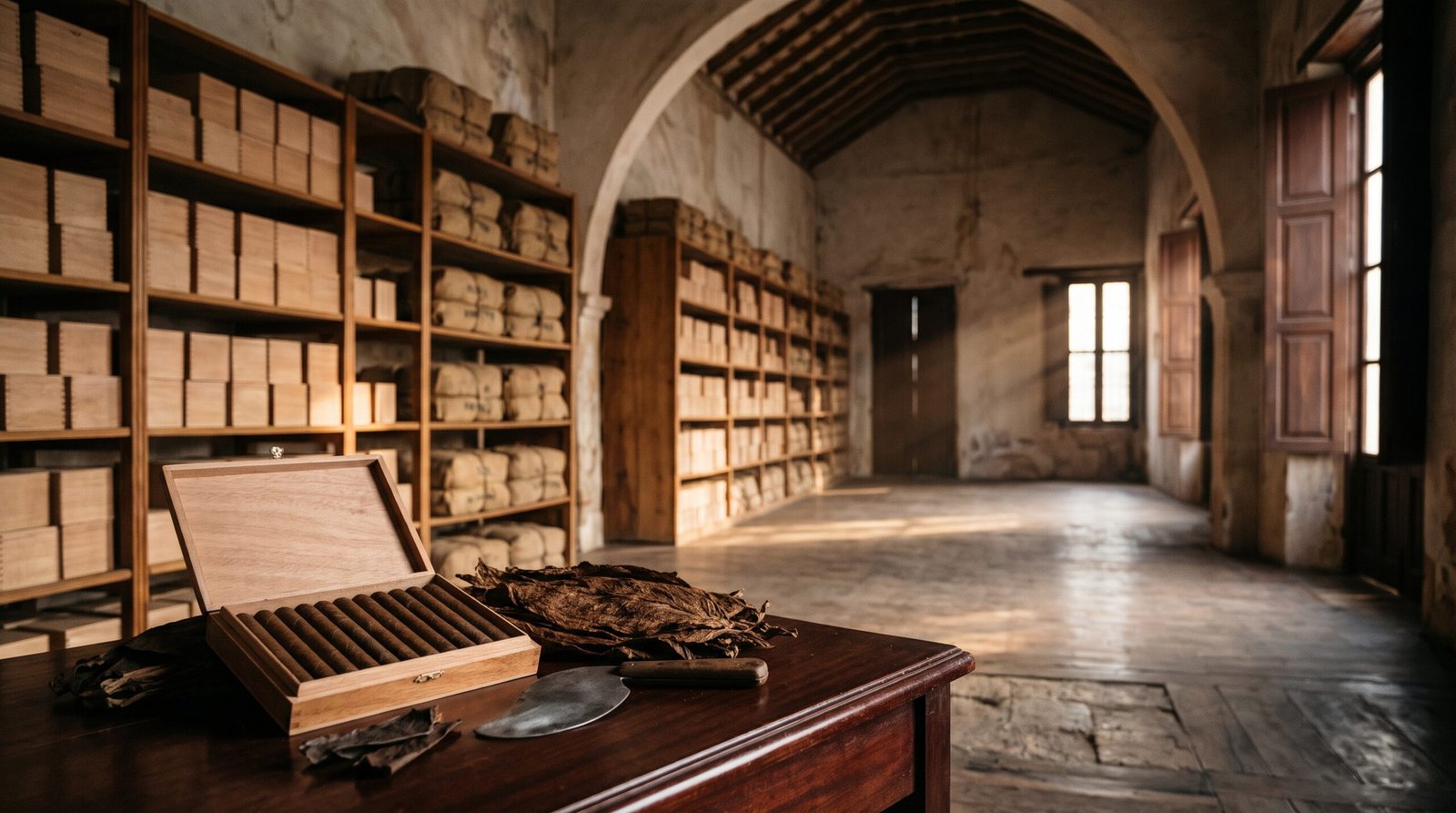
A cigar may appear to be a simple arrangement of tobacco leaves, yet behind its construction lies an industry shaped by centuries of agricultural knowledge, revolutions, economic sanctions and generations of specialised workers.
The documentary Hand Rolled: A Film About Cigars, directed by Jesse Mariut and Steve Gherebean and released in 2019, offers a fascinating introduction to this world.
Featuring prominent industry figures associated with Arturo Fuente, Padrón, My Father Cigars, Plasencia, Rocky Patel and Tatuaje, the documentary examines an industry whose complexities remain largely unfamiliar to outsiders.
However, the story extends far beyond cigars. It is about migration, entrepreneurship, agricultural innovation and the transformation of a traditional craft into an international business.
How Fidel Castro Changed the Cigar Industry
Long before Christopher Columbus arrived in the Americas in 1492, Indigenous communities cultivated tobacco for ceremonial, medicinal and social purposes.
Tobacco subsequently spread throughout Europe, becoming intertwined with colonial expansion, plantation economies and international commerce. Cuba eventually emerged as a leading centre of cigar production, benefiting from favourable agricultural conditions and generations of skilled workers.
However, the Cuban Revolution of 1959 fundamentally transformed the industry.
Following Fidel Castro’s rise to power and the nationalisation of private enterprises, several established tobacco families left Cuba, carrying their agricultural knowledge and manufacturing expertise abroad.
The transformation accelerated in February 1962 when US President John F. Kennedy imposed a comprehensive trade embargo against Cuba.
Rather than ending the influence of Cuban cigar craftsmanship, these developments helped redistribute it across the Caribbean and Central America.
Nicaragua, Honduras and the Dominican Republic emerged as major manufacturing centres, developing distinctive agricultural and commercial identities.
Cuba remained historically significant, but its position as the industry’s unrivalled geographical centre gradually diminished.
The Families That Rebuilt an Industry
One of the most compelling aspects of Hand Rolled is its examination of family enterprises.
José Orlando Padrón arrived in Miami in 1962 after leaving Cuba. According to the family’s historical account, a small hammer enabled him to undertake carpentry work and accumulate approximately $600, which became the foundation of Padrón Cigars in 1964.
The company subsequently developed extensive manufacturing operations in Nicaragua.
The Arturo Fuente family’s journey was equally remarkable. Established in Florida in 1912, the company endured devastating fires, financial difficulties and unsuccessful manufacturing ventures before establishing Dominican operations in 1980.
Carlos Fuente Sr. and his son Carlito challenged conventional assumptions about Dominican wrapper tobacco, eventually introducing Fuente Fuente OpusX in 1995.
Similarly, José “Don Pepín” García brought decades of Cuban cigar-making experience to Miami before establishing extensive manufacturing operations in Nicaragua with his family under the My Father Cigars name.
These histories demonstrate how migration, inherited knowledge and entrepreneurial resilience helped reshape an international industry.
From Seed to Cigar: The Science Behind the Craft
The finished cigar represents the final stage of an extensive agricultural and manufacturing process.
Soil composition, temperature, rainfall, sunlight and plant genetics influence the characteristics of tobacco leaves.
Much like wine, cigar tobacco is influenced by terroir — the environmental conditions associated with its geographical origin.
Nicaragua’s Estelí, Jalapa and Condega regions, Cuba’s Vuelta Abajo and the Dominican Republic’s Cibao Valley have developed distinctive tobacco-growing traditions.
A handmade cigar consists of three principal components: filler, binder and wrapper.
The filler provides its internal structure, the binder holds the tobacco together, and the wrapper forms its exterior.
Following harvesting, tobacco undergoes curing, fermentation, sorting and ageing. Depending on manufacturing requirements, these processes can extend over several years.
This creates substantial financial challenges. Manufacturers invest in agriculture, labour, warehouses and inventories long before finished products generate revenue.
A warehouse fire or failed harvest can destroy years of investment.
The premium cigar industry is, therefore, as much an inventory-intensive agricultural enterprise as a manufacturing business.
When Cigar Factories Became Centres of Literature
Perhaps one of the most extraordinary traditions in cigar history has little to do with tobacco itself.
During the nineteenth and early twentieth centuries, cigar factories in Cuba and Florida employed individuals known as lectores, or readers.
While workers rolled cigars, these readers narrated novels, newspapers, political commentary and literary works.
The tradition became particularly significant in Tampa’s Ybor City, where immigrant communities established a major manufacturing centre.
According to historical accounts, readers also contributed to political awareness and labour organisation.
Popular industry narratives associate cigar names such as Montecristo and Romeo y Julieta with this literary tradition.
The cigar factory was simultaneously a workplace, an informal classroom and a centre of intellectual discussion.
The Economics of a 430-Million-Cigar Market
The modern premium cigar industry is considerably larger than its artisanal image might suggest.
According to figures from the Cigar Association of America, the United States imported approximately 429.8 million premium handmade cigars in 2025, marking the fifth consecutive year in which annual imports exceeded 400 million.
Nicaragua supplied approximately 258.4 million cigars, representing around 60 per cent of American premium cigar imports.
The Dominican Republic supplied 93.7 million, followed by Honduras with 74.5 million.
Together, these three countries accounted for more than 99 per cent of reported US import volumes.
In comparison, American premium cigar imports stood at approximately 338 million in 2019, representing growth of around 27 per cent by 2025.
Meanwhile, the Dominican Republic’s Tobacco Institute reported approximately $1.359 billion in tobacco and related product exports during 2025.
The broader Dominican tobacco sector supported approximately 122,000 jobs, according to government figures announced in July 2025.
Behind the international luxury branding lies a substantial economic ecosystem encompassing agriculture, manufacturing, warehousing, logistics and employment.
Also Read: GTA VI’s $3.79 Billion Debut: How Gaming Is Redefining The Global Entertainment Economy
The Psychology of Exclusivity
Cigars have historically appeared alongside images of political power, wealth and professional achievement.
Photographs of Winston Churchill, Fidel Castro and prominent business figures helped reinforce these cultural associations.
Manufacturers subsequently incorporated elaborate packaging, limited editions, historical references and family narratives into their commercial strategies.
The industry increasingly marketed an identity associated with exclusivity, tradition and leisure.
Premium pricing reflects agricultural costs, specialised labour, prolonged tobacco ageing, taxation, branding and scarcity.
However, scarcity can also be deliberately engineered through limited production.
As with other collectible luxury goods, prices frequently reflect reputation and perceived exclusivity alongside underlying manufacturing costs.
Regulation, Health and the Industry’s Future
The premium cigar industry has faced significant regulatory uncertainty, particularly following the US Food and Drug Administration’s 2016 decision to extend its tobacco regulatory authority to cigars.
Years of litigation followed, culminating in an April 2026 federal court order clarifying the definition of premium cigars covered by an exemption from the challenged rule.
However, regulatory exemptions do not establish that premium cigars are harmless.
Medical research has consistently identified risks associated with cigar smoking, including cancer, cardiovascular disease and nicotine dependence, even among individuals who do not deliberately inhale.
The industry must also address occupational safety, fair wages, climate-related agricultural risks and transparent supply chains.
Its historical and economic significance should not obscure these responsibilities.
Beyond the Smoke
In discussing the motivation behind Hand Rolled, producer Pete Johnson told Cigar Journal: “The story of our industry needs to be told.”
Indeed, the history of handmade cigars is ultimately a history of human migration, specialised labour, political upheaval and entrepreneurial ambition.
It is found in the fields where tobacco grows, the countries that shaped its history, the families that established its businesses and the often-unrecognised workers whose hands sustain its production.
What appears to be a simple arrangement of tobacco leaves represents centuries of accumulated knowledge and an extensive international supply chain.
That is the world beyond the smoke.