

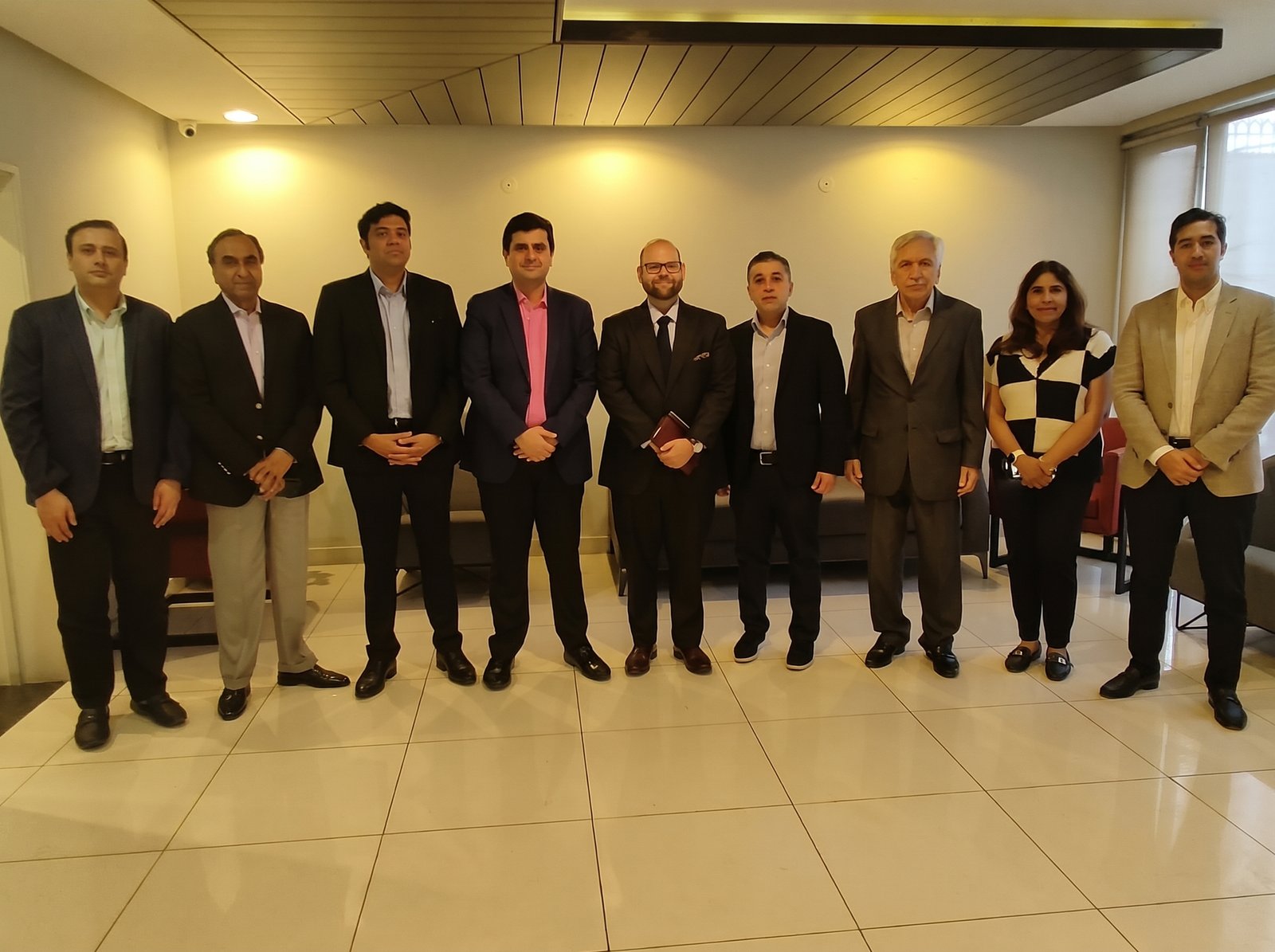
LAHORE: Political and Economic Chief at the US Consulate in Lahore Dillon Clancy and senior leadership of the All Pakistan Textile Mills Association (APTMA) have held talks aimed at expanding bilateral trade, investment, and industrial linkages between Pakistan and the United States—with a central focus on cotton supply chains, apparel exports, and regulatory compliance.
APTMA Chairman Asad Shafi, Senior Vice Chairman (North) Habib Anwar Sheikh, Vice Chairman (North) Muhammad Ali Chaudhry, Senior Executives S. M. Nabeel, Haroon Ellahi, and Faisal Jawed, Energy Advisor Tahir Basharat Cheema, and Secretary General Raza Baqir welcomed Clancy, who was accompanied by Economic Specialist Amna Anis. Both sides reviewed opportunities to deepen cooperation across cotton and textiles while broadening and diversifying major traded commodities between the two countries.
US Highlights Apparel Potential and Global Compliance
Clancy stated that his visit to APTMA was aimed at gaining a deeper understanding of Pakistan’s textile sector and exploring avenues to scale up bilateral economic and commercial ties. Commending Pakistani textile manufacturers for adhering to international compliance standards, he noted that Pakistan holds strong growth potential in textile apparel and allied sectors, underscoring the need for sustained engagement and dialogue to raise bilateral trade volumes and unlock mutual economic gains.
Cotton Deficit Reinforces US–Pakistan Trade Interdependence
Delivering a detailed presentation on Pakistan’s textile landscape, APTMA Chairman Asad Shafi highlighted the steady decline in domestic cotton output over recent years, noting that another poor local harvest will again compel Pakistani mills to import substantial quantities of raw cotton this year.
Shafi emphasised that the United States remains Pakistan’s principal cotton supplier—making Pakistan the world’s largest importer of US cotton—and that American lint plays a vital role in offsetting domestic production shortfalls. Because textiles account for 62 per cent of Pakistan’s total exports, he stressed that uninterrupted access to cotton and essential inputs is critical to the broader national economy.
Highlighting the scale of bilateral commerce, Shafi noted that the United States remains Pakistan’s largest trading partner:
- Total Bilateral Trade: Exceeded $7 billion in 2024.
- Pakistani Exports to the US: Stood at $5.9 billion, with textiles and apparel accounting for 77 per cent of the total.
- Pakistani Imports from the US: Reached $2.7 billion in 2025, led primarily by raw cotton.
Push for Seed Technology, Traceability, and Toll Manufacturing
To build on these commercial ties, Shafi urged stronger US–Pakistan cotton linkages and the promotion of textile toll manufacturing in Pakistan for the American textile industry. He also called for targeted technical cooperation—specifically technology transfer for high-yielding cotton seeds, collaborative synergies with US cotton research institutes to improve fibre quality, capacity building for Pakistani agricultural research bodies, and technology transfer to strengthen cotton traceability.
Compliance Framework and Shift Toward Sustainable Manufacturing
Addressing global buyer requirements, Shafi reiterated that APTMA member mills maintain full compliance with international conventions to strengthen competitiveness, sustainability, and global market access. He noted that APTMA’s in-house research team continuously tracks evolving international trade compliance standards, briefs members, publishes research-driven analysis in the media, and remains actively engaged with stakeholders in drafting a comprehensive legal framework for the proposed National Compliance Entity (NCE).
Shafi added that Pakistan’s textile sector is actively transitioning away from fossil fuels, expanding its focus on preferred fibres such as organic cotton and recycled polyester, and investing in effluent and water treatment plants to uphold socially and environmentally responsible manufacturing.