

LAHORE, November 16, 2026: Pakistan’s sugar industry has intensified its demands for immediate export permissions and comprehensive deregulation, as a previously signed agreement between the federal government and the Pakistan Sugar Mills Association (PSMA) raises fresh questions over the implementation of commitments made more than a year ago.
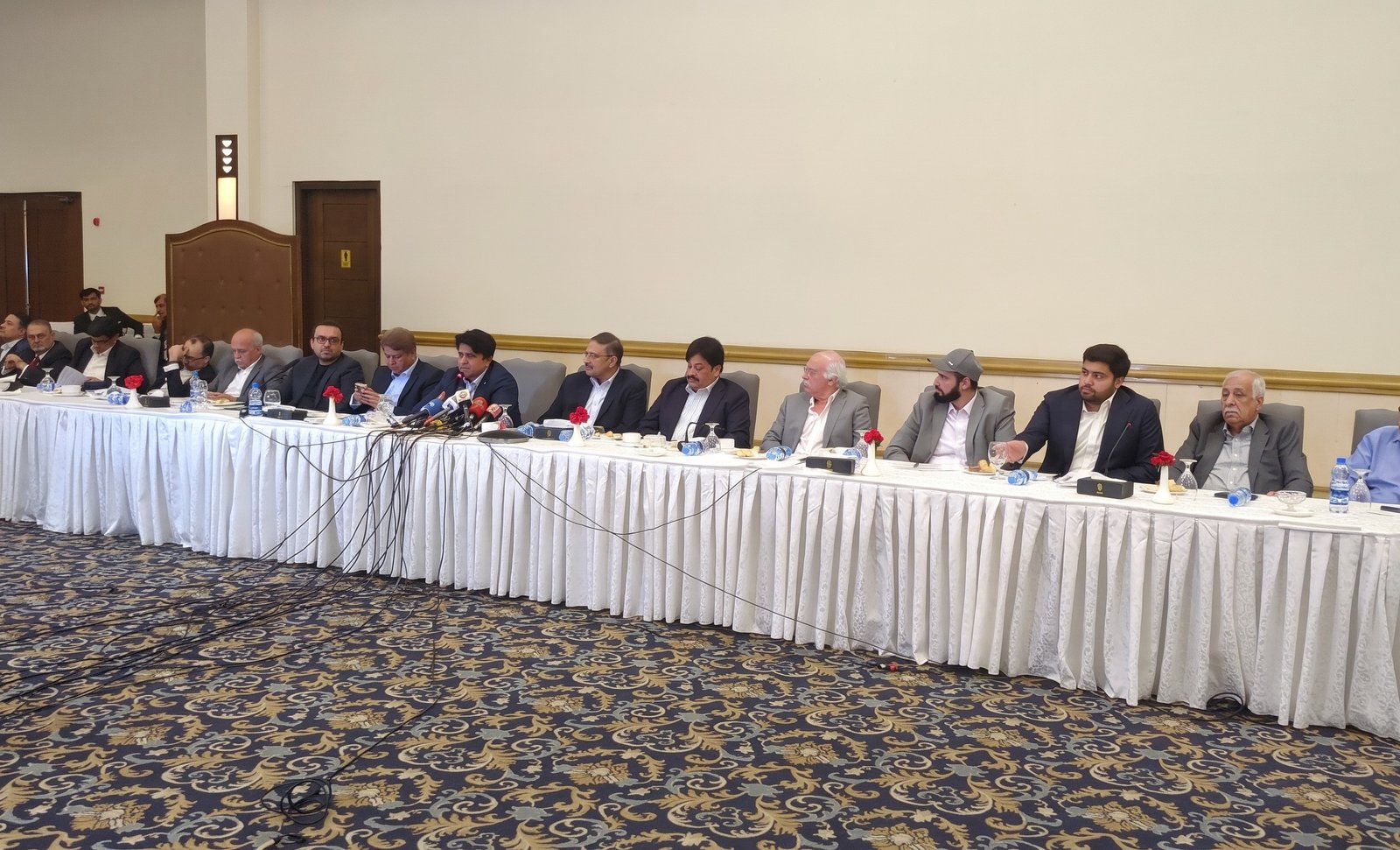
Addressing a press conference in Lahore on Monday, PSMA officials demanded permission to export a total of 2.7 million metric tonnes of sugar across two crushing seasons, warning that continued restrictions, accumulated inventories and mounting financial obligations were threatening the operational viability of sugar mills and the livelihoods of sugarcane growers.
The association called for immediate authorisation to export one million tonnes of surplus sugar from the existing season, advance approval for another 1.7 million tonnes expected during the 2026-27 season, and implementation of the long-awaited deregulation policy.
The latest demands have acquired additional significance following the emergence of a two-page agreement, dated July 14, 2025, between the Ministry of National Food Security and Research and PSMA.
A copy of the document, made available to The Scoop, contains provisions relating to sugar pricing, export permissions, inventory verification and the commencement of crushing operations.
It bears signature blocks identifying Federal Minister for National Food Security and Research Rana Tanveer Hussain and PSMA Secretary General Imran Ahmad.
While the government’s July 2025 announcement of a sugar price agreement is independently documented, the signatures on the copy supplied to The Scoop have not been separately authenticated with the signatories.
The document provides important context for the industry’s argument that export-related commitments were made well before the present dispute.
What the July 2025 Agreement Actually Says
The agreement, executed in Islamabad on July 14, 2025, states that both parties intended to stabilise sugar prices.
Under its pricing provisions, the maximum ex-mill price was fixed at Rs165 per kilogramme effective July 15, 2025, with an increase of Rs2 per kilogramme each month until October 15, 2025.
The agreed schedule was Rs165 per kilogramme from July 15, Rs167 from August 15, Rs169 from September 15 and Rs171 from October 15.
Provincial governments were made responsible for enforcing retail sugar prices in accordance with applicable laws and policies.
The document also permitted corporate consumers to purchase sugar directly from mills at mutually agreed prices.
However, the provision most relevant to the current controversy concerns sugar exports.
Clause 2(d) of the agreement provides for federal permission to export sugar stocks exceeding seven million metric tonnes, comprising carryover stocks and production from the 2025-26 crushing season.
The arrangement was subject to an assessment 30 days after the closure of the 2025-26 crushing season.
The agreement specifically required that the Federal Board of Revenue’s Track and Trace System data be used as the baseline for determining sugar stocks.
It also envisaged a four-member committee consisting of one federal government representative, one provincial government representative and two PSMA representatives to take the final decision on stock quantities.
This distinction is critical.
The agreement did not grant an unconditional right to export every tonne above the seven-million-tonne threshold. It established a conditional mechanism under which verified stocks would determine the quantities eligible for export.
Nevertheless, the existence of this written arrangement raises questions about whether the prescribed verification and decision-making process was completed, what quantities were established by the committee, and whether the approvals subsequently granted reflected those findings.
Also Read: Pakistan’s Car Sales Nearly Double In October As Suzuki Drives Market Surge
Signatories and Their Responsibilities
The document identifies Rana Tanveer Hussain as the government signatory in his capacity as Federal Minister for National Food Security and Research.
On behalf of the sugar industry, it identifies Imran Ahmad, Secretary General of the Pakistan Sugar Mills Association.
The agreement also required sugarcane crushing for the 2025-26 season to commence during the first week of November 2025 and provided for weekly monitoring of agreed sugar prices by federal and provincial governments.
That crushing commitment related specifically to the previous 2025-26 season, rather than the November 2026 deadline now at the centre of the dispute.
The government’s own July 2025 statements confirm that PSMA agreed to supply sugar at Rs165 per kilogramme ex-mill as part of an arrangement intended to stabilise consumer prices.
However, questions remain about how the export provisions were implemented and whether subsequent government decisions fulfilled the arrangement as understood by both parties.
The agreement also places obligations on the industry, particularly concerning pricing, supply and the commencement of crushing.
Consequently, an assessment of compliance must consider both the government’s export decisions and the industry’s adherence to its commitments.
PSMA Claims Sugar Surplus Could Reach 2.7 Million Tonnes
During Monday’s press conference, PSMA officials presented detailed production and consumption figures to support their demand for additional export permissions.
According to the association, Pakistan entered the 2025-26 crushing season with 271,000 tonnes of carryover sugar.
The country subsequently produced approximately 7.695 million tonnes, taking total available supplies to around 7.966 million tonnes.
Annual domestic consumption, according to the association, stands at approximately 6.6 million tonnes, equivalent to about 550,000 tonnes per month.
PSMA maintained that around 1.1 million tonnes of surplus sugar was available in the current season, with another 1.6 million tonnes expected during 2026-27.
Together, these quantities represent an estimated surplus of 2.7 million tonnes.
The association’s requested export allocation, however, differs slightly from its production projections. While its stock assessment refers to 1.1 million tonnes from the existing season and 1.6 million tonnes from the next, its demands seek authorisation for one million tonnes immediately and 1.7 million tonnes for 2026-27.
Both combinations total 2.7 million tonnes, but the precise allocation between seasons remains to be clarified.
The difference also highlights the importance of independently verified inventory records.
The total availability of 7.966 million tonnes cited by PSMA exceeds the seven-million-tonne threshold mentioned in the July 2025 agreement by approximately 966,000 tonnes.
However, that calculation alone does not establish an automatic entitlement to export the difference or prove the quantity of unsold sugar currently held in warehouses. The agreement requires verification through FBR records and a committee decision.
Government Already Approved 200,000 Tonnes, but Larger Dispute Remains
The disagreement is not over a complete absence of export authorisations.
Official records show that the federal government approved the export of 200,000 metric tonnes of sugar in September 2026.
On October 2, the State Bank of Pakistan issued instructions permitting authorised banks to process export transactions under the quota approved by the Economic Coordination Committee and ratified by the federal cabinet.
The central bank subsequently issued revised instructions on October 13, incorporating updated provincial and mill-wise allocations.
Further instructions were issued on October 28 following endorsement of quotas for mills in Khyber Pakhtunkhwa.
Exports under the arrangement were subject to conditions including advance payments or sight letters of credit, maritime shipments and regulatory checks.
These official communications establish that an export mechanism had been authorised and made operational for eligible mills. They do not, by themselves, establish how much sugar had actually been shipped by November 16.
PSMA’s central objection is that the approved quota remained insufficient to address what it described as a much larger accumulated surplus.
At its general body meeting on November 11, the association demanded early permission to export an additional 400,000 tonnes.
Monday’s press briefing expands that demand to a broader two-season export framework.
The outstanding question is whether additional exports should be authorised on the basis of independently verified surplus stocks while maintaining sufficient domestic reserves and protecting consumers against future price volatility.
Sugar Mills Warn of Financial Pressure and Storage Crisis
PSMA officials maintained that sugar mills were facing growing financial difficulties because large stocks remained unsold while bank financing costs continued to accumulate.
The association’s Urdu-language briefing stated that mill warehouses were full and lacked adequate space for newly produced sugar.
Officials also said the industry was paying billions of rupees in bank mark-up while confronting rising production costs.
Sugar manufacturers typically require substantial working capital to purchase sugarcane during the crushing season.
The resulting sugar inventory is then sold progressively, with proceeds used to repay financing facilities, meet operational expenses and fund subsequent procurement.
When mills cannot convert stocks into cash, their ability to borrow additional funds and purchase fresh sugarcane may be constrained.
PSMA argued that the financial strain was being compounded by restrictions on sugar exports.
However, the association’s briefing did not provide a consolidated, independently audited figure for industry-wide outstanding borrowings or mark-up costs.
Without such data, the full financial impact of delayed exports cannot be quantified.
Crushing Season Dispute Puts Farmers at Risk
The export controversy has intensified as sugar mills across Punjab failed to begin operations by the November 15 deadline established by the provincial government.
Reports published on Monday indicated that Ramzan Sugar Mills was the only mill in Punjab to commence crushing on schedule.
The Punjab government had directed mills to begin purchasing sugarcane and start crushing, while instructing district administrations to ensure compliance.
PSMA officials argued that the notification had come too late for mills to make the necessary operational preparations.
According to the association, boilers and other crushing equipment require approximately 15 days of preparation before operations can begin safely.
The industry maintained that commencing fresh production without first resolving existing sugar inventories would worsen financial and storage difficulties.
The association warned in its press briefing that beginning crushing without permission to export surplus sugar could endanger the industry’s viability.
The provincial government, however, has a competing obligation to protect farmers whose harvested crops require timely procurement.
Sugarcane growers have expressed concern that delays in crushing could cause financial losses, disrupt agricultural cash flows and affect subsequent cultivation.
Farmers’ representative Khalid Hussain Bath has demanded a sugarcane support price and intervention by the prime minister, arguing that growers should not bear the consequences of disagreements between sugar manufacturers and the government.
The dispute therefore involves more than export earnings and industrial profitability. It directly affects farmers’ ability to sell their produce and receive payments.
Government’s Position: Domestic Supply and Growers Come First
Federal Minister Rana Tanveer Hussain has previously maintained that government decisions concerning sugar exports and crushing schedules are intended to protect growers and domestic consumers.
On November 6, the minister indicated that the government could consider allowing another 600,000 tonnes of sugar exports if domestic production improved.
He also expressed the expectation that crushing would commence in mid-November.
The government has consistently emphasised the importance of maintaining sufficient domestic sugar supplies and preventing artificial price increases.
In July 2025, the Ministry of National Food Security and Research stated that the agreement with PSMA was intended to ensure the availability of sugar at affordable prices.
The ministry subsequently raised concerns that some mills were not adhering to agreed arrangements for the release and supply of sugar.
These earlier government concerns demonstrate that the dispute over compliance has not been limited to export permissions.
Any assessment of the July 2025 agreement therefore requires scrutiny of the industry’s pricing and supply obligations alongside the government’s handling of stock verification and export approvals.
Deregulation Delay Raises Wider Economic Questions
PSMA’s renewed demand for deregulation also places the spotlight on Pakistan’s commitments under its International Monetary Fund programme.
The IMF’s April 2026 country report identified sugar market liberalisation as a structural benchmark targeted for completion by the end of June 2026.
The proposed national policy was intended to address licensing restrictions, price controls, import and export permissions, zoning arrangements and the broader framework governing sugar markets.
A parliamentary response from the Ministry of Industries and Production stated that a committee had prepared draft proposals after consultations with provincial governments, growers and sugar manufacturers.
The ministry acknowledged that Sindh had expressed reservations about certain proposals, while other provinces had broadly agreed.
PSMA officials argued on Monday that sugar remained one of Pakistan’s most heavily regulated industries.
They maintained that deregulation of sugarcane pricing, without corresponding liberalisation of sugar sales and exports, had created an imbalance in the sector.
The industry contends that mills increasingly purchase sugarcane under market-driven conditions while remaining subject to restrictions on how and where finished sugar can be sold.
However, deregulation also presents challenges.
Without effective competition, stock transparency and safeguards against anti-competitive conduct, liberalisation could expose consumers to price instability or weaken growers’ bargaining power.
The proposed policy therefore requires a transparent framework capable of protecting producers, farmers and households simultaneously.
Can Pakistan Earn $4 Billion From Sugar Exports?
Another major claim made by PSMA concerns the industry’s long-term export potential.
The association maintained that Pakistan’s existing sugar manufacturing capacity could produce approximately 15 million tonnes annually during a 150-day crushing season without substantial new investment.
It argued that, with appropriate policies and sufficient sugarcane supply, Pakistan could eventually export as much as eight million tonnes of sugar annually.
At an illustrative export value of $500 per tonne, that quantity would generate approximately $4 billion in gross export receipts.
PSMA presented this as a potential opportunity for Pakistan’s foreign exchange earnings.
Similar claims were made publicly by PSMA Chairman Chaudhry Zaka Ashraf during an earlier press conference in September 2026, when he also identified Central Asian countries, Afghanistan and China as potential export markets.
However, the proposed $4 billion opportunity should not be confused with earnings available from the 2.7 million tonnes currently under discussion.
The larger estimate represents a hypothetical expansion scenario dependent on production capacity, crop availability, international prices, export competitiveness and access to overseas markets.
Producing eight million tonnes for export while meeting annual domestic demand of approximately 6.6 million tonnes would require total supplies of at least 14.6 million tonnes before accounting for reserve requirements and other adjustments.
That is considerably higher than the 7.695 million tonnes of production reported by PSMA for 2025-26.
The export potential is therefore a long-term industry projection, not a confirmed near-term foreign exchange opportunity.
The Unanswered Questions Behind the Signed Agreement
The July 2025 agreement introduces an important accountability dimension to the current confrontation.
If the federal government and PSMA formally agreed that export permissions would be considered for stocks exceeding seven million tonnes after verification, the relevant authorities should be able to establish whether that procedure was followed.
The most important unresolved questions concern the constitution and functioning of the joint stock-verification committee, the quantities established through FBR’s Track and Trace System, and the decisions taken on those findings.
It also remains necessary to establish why the larger export quantities requested by PSMA were not approved, whether the authorities identified risks to domestic supply, and whether the association fulfilled its own pricing and supply commitments.
The government’s existing 200,000-tonne quota demonstrates that exports were not entirely prohibited. The dispute instead concerns the scale, timing and implementation of additional permissions.
For the government, the challenge is to establish a transparent basis for balancing domestic food security, growers’ interests and legitimate export opportunities.
For the sugar industry, the challenge is to substantiate its surplus projections, demonstrate compliance with applicable rules and ensure that additional export earnings do not come at the expense of domestic consumers or farmers.
More than sixteen months after the July 2025 agreement, PSMA’s latest press conference has brought the government’s earlier commitments back into focus.
With the 2026-27 crushing season facing delays, the immediate need is for a verifiable stock assessment and a clear policy decision that addresses both industry concerns and the rights of growers.
The central question is no longer simply whether Pakistan has surplus sugar. It is whether the government and the sugar industry can demonstrate that the commitments they signed, the stocks they reported and the decisions they subsequently made have been implemented transparently and in the wider national interest.