

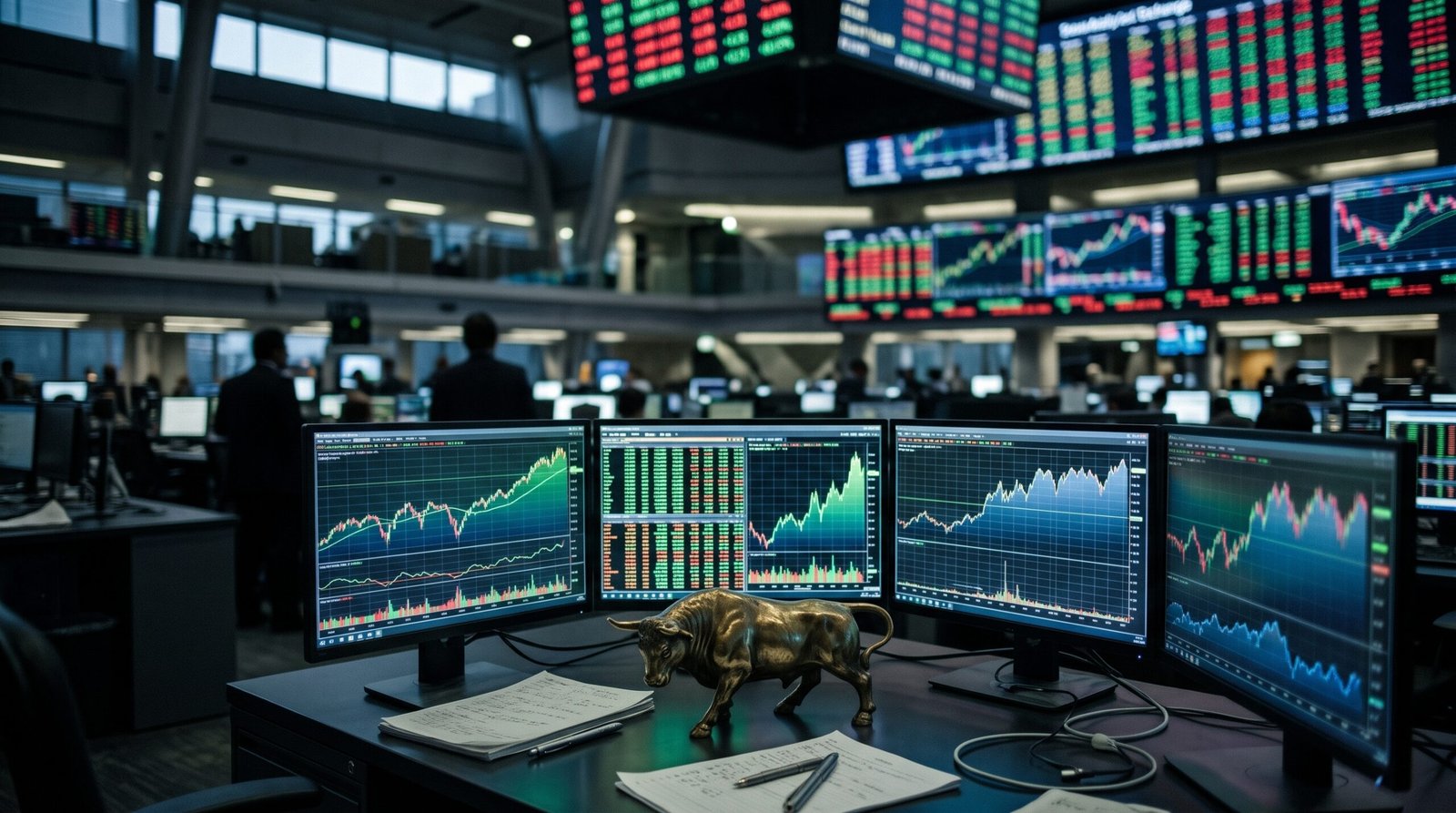
KARACHI: The bulls returned to the Pakistan Stock Exchange (PSX) with staggering force on Tuesday, triggering a massive buying spree that sent the benchmark KSE-100 index soaring by more than 4,500 points.
Investor confidence was heavily buoyed by a combination of easing geopolitical anxieties in the Middle East and robust domestic macroeconomic indicators, resulting in one of the most aggressive intraday rallies of the year.
According to PSX market data, the benchmark index opened sharply higher, immediately gaining more than 3,000 points in the opening minutes of trading. As institutional buying momentum accelerated, the KSE-100 touched a staggering intraday high of 178,429 points. By noon, the index was trading at 178,426.29, up 4,539.61 points—or 2.61%—from its previous close.
The Catalysts: Geopolitics And Macroeconomics
The primary trigger for the rally came from international markets, following remarks by US President Donald Trump downplaying the immediate necessity for military action against Iran. By signaling restraint “at this stage,” Washington offered severe relief to global equities and energy markets that had been deeply concerned about prolonged, catastrophic disruptions to Middle Eastern oil supply chains.
Adding intense domestic fuel to the positive sentiment was fresh data released by the State Bank of Pakistan (SBP). The central bank reported that workers’ remittances increased by 13.8% year-on-year to reach $3.892 billion in October 2026. This vital influx of foreign exchange provided an encouraging signal for Pakistan’s external account stability, easing lingering fears of currency depreciation and balance-of-payments pressures.
A Broad-Based Market Rally
The buying spree on Tuesday was not confined to a handful of blue-chip stocks; it extended aggressively across almost all major sectors. Intense capital inflows were witnessed in commercial banks, oil and gas exploration companies, oil marketing companies, and power generation and distribution.
Cyclical and consumer-driven sectors also saw heavy accumulation, with cement, fertilizer, automobile assemblers, automobile parts, apparel, glass and ceramics, and technology and communication all trading firmly in the green.
Tuesday’s explosive gains build upon a highly robust performance from the preceding week. The KSE-100 index had already gained 7,477 points, or 4.5%, during the previous week to close at 173,887 points on Friday, supported by an average daily trading volume of 1.021 billion shares. That earlier rally was initially sparked by positive investor reactions to Qatar-mediated diplomatic negotiations between Washington and Tehran.
Market optimism was further supported by the shifting political landscape in the United States. Following the US midterm elections on November 3, where Democrats secured 54 seats and effectively took control of both houses of Congress, global markets have been pricing in expectations of reduced geopolitical friction, steady energy markets, and a more favorable global interest rate environment.
Global Markets And Crude Oil Respond
The PSX rally mirrored a broader surge across global equities. Asian markets advanced heavily on Tuesday as declining oil prices improved investor sentiment ahead of crucial US inflation data, which will heavily influence the Federal Reserve’s upcoming interest rate decisions.
South Korea’s KOSPI surged by 4%, Japan’s Nikkei rose 2.5%, and MSCI’s broadest index of Asia-Pacific shares outside Japan climbed 1.5%, recovering from a seven-month low recorded during last week’s brutal technology sell-off. European stock futures were also pointing upwards, trading 0.7% higher.
The Asian rally followed a powerhouse session on Wall Street on Monday, where the S&P 500 surged 2.35%—its biggest one-day increase since April—while the tech-heavy Nasdaq advanced 2.7%, marking its strongest performance in over four months.
Meanwhile, the de-escalation in the Middle East immediately cooled global energy prices. Brent crude futures fell 70 cents, or 0.75%, trading at $91.88 per barrel by 0246 GMT. US West Texas Intermediate (WTI) crude saw a similar decline, dropping 78 cents, or 0.90%, to $86.07 per barrel, bringing much-needed relief to oil-importing economies like Pakistan.