

A fundamental restructuring of Pakistan’s electricity generation and planning framework is projected to yield US$17 billion in macroeconomic savings over the next decade.
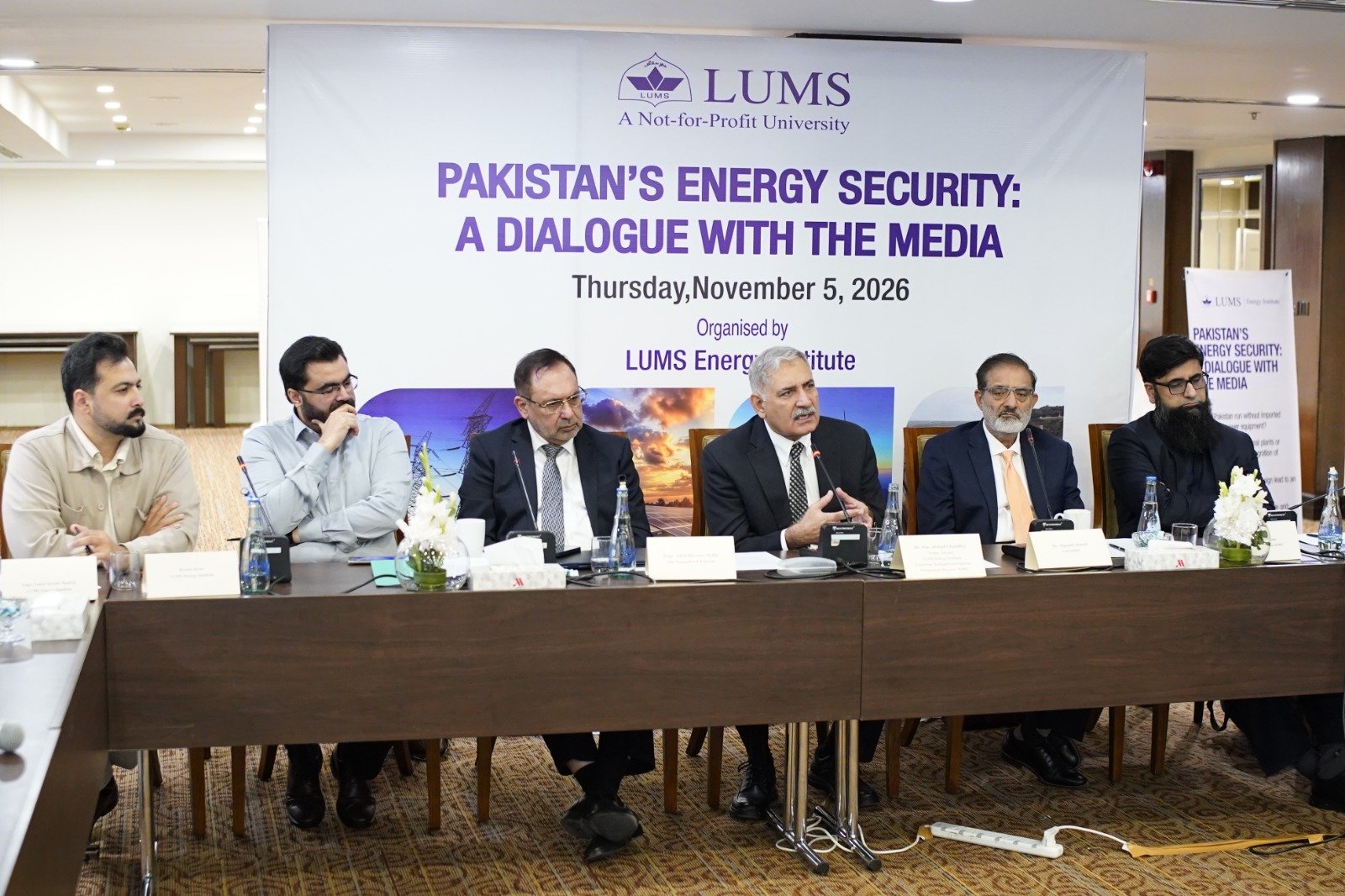
The findings were released in Islamabad by the LUMS Energy Institute (LEI) during a technical briefing that detailed the structural inefficiencies, heavy reliance on imported fuels, and planning deficits currently straining the national grid. The underlying data demonstrates that integrating renewable energy and enforcing domestic manufacturing could significantly lower electricity costs and stabilize the fragile sector.
Dr. Fiaz Ahmad Chaudhry, Senior Advisor at LEI, Chairman of the Board of Directors of National Grid – Pakistan, and Independent Director of the Independent System and Market Operator (ISMO), anchored the technical presentation. Dr. Chaudhry outlined how revising the least-cost generation framework under the “IGCEP 2025–2035” mandate directly unlocks the US$17 billion projection.
Improving energy efficiency in just 25% of residential buildings could reduce peak electricity demand by approximately 3,000 MW and yield potential annual energy-cost savings of PKR 442.6 billion.
Detailed modeling from the institute’s latest study, “The Net Zero Transition: A Pathway to Clean and Sustainable Electricity by 2040,” illustrates a dramatic shift in the nation’s power mix. The transition maps a near-complete decarbonization of the power sector, projecting an avoidance of 78 million tons of carbon emissions over the next fourteen years.
To achieve this, fossil-fuel generation is modeled to plummet from 49% in FY2024 down to a mere 1% by FY2040.
| Energy Source | Projected FY2040 Grid Share |
| Hydropower | 47% |
| Wind | 25% |
| Nuclear | 18% |
| Solar | 8% |
| Fossil Fuels | 1% |
However, the rapid influx of distributed solar power introduces severe operational challenges. Researchers warned that unmanaged solar penetration could drive minimum grid demand down to 3,000 MW, threatening grid stability. This shift necessitates urgent investments in grid flexibility, demand-side management, and large-scale battery storage.
Consequently, domestic battery demand is forecast to surge from between 4 GWh and 5 GWh in 2025–2026 to between 45 GWh and 50 GWh by 2031, presenting a critical supply-chain opportunity. To manage the intermittent nature of renewables, technical analysts proposed repurposing existing, economically stranded thermal power plants into synchronous condensers to provide essential grid-support services.
To stem capital flight and reduce reliance on imported components, the institute also released a power-sector indigenization assessment. It identified PKR 1.1 trillion in localized manufacturing opportunities against PKR 1.9 trillion in projected equipment demand for the country’s transmission and distribution networks.
Having evaluated the manufacturing readiness of 49 local producers, the institute urged the government to expedite the stalled “Power Sector Indigenization Plan (PSIP)” established under the “National Electricity Plan 2023–2027”.
The institutional response to these reforms was addressed by a high-level technical panel comprising Dr. Masood Ahmad, CEO of ISMO; Altaf Hussain Malik, Managing Director of National Grid Pakistan; Omer Haroon, Executive Director of ISMO; and LEI technical experts Umar Farooq and Faisal Javaid Mughal. The executives emphasized that achieving long-term energy security requires immediate capital redirection toward grid modernization and strict adherence to data-driven operational frameworks.